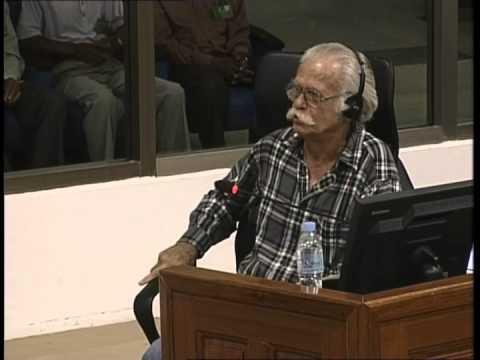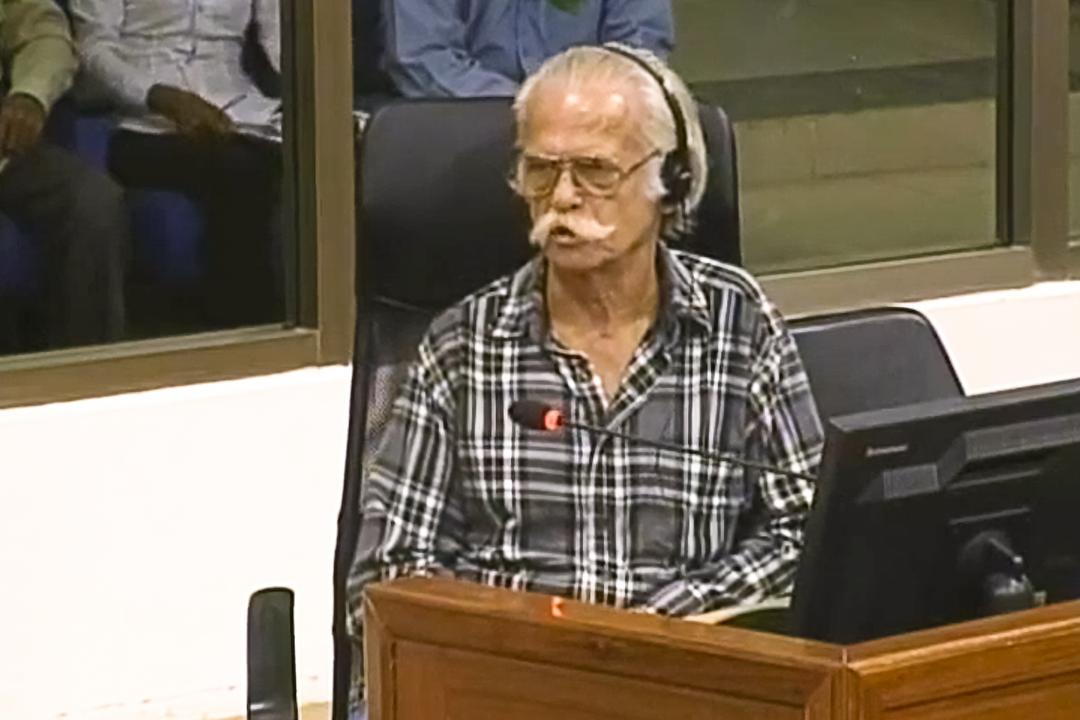
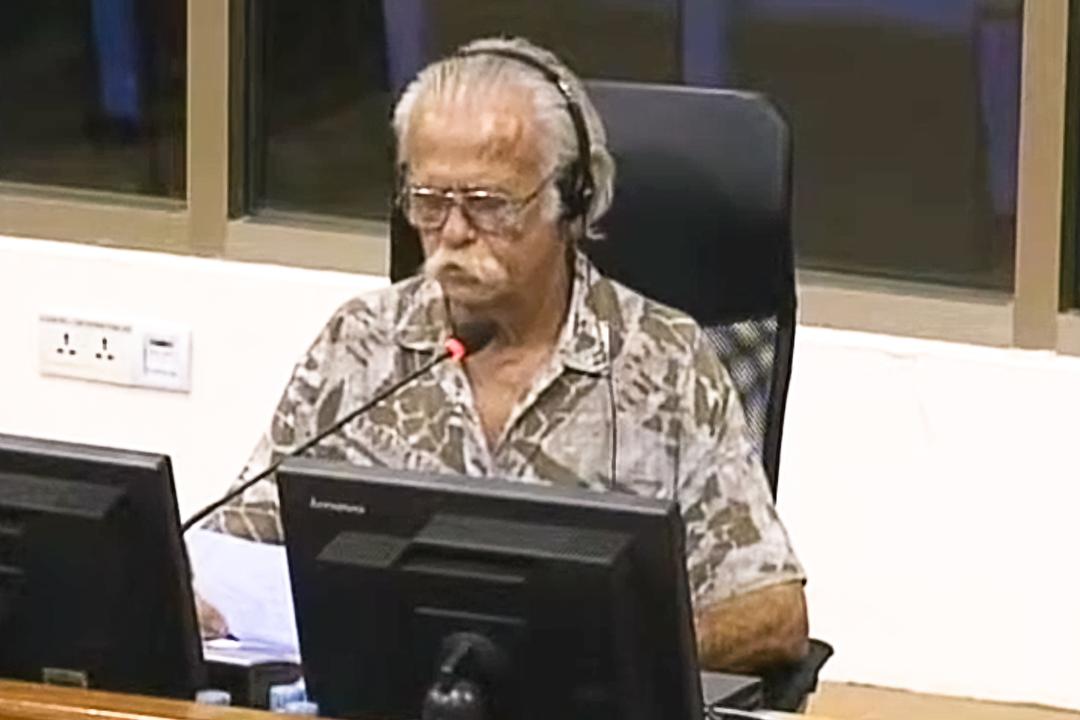
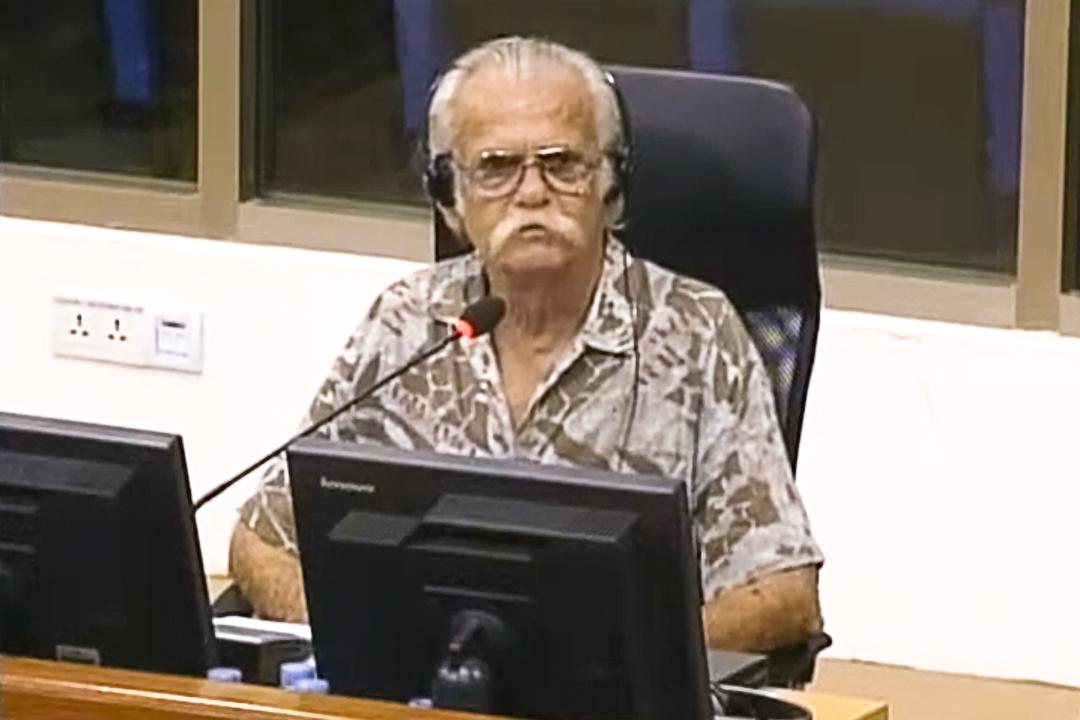
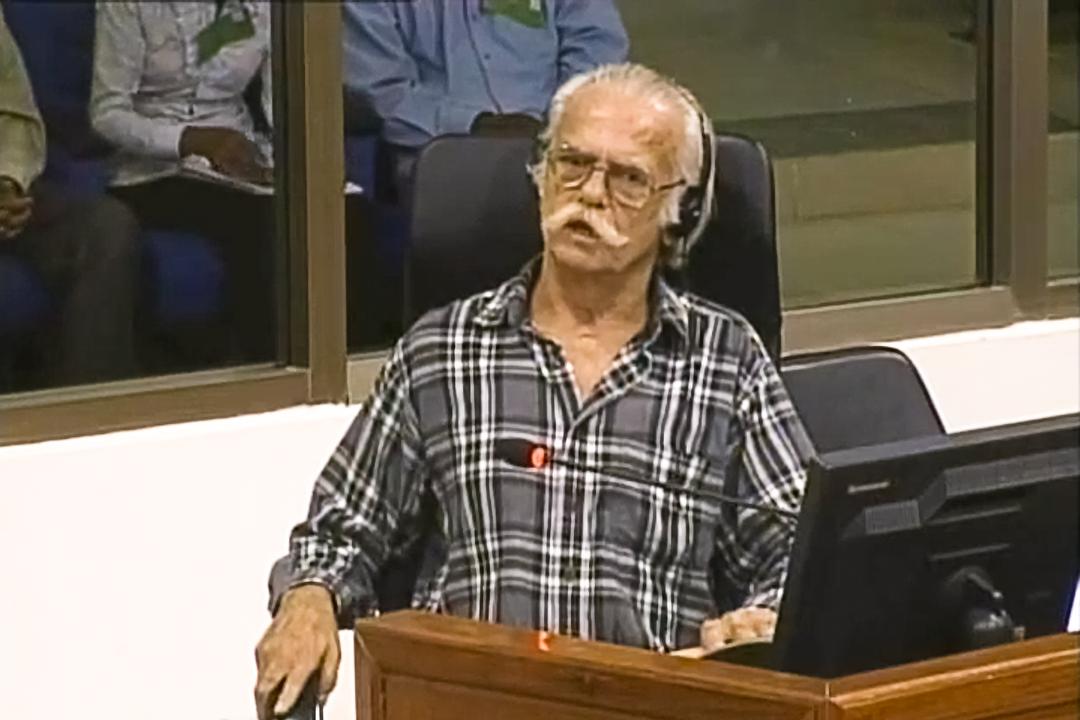
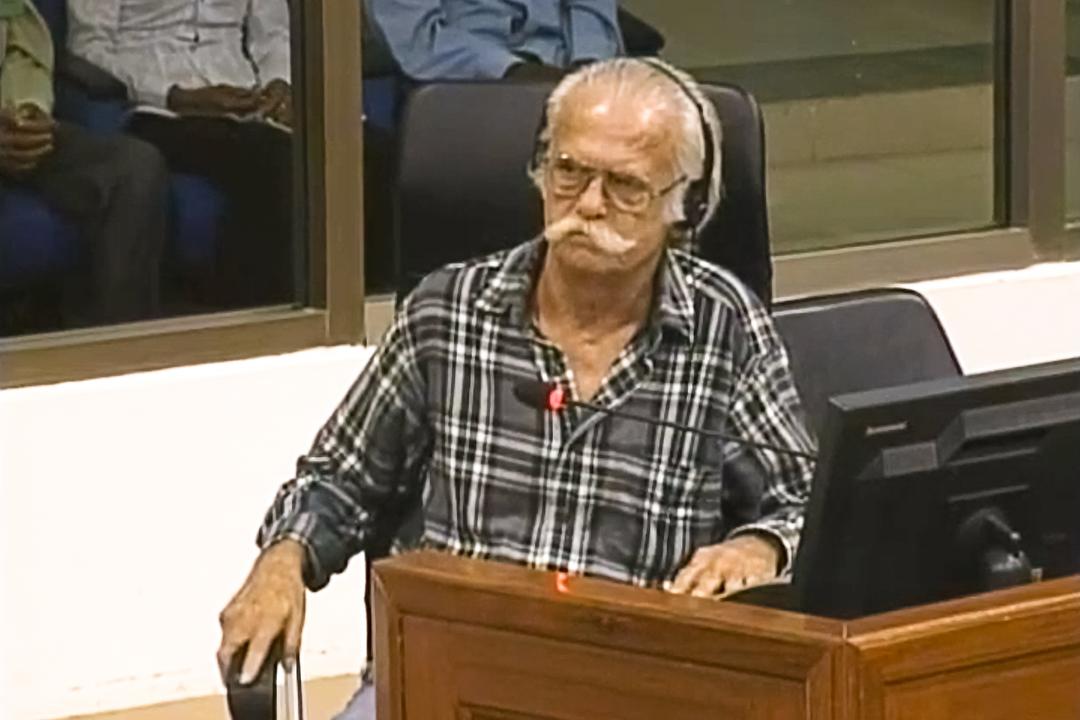
Alan Thomas ROCKOFF
Pseudonym: TCW-565
Cases: Case 002/01
Category: Witness
Background and Role
Alan Thomas Rockoff was an American war photographer and one of the few western newsmen who remained in Phnom Penh when the Khmer Rouge forces entered the city on 17 April 1975.
1
Rockoff served in the U.S. Army and worked as a photographer until he was discharged in 1973.
2
He arrived in Cambodia as a freelance photographer in April 1973 during the American bombing campaign.
3
American Bombings
Rockoff had a clear recollection of the day the American bombing campaign ended on 15 August 1973, as he personally witnessed that after the bombing had stopped, the Khmer Air Force had limited resources and was conservative in how they deployed people and planned operations.
4
The Trial Chamber cited Rockoff’s testimony in finding that the American bombings did in fact end on 15 August 1973.
5
It further found that some of the post-15 August 1973 bombing raids on Communist Party of Kampuchea-controlled territory prior to the evacuation of Phnom Penh were attributed to the Americans, although they were more likely the result of action by remaining Khmer Republic forces.
6
Evacuation of the Population
Rockoff described the events of the morning of 17 April 1975 when Khmer Rouge forces entered Phnom Penh from all directions.
7
He referred to a photo he took on the morning of even date showing a young, armed Khmer Rouge boy, and recalled that there were young soldiers.
8
The Trial Chamber cited his testimony in finding that Khmer Rouge troops, including heavily armed children and teenagers from various zones across Cambodia attacked Phnom Penh.
9
He explained that people were happy that hostilities had ended as the Khmer Rouge forces entered the city to declare the war was over,
10
though the mood changed by midday when they were instructed to immediately leave Phnom Penh.
11
He noted that people were told to expect American bombings.
12
Most left on foot.
13
He did not see force used against people who were leaving the city, though he heard a number of accounts at the French Embassy where he took refuge along with other Cambodians and foreigners after being expelled from an International Committee of the Red Cross-declared neutral zone by Khmer Rouge soldiers.
14
He described that many Cambodians were forced out of the French embassy and hundreds were forced to leave at gunpoint.
15
When Rockoff left Phnom Penh around 6 May 1975, he noticed the presence of occasional armed Khmer Rouge soldiers but no civilians.
16
The Trial Chamber cited his testimony in finding that: (i) Khmer Rouge soldiers announced that the war was over shortly after entering Phnom Penh and people believed peace had returned as they celebrated on the streets, though the mood changed after several hours as soldiers told the population to evacuate in order to avoid further aerial bombardments by the U.S.;
17
(ii) although some people did not see any resistance to the evacuation orders, incidents of forced evacuations were not unheard of;
18
and (iii) Phnom Penh was largely emptied of its inhabitants within one week of its fall.
19
According to Rockoff, refugees wanted to return to where they had come from once the war was over.
20
In response to the Defence’s argument in appeal
21
that the mere fact that people were required to leave Phnom Penh does not prove that threats or physical force were employed, the Supreme Court cited Rockoff’s testimony in finding that even though refugees residing in Phnom Penh may have generally been open to the idea of returning to their homes in the countryside, there is no indication that the refugees willingly left Phnom Penh at the time and under the conditions imposed by the Khmer Rouge.
22
Treatment of Khmer Republic Officials and Soldiers
Rockoff noted that a number of high-ranking officials, including Long Boret, arrived at the Ministry of Information on 17 April 1975 and although they were not held at gunpoint, he believed that they were prisoners.
23
He learned much later after he left Cambodia that the officials gathered were killed.
24
Based on Rockoff’s testimony the Trial Chamber found that Long Boret and other high-ranking Khmer Republic officials were executed and that Khmer Republic soldiers were marched to the Cercle Sportif where they were bludgeoned to death.
25
The Supreme Court Chamber found reasonable the Trial Chamber’s finding that Long Boret had been executed.
26
Rockoff recounted how he spent an hour photographing the growing collection of weapons and the disarming of Khmer Republic soldiers at the intersection of Monivong and Sihanouk.
27
The Trial Chamber cited his testimony in finding that many Khmer Republic soldiers waved white flags in surrender, shed their uniforms, and laid down their arms, after which the Khmer Rouge units were instructed not to shoot people waving white flags.
28
Refugee Conditions and Food Shortages in Phnom Penh
Rockoff described that around 15 April 1975, there was an exodus of thousands of people fleeing from refugee camps in Takhmau towards the centre of Phnom Penh after being attacked by the Khmer Rouge.
29
Food and sanitation in and around Phnom Penh, as well as in refugee camps, was very poor with many people dying from starvation.
30
He noted that there were approximately 2 million refugees in Phnom Penh at the end of the war, many of whom lived in parks and moved around the city as the Khmer Rouge was shelling the city.
31
Referring to Rockoff’s testimony that people were fleeing the Khmer Rouge as well as the American bombings,
32
the Trial Chamber found that there was an influx of refugees from 1970-1975 from the countryside into Phnom Penh, increasing the city’s population from around 0.5 million in 1970-1971 to an estimated 2-2.5 million in April 1975.
33
Videos