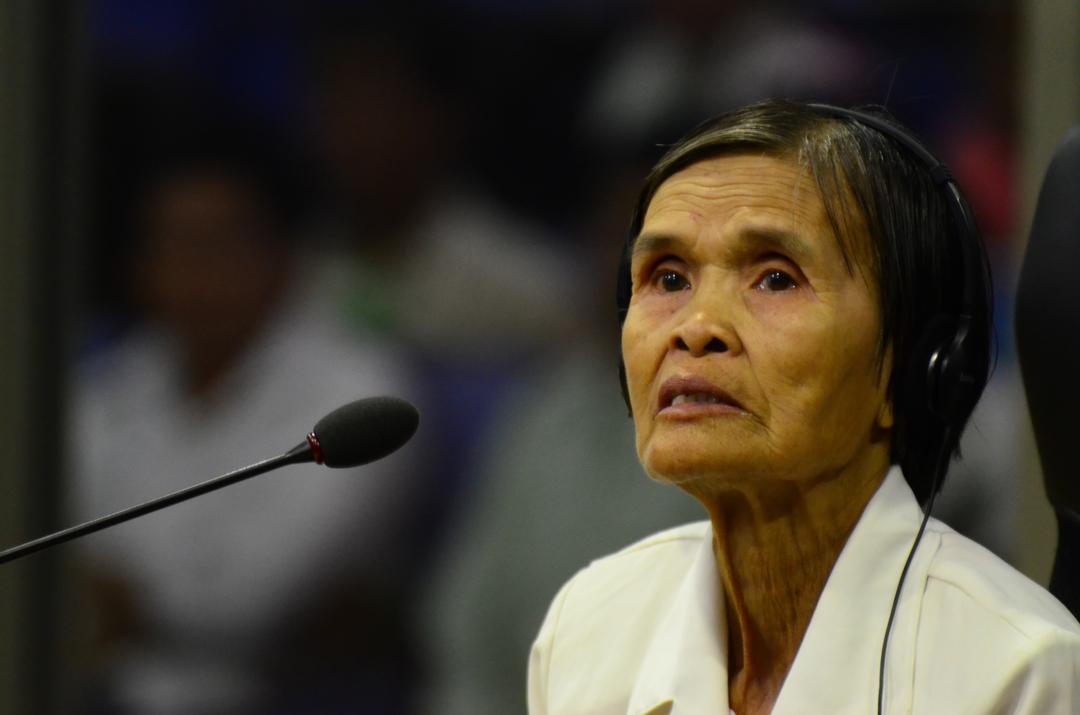
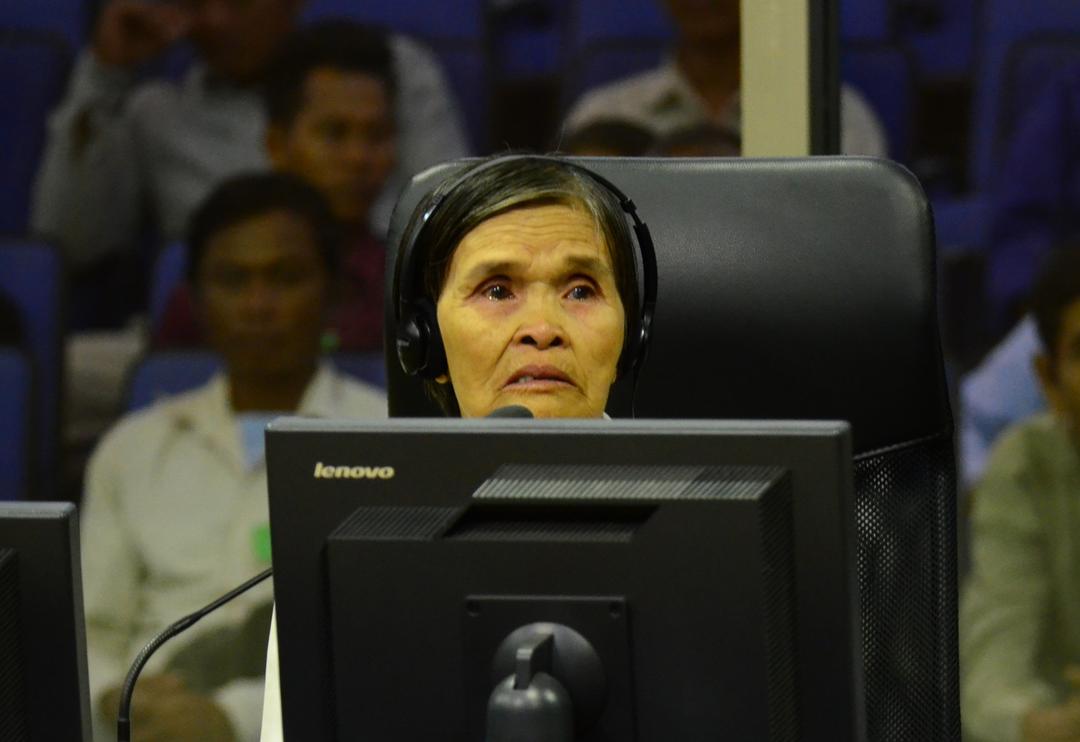
BEIT Boeurn
Pseudonym: 2-TCW-953
Cases: Case 002/02
Category: Witness
Background and role
Beit Boeurn joined the Khmer Rouge revolution in 1971.
1
In April 1975, the Khmer Rouge tasked her with transporting ammunition for them to fight Lon Nol soldiers.
2
Following the fall of the Lon Nol regime on 17 April 1975, she was stationed at Olympic Stadium in Phnom Penh,
3
where she attended political study sessions held by the Khmer Rouge leadership.
4
In July 1977, she was sent to the Ministry of Commerce in Tuol Tumpung
5
before being transferred to Kampong Chhnang Airfield worksite after her superiors at the ministry were arrested on accusation of being disloyal to Angkar.
6
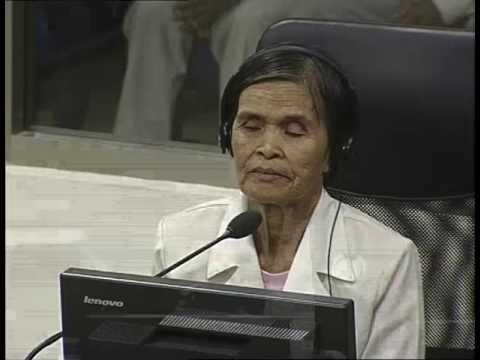
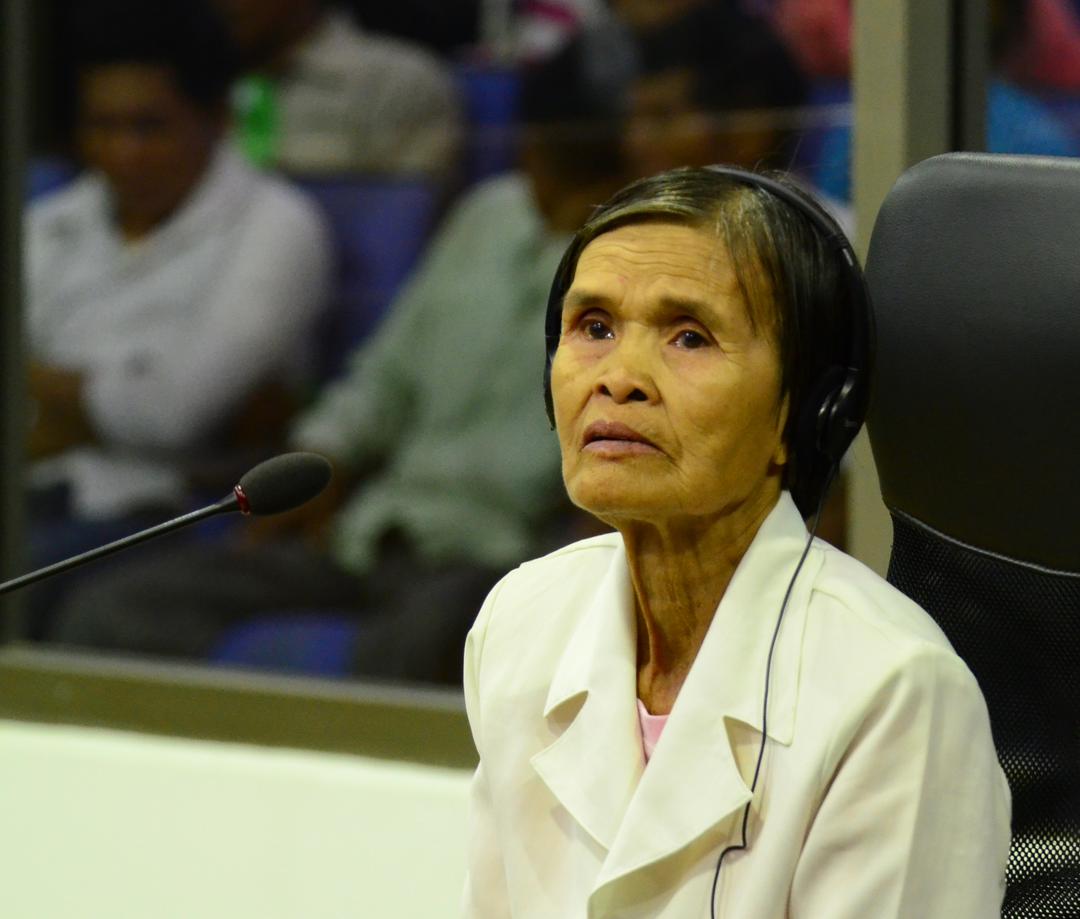
Beit Boeurn testified before the Case 002/02 Trial Chamber as a witness about political study sessions held by the Khmer Rouge leadership and her experience while working at the Kampong Chhnang Airfield, where she was “tempered”.
7
Political study sessions held by the Khmer Rouge leadership at Borei Keila
Beit Boeurn attended two major three-day study sessions held by Khmer Rouge senior leaders at Borei Keila in Phnom Penh in 1977: “Brother Number One”, Pol Pot; “Brother Number Two”, Nuon Chea; and Khieu Samphan.
8
The participants were taught about political organization, work leadership, the contents of the Revolutionary Flag magazines and enemy activities.
9
Pol Pot talked the most during these events.
10
He labelled the Vietnamese as Angkar’s enemy and instructed Khmer Rouge cadres to search for enemies embedded within his revolution.
11
Pol Pot said that sometimes enemies were the participants’ parents and relatives and asked them if they dared “smash” those enemies.
12
After Pol Pot finished his political speech, Nuon Chea and Khieu Samphan were allowed to supplement his presentation.
13
Pol Pot and Nuon Chea talked about Angkar’s enemies during the study sessions at Borei Keila. Khieu Samphan participated actively with Pol Pot and Nuon Chea in the political sessions. Following the events at Borei Keila, Khieu Samphan held meetings with commerce cadres at the Ministry of Commerce, instructing them to search for internal enemies. Beit Boeurn and a small group of her commerce supervisors additionally attended meetings with Khieu Samphan, either monthly or every two or three months, probably four times in total. These meetings were about work leadership, adhering to discipline and morality and also discussed the “psychological enemy”, being those who were lazy to work.
The Trial Chamber relied on Beit Boeurn’s testimony, among other evidence, in finding that: (i) political study sessions were held before and during the Democratic Kampuchea period at the sector, district, zone or centre levels throughout the country and in Phnom Penh, particularly at the Olympic Stadium and Borei Keila to discuss revolutionary and economic policies, cooperatives, self-reliance and mastery as well as vigilance against internal and external enemies;
19
(ii) Khieu Samphan conducted meetings with workers and commerce cadres, instructing them on leadership, discipline and morality, and denouncing as enemies of the Party those who were lazy to work;
20
and (iii) Revolutionary Flag was frequently used for educational purposes at Communist Party of Kampuchea political study or training sessions.
21
Working and living conditions at Kampong Chhnang Airfield worksite
People who were sent to be “tempered” at the Kampong Chhnang Airfield construction site with Beit Boeurn had also been accused of being disloyal to Angkar.
22
On her arrival at the worksite, she saw tens of thousands of workers who were mostly soldiers.
23
While men were assigned to break or carry rocks, women were told to farm dry-season rice.
24
After hard work, workers received watery gruel as food and slept in a long shelter together.
25
People were very skinny with the size of their knees being as big as their heads.
26
The Trial Chamber cited Beit Boeurn’s testimony, among other evidence, in finding that workers at the Kampong Chhnang Airfield worksite suffered as a result of hard work, insufficient nutrition, lack of hygiene and extremely poor sanitary conditions.
27
The Supreme Court Chamber found that Beit Boeurn’s failure to mention Khieu Samphan in her first Documentation Center of Cambodia interview did not override the Trial Chamber’s discretion to accept her in-court testimony about the Khmer Rouge senior leader.
28
Videos