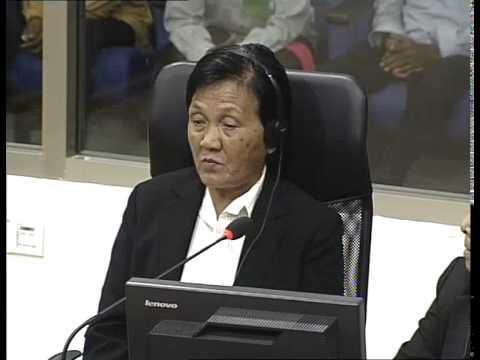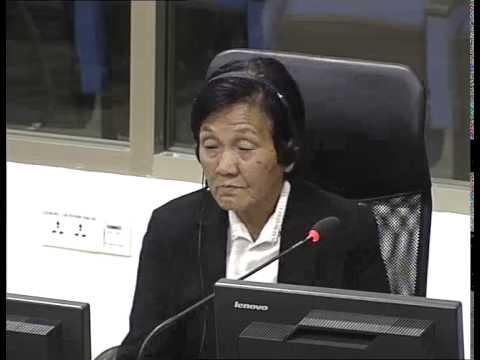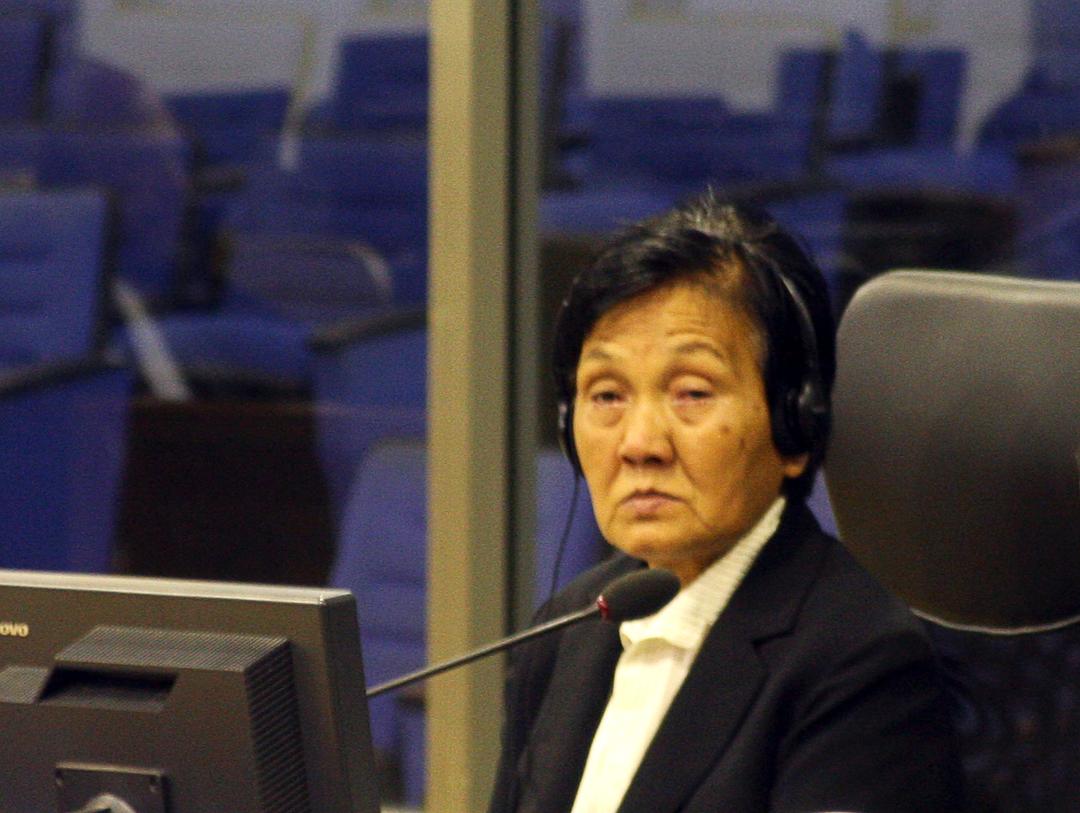
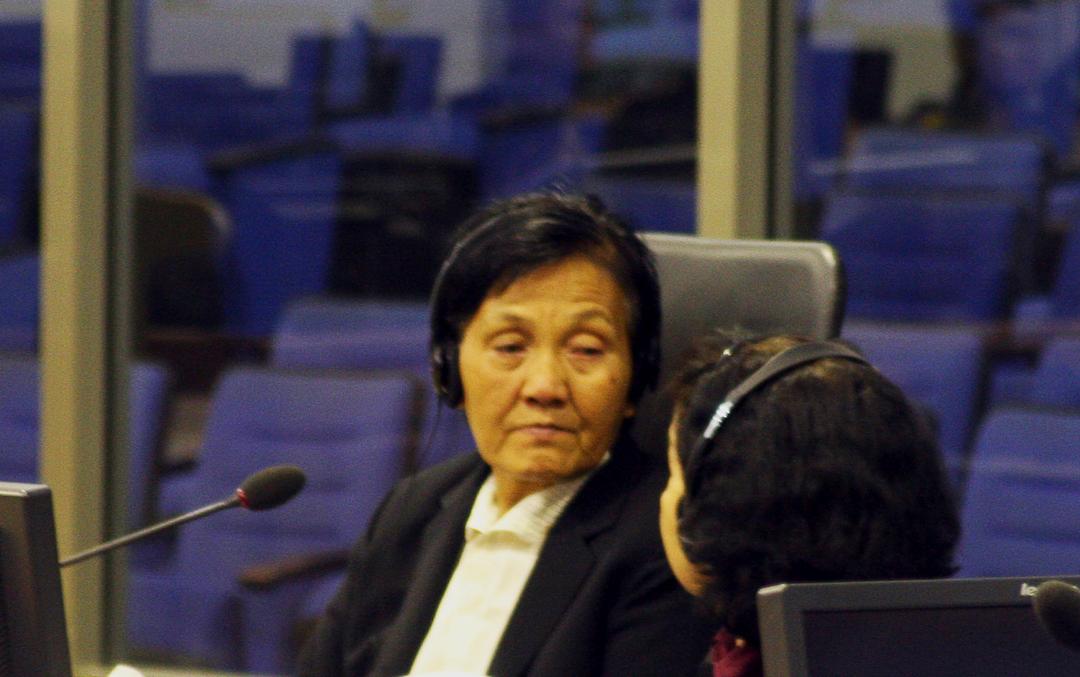
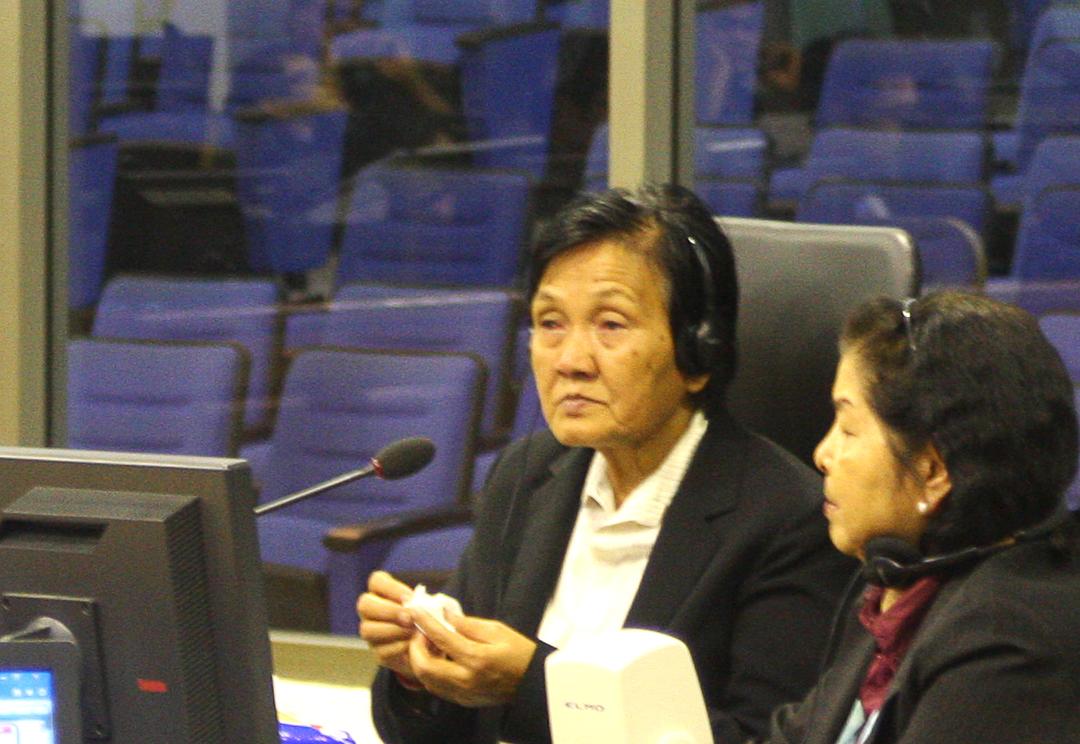
CHAO Lang
Pseudonym: 2-TCCP-992
Cases: Case 002/02
Category: Civil Party
Background and role
Chao Lang was a former hospital worker before 1975.
1
After 17 April 1975, she was placed under a mobile unit in Sector 42 before being transferred to the 1st January Dam worksite.
2
She testified before the Case 002/02 Trial Chamber as a Civil Party about her experience at the worksite and being forced to marry during the Khmer Rouge period from 1975 to 1979.
3
Working and living conditions at the 1st January Dam worksite
Chao Lang was assigned to carry earth at the 1st January Dam worksite.
4
The working conditions were extremely difficult and beyond her physical strength.
5
The work quota was normally two cubic metres for each worker per day.
6
If a worker did not finish, other workers assisted them in meeting the quota.
7
A meeting was held every three days or every week to reinforce the workers’ commitment.
8
In each session, the Khmer Rouge encouraged workers to fulfill Angkar’s work plan and the “great leap forward”, warning that those who dared obstruct the moving wheel of the history would be in trouble.
9
After such meetings, workers routinely disappeared.
10
Lazy workers were sent for re-education and disappeared, never to be seen again.
11
Despite the hard work, workers received only gruel mixed with morning glory as food.
12
They became emaciated and weak but carried on working to avoid being killed.
13
When Chao Lang had a fever, she was sent to a hospital but the medics were not properly trained and only rabbit dropping pellets were available as medicine.
14
A trained medic, Chao Lang tried to use kapok leaves to help her illness, although she was not convinced of their effectiveness.
15
Forced marriage and consummation
The Khmer Rouge forced Chao Lang to marry a man whom she did not love.
16
She did not dare refuse the marriage after being warned that she would be in trouble if she refused.
17
She received a kroma (scarf) and a set of black clothes for her wedding,
18
during which she and her husband were told to hold each other’s hands and to follow whatever directions were set out by Angkar.
19
After her wedding ceremony, Chao Lang and her husband were allowed to return to their sleeping quarter to spend three nights there.
20
On the first night, Chao Lang said nothing to her husband.
21
They did not dare to move their bodies after seeing a militiaman breaking the wall of their sleeping quarter to eavesdrop.
22
After three nights under the Khmer Rouge’s surveillance, Chao Lang and her husband were separated as he was sent to a different worksite to grow cotton.
23
The Chamber relied on Chao Langs testimony, among other evidence, in finding that: (i) the living conditions (including food, hygiene and medical care), were extremely poor and inadequate to sustain the workers;
24
(ii) workers died due to work-related accidents or conditions imposed on them;
25
(iii) workers were subjected to forced marriage;
26
(iv) because of the climate of fear, workers had no other choice but to obey and marry”;
27
and (v) the mistreatment and death of loved ones had immediate and long-term emotionally effects on those who survived the Khmer Rouge regime.
28
Khieu Samphan challenged the Trial Chamber’s finding that monitoring of newlyweds took place and was conducted according to a policy.
29
The Supreme Court Chamber rejected Khieu Samphan’s argument that the Trial Chamber relied selectively on inconsistent evidence when it came to the purpose of monitoring,
30
citing Chao Lang’s testimony, among other evidence, in finding that the monitoring of consummation occurred.
31
Statement of suffering
“When I was at the 1st January Dam worksite, I remembered some events that were painful. When I was sick, I was by myself. There was no relative nearby, and I did not expect that I could survive, not at all. Another painful memory is that the insufficient food. With the lack of food, I became emaciated. My skin was pale. I had to work until 10.00 or 11 o’clock through the night.”
32
Videos