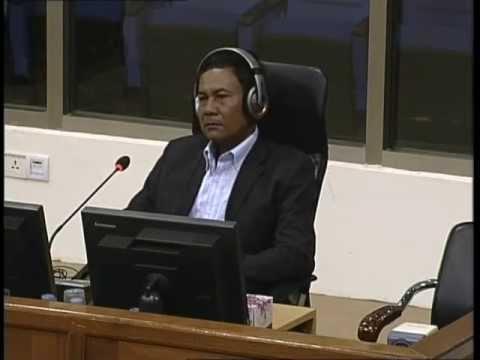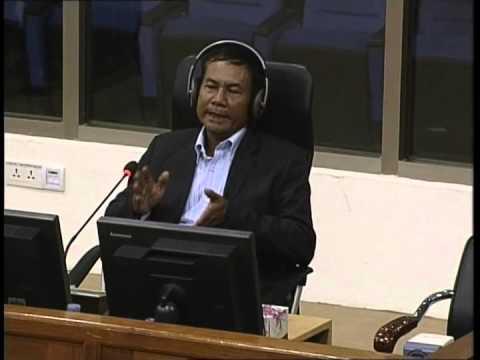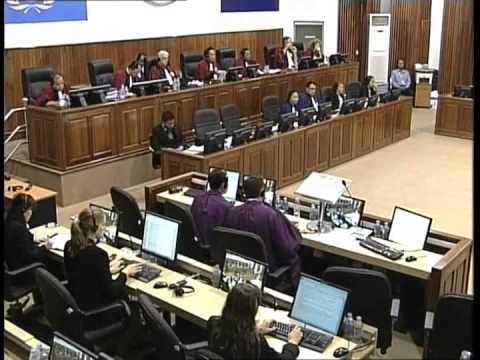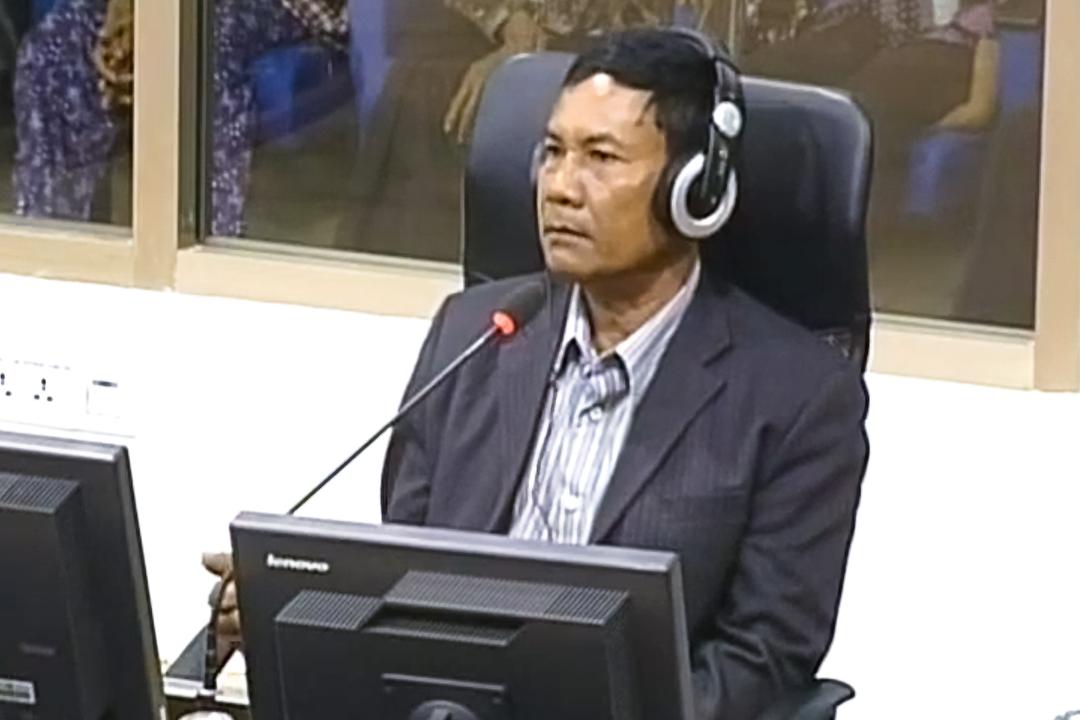
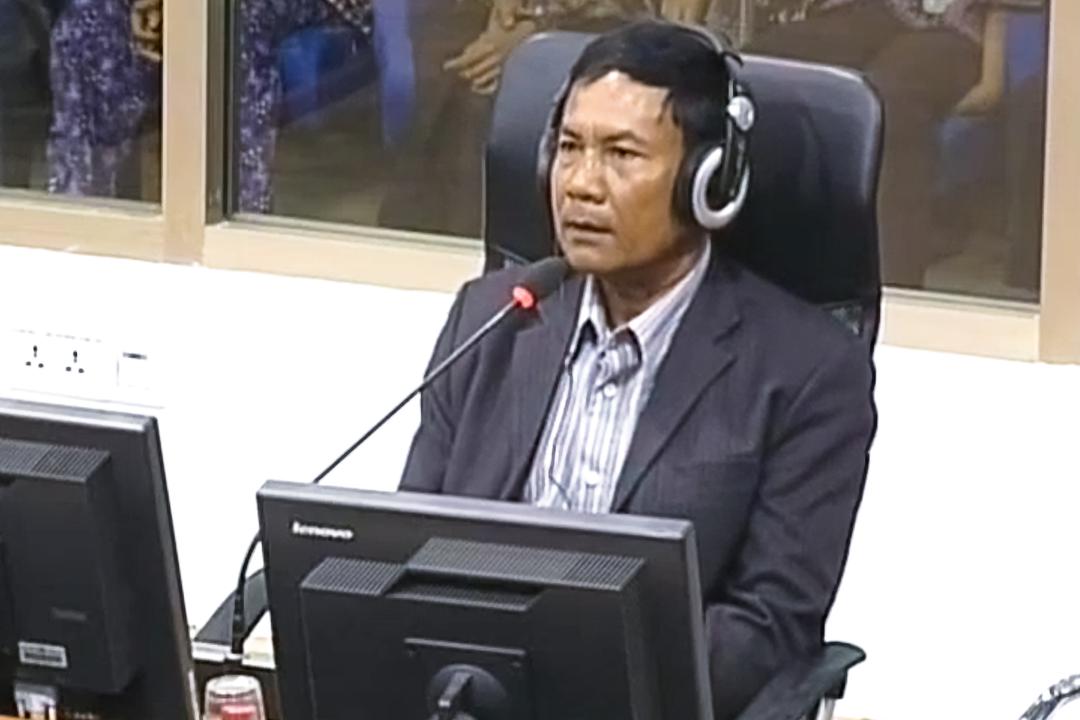
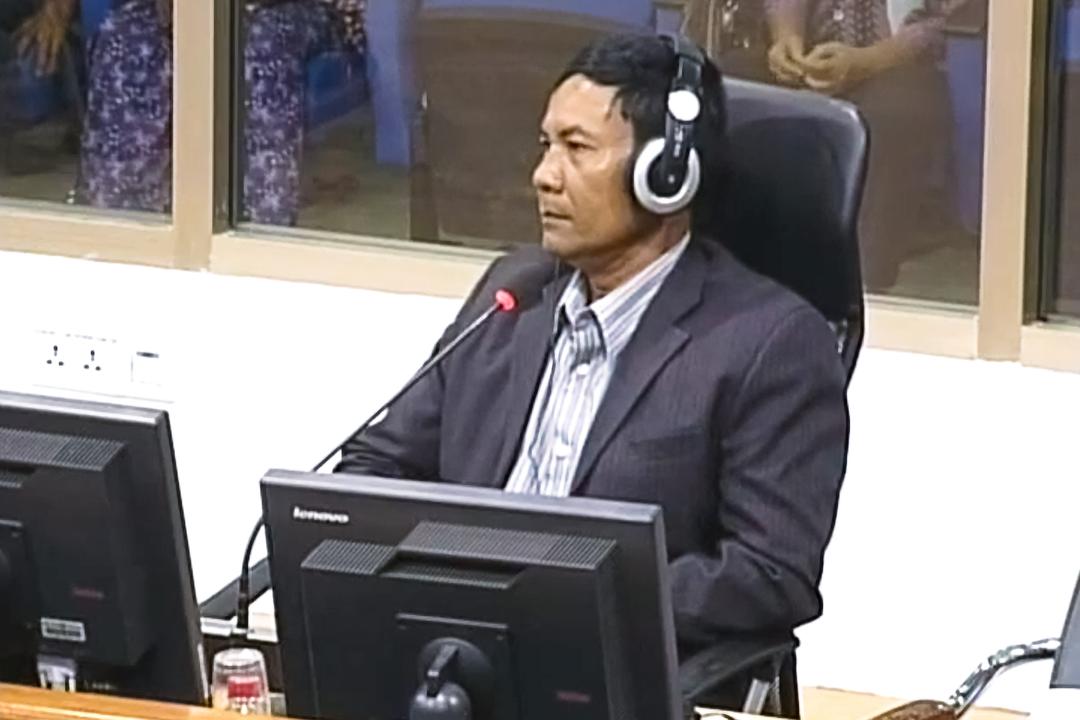
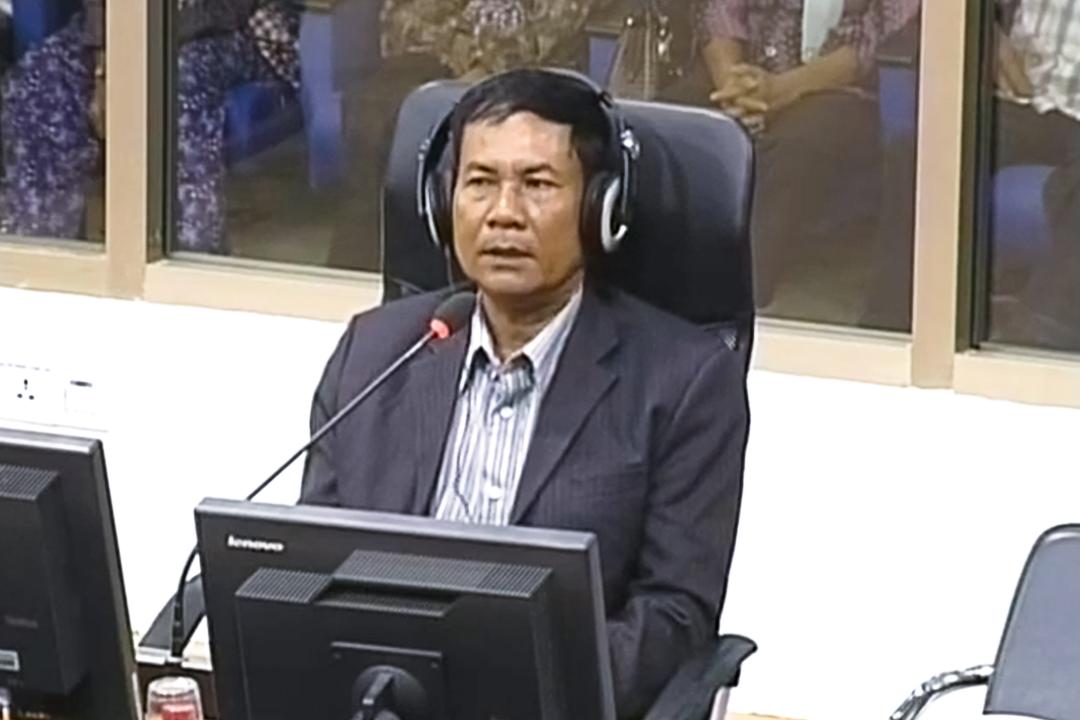
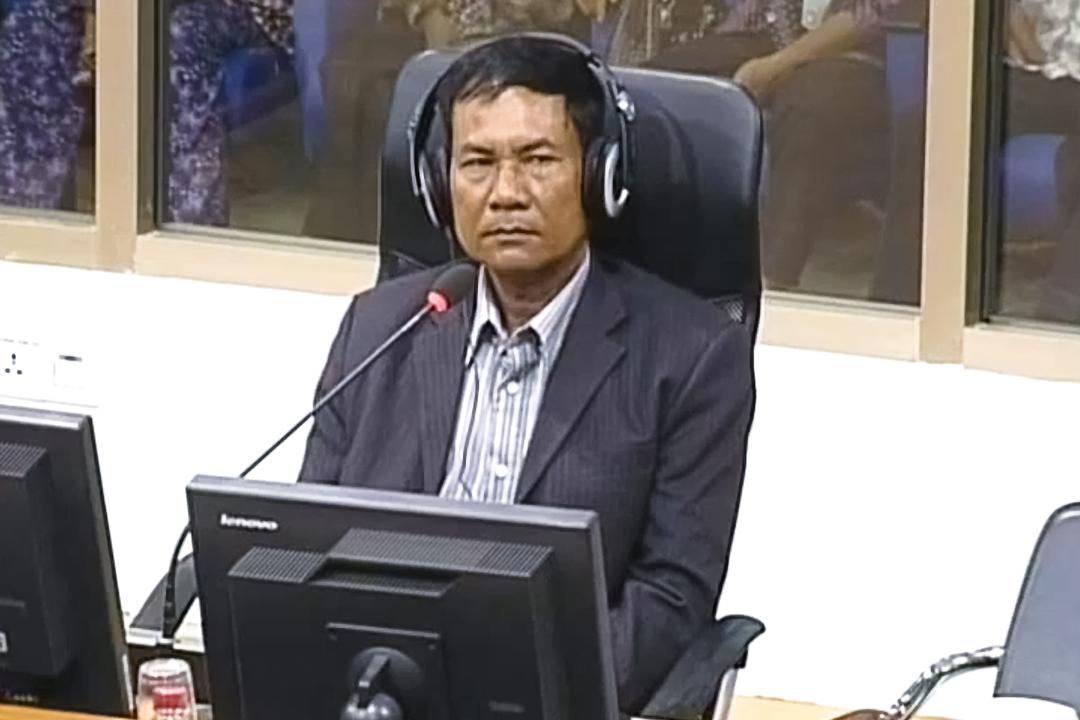
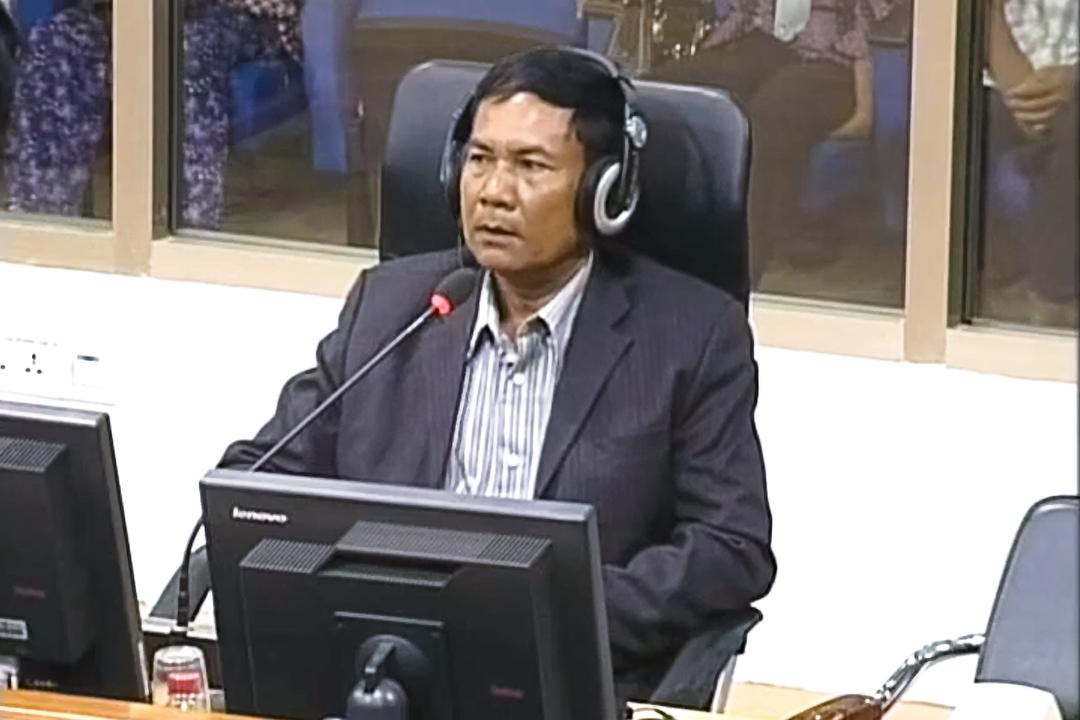
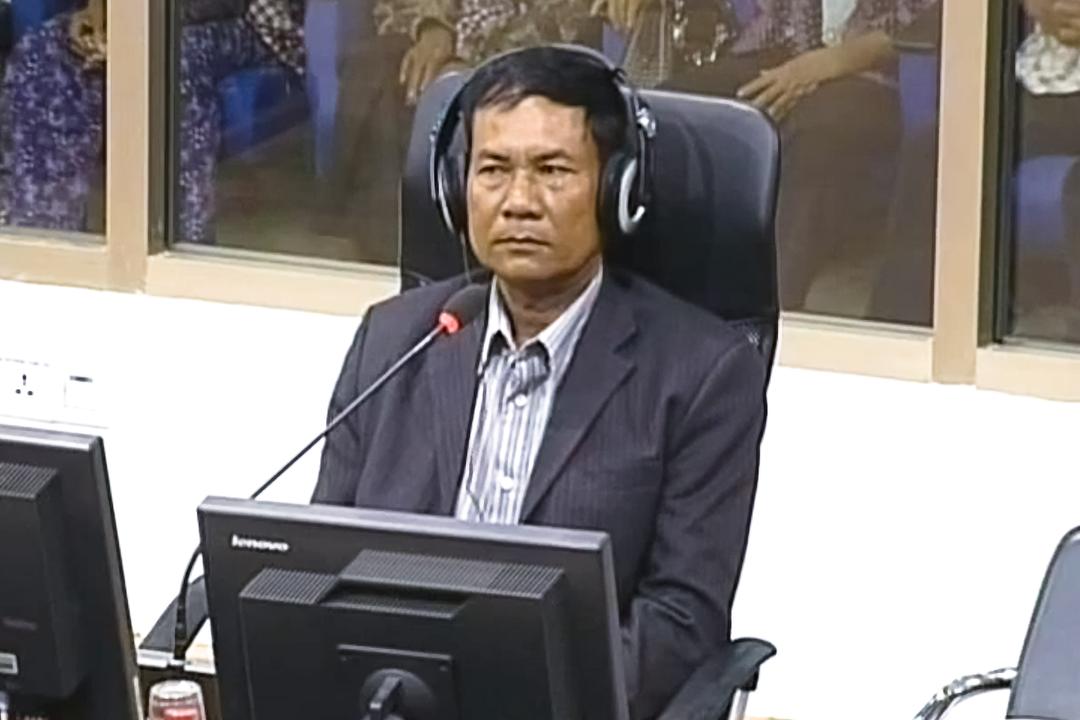
CHAU NY
Pseudonym: TCCP-187
Cases: Case 002/01
Category: Civil Party
Background
Chau Ny was born in Kampuchea Krom and is a member of the Khmer Kampuchea Krom ethnic group.
1
He moved to Phnom Penh in 1970
2
where he lived with his elder brother who worked as a National Bank officer.
3
After he was evacuated from the city, he worked in rice farming in a cooperative in Takeo.
4
During the Regime, his wife’s uncle,
5
Chau Sau disappeared, so he took the opportunity during his testimony to ask the accused, Khieu Samphan, of his fate.
6
Chau Sau was the director of the National Credit Bank between 1970 and 1975,
7
and later formed a political party called the democratic political party.
8
Chau Ny testified as a civil party in the Case 002/01 trial proceedings on his forced evacuation from Phnom Penh to Takeo, subsequent forced movement by train to Battambang, and the screening and treatment of Khmer Krom and New People.
Evacuation from Phnom Penh to Takeo
On 17 April 1975, Phnom Penh residents congratulated the victory of Democratic Kampuchea.
9
Two or three days later, Khmer Rouge soldiers forced people to leave the city by using gunfire.
10
The armed Khmer Rouge soldiers approached Chau Ny’s brother’s house and ordered the whole family to leave Phnom Penh
11
due to the imminent aerial bombing by the US.
12
They were told they could return in three days.
13
Chau Ny and his family headed along National Road Number 2 expecting to travel to his hometown in Kampuchea Krom.
14
On the way, he saw sick and dead people, and nobody could help them.
15
After walking for ten days
16
they arrived in Bati District,
17
Takeo Province.
18
Treatment of Khmer Krom and New People
Upon arriving in Bati District, ‘base people’ told Chau Ny that whoever came from Kampuchea Krom would be killed.
19
He was told to hide his background as a Khmer Krom to avoid being killed.
20
‘Base people’ did not treat ‘new people’ equally because ‘new people’ were viewed as “capitalist” or “imperialists”.
21
The situation was too difficult for Chau Ny and his family to continue living there,
22
so they moved to any direction they could.
23
The Trial Chamber noted his testimony that Chau Ny and his family attempted to return to Phnom Penh because they had no more belongings to exchange for food.
24
They went from one place to another to find food and clothes, and eventually found railway tracks to Phnom Penh.
25
Forced transfer to Battambang
As they were following the railway tracks in the hope of returning to Phnom Penh
26
10 militia stopped them and forced them onto a train.
27
The train was loaded with several thousand passengers,
28
including elderly people, women, men and young children.
29
Passengers were not given food or water.
30
Khmer Rouge soldiers watched over all the passengers.
31
The Trial Chamber considered the impact of the second forced movement on the passengers, noting that “for most of them had even worse consequences due to their already weakened state caused by the first forced transfer”.
32
With regard to the specific impact on Chau Ny, the Chamber observed that “Civil Party CHAU Ny and his family did not know whether they were being taken away to be executed.
33
When Chau Ny and this family got off the train in Moung Ruessei District, Khmer Rouge soldiers and oxcarts were waiting to transport them and the other new arrivals to different cooperatives.
34
They had no choice of determining their own destination,
35
and were taken Ta Heuy Cooperative in Chak Thum, Moung Ruessei, Battambang.
36
Conditions at Ta Heuy Cooperative, Battambang
At the cooperative, they were assigned to rice farming.
37
It was the heavy work,
38
and due to being newcomers they received insufficient food
39
consisting of a small bowl of “thin gruel”.
40
Some people that went to the hospital actually died quicker than those who stayed in the cooperative because patient’s food rations would be cut off at the hospital.
41
Workers drank water from the pond or wherever they found.
42
A few months later, his nephew got sick, and there was no medicine.
43
His other nephew, Chau Suon, got diarrhea and his father gave his own food to the child. When the food ran out Chau Suon ate his own excrement.
44
Chau Ny expressed that the lack of food led to the sickness and death of his elder brother and his three nephews.
45
During their time at the cooperative, Chau Ny and his family kept their backgrounds hidden.
46
He observed that upon his arrival to the cooperative there were hundreds of people,
47
however the number gradually decreased between late 1975 and 1977.
48
Chau Ny did not know whether workers were sent somewhere else or were killed.
49
Statement of suffering, including questions for Khieu Samphan
At Chau Ny did not know where his uncle, Chau Sau, was taken to be executed during the regime. He knew that Khieu Samphan knew his uncle, so he took the opportunity during his testimony to ask Khieu Samphan about his the fate: “The questions that I have for Khieu Samphan is nothing of a revenge nature. My question is 17 April 1975 -- that is, "The Liberation", letter of invitation to my uncle -- that is to Phnom Penh, and I want to know the reason why? And did Khieu Samphan eventually meet with my uncle? That is my first question. And my second question is that the driver of Mr. Chau Sau, in 1979, I met him in Phnom Penh, and he said that when Chau Sau was evacuated, and upon reaching Preaek Kdam, there were two soldiers who delivered a letter from Khieu Samphan, to him. And the content of that letter stated that Mr. Chau Sau is required to return to Phnom Penh. However, Chau Sau refused. He said that he would only return to Phnom Penh when all the Phnom Penh residents were allowed to return. And, subsequently, the two soldiers returned for the second time, inviting him to come to Phnom Penh again, and he still refused. And from that time onward, Mr. Chau Sau disappeared. My question to Mr. Khieu Samphan is: Where did he die? This—or what I want to know,so if I know where he died, I would try to find his skeleton remains so that I can make religious ceremony for his soul”.
50
Khieu Samphan responded to Chau Ny’s questions as follows: At Allow me to inform you that I used to know Mr. Chau Sau during the 1960s. He was the president of a bank, the National Credit Bank. I understand your feeling, your suffering, and how your family could have felt by trying to find out about your uncle's whereabouts and information and his fate. And you also emphasized that if Mr. Chau Sau were - passed away, you would like to bring his remains for Buddhist ritual ceremony. Unfortunately, I have no information at all about the fate of your uncle and I did not have any information about him during the Democratic Kampuchea. And you said somebody told you that I wrote letters to your uncle. Please be confirmed - please understand that I didn't do that. I've never written such letters. There was no soldier under my order or command so that I could send a letter to someone, like you said. And, as you already are aware, I was compelled to flee Phnom Penh. I had to leave behind my sick mother, who had been staying with me all along. I had to leave behind my younger siblings, who had been supported by me since 1967. From then on your uncle and I myself never had the opportunity to meet one another again. So, in conclusion, there was - there is no means for me to send any letter to your uncle. On top of that, it was not possible that it was my intention to look for your uncle or to call him to return to Phnom Penh. Today I may wish to also tell you that I fully appreciate the sufferings you and your family could have had. We - I fully understand that you have the sympathy with - towards your uncle. And for this reason, I would like to take this opportunity to talk to you in person so that you understand my heart. I am talking this from the bottom of my heart so that everything is clear and that your mind is clear. I feel sorry that there is no way I can help you to entertain your request or to answer to your request, and I hope you understand me and my situation. That's all. I thank you”.
51
Videos