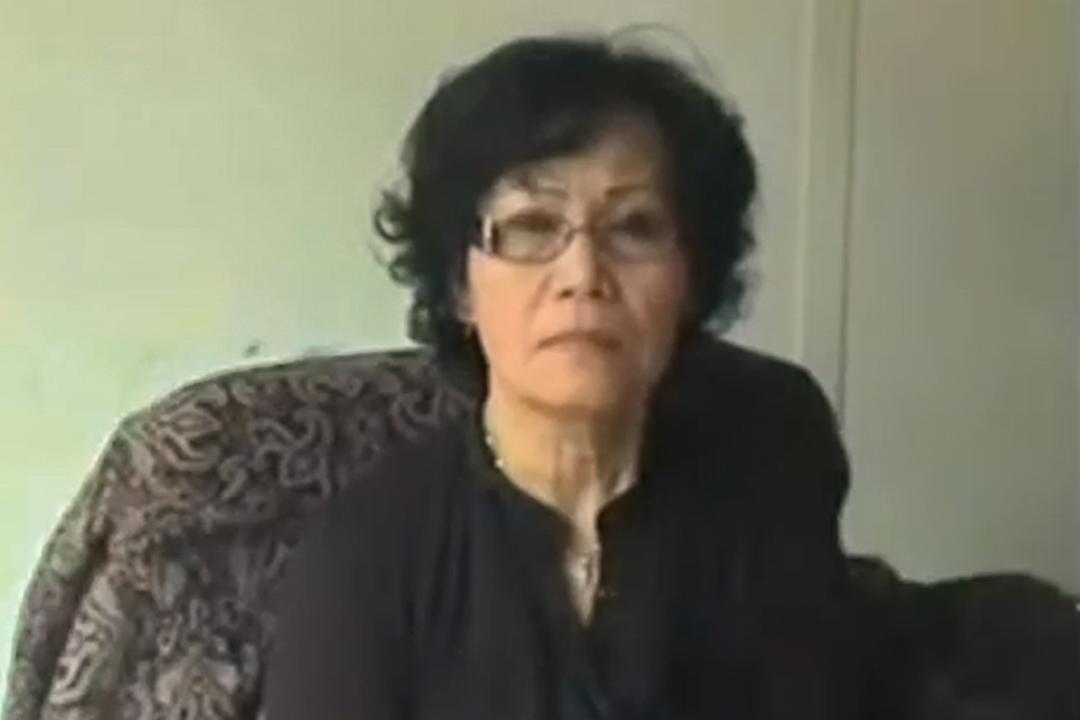
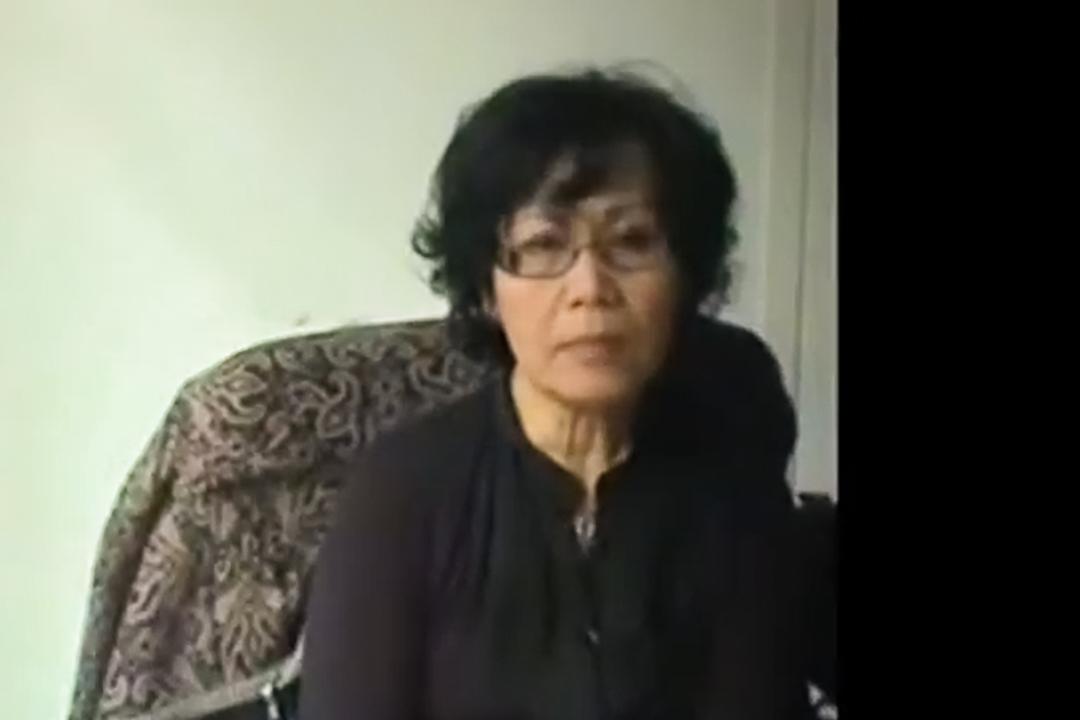
CHHENG Eng Ly
Pseudonym: TCCP-13
Cases: Case 002/01
Category: Civil Party
Evacuation of Phnom Penh and subsequent journey
On 17 April 1975, black clad soldiers forced Chheng Eng Ly, her three brothers, and her elderly mother to leave their houses with only few possessions.
3
Soldiers claimed that the American bombardment would be imminent as a pretext to justify the evacuation.
4
The evacuation was compulsory and some civilians were forced to leave at gunpoint, even elderly people such as Chheng Eng Ly’s mother.
5
When they marched out of Phnom Penh and travelled along National Road Number 1, crossing Monivong Bridge, Chheng Eng Ly witnessed the murder of a baby who was taken from his mother’s dead body and torn apart by Khmer Rouge soldiers.
6
When taking the boat from Kien Svay and when travelling to Roka Kaong, Chheng Eng Ly saw the black clad soldiers ordering them to move.
7
Along the river, she saw floating corpses, but was not able to identify whether they were civilians or soldiers from the Khmer Rouge army or Lon Nol soldiers.
8
When she reached Roka Kaong, Chheng Eng Ly had to join a cooperative.
9
The Trial Chamber relied on Chheng Eng Ly's evidence, among other witness and Civil Party testimony, to find that the evacuation of Phnom Penh caused the victims long-lasting and serious bodily and mental harm.
10
On appeal, Nuon Chea claimed that the Trial Chamber erred in law and fact when relying on victim impact testimony or statements of suffering, including Chheng Eng Ly’s, to support the conclusion that some evacuees died due to the conditions of the journey.
11
The Supreme Court Chamber denied this ground of appeal, finding that the Trial Chamber did not err in relying on those statements as material evidence.
12
It considered that the applicable legal texts do not provide any prima facie reason as to why the Trial Chamber could not rely on victim impact testimony or statements of suffering in making factual findings relevant to the guilt of the Accused and that the Trial Chamber did not give the impression that information contained in the statements or testimony could not be used for that purpose.
13
Living in the cooperative
When Chheng Eng Ly reached the cooperative, she witnessed people who came from Phnom Penh gathering and protesting against the authority.
14
The Khmer Rouge soldiers used threats to tie up their hands and frogmarched them out.
15
Chheng Eng Ly assumed that they were all executed afterwards.
16
Chheng Eng Ly suffered from malnutrition and exhaustion due to overwork and passed out several times.
17
As part of the “New People” – meaning the 17 April People who were from Phnom Penh, as opposed to the “Base People” who lived in villages
17
– she was subjected to numerous insults from the unit chief.
19
In the cooperative, Chheng Eng Ly lived with another woman that also left Phnom Penh.
20
One day, that woman wondered about her two younger siblings.
21
The next morning, two Khmer Rouge soldiers came; they brought the two of them to another location, asked the woman to dig a pit, pushed her inside, and buried her alive.
22
Chheng Eng Ly has been living in France for many years but cannot forget what happened under the Khmer Rouge regime, even after 30 years.
23
Statement of suffering
It has been over 30 years that I cannot forget what happened under the Khmer Rouge regime; the mistreatment on more than 2 million Cambodian people, including myself. On 17 April 1975, the situation and the cruelty at the time cannot be described in words, and it was beyond anybody's expectation. And they hacked away of a baby who was still breastfeeding and that happened in front of me and it was committed by the Khmer Rouge soldiers. How could you bear the witness to such an event? While en route I saw a lot of people who died along the road. I was leaving Phnom Penh along National Road Number 1 and along the river I saw floating corpses, and that shocked me. I continued from Kien Svay crossing the river in an attempt to go to Battambang province which was the native place of my parents, but we could not reach the destination as my parents were sick and my siblings' bodies were swollen from malnutrition. We did not have anything with us except the clothes that we wore. Two or three weeks after the 17 April 1975, money was still used and we spent some money to buy something to eat, but later on it could not be used and we were placed in a cooperative. We lived with the deprivation of food and we were only given a ration, and the word "ration" there it means everybody would be given the same thing and that only applied for the New People. And the New People means the 17 April People who were from Phnom Penh and the Old or the Base People were those who were living at their villages. We were given three ladles of watery gruel only with a few grains of husked rice and a little bit of salt. I never want to recount such an experience. The experience that we faced and that the New People faced - and I can never forget that. Our freedom was deprived. We were not allowed to cry, to love or to speak. At 5 a.m. we were asked to work until noon and then we were given three ladles of gruel. We worked again, and in late evening we were given another three ladles, and then we worked again until about 10.00 or 11.00. But I was not sure of the hours, as we did not have any watch to look at. And the work was hard. We worked during the night, and there was no light. Sometimes we stumbled and fell down. We did not have any shoes to wear and we only have one black clothes that we wore. And when we were sick, there was no medical treatment or medicine provided, and if one was seriously ill that person will be given a "rabbit drop" pellet. It could be a mixture of some rice and some other stuff which was a bit sweet. Could you imagine living without freedom? I carried a basket of rice or corn on my head, and at that time I was about 21 years old. And, of course, I was still at the age that I could still grow taller but with such a weight on my body I could not grow any taller, and that was the impact of carrying heavy things from that regime. I lived with a friend. I said a friend but that person was someone else who left Phnom Penh. She said that she was thinking of the two younger siblings, that she did not know where they were. And just by saying that phrase, next morning - next early morning - two black-clad soldiers came to us and called the two of us to walk across the rice field. And when we reached a location - but I cannot it - and they asked that person - her name was Moi (phonetic) - to dig a pit of about her size. And imagine that we did not have sufficient food to eat and she has to dig the pit. And because of the exhaustion she could not continue digging the pit. The two Khmer Rouge asked her whether she already finished digging the pit, and then they pushed her into the pit and buried her alive and they said that now we send you to meet with your relatives. I don't want to cry now, but when I recall it, it seems to be weaving in front of my eyes. She was buried alive, and the two soldiers said to me, "Now you see what happen. Now you return to work." I did not dare to cry. If I cry I would be killed by the two soldiers. I tried not to cry, then I came back to carry husked rice on my head again. I tried to survive and tried to be humble to them. When I returned to my workplace, I did not dare tell anyone there. I was so shocked by seeing that friend buried alive. Later on, I became unconscious and then I was pulled to the side and they tried to massage me to wake me up. Upon gaining my consciousness, I did not even dare to tell them what happened. And when I was unconscious, a medic came with some kind of a bottle of fluid. They were about to inject me. I gained consciousness and I told the medic that it's okay, there is no need for the injection. And, of course, I regained my consciousness based on my mental strength. Every few days I kept falling down because of the over-exhaustion. Sometimes I thought of committing myself by jumping into the river because we worked on the riverbank because I thought that living in the situation was meaningless. I could not even cry. I could not do anything. The food was insufficient. I did not have any strength. When I went up, or climb up a ladder, I had to climb up not only with my two feet but also with my two hands I was so weak. My mother at the time was staying with me and if I were to die nobody would look after her because for the porridge that was given to me, I try to put either grass or morning glory mixed with a bit of salt into it and I gave it to her. And because of my mother, I decided not to commit suicide by jumping into the river. I, once again, cannot forget what happened under the Khmer Rouge regime. I abandoned my study and, in fact, I determined to live so that I could see what happened next and to see how far would that Khmer Rouge regime went - rather, go. What they did by killing millions of people were miserable. There was no hygiene, no clothing, no medicine. Everybody got lice all over the body and skin wounds. I wish now to end my statement and I may respond to any questions that are put to me, but allow me to repeat that because of the living through the regime the result is terrible and it still remains with me. And the experience remains with me forever. I could not see anything that is bloody on the TV or on anything, I become so scared. Even in my capacity as a pharmacist, I never dare look at blood because whenever there is a patient who comes and has a little bit of blood I would ask the other staff to do it. And for any movie that deals with the killing of people, I would avoid it, and I become so shocked when there is a loud noise or a loud bang or a loud group of people. Even with my husband, I cannot stand if he speaks loudly because then it would give me a shock. And these are all the results of my experience living under the regime.
24
Videos