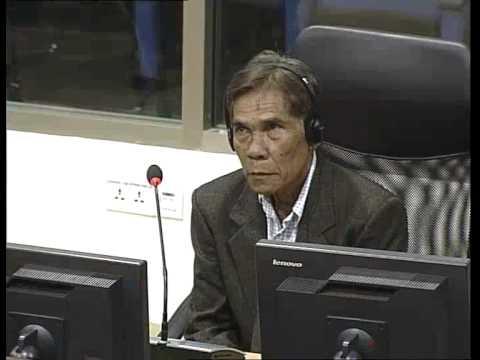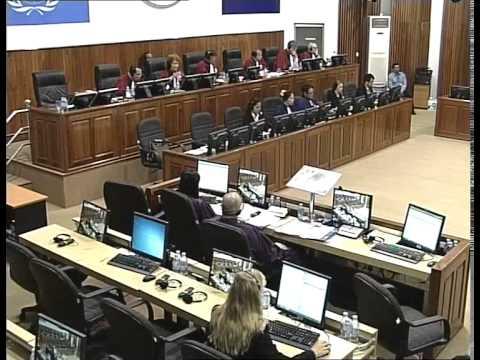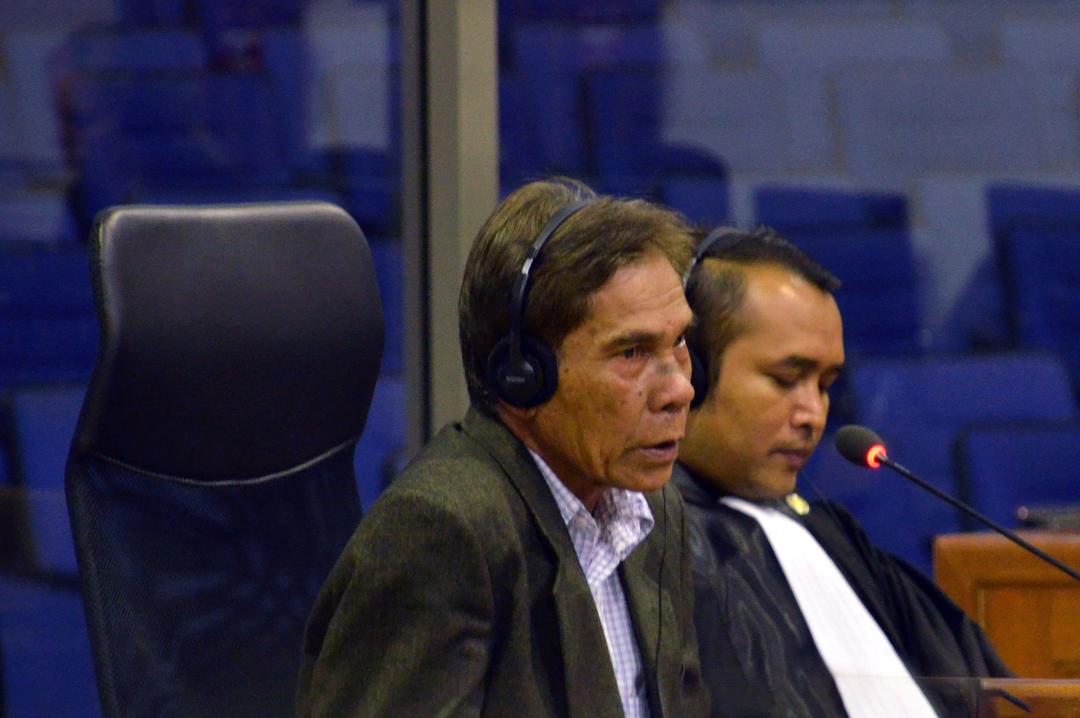
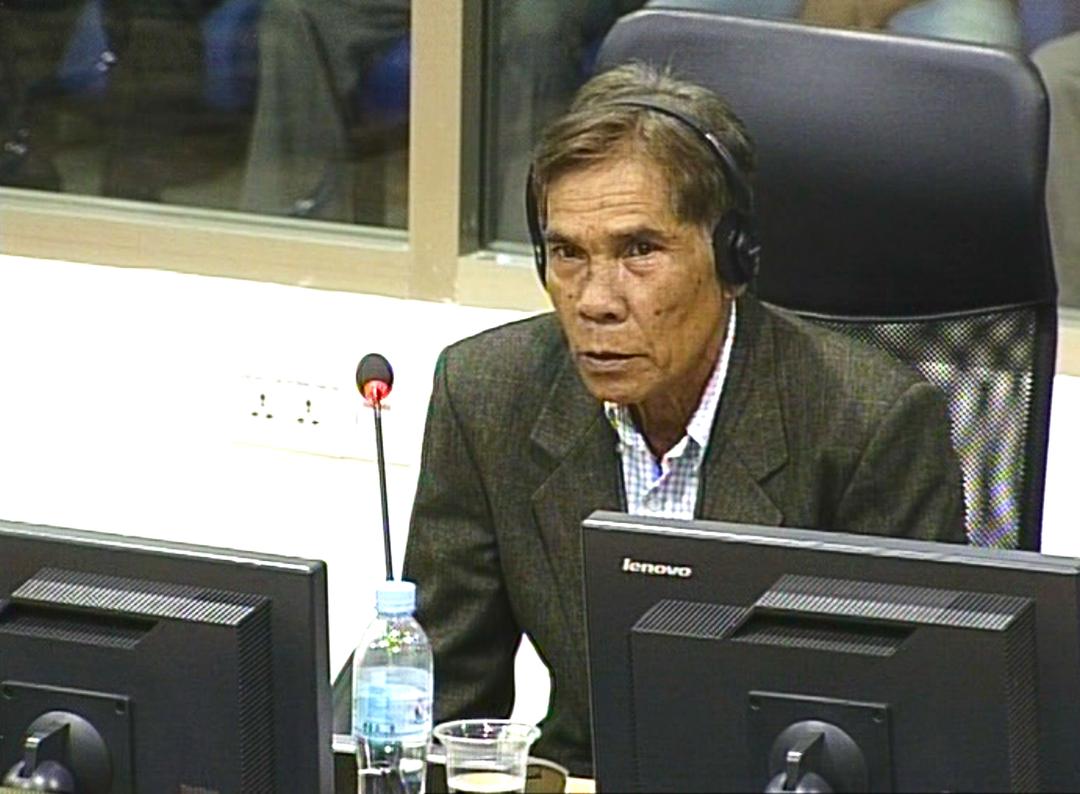
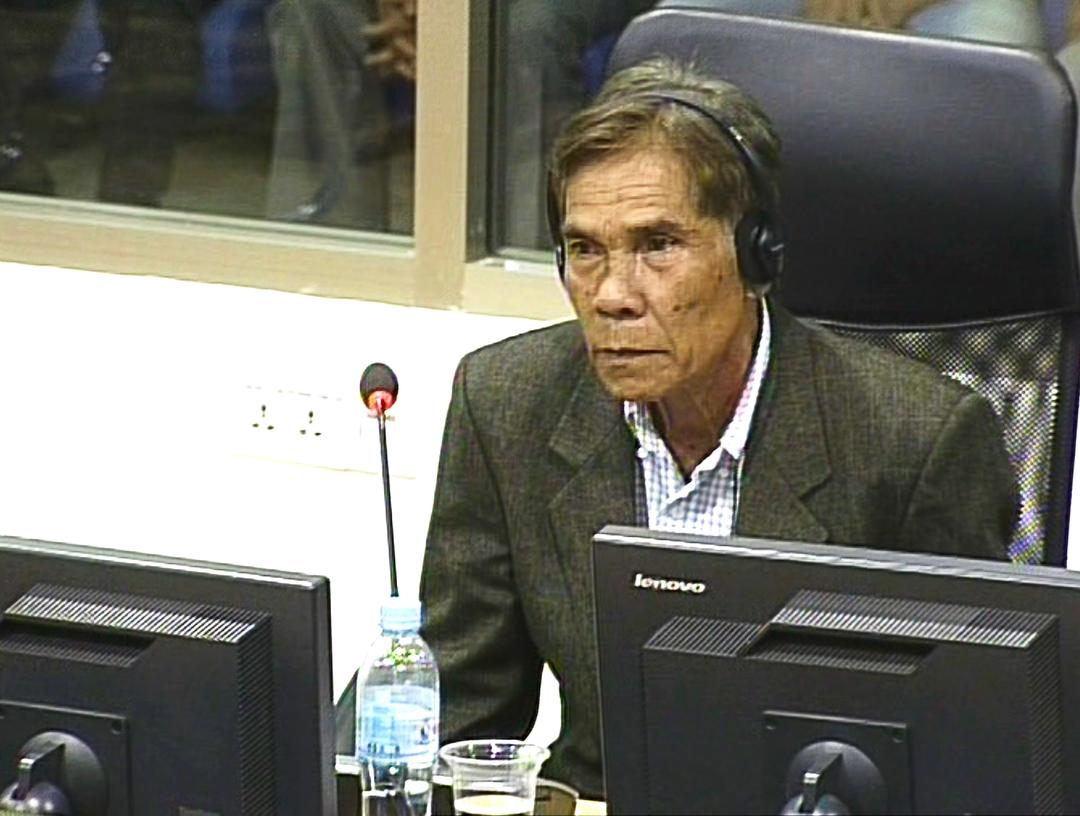
CHHIT Yoeuk
Pseudonym: 2-TCW-937
Cases: Case 002/02
Category: Witness
Background and role
Chhit Yoeuk was born in 1946 in Char Leu village, Preah Netr Preah district.
1
He was a Buddhist monk and joined the Khmer Rouge in 1973, when Preah Netr Preah was captured.
2
In April 1975, Chhit Yoeuk became a militiaman and was sent to the Preah Netr Preah district office.
3
He became chief of a youth mobile brigade.
4
In early 1976, he was sent to work at the Trapeang Thma Dam (the “Dam”) as assistant to Ta Val, mobile unit chief who was in charge of supervision of the Dam.
5
Chhit Yoeuk testified as a witness in Case 002/02 on structure and authority, working and living conditions, and arrests and disappearances at the Dam.
The Trial Chamber found that Chhit Yoeuk was credible and consistent in his recollection of events, both in his previous statements and in-court testimony.
6
Chhit Yoeuk was however unable to remember clearly the dates of certain events.
7
Accordingly, the Trial Chamber sought corroboration from other evidence when relying on Chhit Yoeuk’s statements about specific dates.
8
Establishment of the Dam
In 1977n there was a meeting of the Khmer Rouge leaders in Svay Sisophan, to discuss the construction of the Dam.
9
Chhit Yoeuk did not know who attended.
10
The Dam was planned at Zone level, or higher.
11
The construction had to be completed within a year,
12
but was not, and suffered damage from floods.
13
People from the Zone came to inspect the construction two or three times per month.
14
The Trial Chamber referred to Chhit Yoeuk’s testimony in its findings regarding the establishment of the Dam
15
and timeframe of its construction.
16
Administrative structure of the Dam
Ta Val was a mobile unit chief at the Dam.
17
As Ta Val’s assistant, Chhit Yoeuk performed tasks of a minor nature, relaying instructions to workers and reporting on work quotas.
18
After Ta Val’s arrest, the Southwest Zone cadres replaced the management.
19
Ta Pheng, a former Phnum Srok deputy committee from the Northwest Zone, replaced Ta Val.
20
Chhit Yoeuk reported to Brother Yoan, who oversaw the mobile unit under Ta Pheng’s supervision.
21
Ta Maong replaced Loeum as district chief in Preah Netr Preah district.
22
Ta Houeng replaced Ta Pheng, and Cheal replaced Ta Hoeng as chief of sector 5.
23
Chhit Yoeuk heard that Cheal was Ros Nhim’s son.
24
In early 1978, Bong Rin from the Southwest Zone replaced Cheal.
25
He remained chief of sector 5 for a little over one year.
26
Bong Rin was later replaced by Im Chaem.
27
The Trial Chamber observed that Chhit Yoeuk did not say that Cheal was Hoeng’s deputy.
28
The Trial Chamber was unable to reach a conclusion as to Ta Cheal’s exact role within sector 5, or determine who replaced Ta Val, considering contradictory evidence.
Working conditions
The workers were recruited from the Preah Netr Preah district.
34
Most of the workers were evacuees from Phnom Penh.
35
Work was from 7 a.m. to 11:30 or noon, then 1 p.m. to 5 p.m.
36
Sometimes, the workers had to work around the clock.
37
Each worker had to complete two cubic meters of earth per day.
38
There were also children (seven to eleven years old) at the worksite, who received two cans of rice per day.
39
Chhit Yoeuk did not know about the work quotas for children.
40
Once Chhit Yoeuk was assigned to carry up to eight cubic meters of earth and had to work from 3 a.m. to 8 p.m. to accomplish the task.
41
He learned how to manipulate the quantity of work he did, by keeping the earth he had just dug up and measured.
42
The workers were emaciated from lack of food and sleep, especially during the rainy season when the food ration was halved.
43
Occasionally, Chhit Yoeuk saw people collapsing from exhaustion.
44
When Ta Rin replaced Ta Val as chief of sector 5, there were no nightshifts,
45
but the working conditions did not change.
46
The Trial Chamber referred to Chhit Yoeuk’s testimony in its findings regarding the age of workers,
47
the workforce composition,
48
the work of teenagers,
49
working quotas and punishments for failing to meet the quotas,
50
and the nighttime work.
51
Monitoring, arrests, and disappearances
People disappeared for no reason during the time Chhit Yoeuk was working at the Dam.
52
Arrests and disappearances happened both before and after the arrival of the Southwest Zone cadres.
53
The work quotas of Chhit Yoeuk and other workers were monitored.
54
The workers were required to provide biographies.
55
Chhit Yoeuk did not disclose his background as a monk and a teacher during the Lon Nol period in his biography.
56
The administration could not collect biographies of the tens of thousands of workers.
57
Ta Val was arrested in early 1977.
58
He was called to attend a study session and disappeared.
59
Chhit Yoeuk also heard that Ta Hoeng was arrested and disappeared.
60
In early 1977, Maong was arrested and disappeared.
61
His deputy, Ta At, was arrested as well.
62
Chhit Yoeuk testified that he did not know why.
63
The Trial Chamber referred to Chhit Yoeuk’s testimony in its findings regarding discipline and biographies,
64
arrests and disappearances,
65
authority over the worksite and Ta Val’s arrest.
66
Food rations
In the mobile brigade, Chhit Yoeuk received three cans of rice per day.
67
After Ta Val’s arrest, Chhit Yoeuk was reassigned to collect and distribute rice to the representatives of the mobile brigades for the workers of those brigades.
68
The rice was not distributed regularly and was reserved for mobile units, working on construction.
69
Chhit Yoeuk testified that sometimes he distributed rice once every three days, because he was on the “offensive.”
70
Being on the “offensive” meant working harder to accomplish a set target.
71
The Trial Chamber referred to Chhit Yoeuk’s testimony in findings on food rations after arrival of the Southwest Zone cadres
72
and the “offensives”.
73
Videos