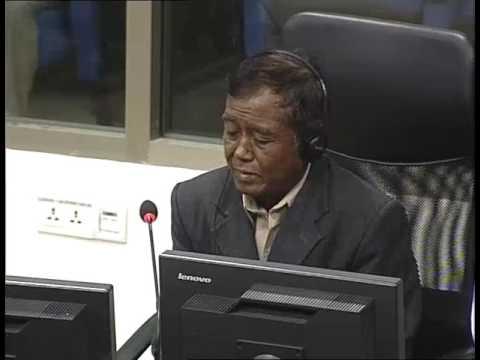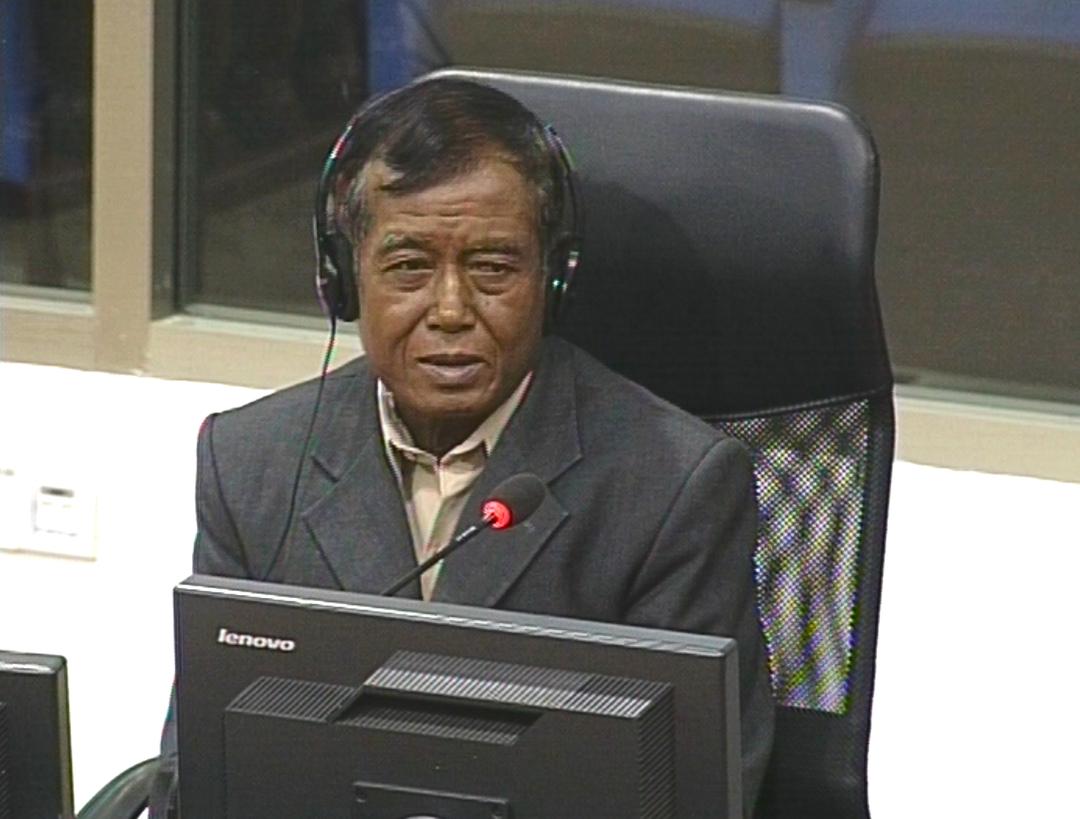
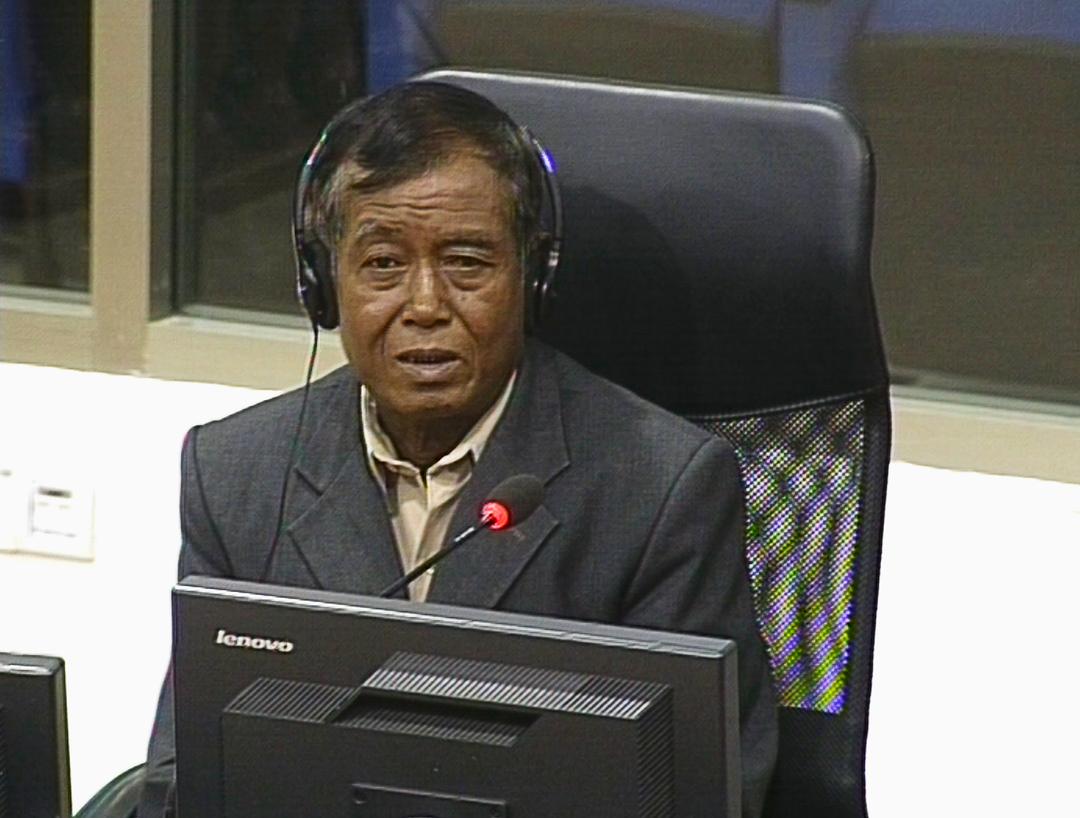
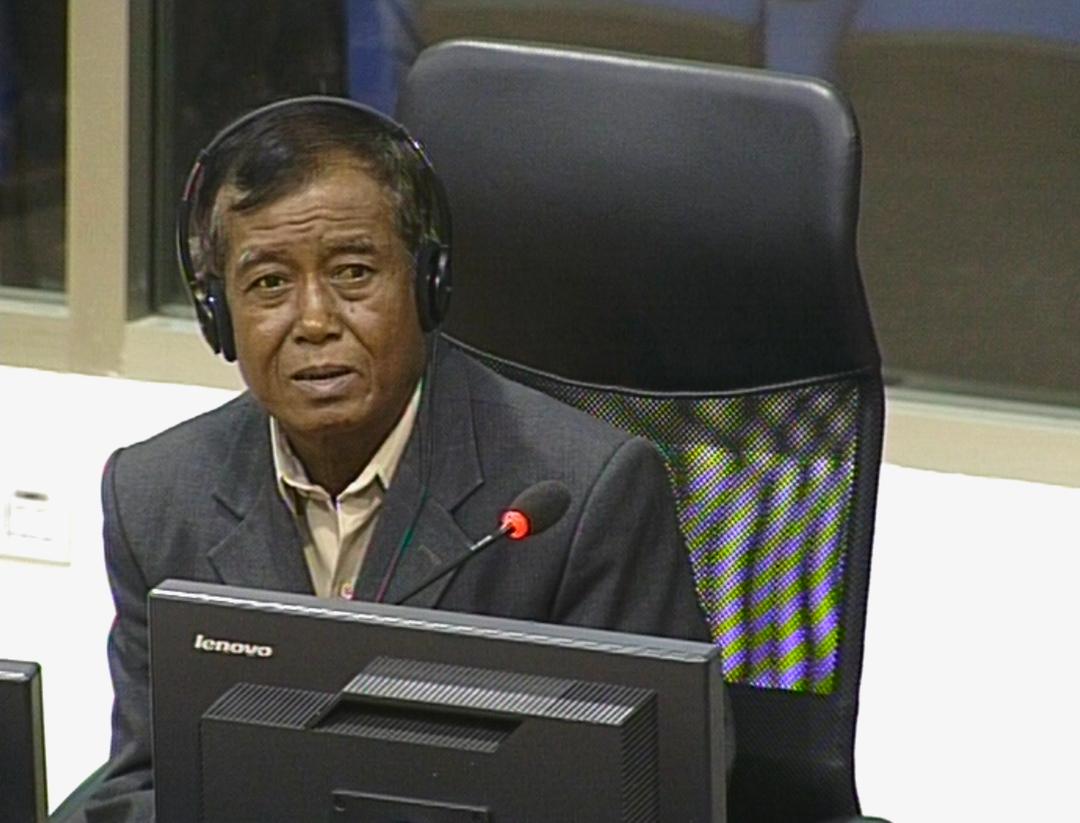
CHHUN Samorn
Pseudonym: 2-TCCP-236
Cases: Case 002/02
Category: Civil Party
Background and role
Chhun Samorn was from Svay Rieng province, located in the East Zone under the Khmer Rouge regime.
1
He was a Khmer Rouge military messenger in Kampong Rou district in May 1975.
2
From early 1976, he became a member of a reconnaissance group in a special unit of “Ngor-112” or Regiment 112 of Sector 23.
3
After some commanders in his Regiment were arrested, he was integrated in the Centre army, Division 703, and then sent to work in the rice fields until August 1978.
4
Upon his return to his village, he was re-arrested and brought in to be executed, but he managed to untie himself and escape to Vietnam with two other people.
5
Chhun Samorn testified as a Civil Party before the Trial Chamber IN Case 002/02 on the armed conflict with Vietnam and internal purges in the East Zone.
Armed conflict with Vietnam
Chhun Samorn’s special unit in “Ngor-112” was responsible for collecting intelligence from Vietnamese soldiers about their bases, weaknesses, and strengths, in order to devise plans for attack.
6
His unit did not have any specific base, and was mobile to any location where the enemy situation became intense.
7
The unit’s task was very tough because of long working hours without time to rest.
8
Chhun Samorn submitted oral reports to his commander through radio communication.
9
The radio was mainly used for communicating with the artillery unit in order to shell a particular location at the front battlefield.
10
The Trial Chamber cited his testimony among other evidence to find that communications via shortwave radios were used in different locations throughout Democratic Kampuchea.
11
He testified that, when the situation was not tense, his special unit received orders to plant mines along the border in order to kill Vietnamese soldiers.
12
At night, he and his unit would sneak into Vietnamese territory to plant mines at the line behind the enemy to stop their economic unit from sending food to the front.
13
The fierce fighting took place along the border in Svay Rieng province in Sector 23 in 1976 when the Vietnamese soldiers attacked and pushed the Cambodian side into Svay Rieng.
14
DK forces fought back and pushed Vietnamese forces back into their territory.
15
In 1977, soldiers from the Central and Southwest Zones were sent in as reinforcements in the fighting.
16
Because many of those soldiers were young teenagers and did not really know the area, they were killed by the Vietnamese soldiers.
17
Based on Chhun Samorn’s testimony among other evidence, the Trial Chamber found that both belligerents made several incursions in each other’s territories.
18
However, it was not satisfied beyond reasonable doubt that DK forces made the large-scale incursions into Vietnam in April and September 1977 as denounced in public official Vietnamese authorities statements.
19
Internal purges
In 1977, while East Zone soldiers were engaged in the fighting against Vietnam, some commanders were called back to join training sessions and disappeared including Hour, a special unit commander in Regiment 112, and Savoeung, a group chief in Regiment 112.
20
Based on Chhun Samorn’s testimony and other documentary evidence, the Trial Chamber found that Hour and Savoeung were sent to and executed at S-21 in April-May 1978.
21
There were no appointments of new commanders to replace those who disappeared.
22
Only ground soldiers stayed.
23
Chhun Samorn was called to a meeting in Angk Prasrae village, where 20-30 armed soldiers from Division 703 confiscated Sector 23 soldiers’ weapons on the pretext that those weapons were too old.
24
Chhun Samorn was integrated in the special unit of Division 703 to show them the locations where mines were laid.
25
After that, he and the disarmed soldiers were boarded onto trucks and sent to Veal Taprunh where they had to work in the rice fields until August 1978; he described this as “the coup d’état” between the Centre army and the soldiers from the East Zone when they were told to return to their respective villages.
26
He saw many district and provincial-level military and civilian cadres in Sector 23 arrested.
27
Upon his arrival in the village, he and others in his unit were tied up, accused of “betraying the Party” and had “Yuon heads on Khmer bodies”, was hit with a butt of a gun, and taken to be executed.
28
Only three of them – whose ties were removed – could escape from the shot, and ran to Vietnam.
29
The next morning, they were questioned one by one by Vietnamese soldiers about their biographies.
30
The Vietnamese expressed their understanding, spoke to them about the East Zone soldiers’ and cadres’ fates, and asked them if they wanted to join the army again and return to Cambodia to liberate the country.
31
Chhun Samorn was not aware of any plans to rise up against the Centre army forces by East Zone forces.
32
There was no tension between any of the zone forces when he joined the forces in 1975, but he heard about the “coup d’état” in August 1978.
33
The Trial Chamber relied on his testimony and other evidence to find that even when informed of the danger of purges in the East Zone, the East Zone Secretary Sao Phim took no steps to fight against the Central Zone and Southwest Zone cadres who were executing arrests in the East Zone;
34
and the rebellions arose after the East Zone purge and when these forces first made contact with Vietnam.
35
Statement of suffering
Chhun Samorn stated: “I respected the plans of the Party and I implemented and adhered to all disciplines. I, myself, was engaged in the fighting against the enemy day and night. Sometimes I went without food for two to three days and sometimes there was no water to drink. The situation was so miserable. However, as a result, myself and many East Zone soldiers were accused by Angkar of betraying the Party. We were arrested and sent for execution. I was in great shock at the time, and I could not believe the actions of the regime. […] These were vicious acts inflicted upon me, and it was so much more miserable than the time that I was at the front battlefield. Another misery was the loss of my relatives”.
Videos