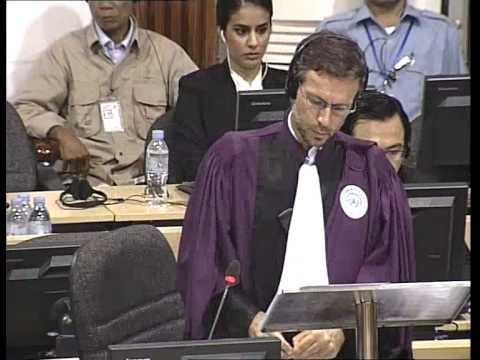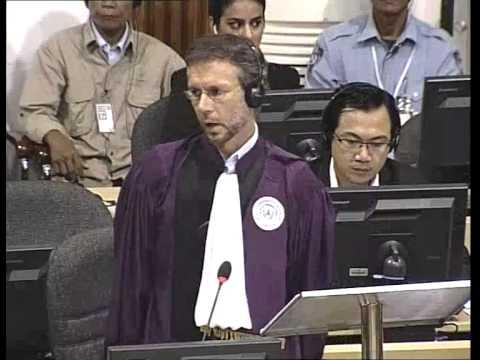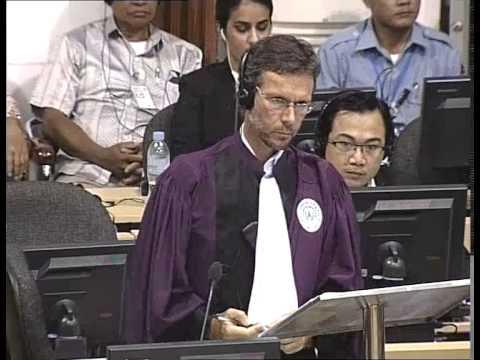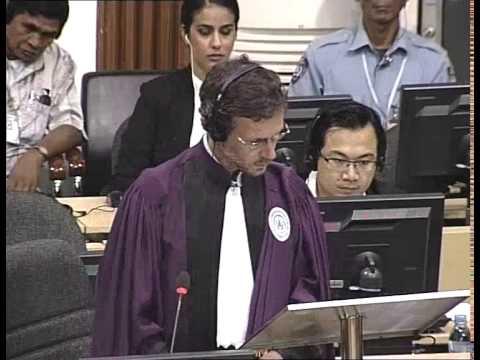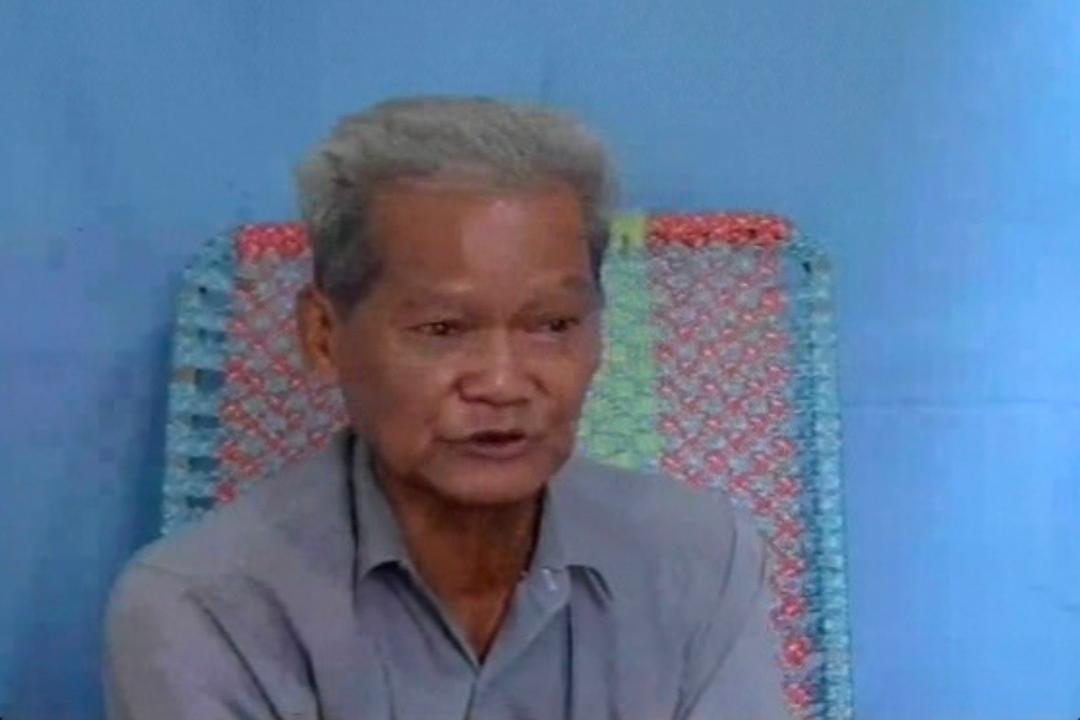
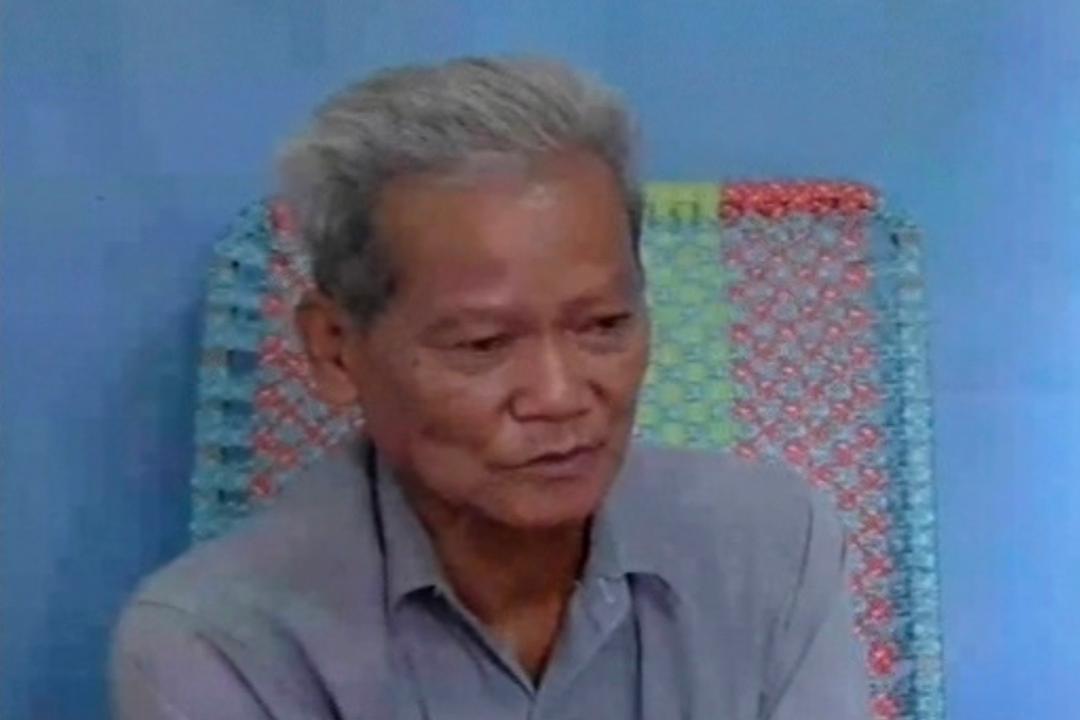
EK Hoeun
Pseudonym: 2-TCW-822
Cases: Case 002/02
Category: Witness
Background and role
Ek Hoeun (his official name, also known as Ul Hoeun),
1
was born in Tram Kak (“TK”) District, Southwest Zone.
2
He was cousin and brother in law of Pech Chim, who was TK District Deputy Secretary in 1975.
3
Between 1974 and 1975 he was a group leader, and after April 1975 until 1976, he was in charge of uploading rice and salt in the TK District unit office before working for the “cadastral ministry” where he oversaw land surveys for dams and canals throughout the TK District for two years.
4
In July 1978, he left the District to work at the rubber plantation at Chup, in Kampong Cham province, East Zone.
5
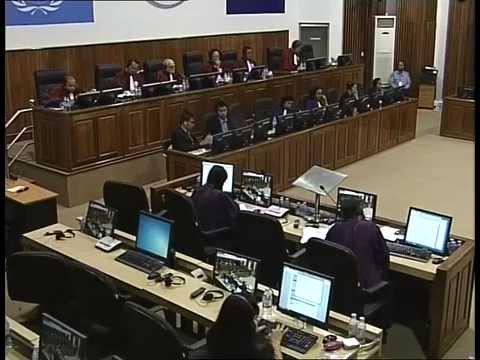
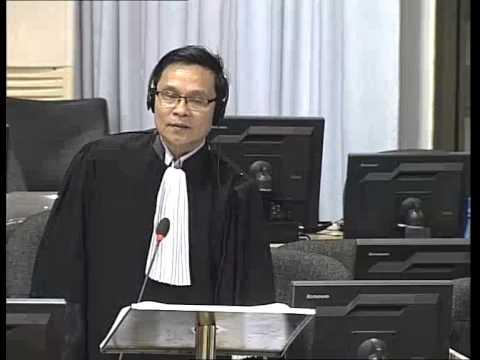
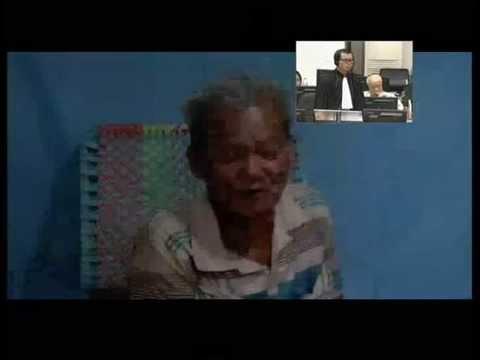
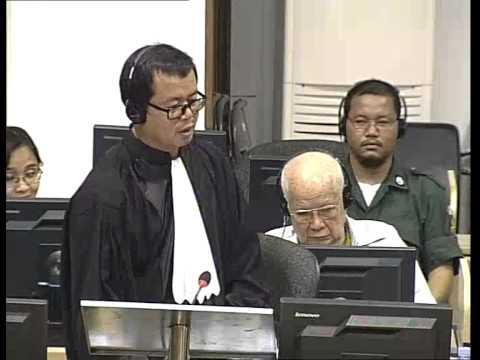
The witness testified before the Trial Chamber in Case 002/02 on the TK Cooperatives and Kraing Ta Chan Security Centre (“KTC”). He also gave evidence on forced marriage and the treatment of target groups.
Life in the TK Cooperatives
The witness testified on various events at the TK Cooperatives as a former District level cadre who lived and worked there prior to and during the Khmer Rouge regime.
On the basis of the witness’s testimony (amongst others) the Trial Chamber found that collectivization and communal eating were introduced in the TK District and expanded progressively, along with the conversion of “solidarity groups” into cooperatives, from at least 1973.
6
Meetings took place to prepare for the evacuees’ arrival, where Ek Hoeun was assigned to organize food supplies for evacuees.
7
Evacuees gathered at Champa pagoda in Takeo before being redistributed amongst cooperatives/communes in the District, when chiefs of those communes came to take them to their respective communes.
8
On the basis of this witness’s testimony (amongst others), the Trial Chamber further found that there were periods of acute food shortages in the TK District, and that various people died from malnutrition, overwork, and sickness.
9
The Supreme Court Chamber agreed with the Trial Chamber’s finding that workers in the District became sick, experienced food shortages, or died at the worksites due to the living and working conditions, based on the witness’s testimony.
10
Human remains found at KTC
As to the human remains which were found at KTC, the Trial Chamber found that most post-dated 17 April 1975, given the totality of evidence of executions and burials, although the witness claimed that KTC had been a burial site before 1970 and was a killing site after 1979.
11
Treatment of target groups
The witness testified on the measures taken against enemies and specific groups including the former Khmer Republic soldiers and officials and Vietnamese and their respective families in the TK District.
The District Secretary (“Yeay Khom”) passed on orders to the lower echelons for executions, and people who were accused of having different political tendencies or of being associated with the CIA, KGB, "Yuons" or Soviets would be sent to her, and large numbers of people were arrested pursuant to these orders.
12
The Supreme Court Chamber agreed with the Trial Chamber’s finding that people who were suspected to be enemies were monitored.
13
People shivered with fear because of the widespread arrests and disappearance in TK District,
14
and after the commune level identified security concerns, the list of names would be sent to the district, which would, in turn, send it to the sector.
15
Former Khmer Republic officials and soldiers and their families were systematically screened through registers and biographies to determine their class affinities and former occupations,
16
and instructions came repeatedly from “Yeay Khom” in numerous communes/districts meetings until 1976
17
to execute them.
18
This explained the events described at Champa Pagoda, where former Khmer Republic soldiers and officials were gathered, screened, and then arrested.
19
The Trial Chamber considered that Ek Hoeun had “direct knowledge” of instructions to kill Vietnamese and to move them to Vietnam as part of an exchange process, and did not always distinguish one set of instructions from another.
20
The Supreme Court Chamber found the Trial Chamber did not err in finding that there was a policy to exchange the Vietnamese in the TK District with the Khmer Krom, which changed to one of killing the Vietnamese, some of them were transported by truck headed for the border and/or taken away; and the witness was acutely aware of what was happening to the Vietnamese as he himself was of Vietnamese origin.
21
The Trial Chamber relied on his evidence that in 1974, Buddhist monks were defrocked and came into manual labor including agricultural work to provide food to Khmer Rouge soldiers in the battlefield, and some others joined the battle front.
22
Forced marriage
The witness’s evidence on the marriages was assessed by the Trial Chamber in findings on the number of couples married in a single wedding ceremony,
23
and individual consent.
24
The Supreme Court Chamber found the Trial Chamber did not err in rejecting his assertion that marriages in the TK District were arranged based on individual consent, without any threats or coercion, considering that consent given to the Khmer Rouge cadres by the individuals may not have been genuine due to a “general climate of fear” and those cadres had a tendency to minimize their own responsibility in the marriages organized under the regime.
25
Videos