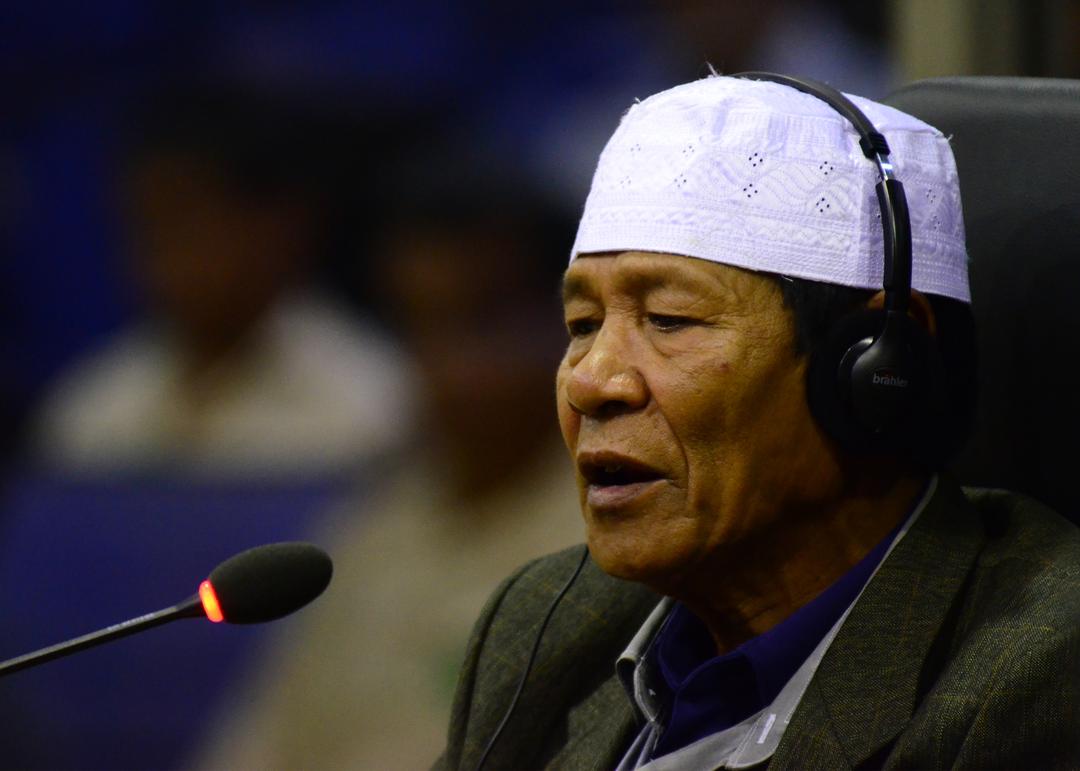
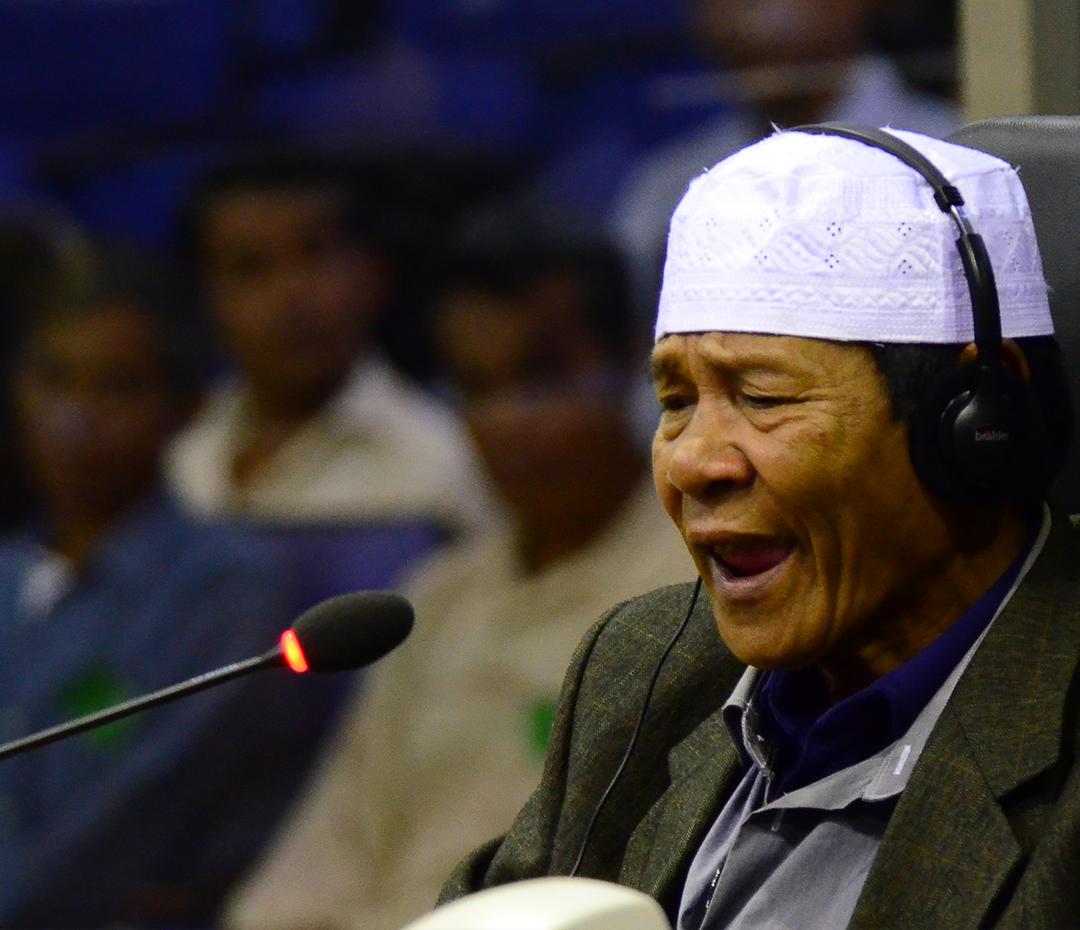
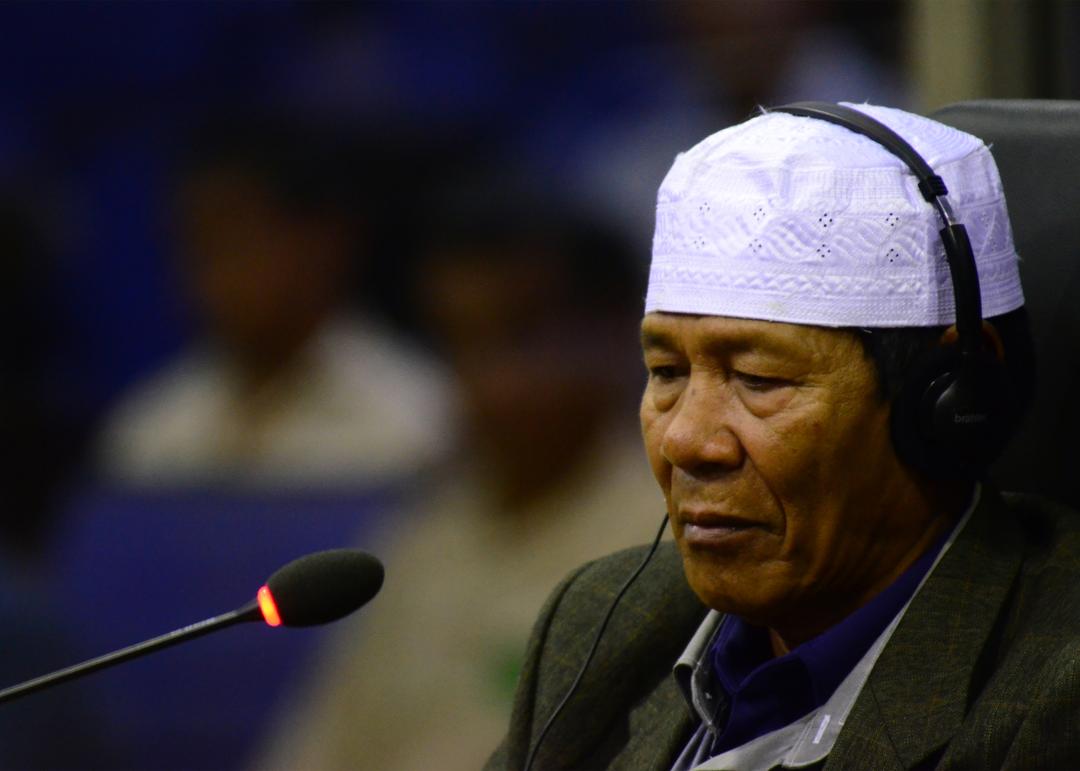
HIM Man
Pseudonym: 2-TCCP-252
Cases: Case 002/02
Category: Civil Party
Background and Role
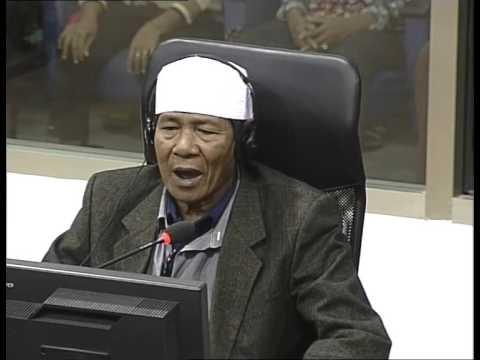
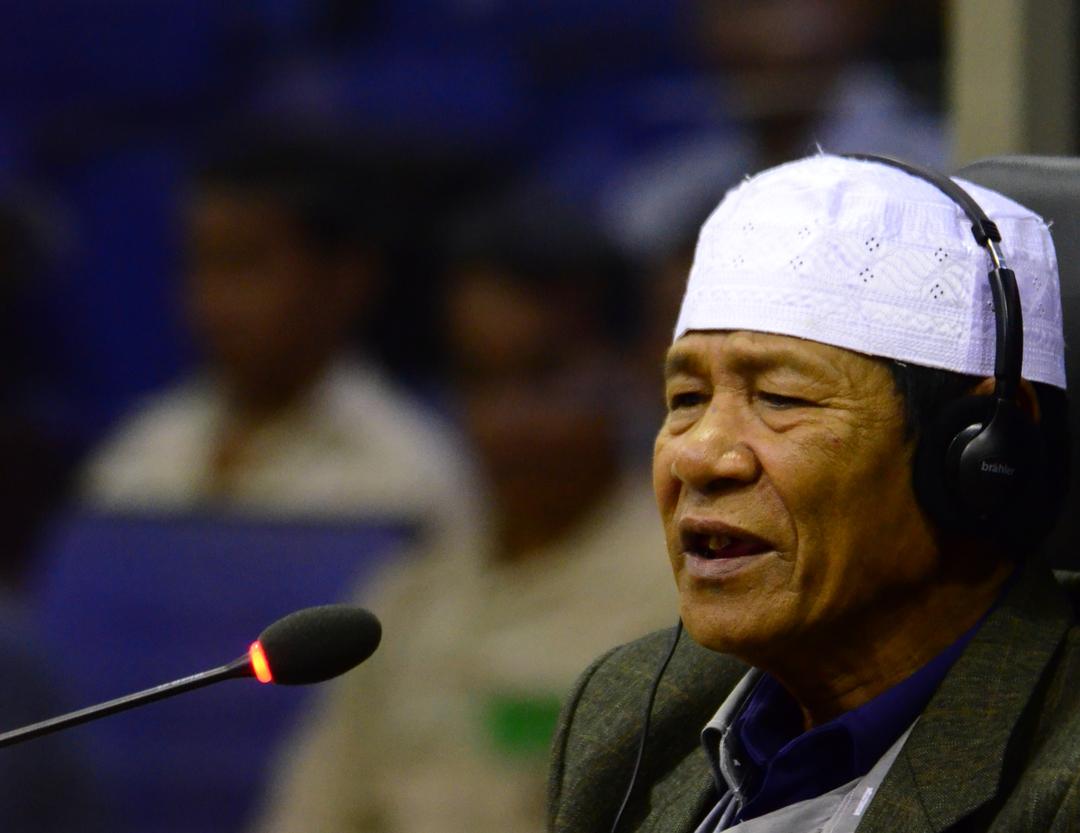
Him Man lived in Sach Sou village in Kang Meas district, Kampong Cham province, which was a Cham village during the Democratic Kampuchea period.
1
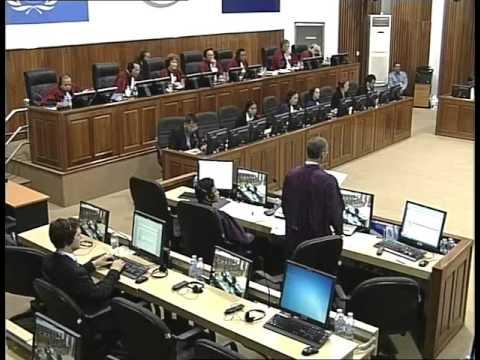
He testified as a civil party in Case 002/02 on the treatment of the Cham by the Communist Party of Kampuchea.
2
The Trial Chamber relied on his testimony in finding that (i) the Cham were prohibited from practising their religion and culture from 1975;
3
(ii) the Cham population living in Cambodia were expected to assimilate into a single Khmer nation and identity;
4
and (iii) the Cham were arrested and killed.
5
Changes in the Treatment of the Cham
Him Man described the situation for the Cham in Cambodia before 1975, including the freedom to practise their own language and religion, and wear their own clothes.
6
However, he recalled being invited in 1975 to attend a meeting where he was told that there were instructions from the upper echelon
7
ordering people of Cham ethnicity to have their hair cut, not to cover their heads with krama, not to say daily prayers or practise anything relating to Islam, and to eat pork, failing which their limbs would be cut off.
8
After the meeting, he described that the Cham were “under constant monitoring by the militia”.
9
Although there were rebellions formed in Kroch Chhmar district, Him Man described that the Khmer Rouge cracked down on them within days, and restrictions against the Cham further worsened as a result.
10
He noted that the destruction of Koh Phal after the rebellion was used to warn other Cham not to resist the regime.
11
He also testified about his village chief making announcements that the Khmer Rouge “wanted to make all of us into one flesh and one spirit. They wanted to convert the Cham into the Khmer. And because of such intent, they had to make sure there were no more Cham left, but only the Khmer.”
12
According to Him Man, the Cham were forced to eat pork at gunpoint and some of them wept while eating pork.
13
He recalled that there was an announcement that any person refusing to eat pork would be opposing Angkar.
14
The Trial Chamber relied on Him Man’s testimony in finding that: (i) prior to 1975, the Cham had their own language and script, wore distinct traditional clothes that were different from other Cambodians,
15
and had few, if any, restrictions on their religious and cultural practices;
16
(ii) the Cham enjoyed good relations with Khmer people before 1975, including in areas under Khmer Rouge control, and were able to practise their religion freely until 1972;
17
(iii) the Cham living in Cambodia form a distinct religious and ethnic group;
18
(iv) there was a significant increase in restrictions prohibiting the Cham from practising their religion and culture in 1975
19
from the upper echelon;
20
(v) the Communist Party of Kampuchea cracked down on the Cham rebellions formed from September to October 1975 and the situation further worsened for the Cham as a result;
21
(vi) the Communist Party of Kampuchea specifically targeted the Cham population living in Cambodia in a programme which was expected to fully assimilate them into a single Khmer nation and identity;
22
(vii) the Cham were forced to eat pork as refusing to do so had serious consequences;
23
and (viii) the Cham were specifically targeted and if they refused to abide by the instructions restricting their religious practices, they would be considered as opposing Angkar and punished.
24
The Supreme Court Chamber also cited Him Man’s testimony in finding the Trial Chamber was reasonable in concluding that, in order to eliminate the Cham’s differences, their religion and practices were prohibited, and no allowances were made for their strict taboo of pork or pork products.
25
Evacuation and Killings of Cham
Him Man stated that, after the April 1975 evacuation of Cham in Sach Sou village, only about 30 Cham families remained in the village from the 200 to 300 that used to live there.
26
He noted that the village chief, who was a Muslim Cham, was taken away and killed.
27
He recalled that the Long Sword Group took him and his wife in the direction of Wat Au Trakuon one day, but they managed to escape.
28
Him Man described hiding in the dark behind bushes 100 metres from pits outside Wat Au Trakuon where he heard the Cham screaming to Allah for help as they were killed.
29
He and his wife hid in various places in the village for three months and 29 days, during which he smelled the stench of dead bodies.
30
He described that, upon being captured by the Long Sword Group, they were beaten and detained in a corn barn in Sambuor Meas before taken to be killed at Au Trakuon pagoda,
31
though they were eventually spared due to their lack of association with anyone as well as his skills in swimming, spoon making, steel melting, and knowledge in retrieving tangled nets at the bottom of the river.
32
He added that many of his relatives disappeared after being rounded up by the Long Sword Group.
33
After 1979, he recalled seeing grave pits near Wat Au Trakuon Security Centre with many bones in them.
34
The Trial Chamber relied on Him Man’s testimony in finding that: (i) starting from the fall of Phnom Penh, instructions prohibiting Cham religious and cultural practices were imposed in various locations in the Central (old North) Zone;
35
(ii) hundreds of Cham were arrested by members of the Long Sword Group in early 1977 and brought to Wat Au Trakuon;
36
and (iii) Him Man and his wife were the only two Cham to survive the Democratic Kampuchea period in Sach Sou village.
37
The Supreme Court Chamber also found that Him Man clearly referred to the arrest of Cham persons and the fact that he was a Cham himself and was spared did not indicate that arrests were indiscriminate, thus dismissing Khieu Samphan’s claim that Him Man’s testimony indicated that arrests were indiscriminate
38
as untenable.
39
Videos