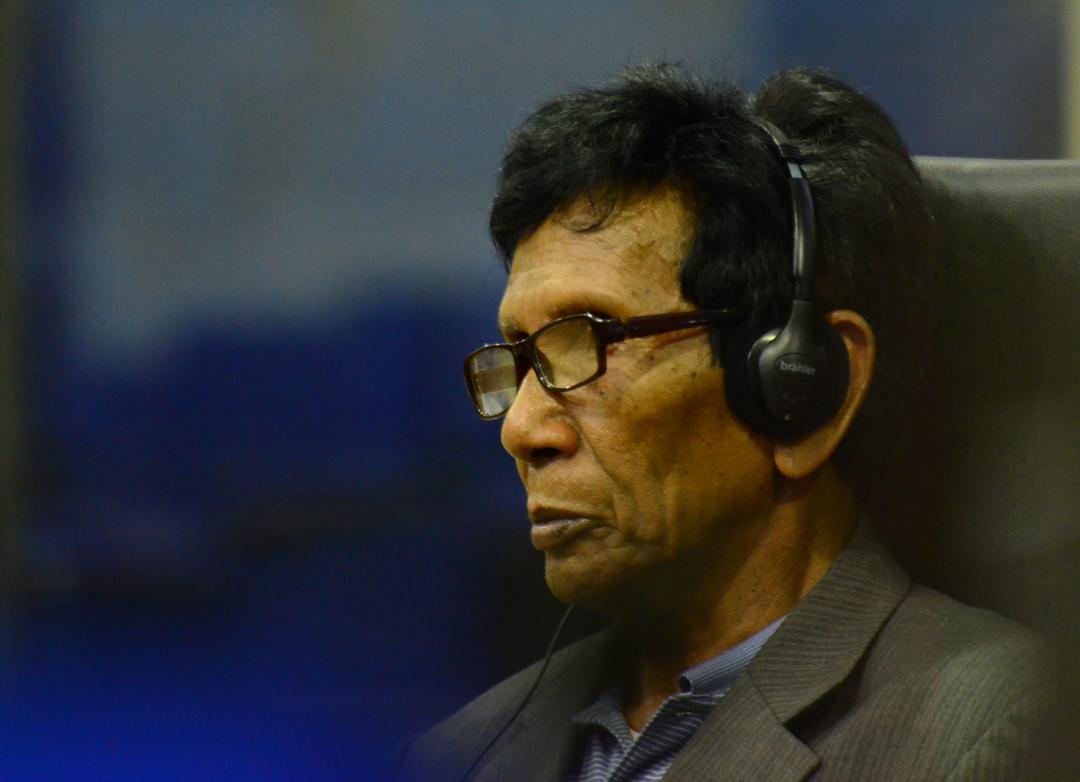
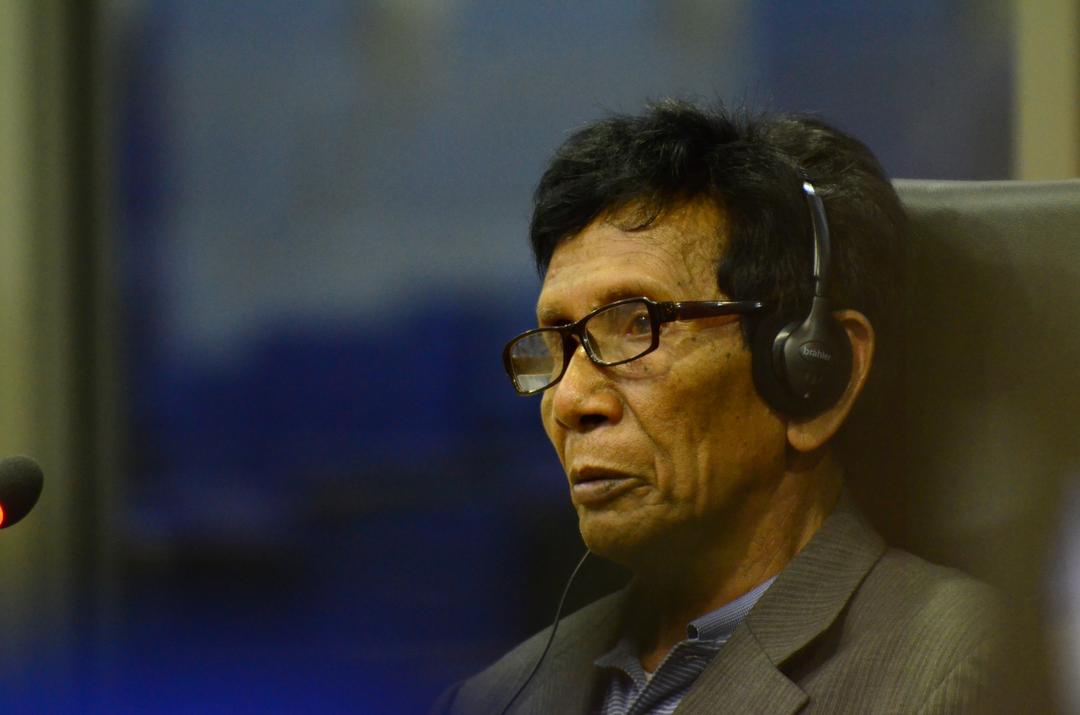
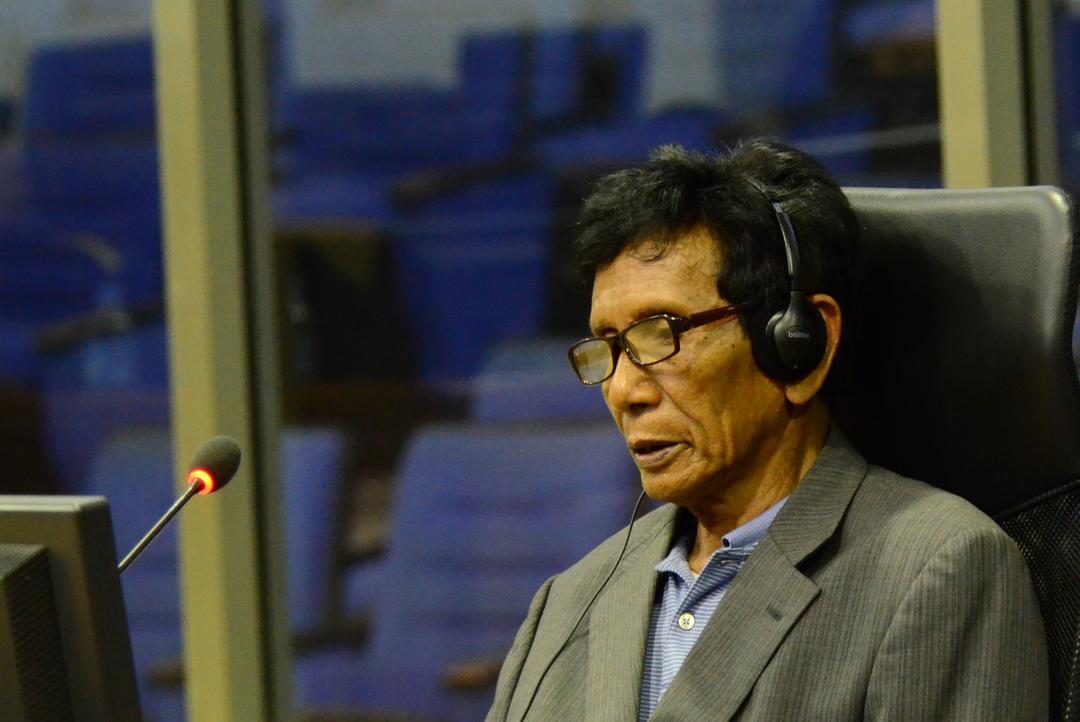
HUON Choeum
Pseudonym: 2-TCW-1037
Cases: Case 002/02
Category: Witness
Background and role
From 1970 Huon Choeum joined the Khmer Rouge army and engaged in fighting against Lon Nol soldiers in the Northwest Zone.
1
From 1973, he became a chief of a section in charge of the logistics and economy under Division 2 of the zone military with main responsibilities in controlling the food, clothing and the ammunition to the battlefield.
2
In 1975, he was promoted as the deputy chief in charge of the military economics for Division 2.
3
From 1976, he was transferred to the fishing unit based at Tonle Sap area in order to supply fish to the soldiers in the divisions, the office and department of the zone.
4
In 1978 during the internal purge, he was sent to work in the cooperative named Sala Ta An.
5
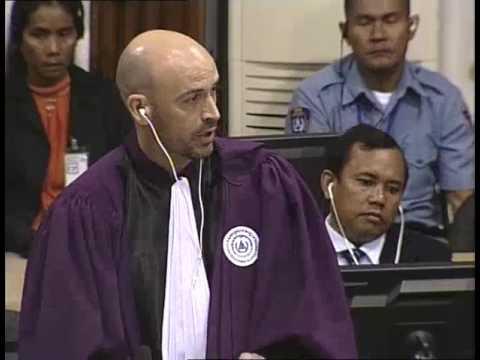
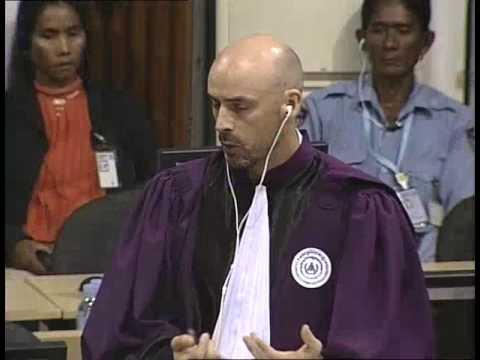
He testified as a witness before the Trial Chamber in Case 002/02 on the Internal purges.
Internal purges in the Northwest Zone
Huon Choeum recalled that Ruos Nhim was the Northwest Zone secretary,
6
and he used to see him in person and attended political sessions presided over by him at the political school.
7
The Northwest Zone army consisted of Division 1, located along National Road Number 5,
8
and Division 2, based along the former National Road Number 10,
9
and commanded by Ren, Khleng and Ham.
10
The meetings for the divisions or regiments levels were held at Battambang and Traeng.
11
Khleng was the chief of the military staff of the zone.
12
Ham was Khleng’s deputy, and later in charge of the logistics of the zone.
13
After being transferred to the fishing unit in 1976, he came to Battambang town three times a year.
14
Initially, the Southwest Zone cadres had not arrived in large number in the Northwest Zone.
15
Some of them were present at some departments or offices of the zone, and that was the Northwest people who arrested their own Northwest people, namely in the platoons or the companies.
16
After that, the Southwest people started to arrest the Northwest people including the senior leaders at the district, sector and zone levels, and the military commanders at divisions and regimental levels.
17
Huon Choeum heard the Southwest cadres say that the Northwest people were CIA agents or other agents serving the feudalism.
18
They further said that the Northwest Zone division had a plan for counterattacks Pol Pot that was found out, and that was the reason for their continuous arrest.
19
Huon Choeum said he did not know about any plan of Coup d’Etat or military attacks before.
20
In 1978, Southwest Zone army came to his place where hundreds of families were rounded up and sent to various sectors including Sector 4 and various cooperatives.
21
Houm Choeum observed that the living condition in his cooperative became worse compared to the time when he was living in the army.
22
He heard from the Northwest Zone army that some of them were sent to Kakaoh prison for refashioning, while the seniors or high level cadres including Ham and Khleng were sent to Phnom Penh.
23
Ham was arrested in around late 1977, accused of being linked to the traitor's networks and colluding in transporting and hiding firearms and ammunition to attack Pol Pot.
24
Vanh, the Sector 2 committee member since 1973-1974 and then supervisor at Kanghat dam construction site, was arrested and accused of concealing weapons to arm a mobile unit illegally.
25
Treatment against targeted groups
There were five or six Vietnamese families in his area that lived there since the old regime.
26
The Vietnamese could be recognized by their accents since they did not speak Khmer clearly.
27
Around July or August 1975, Vietnamese families were sent by boats to Vietnam along Tonle Sap through Phnom Penh, and only those who had Khmer spouses could stay.
28
Around July or August 1978, when the purge started, those who had relationship with Vietnamese were all arrested and killed along Tonle Sap by the Southwest Zone cadres.
29
Huon Choeum said there were no remarkable actions taken against Cham people compared to the ones taken against Vietnamese.
30
Because Cham people had different ways of living from Khmer people, they had some difficulties during that time.
31
Cham people were required to eat communally in a dining place with other people including pork consumption.
32
In some areas, they could be spared from being forced to eat pork by the benevolence of a given person in charge.
33
Huon Choeum noticed that the majority of Cham people survived the regime; only those who opposed instructions were killed.
34
The Trial Chamber relied on his testimony in addition to others to find that: (i) while individual leaders may not always have imposed the forced consumption of pork, CPK announcements made it clear that it was one of the ways in which the Cham were expected to assimilate into Khmer culture;
35
and (ii) CPK forcibly imposed restrictions on Cham religious and cultural practices, including forcing them to start eating pork, in other various locations throughout Cambodia, under the threat of killing those who refused to set an example for the others.
36
Forced marriage
Huon Choeum got married with his current wife that he knew since before their marriage on 31st December 1975.
37
While some couples loved each other, others were forced to get married.
38
During the regime, the marriages were organized differently from the tradition.
39
The ceremony was simple: there were many couples at once, and they were required to hold each other's hand and make the commitments to follow the instructions and the lines of Angkar.
40
The wedding ceremony was arranged and presided over by cadres at the zone level including Khleng, Ta Ham and Ta Sum.
41
Following the marriage, the newlyweds were allowed to stay together for a few days before going back to their respective workplace, and needed permission if they wanted to see each other after that.
42
He heard that some newlyweds who did not consummate their marriage were killed because they did not comply with the Party’s line.
43
Videos