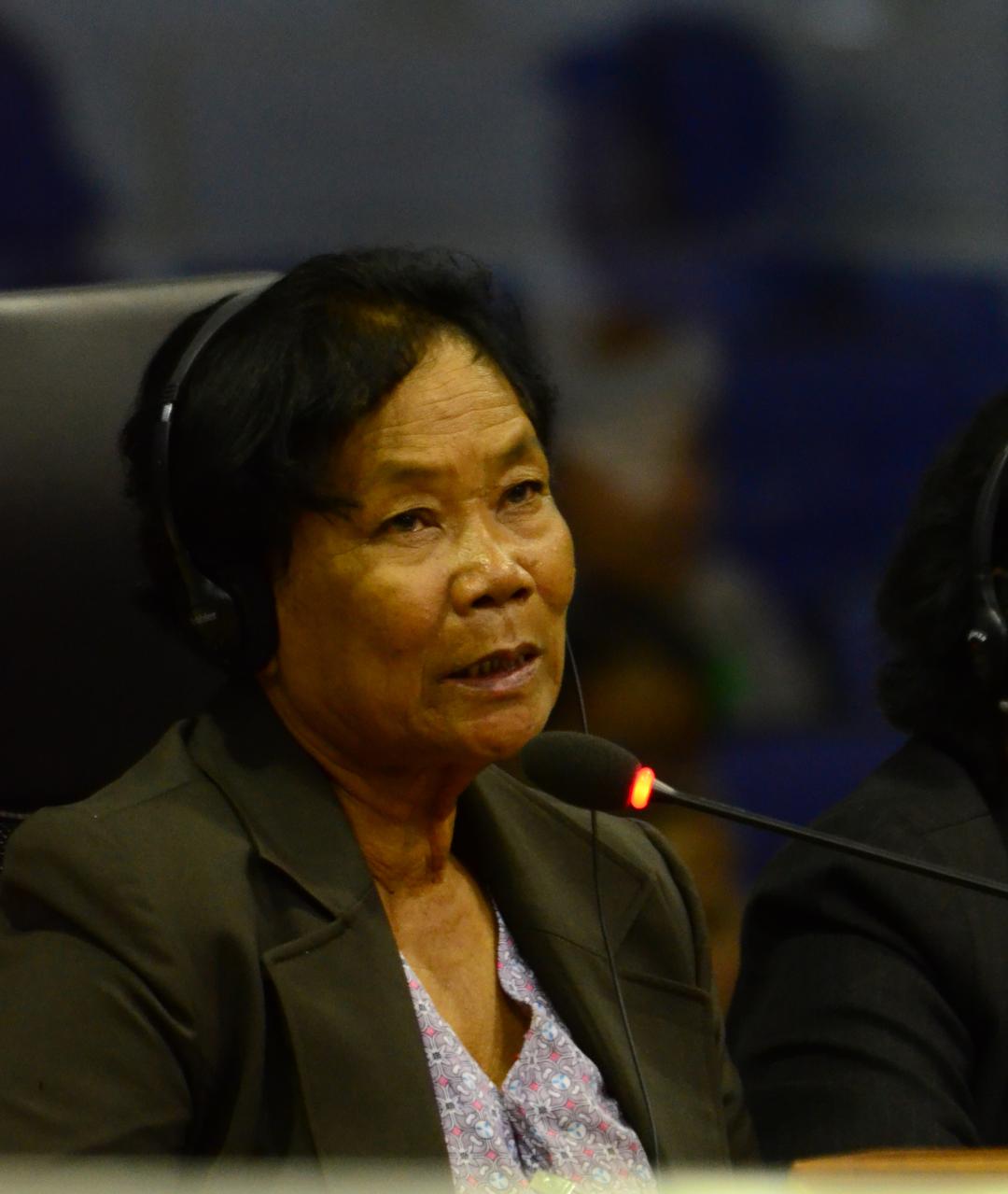
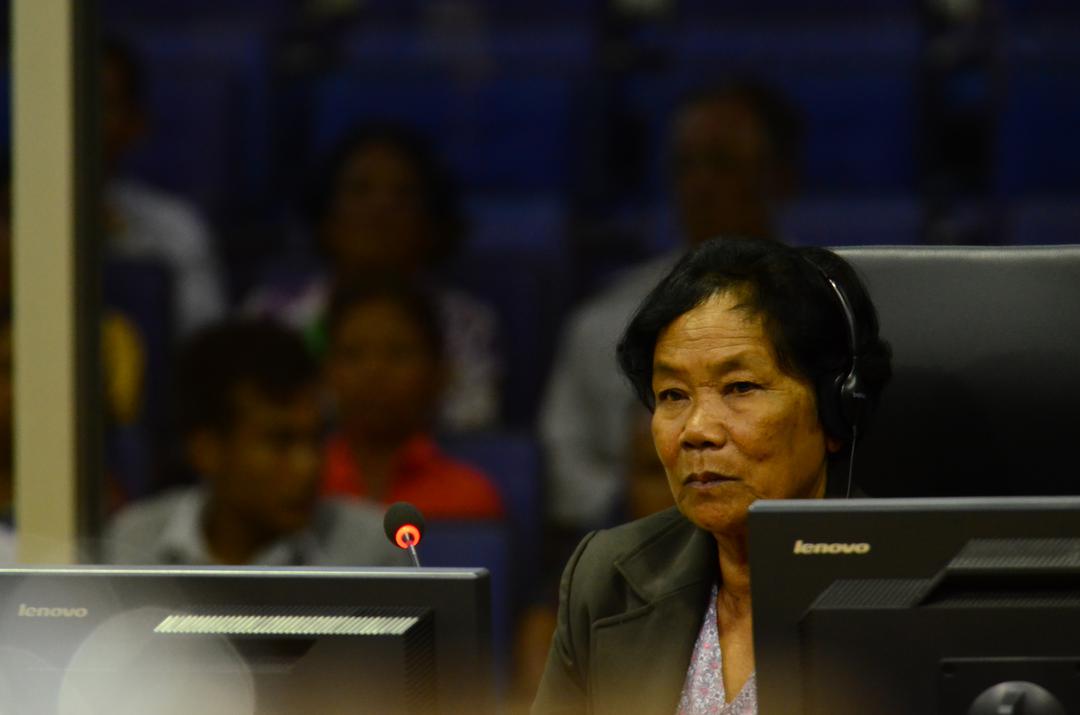
KONG Siek
Pseudonym: 2-TCCP-261
Cases: Case 002/02
Category: Civil Party
Background and role
Kong Siek joined Khmer Rouge military in Division 450 in Phnom Penh in 1975.
1
Around 1977, the Khmer Rouge transferred her to Kampong Chhnang Airfield worksite to be tempered after her superiors in the division were arrested and taken to Tuol Sleng prison on accusation of being disloyal to Angkar.
2
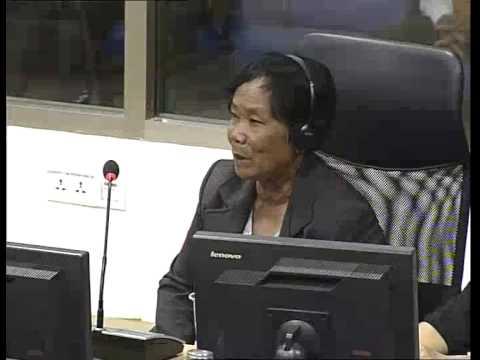
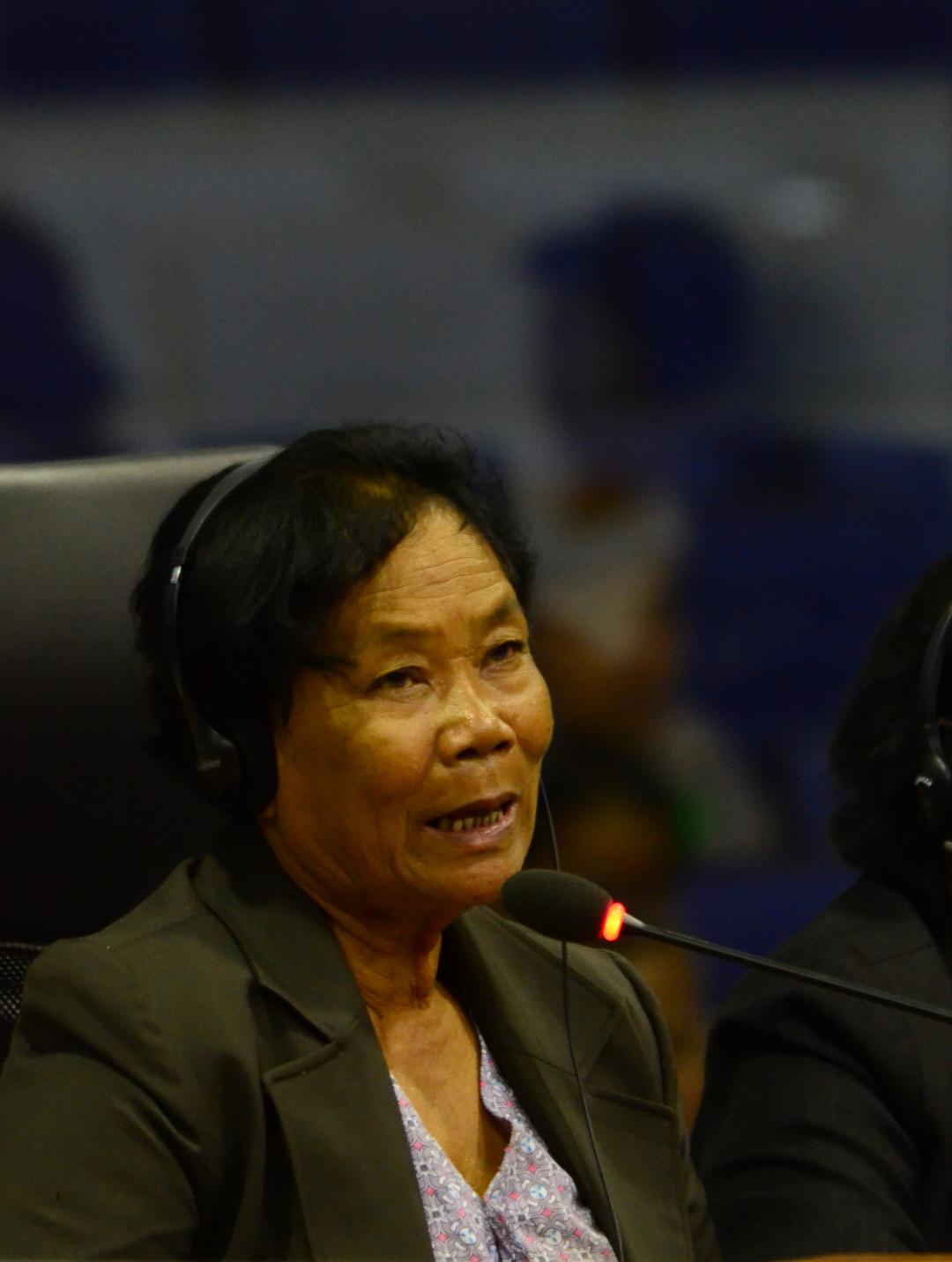
She testified before the Case 002/02 Trial Chamber as a Civil Party about her experience while working at the Kampong Chhnang Airfield worksite.
3
Working and living conditions at Kampong Chhnang Airfield
Upon her arrival, Kong Siek saw thousands of workers and soldiers from many divisions already working at the construction site.
4
The Khmer Rouge assigned Kong Siek to a women’s mobile unit to carry earth and cement for some times before asking her to provide her biography.
5
Those who disclosed their previous occupation as soldiers would be taken away to somewhere unknown.
6
Kong Siek started work at 5:00 a.m., stopped at 11:00 a.m., started again at 1:00 p.m. and continued until 5:00 p.m. or, at times, until 9:00 p.m.
7
She walked low in a bending posture like a duck when she had to carry cement – usually 20 to 30 bags weighing 50 kilograms each.
8
Despite her terrible back pain, Kong Siek did not dare refuse the assignment for fear of being killed.
9
Some women in her unit did not menstruate regularly because of the heavy work imposed on them.
10
When women had their periods, they were not provided with soap or anything to clean or wash their bodies, which smelled terribly as a result.
11
All workers were bony due to insufficient food.
12
“The only big thing that you could see was the head and the two … kneecaps.”
13
Workers did not have mosquitos nets, and they did not have mats to sleep and clean water to drink.
14
Workers were not allowed to move freely around the worksite, and those who violated the rules would be arrested and imprisoned.
15
Workers did not dare to speak to one another if they were in different units even if they were related by blood as a brother or sister.
16
After work, her unit chief Voeun convened self-criticism sessions in the evening where she criticised people who did not accomplish their work.
17
The Trial Chamber relied on Kong Siek’s testimony, among other evidence, in finding that: (i) the Khmer Rouge took biographies to screen soldiers and know their family background;
18
(ii) workers at the Airfield were all soldiers who were reassigned to perform manual labour;
19
and (iii) the living and sanitary conditions were extremely poor and inadequate to sustain the workers.
20
Statement of suffering
“The cement I had to carry was too heavy for me. I walked in lower and bent posture like a duck, but they had to make me do it, that’s why it affects my body. I had suffered, and now I am still suffering from that overwork. My chest and waist have been in pain. I am on regular medication, such as high blood pressure and blood vessel, that’s why I can live until today”
21
Videos