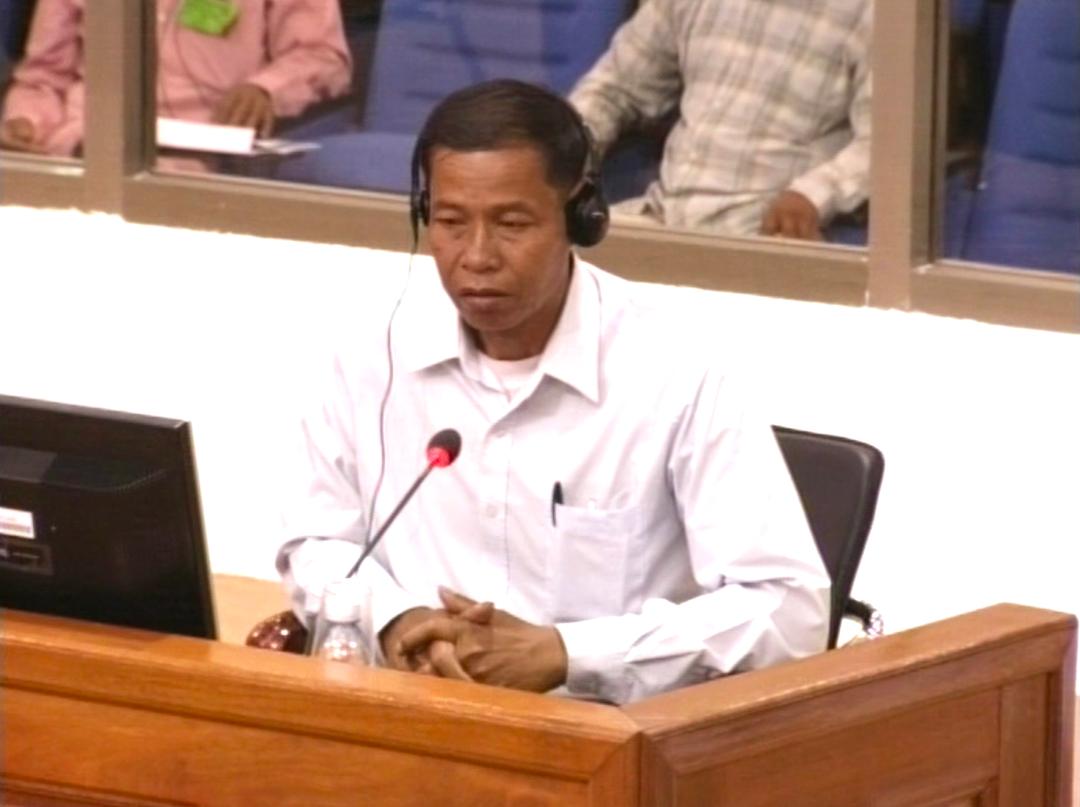
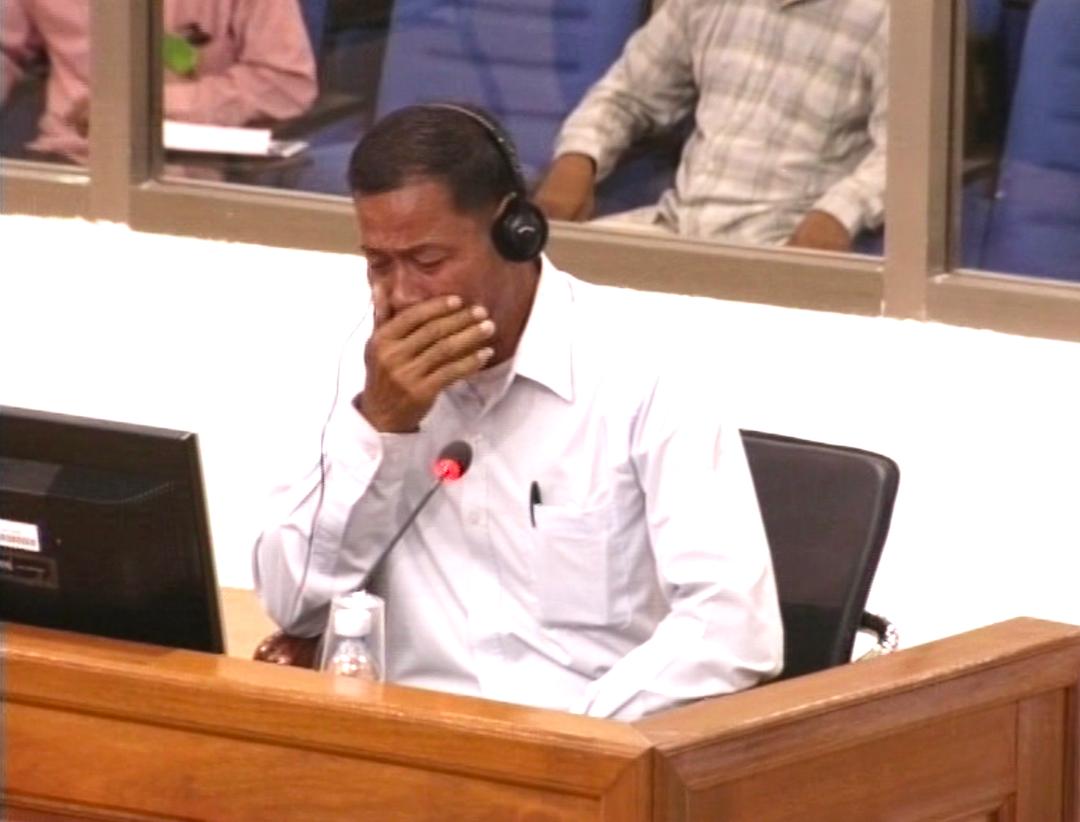
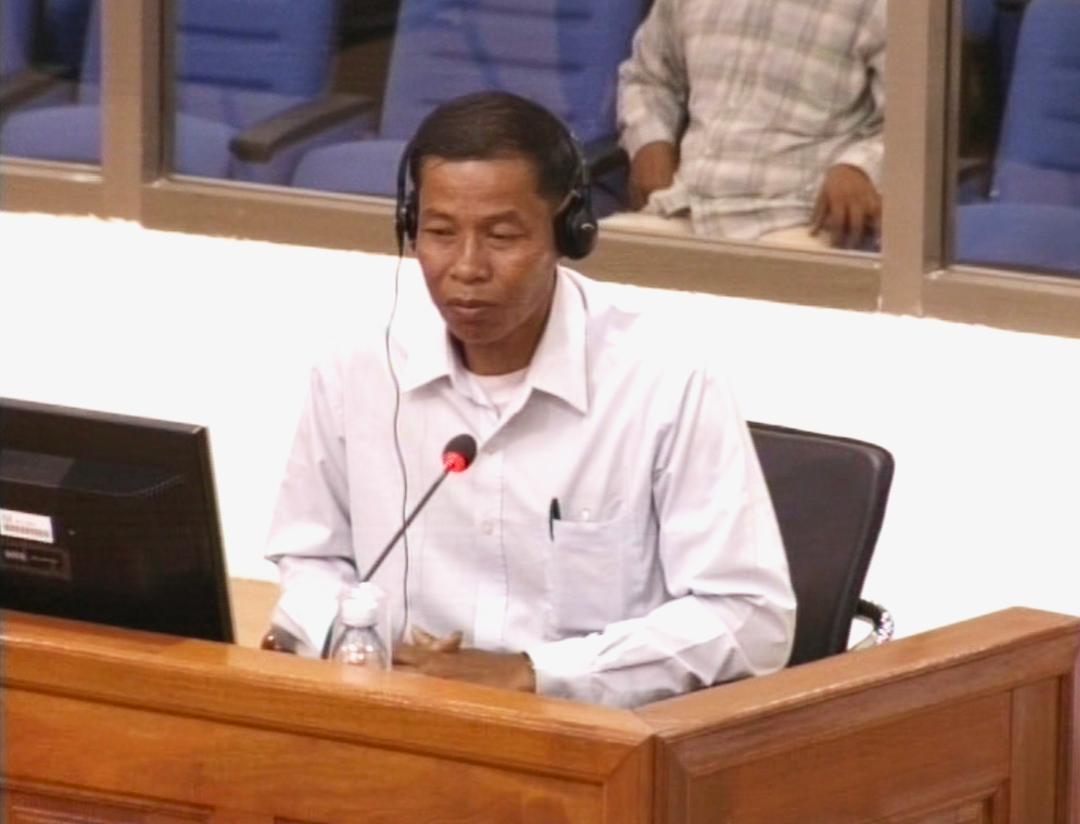
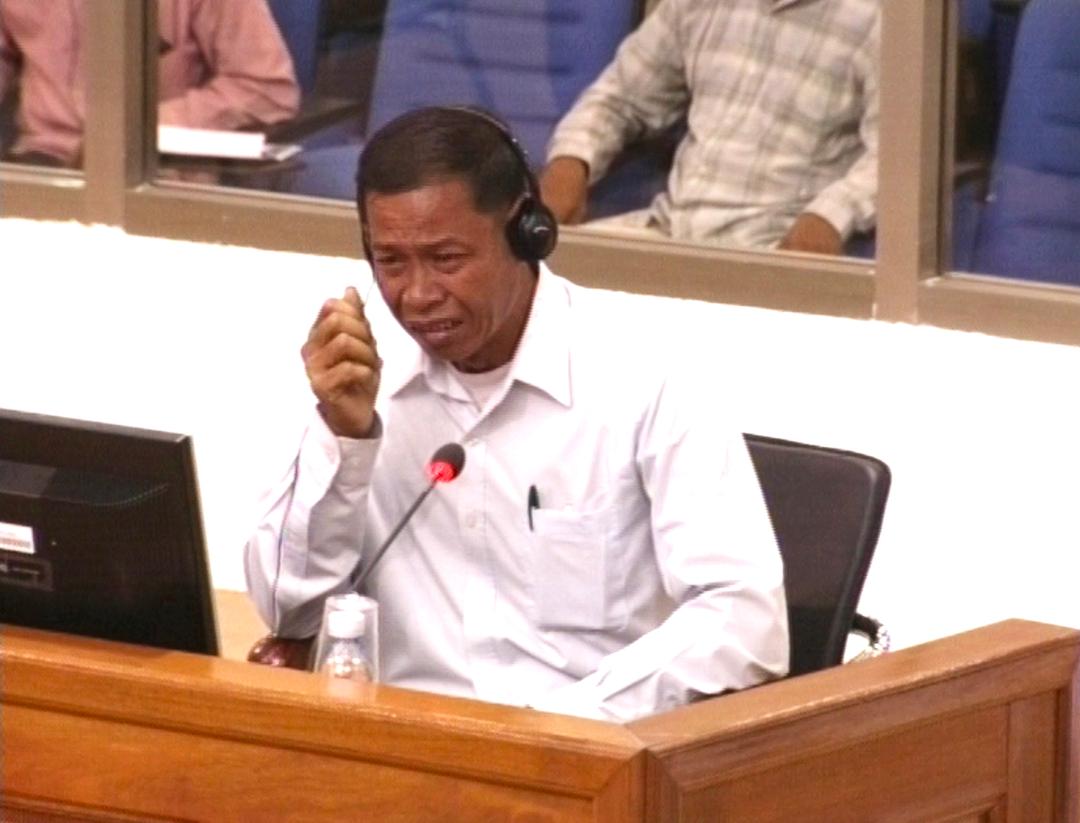
LAY Chan
Pseudonym: E2/32
Cases: Case 001
Category: Civil Party
Background and Role
Lay Chan was a rice farmer
1
who filed a civil party application on the basis of his detention at S-21.
2
He testified in Case 001 about the detention conditions, detention facilities, and interrogation sessions.
3
Lay joined the revolutionary forces before 1975.
4
After being wounded in the battlefield, he was assigned to work as a messenger at the Kilometer 6 Port.
5
In 1976, he was arrested and accused of participating in the theft of rice for the enemy.
6
Detention and Release
Since his detention in 1976, Lay never spoke about his experience and suffering.
7
He was blindfolded most of the time except for when he was shackled in his one-metre-wide cell, where he was detained for around three months.
8
He did not know the location of his detention but recounted how he overheard guards at the detention facility mentioning it as the “Tuol Sleng school”.
9
There he was interrogated and severely beaten twice to the point of losing consciousness because he denied colluding with three other people and stealing rice.
10
He still suffers from the consequences of these interrogation sessions, including an inability to hear with his left ear.
11
Although Lay did not see other detainees as he was not allowed to stand up or peek out of his cell, he heard screams of other detainees.
12
He heard footsteps of people walking above him and speculated that he was detained on the ground floor.
13
His cell had a low concrete ceiling, meaning he would hit his head if he stood up.
14
After being interrogated, he was led by the guards to an unknown location around 15 to 20 minutes by foot from where he was detained while being blindfolded and was asked to dig three pits every night to plant banana trees.
15
Over the course of his detention, he was “eating no more than a small bowl of gruel” and had only bathed twice using water from a broken jar when he worked outside.
16
After about three months of detention, Lay was released and sent to a re-education section.
17
After one year there, he was sent back to the Kilometer 6 Port and assigned to grow rice and vegetables.
18
Civil Party Application
Lay paid one visit to Tuol Sleng prison between 1979 and when the ECCC was established, but did not recognise the place where he was detained as the location had changed its appearance.
19
The Trial Chamber rejected his civil party application,
20
reasoning that although Lay suffered severe harm during the Democratic Kampuchea period, no evidence showed that this occurred at S-21 and his description of detention conditions was at odds with evidence before the court regarding established practices at S-21.
21
The Co-Lawyers appealed the Trial Chamber’s decision, submitting an additional photograph of either Lay’s actual cell or an example of the kind of cell in which he was detained to the Supreme Court Chamber.
22
The Supreme Court Chamber dismissed the appeal, finding that the Co-Lawyers did not adduce any additional argument or evidence addressing other deficiencies with Lay’s application.
23
Consequently, it found no reason to intervene in the Trial Chamber’s assessment of Lay’s credibility.
24
Videos