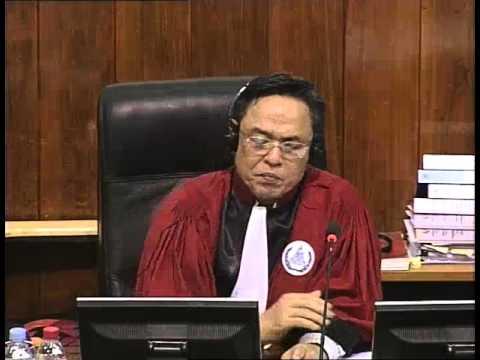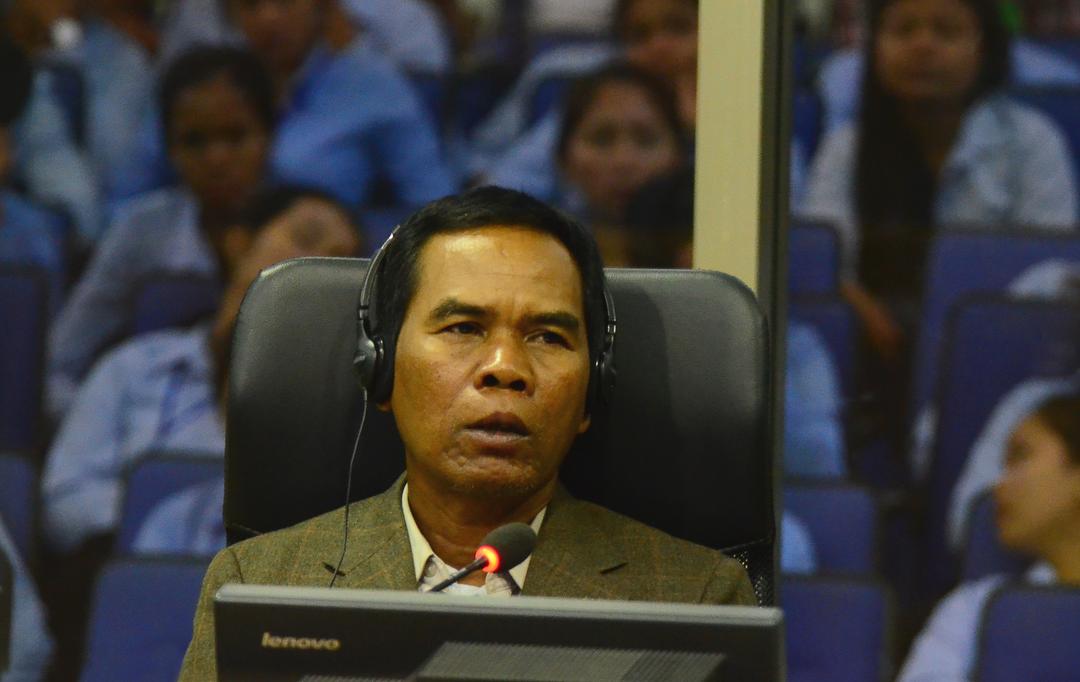
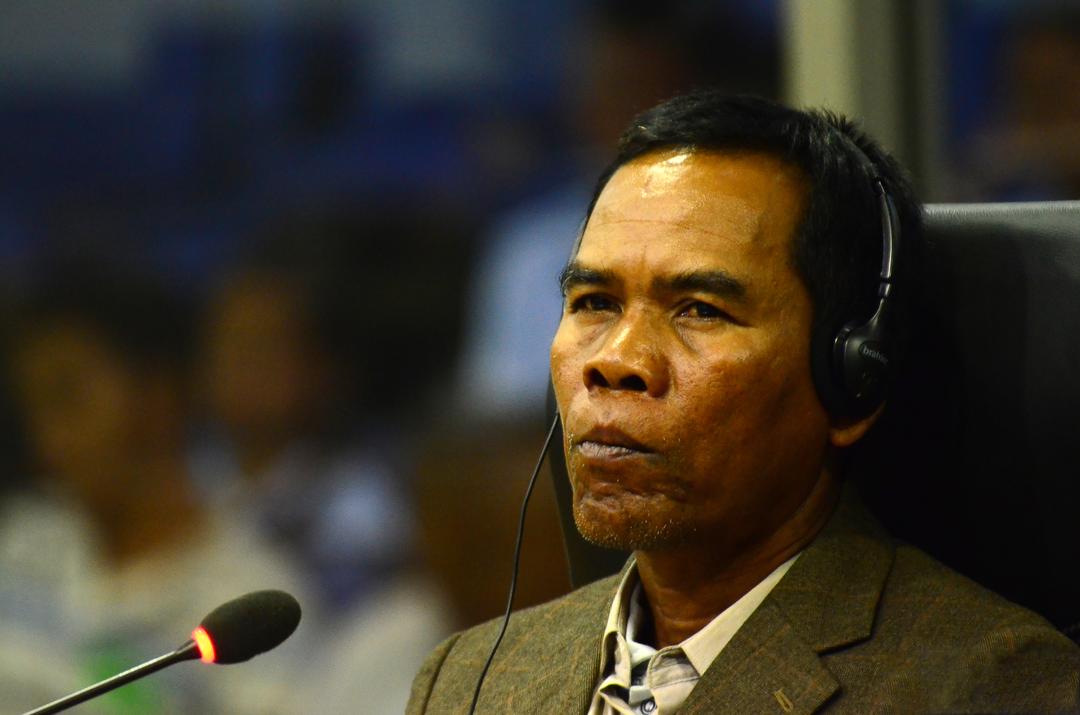
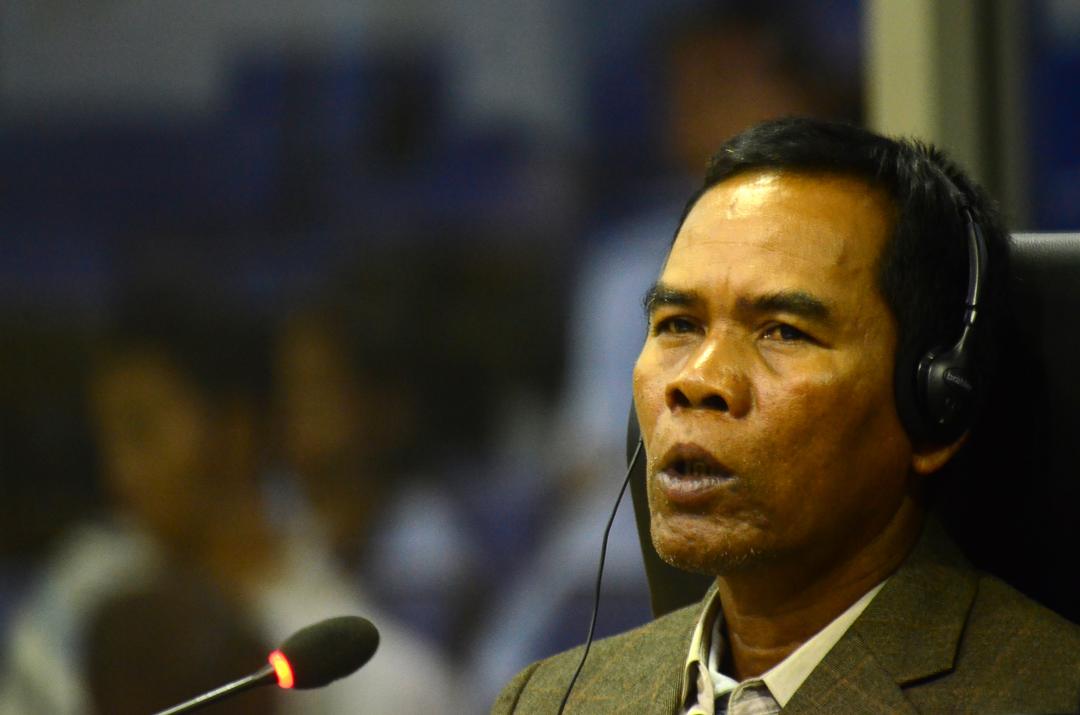
MAK Thim (MAKK Sithim)
Pseudonym: 2-TCW-808
Cases: Case 002/02
Category: Witness
Background and Role
Mak Thim, previously Makk Sithim,
1
was a farmer and a medic who worked at S-21.
2
Before working at S-21, he was sent to Takhmau to learn how to farm, to use weapons, and to create medicinal tablets which were used at S-21, and later to Prey Sar to grow vegetables.
3
He then joined a military strategies training session and was assigned to join a medical training session in Psar Thmei for two to three months.
4
Afterwards, he was sent to S-21 to work as a medic when he was around 16 or 17 years old.
5
He testified as a witness in Case 002/02 in relation to the treatment of prisoners and medical treatments at S-21.
6
The Trial Chamber relied on Mak’s testimony in finding that: (i) medical treatments for prisoners at S-21 were ineffective; and (ii) prisoners died as a result of malnutrition and injuries sustained from interrogations at S-21.
7
Medical Unit at S-21
Although Mak was unsure about the date he began to work at S-21, he was there for about one year until the arrival of the Vietnamese.
8
S-21’s medical unit was headed by Try,
9
who supervised approximately 10 to 15 medics between the age of 16 and 20
10
who were stationed at S-21 to provide treatment to prisoners, including dressing wounds and the provision of pills.
11
There was a separate medical unit for the treatment of S-21 staff.
12
The Trial Chamber relied on Mak’s testimony in finding that: (i) Mak worked in the medical unit at S-21 from about late 1977 or early 1978 until the Vietnamese arrived in 1979;
13
(ii) Try was the Chief of the S-21 medical unit until he was arrested;
14
and (iii) approximately 10 to 15 medics between the ages of 16 and 20 treated prisoners.
15
Treatment of S-21 Prisoners
According to Mak, the prisoners at S-21 were thin because there was a lack of food.
16
There was also a lack of medicines,
17
and shackled prisoners who suffered from beriberi, which involved numbness and swelling of limbs, were treated by S-21 medics with only vitamin injections.
18
He elaborated on the locations where prisoners received medical treatment at S-21 and instances where they were taken to the medical unit.
19
Although medics were instructed to be careful with the medical treatment of prisoners and their wounds when their interrogations had not yet concluded,
20
their overall health conditions were poor due to the ineffective medicines.
21
While working as a medic, he witnessed prisoners dying at S-21 every three or four days or every week,
22
and medical staff carried the corpses and buried them outside the compound.
23
Following interrogations, the wounds of prisoners were cleaned with salt water and bandaged using pieces of cloth and mosquito nets because staff did not have proper bandages, and the medical unit ran out of a “red liquid” which was an antibiotic they used to treat wounds, including instances where nails of detainees had been pulled out.
24
He treated prisoners who had their blood drawn,
25
the medics had to report to the chief medic if a prisoner was seriously ill.
26
The Trial Chamber relied on Mak’s testimony in finding that: (i) prisoners became thinner and thinner due to the lack of food;
27
(ii) prisoners who had been handcuffed or shackled for long periods suffered from swollen and numb limbs, while others suffered from beriberi, and they were only given pills and vitamin injections to treat various conditions due to a lack of medicines;
28
(iii) medics were instructed to keep important prisoners in good health for interrogation, after which the latter would be sent for execution;
29
(iv) while prisoners were sometimes provided with medical treatment, the medicines were not effective,
30
which resulted in a number of deaths;
31
(v) medical staff at S-21 were instructed to carry the dead prisoners and bury them outside the S-21 compound;
32
(vi) there was a lack of medical equipment to treat injuries and wounds sustained during interrogations;
33
and (vi) if a prisoner could not be treated after an interrogation, this had to be reported to the chief medic who dealt with prisoners with serious conditions.
34
However, the Trial Chamber found that Mak’s testimony in relation to: (i) the locations where prisoners received medical treatment at S-21 and whether or not they were taken to the medical unit;
35
and (ii) prisoners having their blood drawn
36
was marked by contradictions, confusion, and lack of clear recollection, thus it did not rely on his evidence on these matters.
Videos