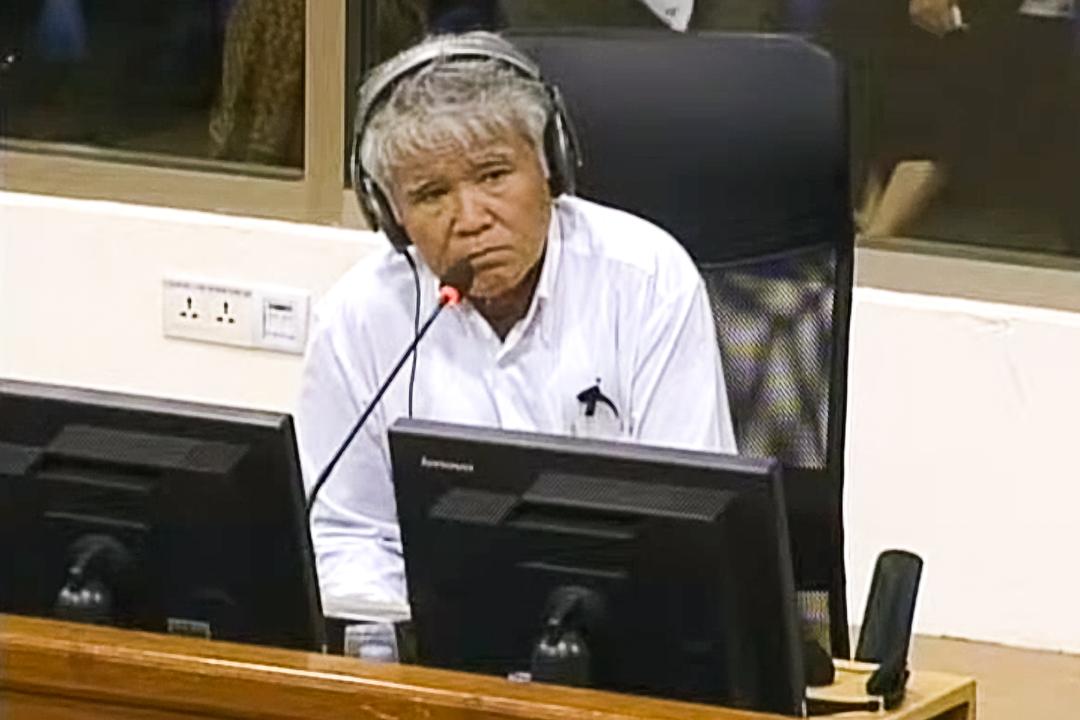
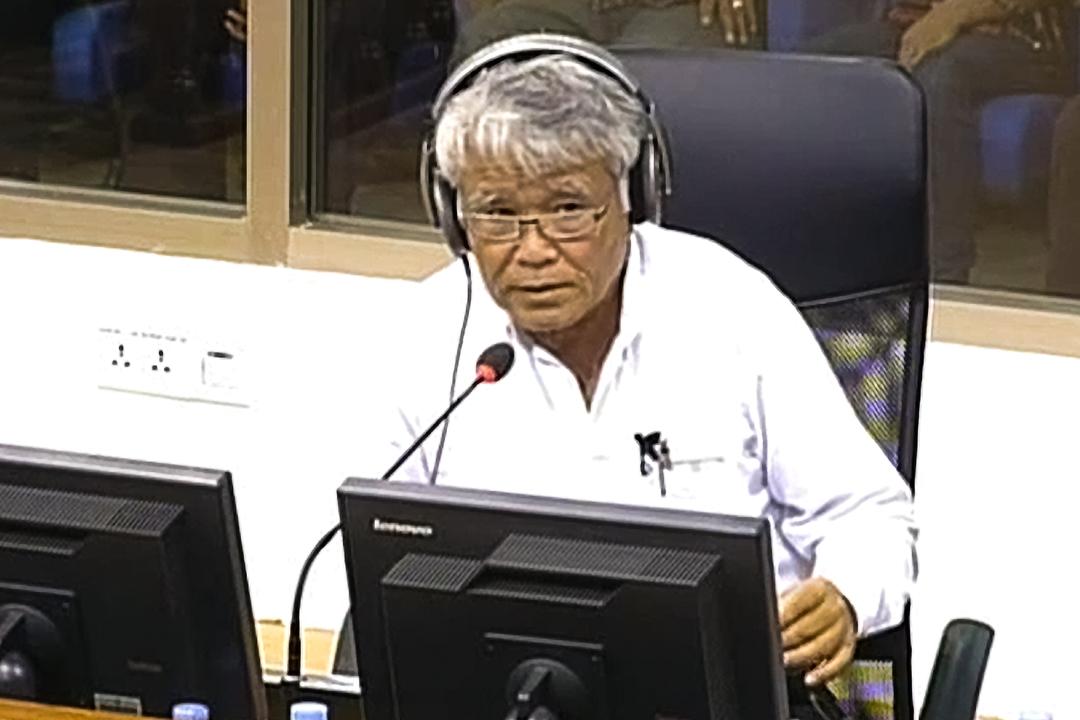
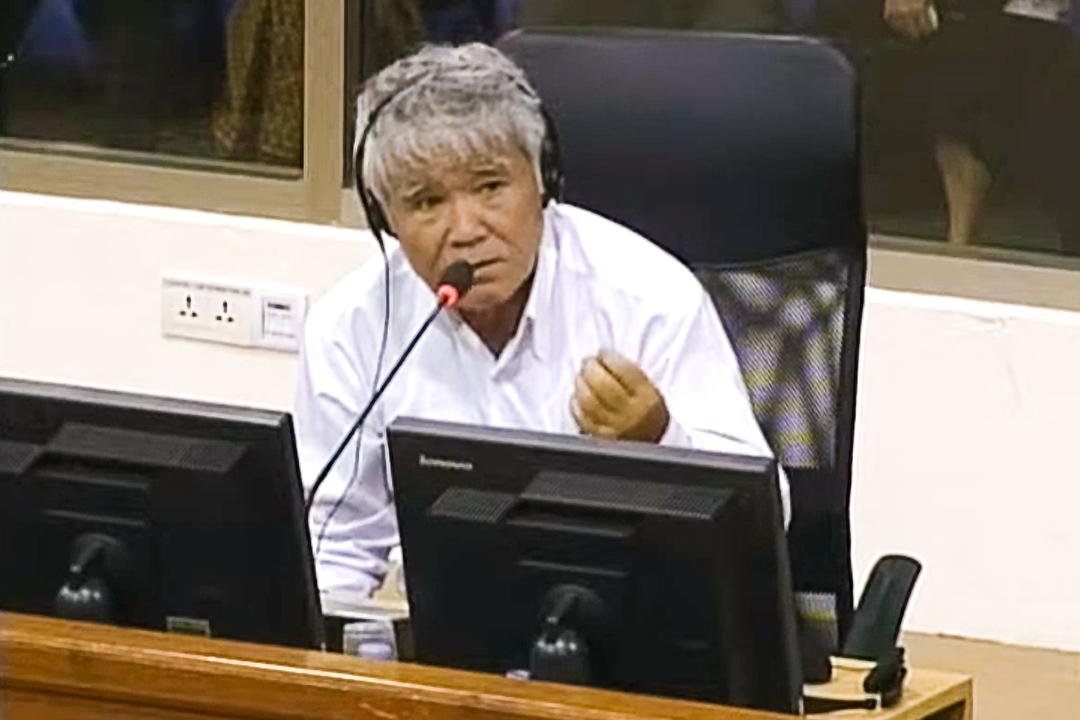
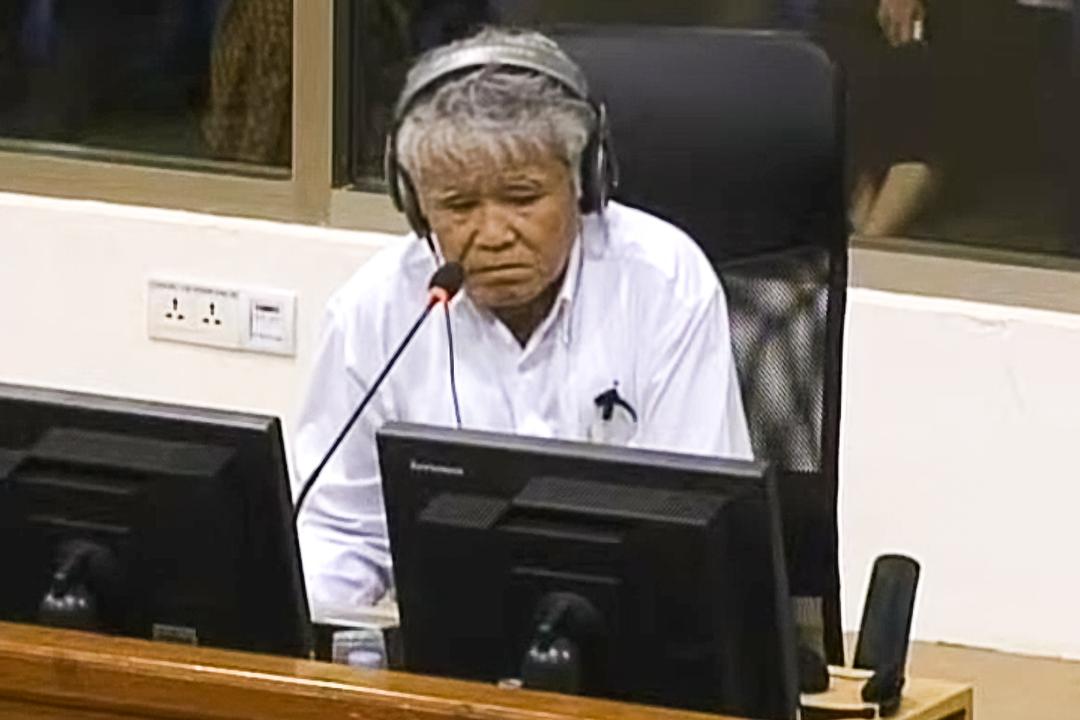
MEAS Saran
Pseudonym: TCCP-82
Cases: Case 002/02
Category: Civil Party
Role and Background
Before April 17, 1975, Meas was a nurse.
1
He attended medical school from 1969 until 1972 and thereafter he worked as a medic in the military at Preah Ket Mealea Hospital in Phnom Penh.
2
Upon his 18-month completion of his military service as a medic, he returned to Phnom Penh to work at Borei Keila hospital in late 1974 with his pregnant wife.
3
Since the evacuation of Phnom Penh on 17 April 1975 he never saw his wife again.
4
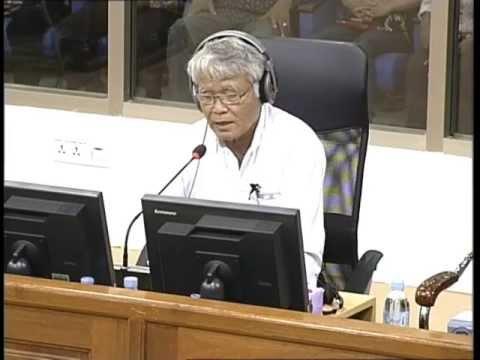
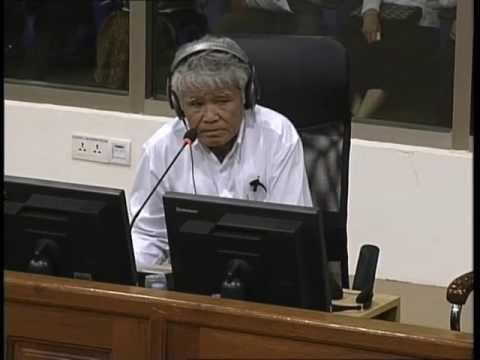
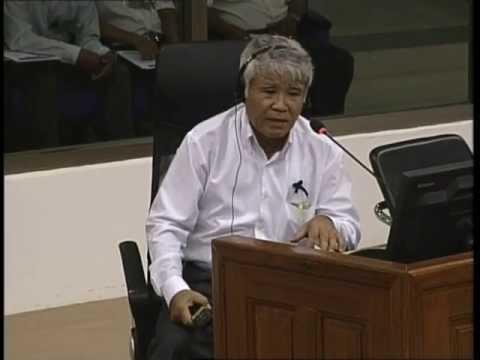
Meas Saran testified as a Civil Party in the Case 002/01 trial proceedings on the forced evacuation of Phnom Penh, the conditions and deaths during the transfer – especially concerning sick or injured people who were forced to leave the hospitals or die there, the CPK’s screening for enemies, and the disappearance of his pregnant wife.
Evacuation of Phnom Penh
In late 1974 Borei Keila hospital was the designated government hospital to receive victims of bombardments.
5
Many people suffered from bombardments and fighting in the city.
6
The Trial Chamber noted his testimony in its judgment that “people were terrified by the Khmer Rouge bombing attacks and the influx of people from the countryside”.
7
On April 17 1975, there was gunfire and bombing everywhere in Phnom Penh, including at Chrouy Changva Bridge.
8
In the following days he went to the southern part of the hospital where he saw Khmer Rouge soldiers on the street and many more coming in the distance.
9
When he walked outside the building he saw Khmer Rouge soldiers carrying guns and wearing black clothes, slippers and Moaist caps.
10
At around 10 o’clock, he left the hospital quickly as he was told that soldiers were forcing people to leave the city as the Americans were about to drop air bombardments.
11
However, this was just a pretext that the Khmer Rouge used to persuade people to leave.
12
Evacuating the hospital
Although there were wounded people in the hospital, the Khmer Rouge soldiers did not assist anyone leaving the hospital.
13
Injured people who were unable to move were left to die as the medical staff were evacuated.
14
The Trial Chamber noted his testimony in its Judgment that “at hospitals, seriously injured patients (primarily soldiers previously injured in fighting) and the weak who could not be evacuated were left behind to die as everyone else was evacuated”.
15
Despite there being many Khmer Rouge soldiers present at the hospital, none of them took charge of the hospital and assisted the medical staff.
16
Conditions during the transfer and CPK call for civil servants to return
When Meas was leaving Phnom Penh he tried to find his pregnant wife but he could not see her anywhere.
17
When he arrived at Moha Motrey Pagoda to look for his wife, he saw people leaving their homes and walking along the road.
18
They were told that they were required to leave the city for only a few days and that they had to leave quickly so people could not bring many things with them.
19
Meas and others had to keep walking, and many of them did not know where to go besides exiting the city.
20
On the way he saw old people abandoned by their family members due to the terrible situation.
21
After the third day of the evacuation, there was no broadcast, instruction or communication telling people to return to Phnom Penh, and there was no sound of any bombardment. Meas started to feel suspicious.
22
On the fourth or fifth day since the evacuation, there was an announcement calling for “civil servants”, “soldiers”, “senior military officials” to return to Phnom Penh to continue their work and build the country.
23
There were people returning back to Phnom Penh based on this instruction, but he did not follow.
24
He did not know where those people went or what happened to them.
25
When Meas arrived at Monivong Bridge, he witnessed that evacuees were not given food, water, support or any assistance.
26
He stayed at the bridge for around two weeks.
27
He saw two dead civilians on the left side of the bridge.
28
Searching for his wife in Bati village & CPK screening for enemies
Meas left Monivong Bridge to find his wife at her native village in Bati.
29
When he arrived at Bati, there was a checkpoint where the Khmer Rouge asked people about their identity, including their native village, occupations and parents’ names.
30
He lied about his identify,
31
and noticed that evacuees disappeared gradually after being questioned.
32
When he arrived at Bati village, he did not find her. When he presented himself to Angkar, he was tied up and arrested.
33
He was released but then was arrested for a second time and sent to Sisophon.
34
Videos