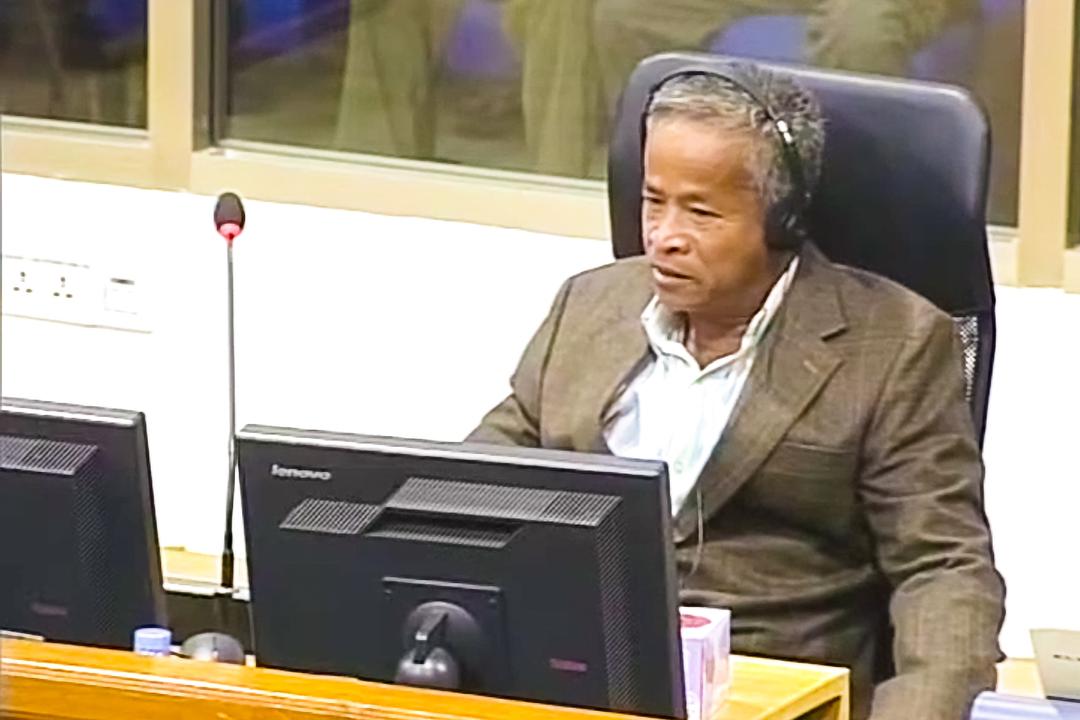
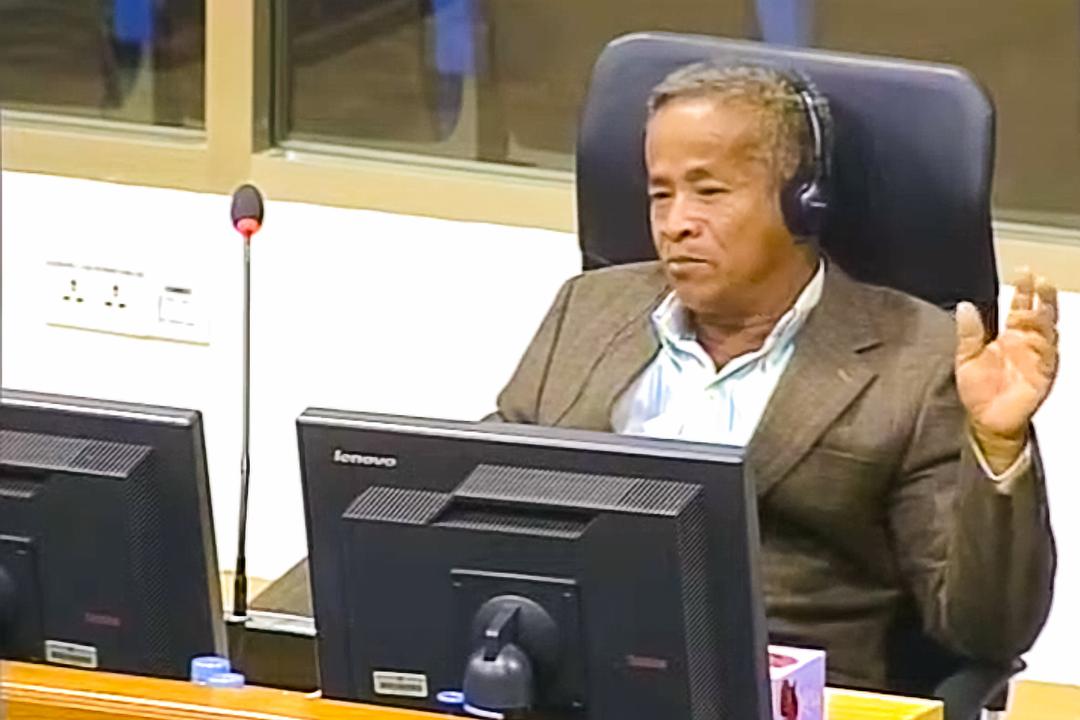
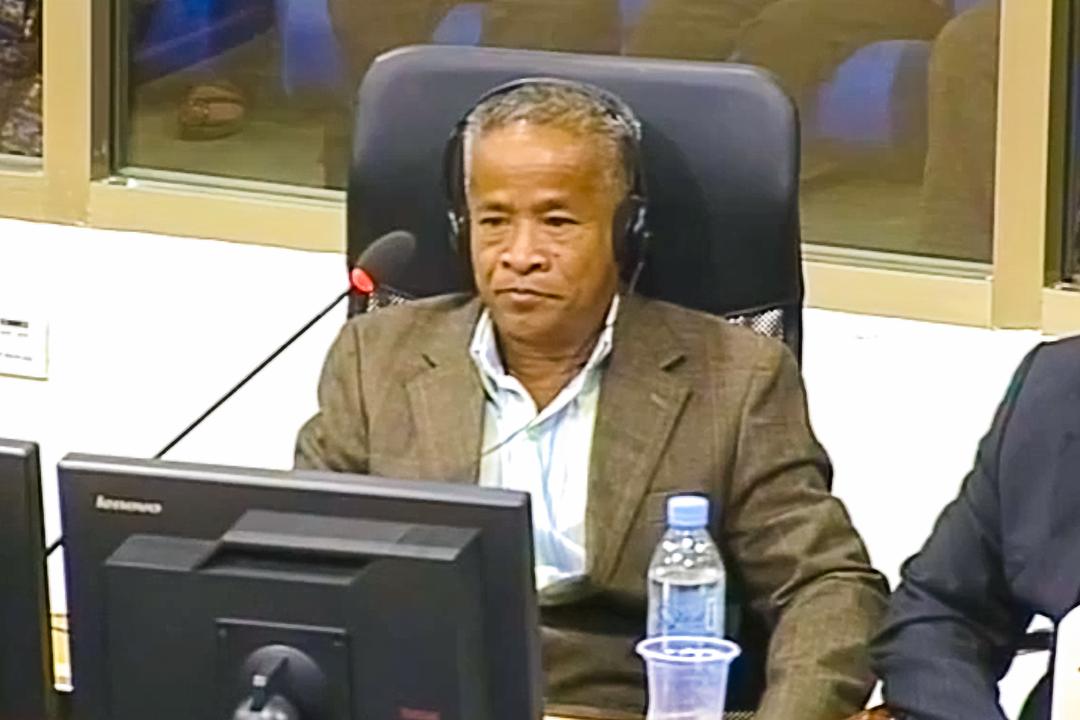
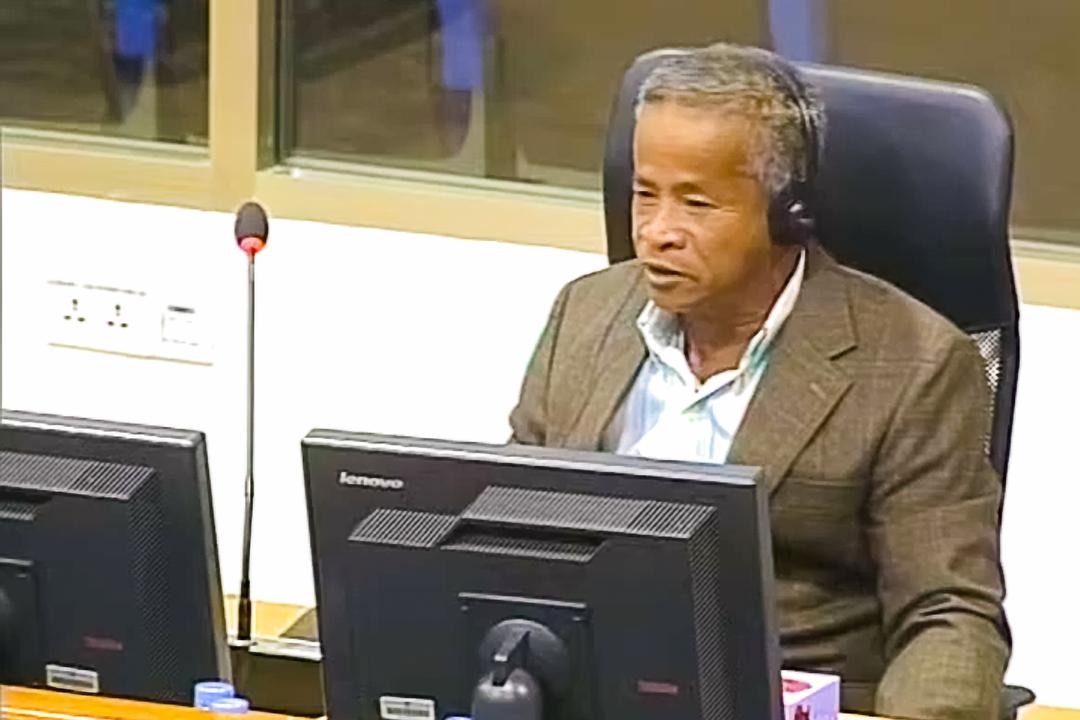
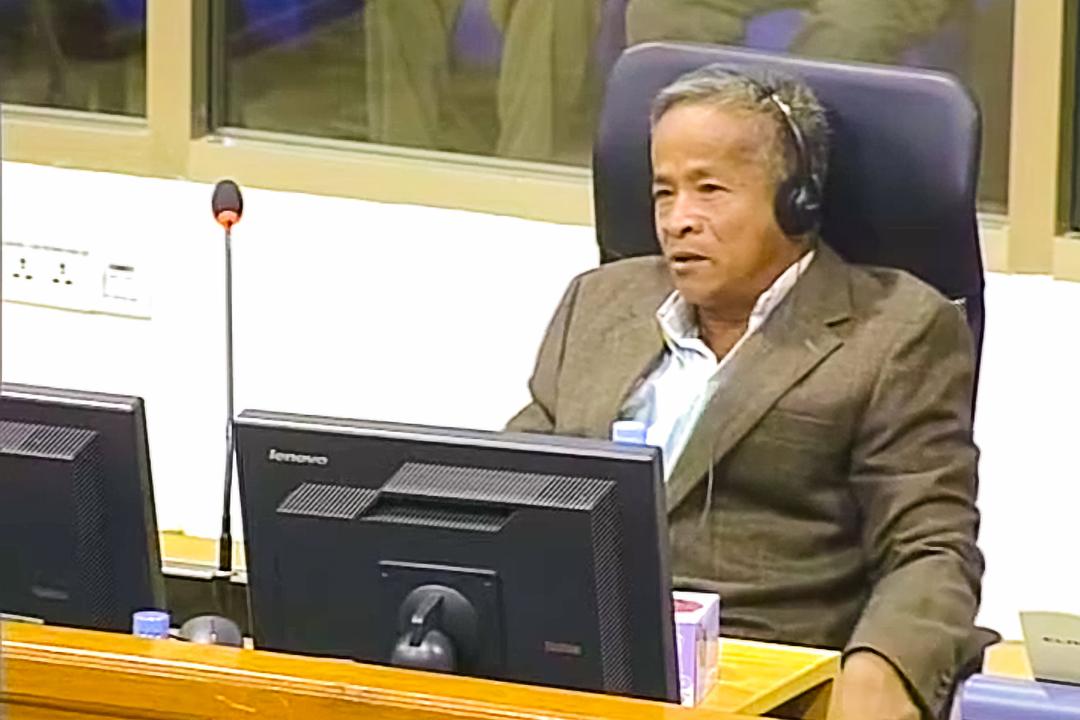
MEAS Sokha
Pseudonym: 2-TCW-936
Cases: Case 002/02
Category: Witness
Background and role
Meas Sokha, alias Thlang, was considered a member of the “Base” (or “Old”) population.
1
As a child, he lived in the Tram Kak cooperative in Cheang Tong commune until 1976,
2
when he and his entire family was arrested and detained in the Kraing Ta Chan security centre.
3
He and his family members were released in August 1978 and sent to a cooperative in Ta Reab village.
4
After 1979, he became a soldier.
5
In Case 002/02, Thlang testified about the conditions in the Tram Kak Cooperative (1975-1976) and the detention conditions, interrogations and executions in the Kraing Ta Chan security centre (1976-1978).
Life in the Tram Kak Cooperative (until 1976)
Before 1975, the witness lived in a cooperative.
6
Thlang was part of a 6-member mobile children’s unit, assigned to tend cattle.
7
They were supervised by two militiamen.
8
The children were aged 10-14 years; those 15 years and older were part of the youth unit.
9
People were forced to eat together communally.
10
Although there was not enough food at the cooperative,
11
they did not report it.
12
His only personal belonging was a plate and a spoon.
13
Base People were separated from the “New People”, who were considered feudalists.
14
The Trial Chamber in Case 002/02 found that “[c]ollectivisation and communal eating was introduced in Tram Krak … and expanded progressively”,
15
that Base and New People were divided into separate groups,
16
and that the Base people (including children) were forced to work.
17
Kraing Ta Chan security centre
In 1976, Thlang’s father and brother-in-law were arrested by the commune chief, supposedly because his brother-in-law was requested to collect signatures for deposing the village chief and send the report to the Khmer Rouge.
18
When Thlang arrived at Kraing Ta Chan a few days later,
19
his father and brother-in-law had already been taken there and killed.
20
The Trial Chamber in Case 002/02 found that the detention of Thlang and his family at Kraing Ta Chan was arbitrary,
21
upheld his account of his father’s and brother-in-law’s arrests, and found that the conditions at Kraing Ta Chan were “dire”.
22
Detention conditions at Kraing Ta Chan
The Kraing Ta Chan security office had three buildings for prisoners.
23
Prisoners were cuffed
24
and shackled day and night,
25
and were released only for work and lunch.
26
Babies or young children stayed with their mothers.
27
Five prisoners were shackled to one segment of a metal bar, with no space between them.
28
Prisoners were punished for talking to each other or moving while they slept.
29
If one prisoner moved, all were beaten.
30
The detention building was filled with bedbugs.
31
Prisoners relieved themselves in the room, into a coconut shell, which would be passed from one prisoner to another to pour it into a container.
32
There was no doctor to treat the prisoners.
33
Prisoners had two meals a day from dirty bowls,
34
consisting of a ladle of gruel with at most 10 grains of rice or three small pieces of potatoes and a little bit of water plant.
35
They allowed the prisoners to drink water only twice a day, at most three gulps of it; the water was red due to its proximity to the fertilizer’s pit.
36
At Kran Ta Chan, Thlang tended two cows and four water buffaloes, until 5 p.m. every afternoon.
37
Thlang testified that on most nights, between 10 and 30 more prisoners were brought in.
38
Interrogations in Kraing Ta Chan
Only adults were interrogated, not children.
39
Women were rarely interrogated.
40
The interrogation took place in the open.
41
Behind the interrogation place were piles of clothes of prisoners who had been killed.
42
Some cadres made their own wine, which the witness says was consumed along with human bladders
43
that were dried in the sun.
44
The cadres also brought wine and gallbladders to interrogations,
45
believing that drinking wine made people braver.
46
Prisoners were asked whether they were American or Vietnamese spies.
47
They were beaten in interrogations
48
and tortured by having their fingernails pulled by pliers,
49
if they did not confess.
50
If prisoners escaped during interrogations, the kitchen staff would help catch them.
51
In 1976, Thlang witnessed a handcuffed prisoner being suffocated with a plastic bag after being tortured
52
during his interrogation.
53
The prisoner fainted and was carried into the prison.
54
Thlang found the prisoner dead the next day.
55
The Trial Chamber found Thlang’s testimony about the interrogations and the suffocated prisoner credible,
56
and also found a notebook (E3/4095), summarising interrogations at Kraing Ta Chan, to be authentic.
57
Executions at Kraing Ta Chan
Executions took place once every week,
58
usually from 2 or 3 p.m. until 5 p.m. and sometimes until 8 p.m.
59
Sometimes there were 50, 70, 80 or 100 prisoners who were killed.
60
Prisoners were starved for one week before being killed.
61
Thlang described how two or three prisoners at a time, having been falsely told that they would be sent back to their bases, were walked to the pit.
62
Two executioners would hold the prisoner tight and the third one would slit prisoner’s throats with a sword.
63
During killings or violent interrogations, there was loud music played on speakers,
64
which was directed towards concealing the sound from the prisoners.
65
After the execution of a mother, her children would be killed by throwing them against a gum tree.
66
Thlang also witnessed a mass execution in 1977
67
of 100 or more individuals who were brought in from Srae Ronoung and Nhaeng Nhang communes and not even interrogated,
68
because there was no space in the prison.
69
Thlang buried the bodies.
70
The Trial Chamber in Case 002/02 found Thlang’s account of regular and mass executions, and the killing of a baby against a tree, to be credible.
71
Office 204 as a Lon Nol detention centre
Thlang testified that Office 204 (or M-204), located to the west of Trapeang Kranhung, was a detention centre for former Lon Nol officials and “the rich or the capitalist”.
74
Thlang’s suffering
Thlang’s father and brother-in-law were killed at Kraing Ta Chan three days before his arrival;
75
and three of his younger siblings died of malnutrition three months after they were detained.
76
His aunt, her husband and their five or six children also died at Kraing Ta Chan.
77
All the villagers from his village were killed.
78
Thlang said that if he had spoken out about any of the incidents he witnessed, he would have been killed too.
79
He was a teenager and was afraid.
80
Before being taken to Kraing Ta Chan, he was told that if he attempted to escape the cooperative while tending cattle, his parents would be killed.
81
He could not refuse the job of tending cattle.
82
At Kraing Ta Chan, the guards trusted him because he did not dare to talk to anyone else about what he witnessed: “I knew if I talked about it then I would be in trouble”.
83
After the DK regime, he returned to Kraing Ta Chan to search for the skeletal remains of his relatives but could not find them because of the number of skeletons.
84
Videos