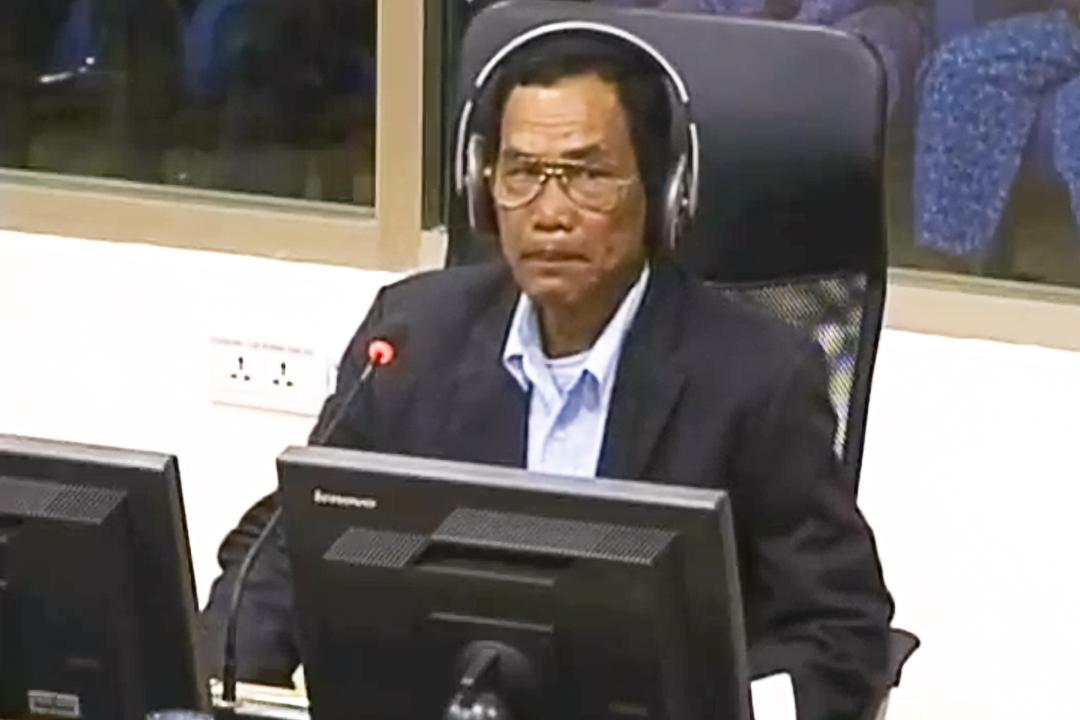
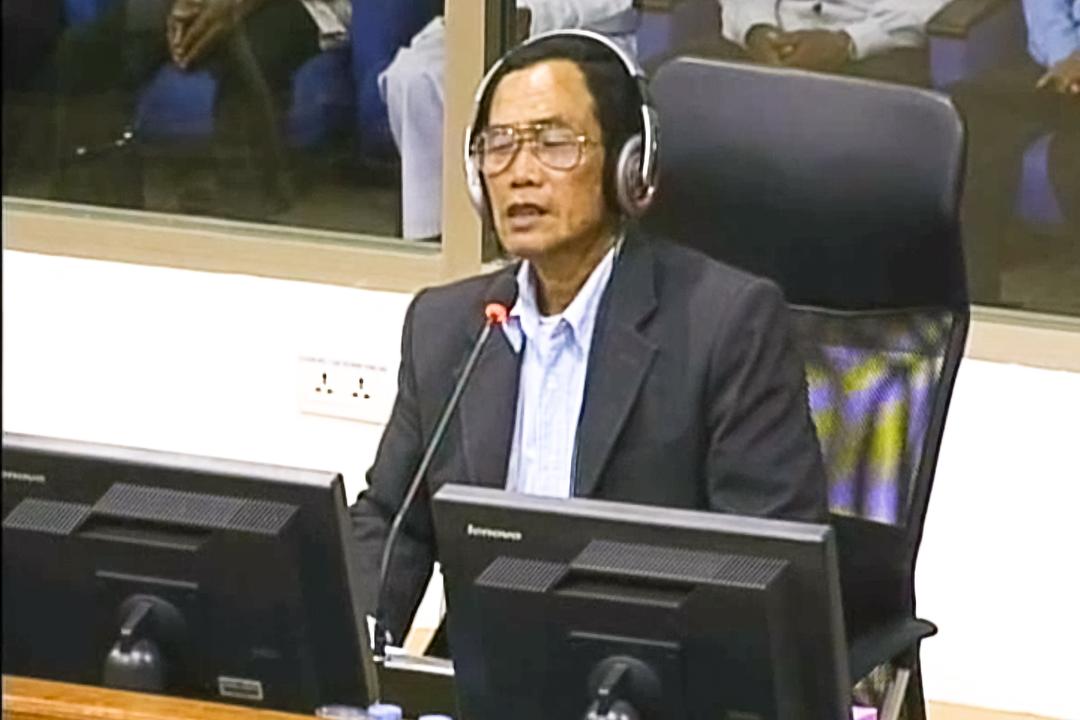
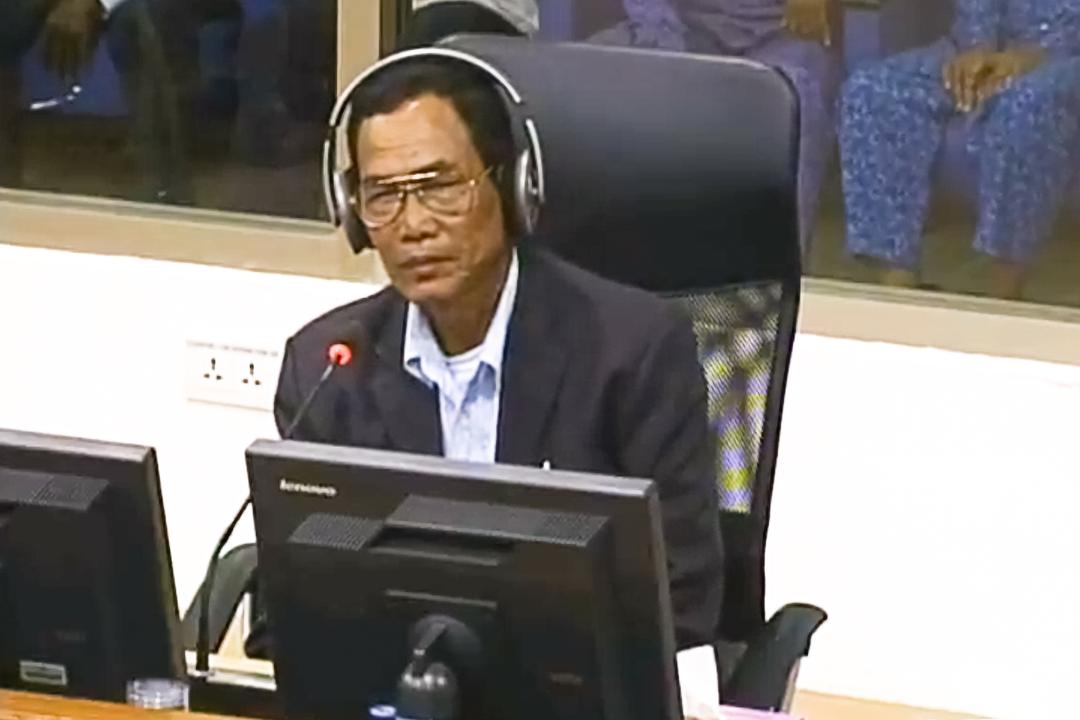
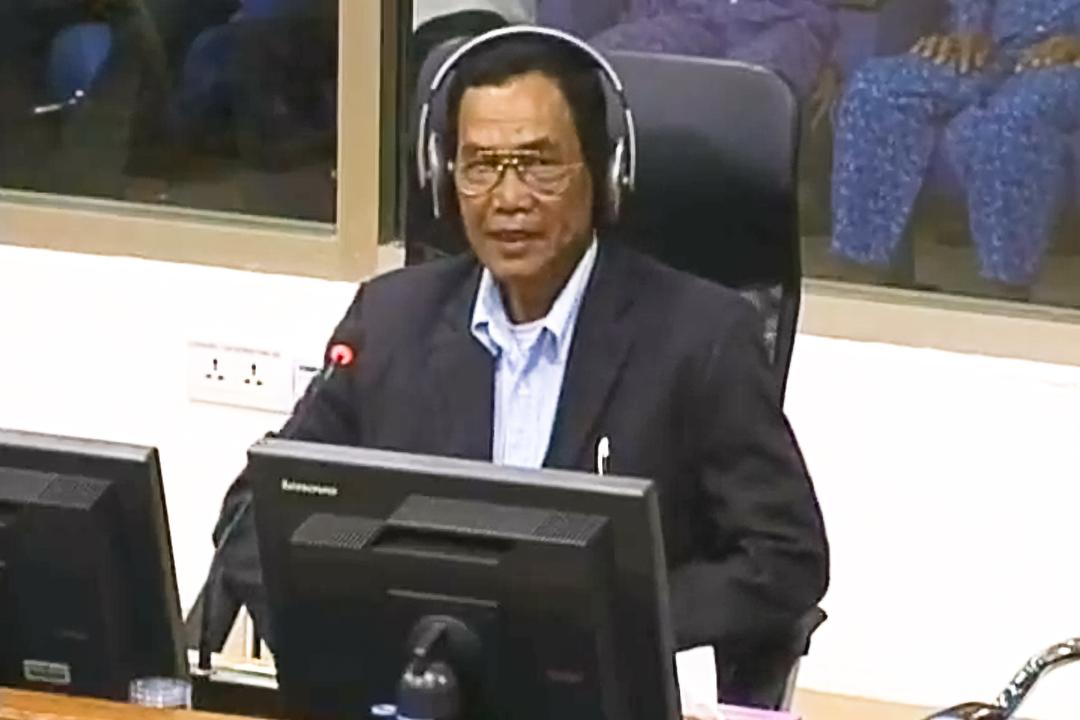
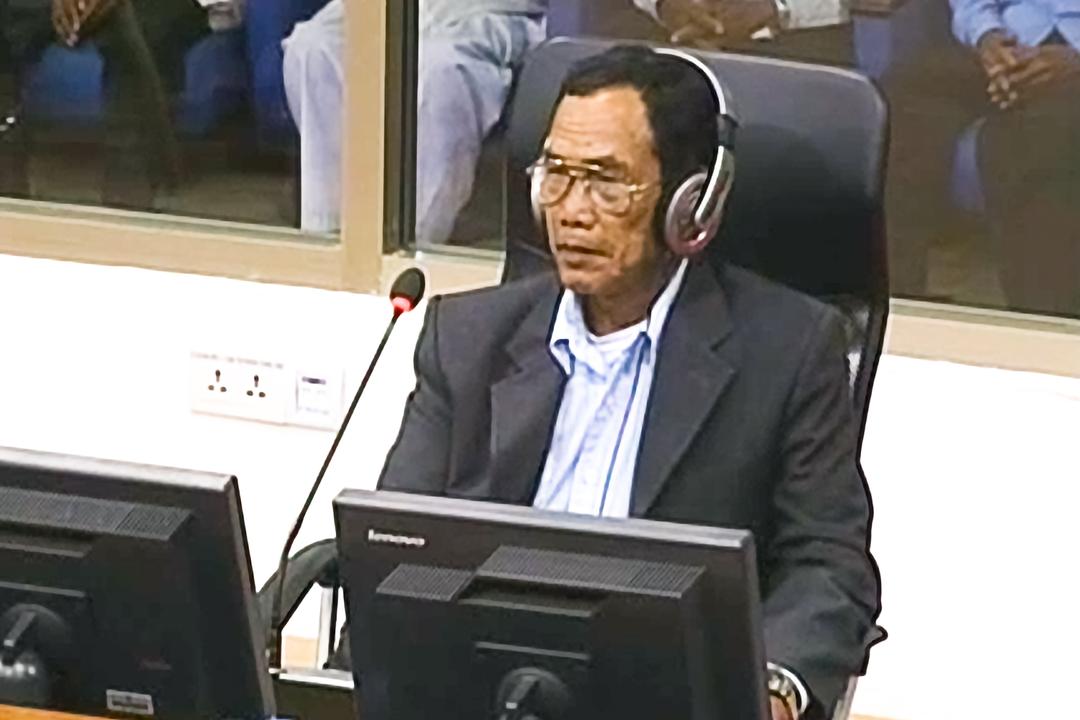
NORNG Sophang
Pseudonym: TCW-480
Cases: Case 002/01
Category: Witness
Background and role
Witness Norng Sophang was the head of a telegram coding/decoding unit based in Phnom Penh.
1
In mid-1973, he attended training on telegrams, which taught him how to translate and receive secret telegrams for translation, to be sent to “Angkar”. Men called “Pon” and “The” taught him to translate telegrams.
2
The witness arrived in Phnom Penh in late 1975.
3
His office was located in Sothearos School. Aside from coding and decoding telegrams, he was in charge of providing training to people who were sent from provinces to learn writing, reading, typing and to translate Latin letters into English, ultimately learning how to decode secret telegrams.
4
He remained in the same position until the arrival of the Vietnamese in 1979.
5
Administrative structures
According to Norng Sophang’s testimony, prior to the regime, there were various zones including the Special Zone, East Zone, North Zone, Northeast Zone, Northwest Zone, West Zone, and Southwest Zone, as well as autonomous sectors i.e. Preah Vihear, Mondulkiri, Siem Reap/Oddar Meanchey. After the liberation, the organization of the zones and sectors was the same as before 1975, except the Special Zone which was located in Phnom Penh.
6
However, he recalled that a new zone called Zone 801 was established later on, which included former autonomous sectors Siem Reap-Oddar Meanchey and Preah Vihear.
7
The witness commented on several Democratic Kampuchea documents, in particular the instructions relating to the communication of information which were issued by the Standing Committee between 1975 and 1978.
8
He explained the meaning of terms that were used in those documents and/or written communications. According to his testimony, “870” was a secret code that referred to the “Centre”,
9
and “committee 870” referred to the Standing Committee.
10
However, on the basis of various other evidence, the Trial Chamber was “unable to make a definitive finding” as to whether “870” referred to the Standing committee or Central committee.
11
The witness also recalled four main institutions of Democratic Kampuchea, being Committee 870, the State Presidium, the Peoples' Representative Assembly, and the Court.
12
Kang Chap was the President of the Court.
13
Khieu Samphan was the President of the State Presidium in charge of receiving official visits from foreign Heads of State and foreign delegates, and of economic affairs, including distributing materials to the local levels.
14
He recalled receiving messages from and calls with Khieu Samphan, related to the organization and the distribution of materials to the local levels.
15
On the basis of his testimony (amongst others), the Trial Chamber found that Khieu Samphan “never had direct military responsibilities”.
16
In the government, there were various Ministries including the Ministry of Foreign Affairs which were led by Ieng Sary,
17
Ministry of National Defence by Son Sen,
18
and Ministry of Industry by Vorn Vet.
19
Nuon Chea was the Chairman of the People’s Representative Assembly,
20
and also in charge of social and cultural affairs.
21
The witness recalled receiving only one message from Nuon Chea, in 1977 - an order to convene members of the Assembly for a meeting.
22
As to Pol Pot, he was the head of Committee 870.
23
He oversaw every sector and field, and had the right to “say anything concerning anyone.”
24
The witness explained: “According to the experience living through the Democratic Kampuchea regime, everything was managed by the Party, so Party was the supreme body with the highest authority. Even the State Presidium, the People's Representative Assembly, all of? which were the key institutions in the CPK regime, was all under the supervision […] of Committee 870. […].”
25
As to various offices in Phnom Penh that performed support functions for the Party Centre, Norng Sophang explained that there was an Office called “S-71”, led by Pang, was under the supervision of Committee 870. This office had many sub-offices which were called by code names beginning with the prefix ‘K’. He described the location and functions of these several “K” offices, including offices K-1, K-7, K-8, K-12, K-18, as well as the organisation of power within and between these offices. K-7 was the messenger unit in charge of receiving domestic guests from provinces, incoming mails for the Party Centre, and delivering general mails everywhere. K-8 was a production unit responsible for growing vegetables. K-18 was a telegraph office where all telegrams across the country were received and transmitted. K-18 and his office were under the supervision of ‘Pon’ and ‘The’ whose office located in K-1, Pol Pot’s residence and office.
Communication structures
The witness confirmed that the communication structure was hierarchical and was organised very thoroughly. Only the zones and autonomous sectors could report directly with the Centre or the central Telecommunication Section.
33
Information or reports that came from the lower echelons were compiled and then forwarded to the upper echelon in Phnom Penh.
34
Norng Sophang recalled that prior to 1975 telegrams were used to communicate between the Zones and the Party leaders in their headquarters. The telegrams from the Zones contained information on the development of the battlefields at the front, while the outgoing telegrams were in the form of directives for implementation at the base.
35
After April 1975, central telegraph offices were established in Phnom Penh and remained until the end of the regime.
36
Telegrams were mainly for long-distance communication; the various offices within Phnom Penh did not typically use telegrams to contact each other.
37
Other means of communications were the telephone and messengers who passed through K-7. The witness recalled having a telephone in his office with very restricted connection to a few offices in Phnom Penh.
38
Certain military units including navy and infantry forces had telephones and encoding and decoding units.
39
There was a communication section and telegram facilities for each zone and division.
40
As to the telegrams’ organization and process, upon being transmitted and received at telegraph office, telegrams were encrypted or decrypted as necessary at coder/decoder’s office, either at K-1 or at the witness’s office.
41
The encrypted messages were then sent to a separate telegraph operator for transmission.
42
After decoding, if necessary, the telegrams would be sent to ‘Pon’ so that they could be sorted and redistributed.
43
This separation of responsibilities was intended to “preserve the principle of secrecy”.
44
Telegrams were classified into two categories, confidential or highly confidential (pertaining to cadres’ travel plans or internal affairs), and open messages.
45
Unencrypted messages (open messages) were sent in Morse code in Khmer, confidential messages were encrypted into a coded number before transmission and additional encryption applied to highly confidential messages.
46
Video 11
Video 12
video 13
Video 14
Video 15
Video 16
Videos


