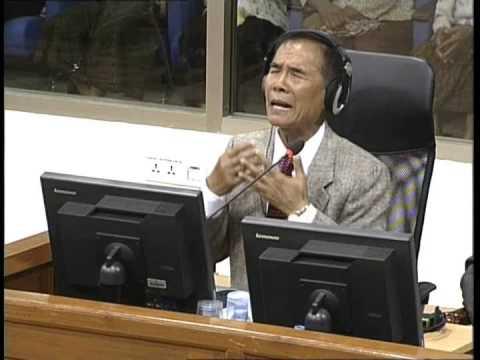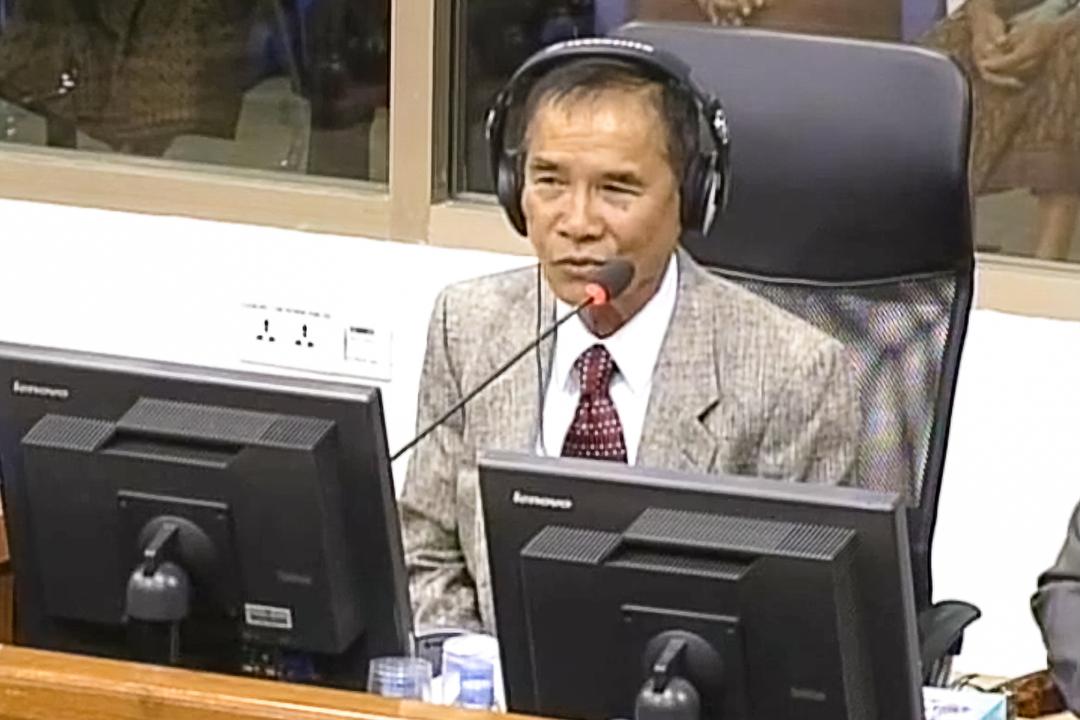
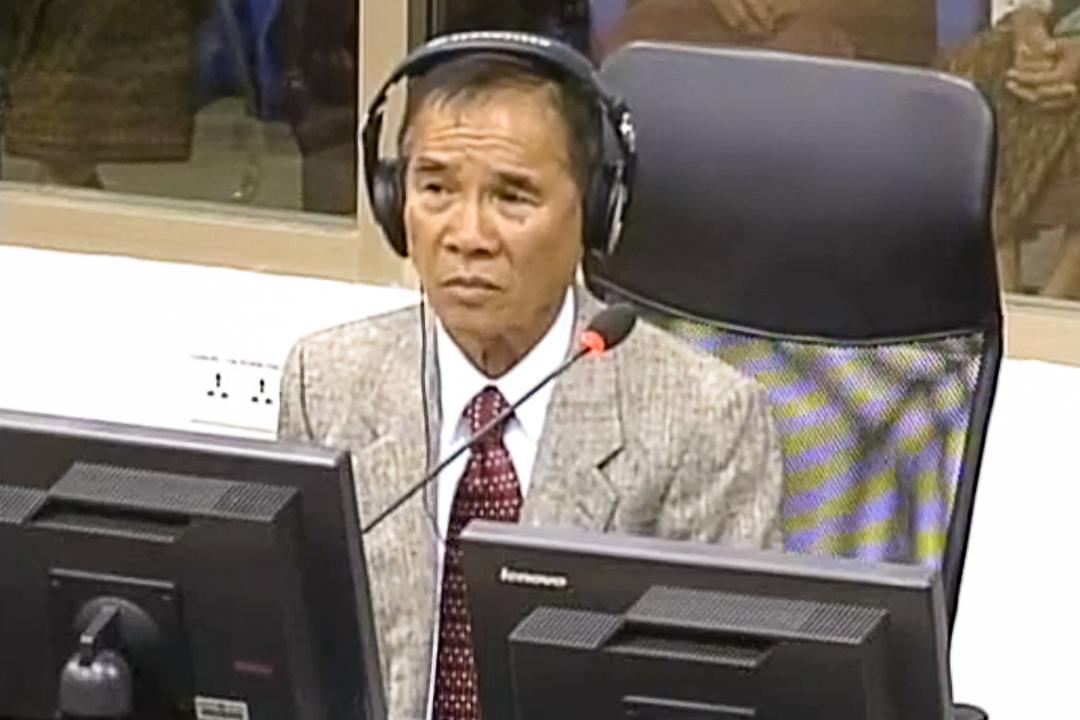
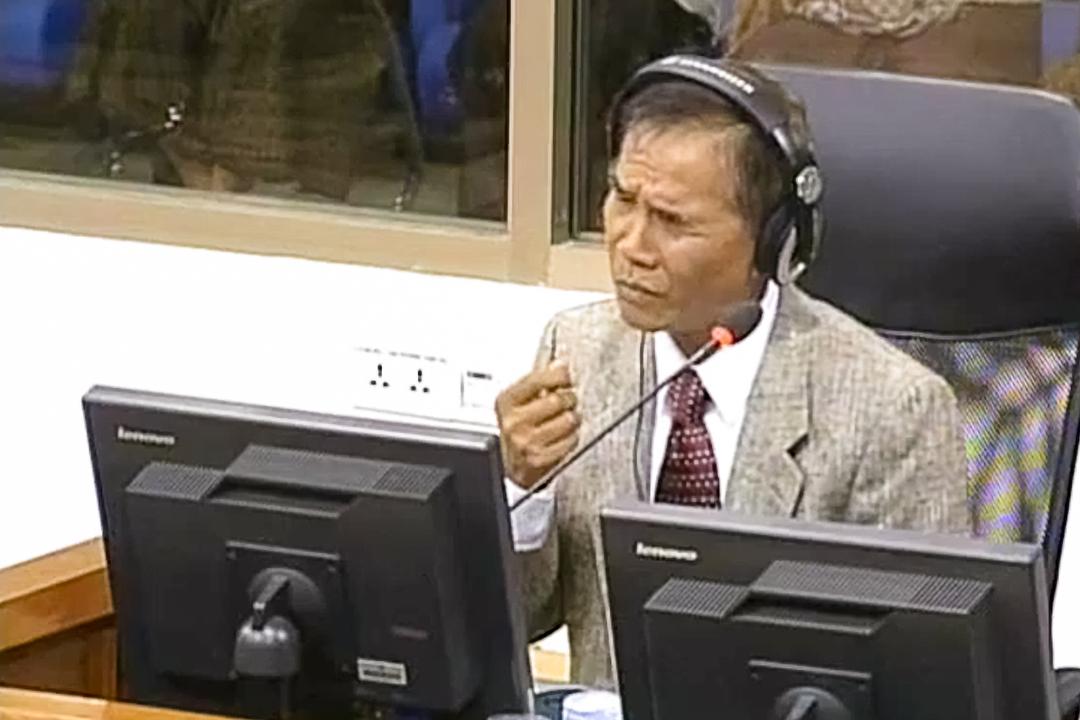
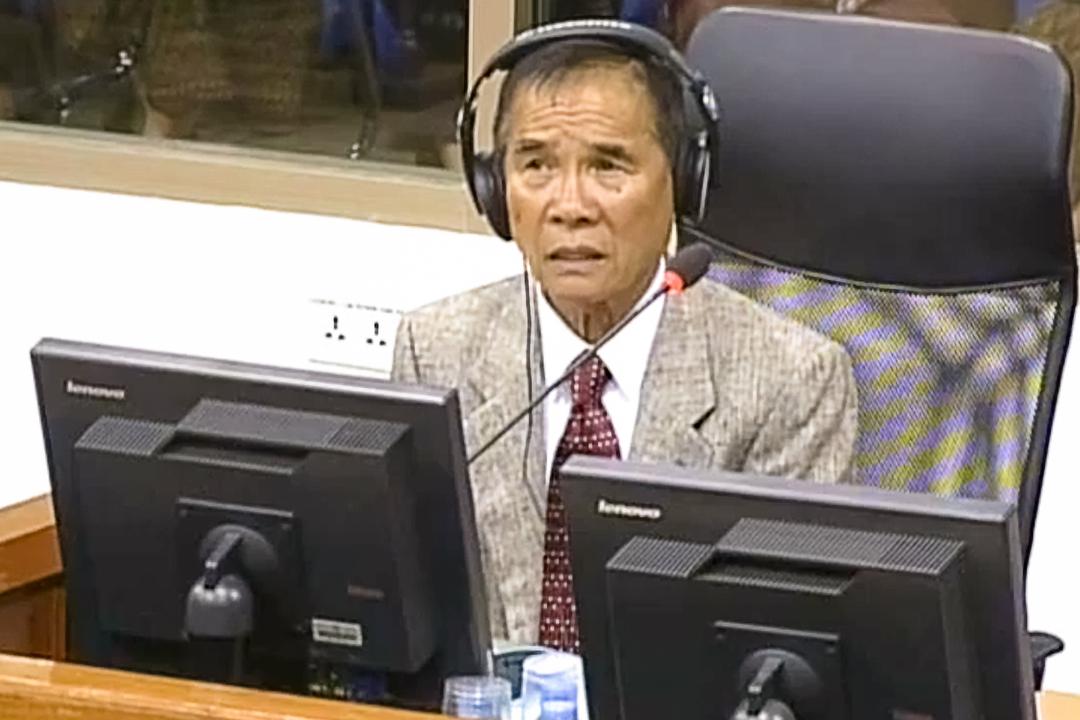
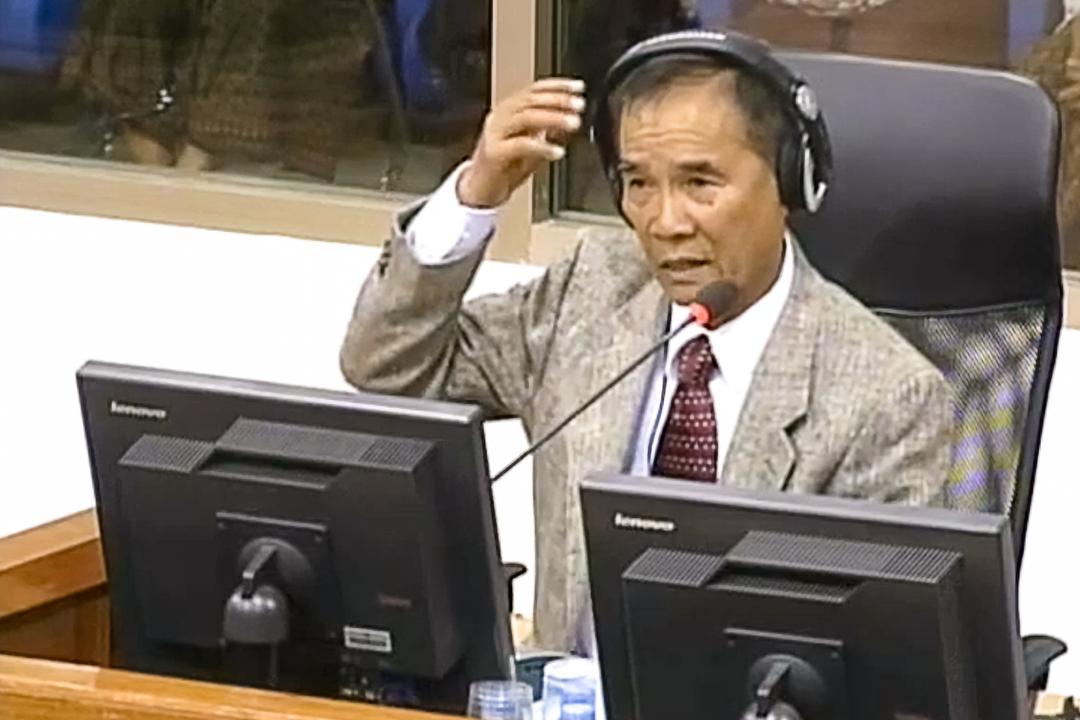
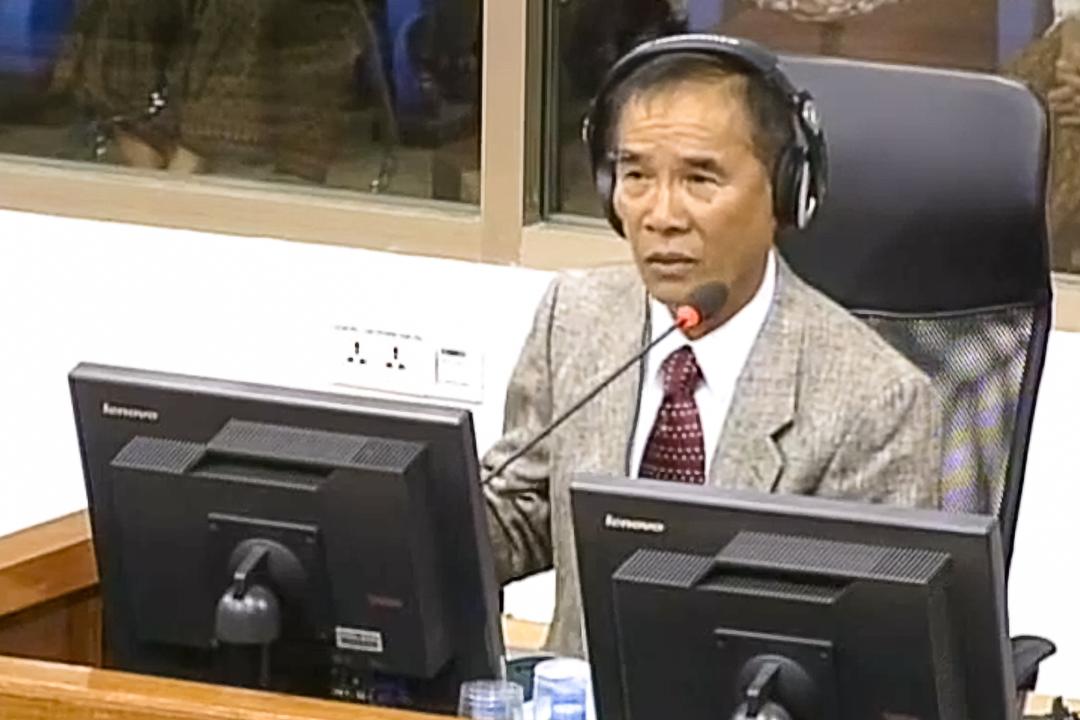
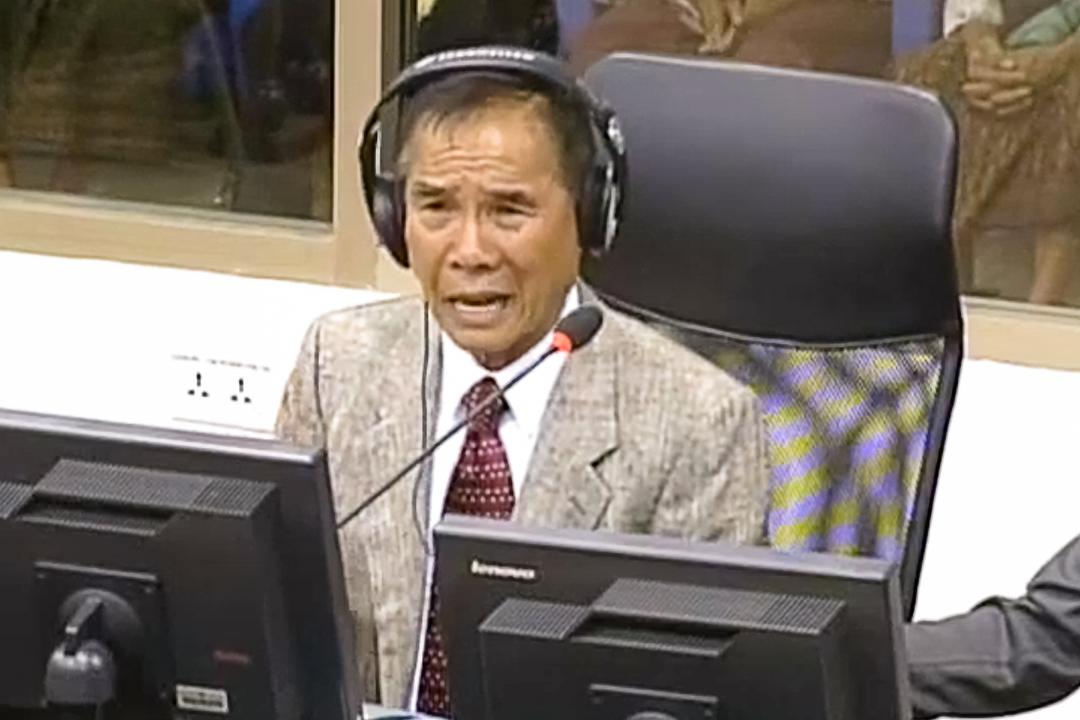
NOU Hoan
Pseudonym: TCCP-100
Cases: Case 002/01
Category: Civil Party
Background:
Prior to 1975, Nou Hoan worked in the anti-tuberculosis, anti-malaria, and wound treatment department in the Ministry of Health and was stationed in various provinces.
1
He testified in the Case 002/01 proceedings on the evacuation of Phnom Penh,
2
treatment of former civil servants
3
, forced labor,
4
and availability of medicine
5
during the Khmer Rouge regime. He also posed questions to Khieu Samphan during the hearing.
6
The evacuation of Phnom Penh
During the Phnom Penh evacuation in 1975, Nou Hoan and his family members were forced by Angkar out of the city, like many other city dwellers.
7
On 17 April 1975 he heard an announcement broadcast on mobile loudspeakers that all people had to leave their houses because the Americans would come and bomb the city.
8
His family members were moving toward the eastern side of the city and were told by the Khmer Rouge soldiers to keep walking forward.
9
They were not escorted by the Khmer Roug soldiers, but witnessed those soldiers stationing along the road.
10
He explained that there were huge crowds travelling out of the city, and some families lost their children along the way.
11
There were people dying along the street, there was no food and sick people could not seek any assistance.
12
The situation was chaotic.
13
His family went along the National Road Number 1 toward Prey Veng and Svay Rieng province.
14
At one point, they were fortunate to approach two Khmer Rouge soldiers who were guarding the truck and preventing people from taking the ferry to the other side of the river of Neak Loeang.
15
The two soldiers gave him some food.
16
Questions to Khieu Samphan and related information
During his testimony Nou Hoan put forward two questions to Khieu Samphan.
17
Firstly, seeking to understand who killed the people, and secondly how could the Khmer Rouge claim that they were defending our national interest and protecting the country when so many people were executed.
18
In response, Khieu Samphan apologized to Nuo Hoan for what happened to him during the Democratic Kampuchea regime.
19
Khieu Samphan added that he honestly did not know what was happening during the regime, because he was not an effective leader.
20
He further explained that he joined the Democratic Kampuchea by accident and had no intention to kill Cambodians and many innocent people.
21
He continued to maintain that he was only in charge of the propaganda and education of the party and had no power in the executive branch.
22
During the evacuation, when his family members were about to reach Champa Pagoda, they met other families who were heading toward Prey Veng province that knew Khieu Samphan well.
23
Those people said that Khieu Samphan would return to Phnom Penh and that he would also invite former servants to return there as well.
24
Former Lon Nol soldiers and civil servants
While reaching Chbar Ampov and Champa Pagodas, he saw writing on the blackboard asking former public servants, police officers, and military officers to register their names so that they could return to Phnom Penh after Angkar restored the country.
25
While some people went to register their names, Nou Hoan did not.
26
He had read communist documents prior to the fall of Phnom Penh and believed that there were indications of danger ahead.
27
Some Khmer Rouge soldiers were in uniform, while others were not, and they also stopped travellers suspected of being Lon Nol soldiers, and put them on one side.
28
Forced labor
In May 1975 after arriving in his home village for a week, Nou Hoan and his uncle, a former engineer, were taken to a study session in Preah Sdache office.
29
He testified that “the situation was miserable. We had to sleep on the ground and when it rained, we had to sit up and there was no food for us except the red corn”.
30
After being released from Preah Sdach detention centre on 27 October 1975, he returned to Prey Veng province and worked as a farmer.
31
He worked with base people ploughing the fields, transplanting rice and cultivating crops.
32
In 1978, he was assigned to work in a mobile unit, and his specific assigned tasks included carrying water and clearing the dining hall.
33
Medicine during the Khmer Rouge
Upon arriving in his home village, his belongings were taken away from him.
34
The Khmer Rouge took away medical equipment and syringes, but not the medicines.
35
They regarded certain modern medicines to come from imperialist countries and were thus confiscated.
36
They used only the rabbit dropping medicine pills for patients.
37
Traditional medicines made of herbs were commonly used to treat patients.
38
During the Regime, people were exchanging medicine with one another to save their sick children.
39
People could hide some medicine, but not the syringes.
40
There were some individuals who had medicine from France, but they had to be extremely careful when using them.
41
Videos