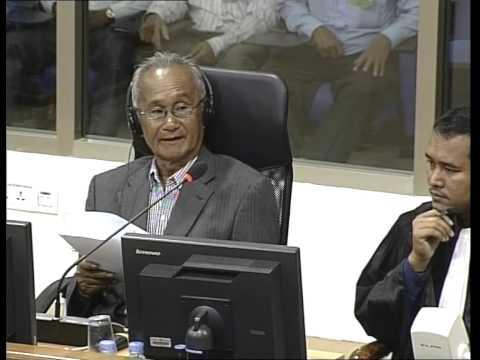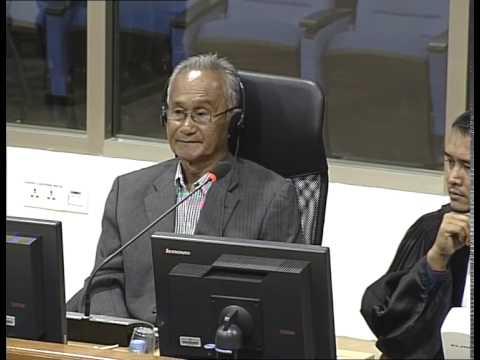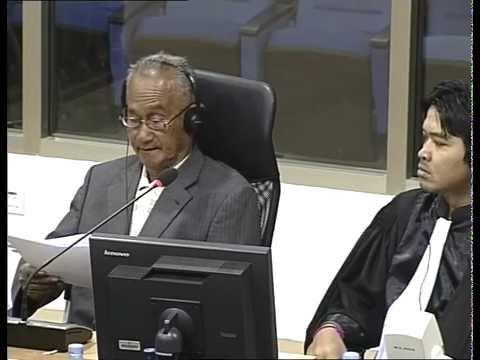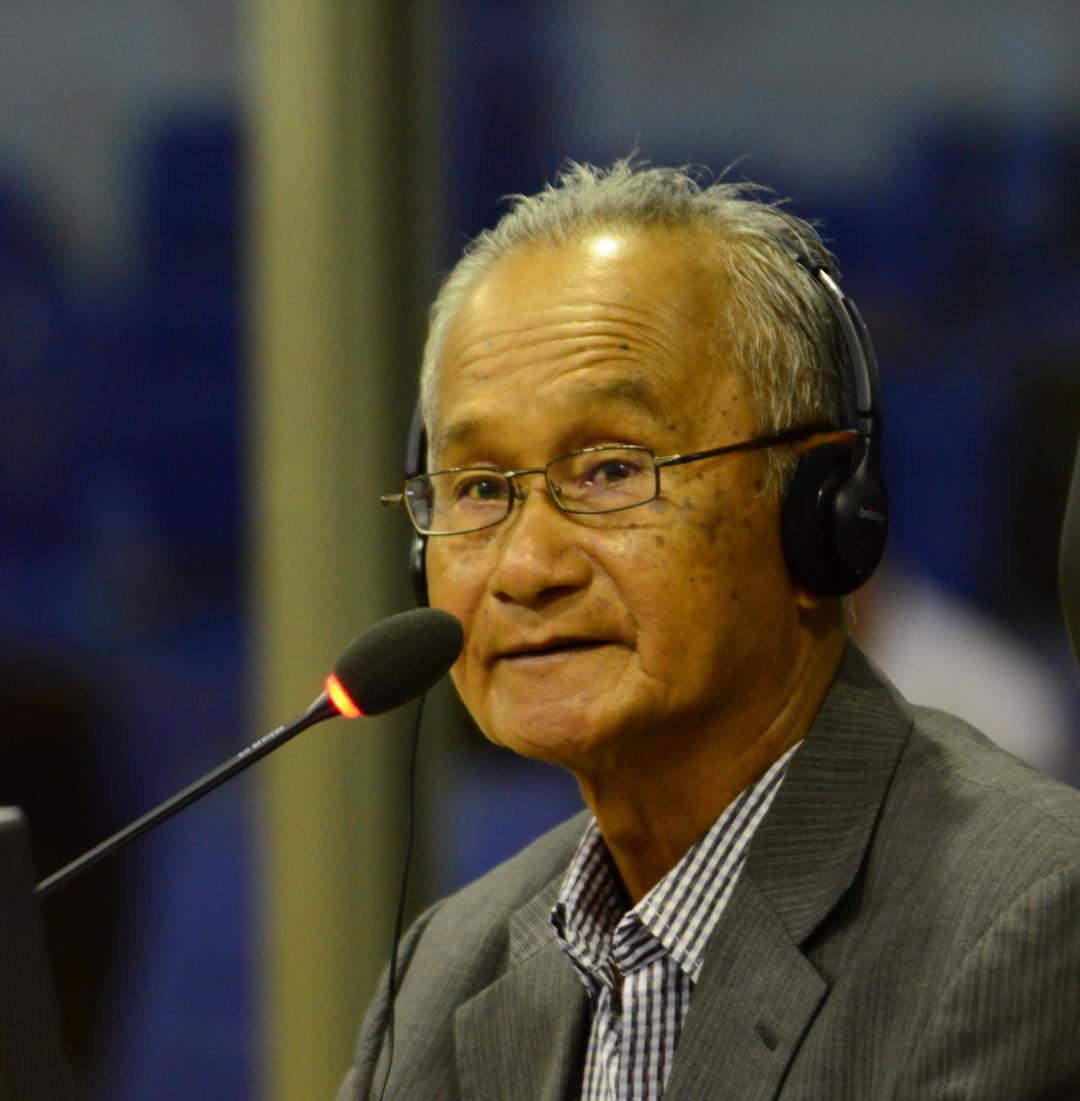
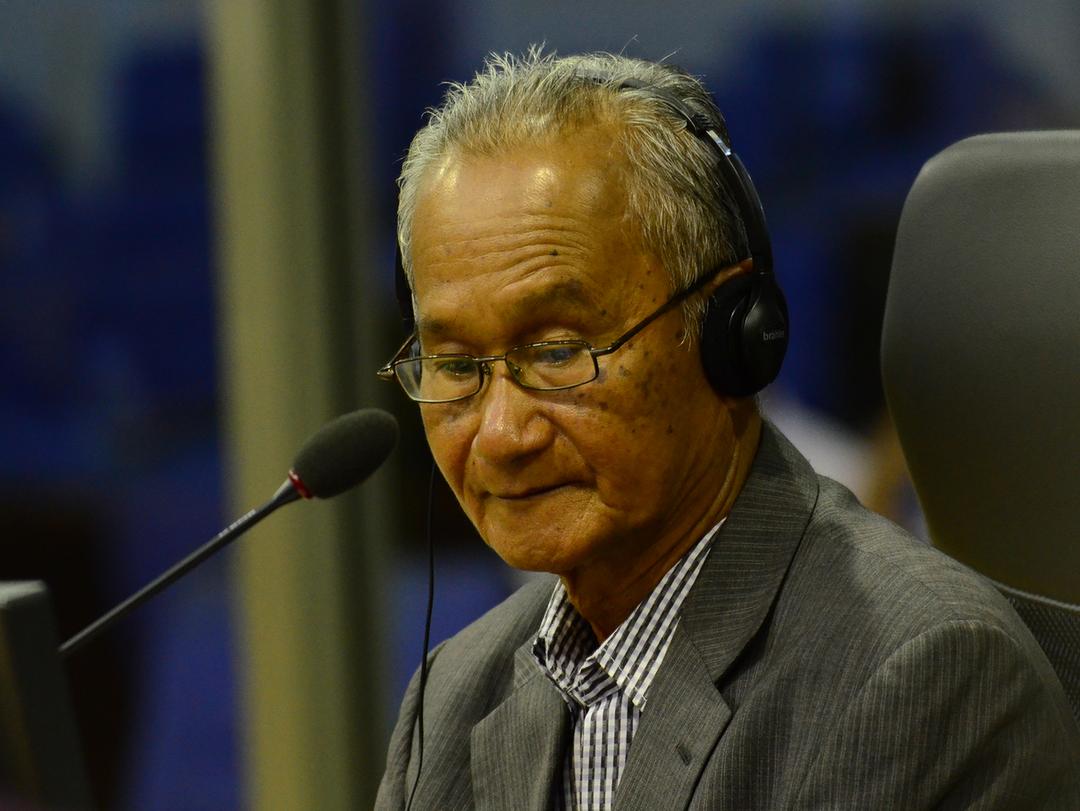
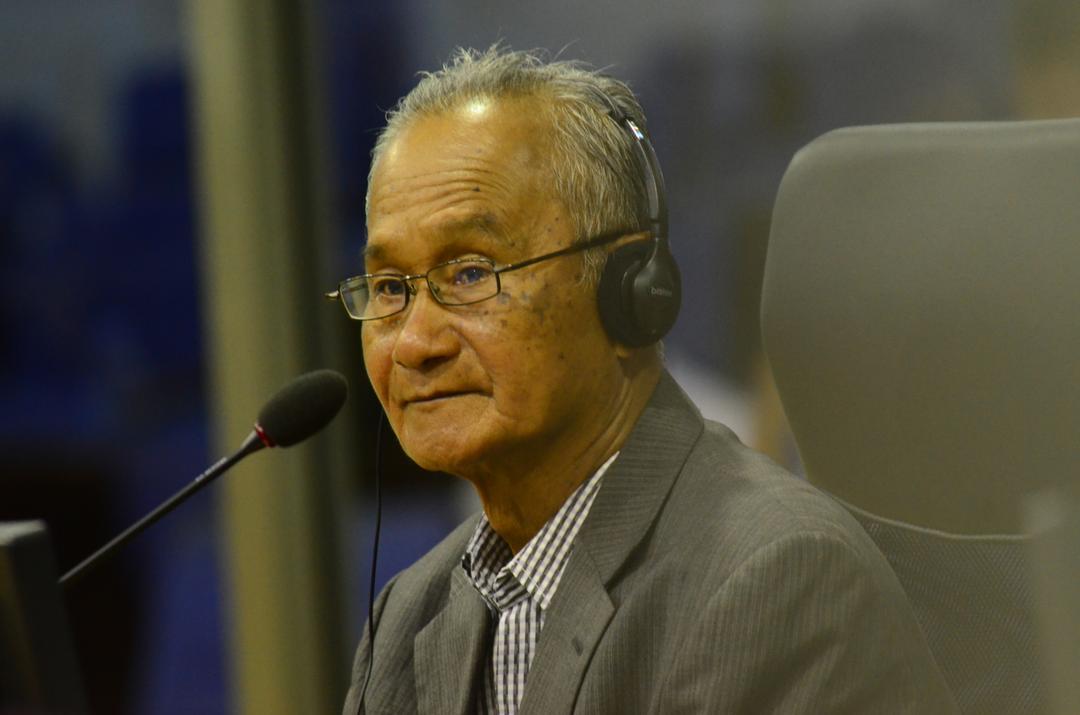
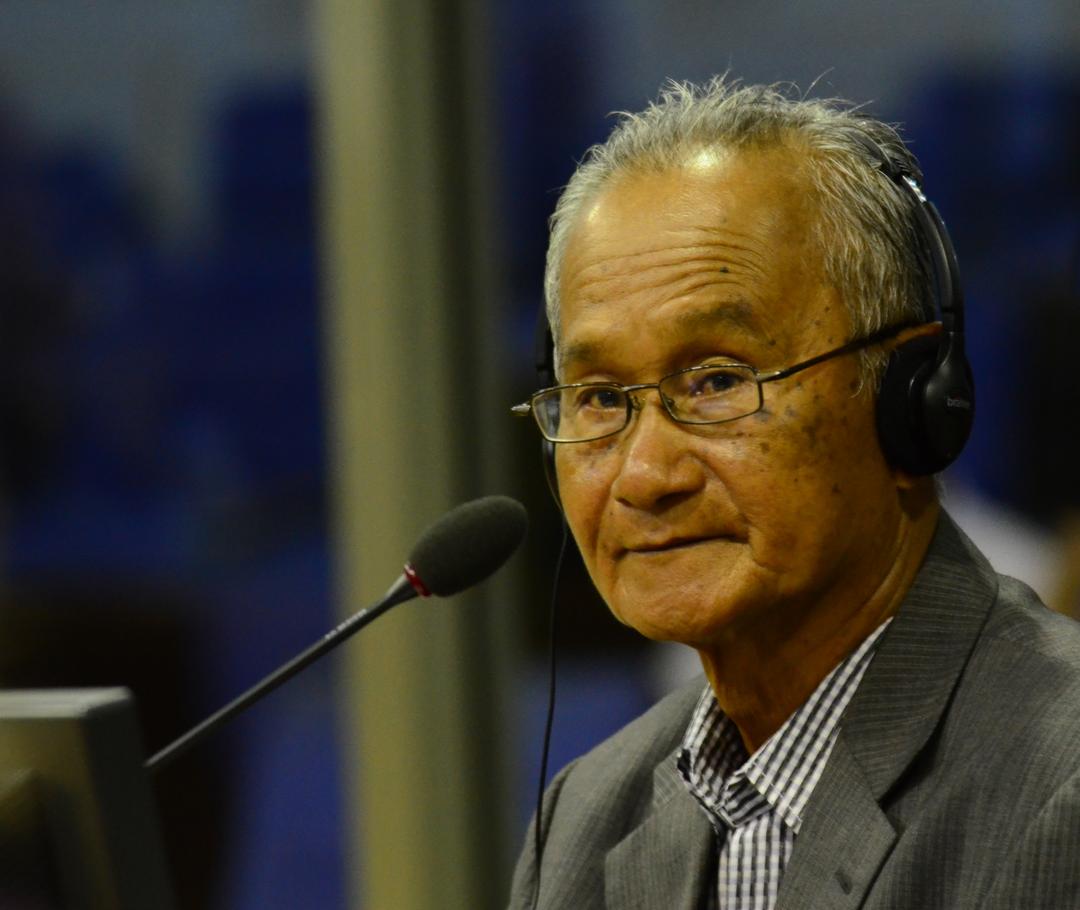
NUT Nov
Pseudonym: 2-TCW-948
Cases: Case 002/02
Category: Witness
Background and Role
Nut Nov was a Khmer Rouge group leader in Angk Roneab village, Tram Kak
commune, Tram Kak district from 1970-1973.
1
In 1974, he was transferred to Nhaeng Nhang where he was in charge of financial records and documents.
2
He then served on the commune committee in Leay Bour,
3
and was commune chief in Srae Ronoung
4
and again in Angk Ta Saom.
5
Nut testified as a witness in the Case 002/02 trial proceedings on decision-making structures in the CPK, categorization of people, distribution of food, and purges of perceived enemies.
During his testimony, Nut was confronted with witness evidence that he had led the commune military in Nhaeng Nhang. He denied this, responding that he only had economic responsibilities,
6
but acknowledged that people had been afraid of him due to his loud voice.
7
Decision-making structures
Orders went from the Centre to Zone to Sector to District.
8
As commune chief in Srae Ronung, Nut would attend meetings at Tram Kak district and Sector 13.
9
The Sector 13 chief was Ta Soam; then Ta Prak; then Ta Ran;
10
then Ta Tith; then Ta Kit.
11
Nut heard Ta Saom discuss purging the enemy, meaning anyone who opposed the Khmer Rouge regime.
12
Bun Si was the commune chief in Nhaeng Nhang until 1977. He was replaced by Ta Son.
13
Mean was the deputy.
14
Nut claimed that decisions about who would be arrested or killed (“smashed”) would be made at the sector or zone levels.
15
Commune leaders would draft reports about people who expressed opposition to the Regime and send them to the upper echelons for decision to be made.
16
Communes would also draft reports on people who tried to escape Cambodia.
17
Communes would keep records and send them to the upper levels.
18
Commune chiefs kept documents from the upper level.
19
Nut denied that he drafted such reports himself,
20
and instead testified that his communes held criticism and self-criticism sessions.
21
The Trial Chamber cited Nut’s evidence identifying people in positions of power and how the CPK made decisions.
22
Arrival of evacuees
Nut claimed he first learned of the evacuation of people from cities when he saw large crowds of people coming into his area.
23
Thousands were brought in 1975.
24
Nut testified that some of the evacuated people were being sent back to where they had been born.
25
When people arrived, village heads met with commune chiefs about taking their biographies.
26
Then the Khmer Rouge members drafted biographies.
27
Organization of people
When the Khmer Rouge took over Cambodia in 1975, people were organized first into mutual assistant teams and then into cooperatives.
28
From 1976, everyone had to work and eat communally.
29
In late 1977 or early 1978, people were organized into units.
30
At first, mutual assistance groups distributed food based on people’s ability to work, with stronger workers receiving extra rice.
31
People were categorized into full rights people, who were deemed loyal to the Khmer Rouge; “candidate people”, whose children had been sent for study or lived in the enemy zone; and 17th April people, city dwellers who had been evacuated to the communes.
32
17 April people were sometimes called prisoners of war.
33
The commune clerk would draft lists of people in each category, which the commune chief kept.
34
People in a given category would be assigned to live together.
35
Nut testified that in late 1978, these divisions were abolished.
36
In its Judgment, the Trial Chamber cited Nut’s testimony on the categorization of people and communal distribution of food.
37
Living Conditions
District level authorities would give the commune a package of food. The commune chief would allocate food to different units, and Nut would supervise the distribution.
38
Sometimes Nut would get food or clothing from the district level,
39
and rice came in from overseas.
40
There was a food shortage,
41
especially in Leay Bour and when Nut arrived in Srae Ronung.
42
There were also no proper schools.
43
Though conditions were difficult, people were too scared to express opposition to the Khmer Rouge.
44
Many became ill, especially New People who were not used to working in the fields.
45
Nut testified that sick people received medical treatment,
46
though there was limited medicine and few medics.
47
Some of the sick people died.
48
Purges
Nut testified that sector-level Khmer Rouge authorities directed district and commune level leaders that everyone who opposed the Khmer Rouge was the enemy.
49
Khmer Rouge members were taught to “strictly follow” the party’s policy.
50
He explained that to “sweep clean” meant to purge disloyal Khmer Rouge members, and that even commune chiefs could be purged.
51
People who opposed the Khmer Rouge would be arrested and generally were never seen again in the commune; he was told they had been sent for “re-education.”
52
It was Nut’s impression that they were executed.
53
Commune and district authorities received reports on arrests.
54
Nut testified that only those “few” Lon Nol officials who opposed the Khmer Rouge were sent away.
55
When confronted with witness evidence that former officials were gathered at Champa Leuk and killed, he claimed not to have been aware of this.
56
Confronted with evidence of purges of Lon Nol officials in other communes, he claimed they were not all purged in Nhaeng Nhang.
57
His role as Chief of Srae Ronung commune
Nut himself was a second category, or “base” person, but he was put in charge of a commune as a result of his good work performance.
58
He was appointed chair of Srae Ronung by district chair Ta Kit; district committeeman Ta San; and Ta Chim.
59
His deputy was Som Phoa.
60
Dissidents had been purged in Srae Ronung before he took over as commune chief.
61
He asserted that Ta Khun, the previous commune chief, was dismissed for cruelty and disobeying orders.
62
He claimed there were no arrests during his period as commune chief.
63
Shown records of people sent from Srae Ronung to prisons in 1978, he responded that he knew nothing about them.
64
He acknowledged that in 1977, before he arrived, commune officials made lists of ethnic Vietnamese people and Khmer Krom people in the area.
65
Videos