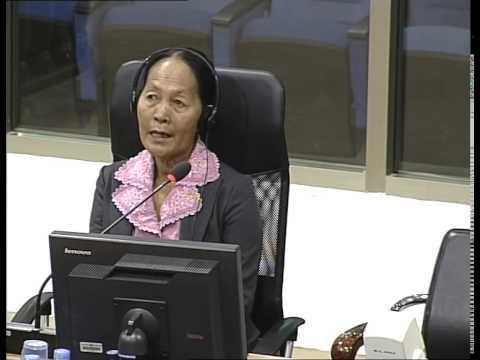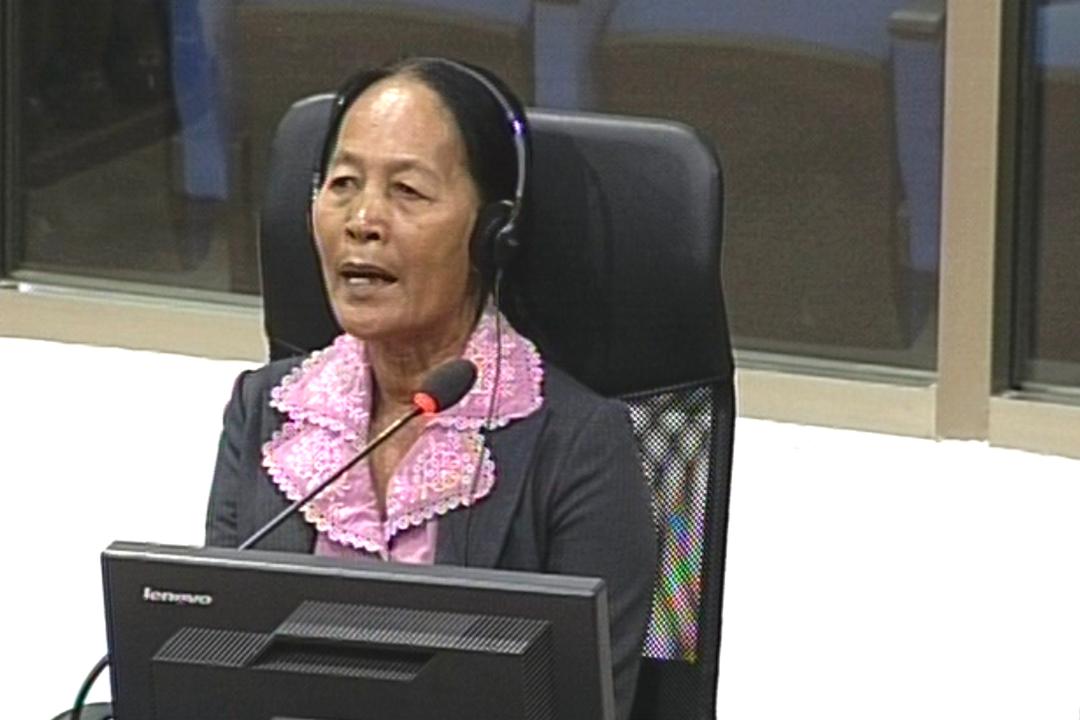
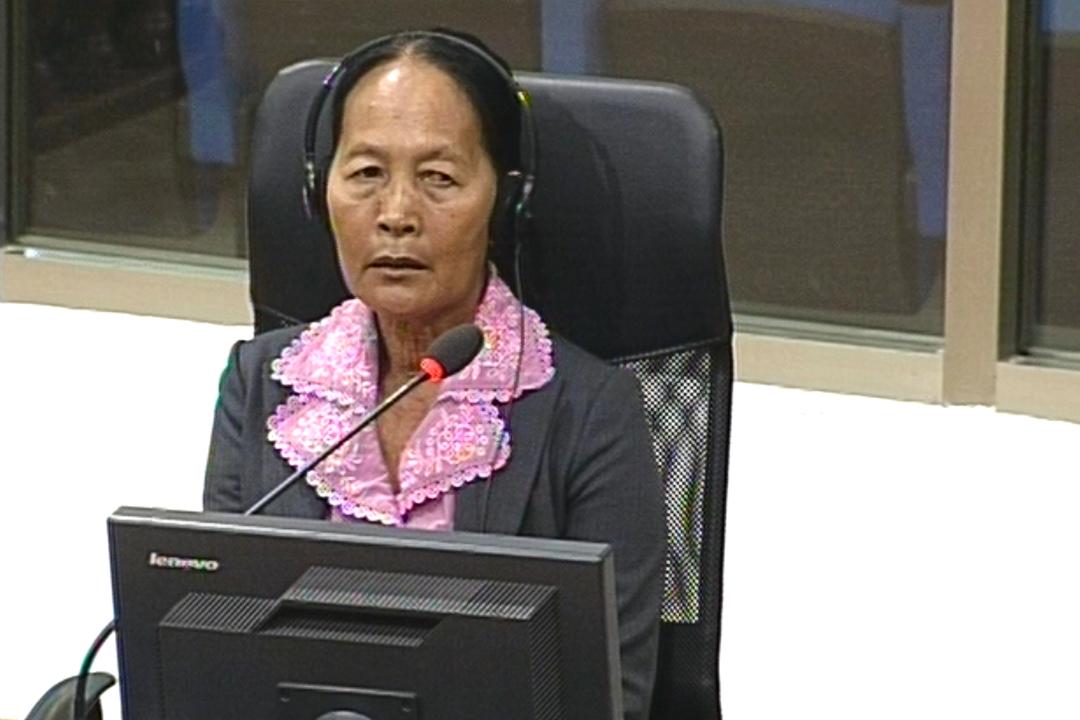
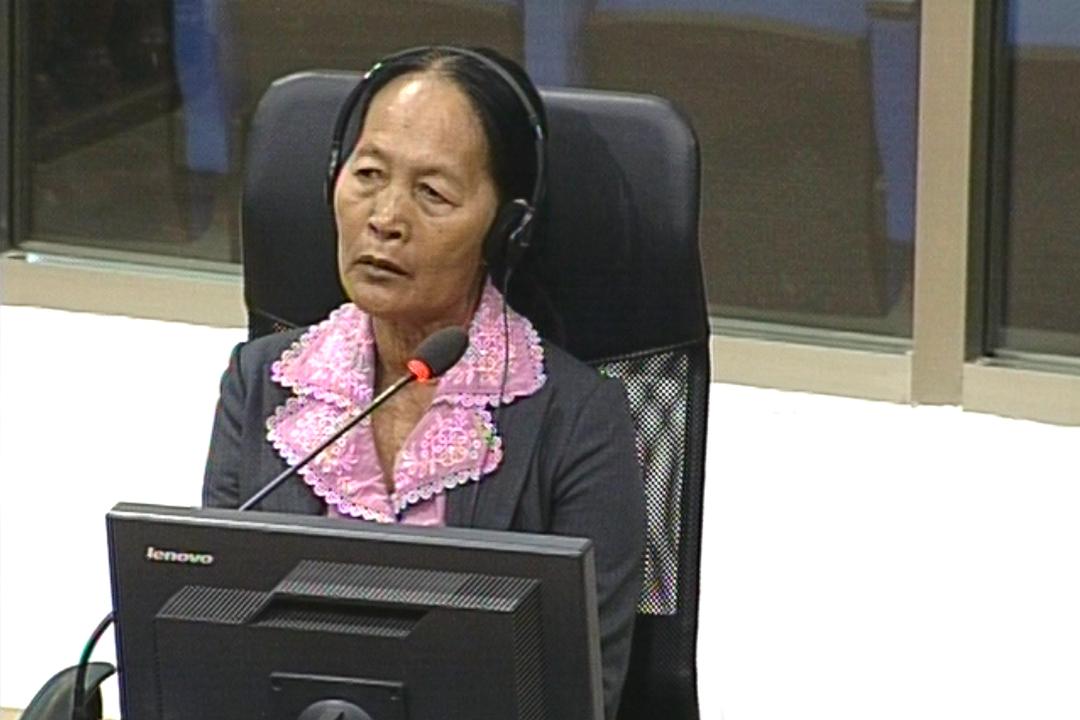
OEM Saroeurn
Pseudonym: 2-TCCP-980
Cases: Case 002/02
Category: Civil Party
Background and role
Around 17 April 1975 Oem Saroeurn was categorised as a “New Person” and was evacuated from her home village in Takeo province to Champa pagoda in the province’s Tram Kak district.
1
As a New Person, she settled in K-3 Cooperative in Leay Bour Commune where she was assigned to carry earth, dig canals and build dams in a group of 12 women.
2
She testified before the Case 002/02 Trial Chamber as a Civil Party on killings and disappearances of Khmer Republic officials – including her family members who held positions in the Lon Nol regime - and the treatment of New People in Tram Kak district during the Khmer Rouge period.
3
Killing and disappearance of Khmer Republic officials
In April 1975 Oem Saroeurn arrived at Champa pagoda in Tram Kak district with her family along with large numbers of other people.
4
She described persons registering the arrivals’ names and taking notes of their previous roles and professions.
5
Those who disclosed that they had held high ranks or were senior officials in Lon Nol regime were taken away under the pretext that they would return to their previous jobs but in reality they disappeared.
6
Her uncle, Im Chak, a former secret agent, was one of those taken away from the pagoda along with former teachers, soldiers, police and custom officers.
7
The Chamber relied on Oem Saroeurn’s testimony, among other evidence, in finding that the events at Champa pagoda lasted one week or slightly longer in the immediate aftermath of 17 April 1975,
8
and that evacuees were asked to divulge their previous occupations with some being killed or disappeared or sent to Kraing Ta Chan Security Centre as a result.
9
In 1976 Oem Saroeurn received confirmation from a guard named Chim at Angk Ta Saom prison of the death of her husband, Oy Mut, who was also a Lon Nol soldier, as well as of the deaths of other family members who held positions in the former government, including her father, Im Phum, her uncle, Im Chak, and her elder brother, Ung Lim.
10
Chim was in charge of maintaining the list of prisoners held at Kraing Ta Chan Security Center in Tram Kak district.
11
Treatment of New People in Tram Kak district
After one week of staying at Champa pagoda, Oem Saroeurn was moved to Leay Bour commune.
12
On arrival, group chiefs recorded the names and categorizations of the members of each group and passed the information to the village chief.
13
The K-3 cooperative was for New People, whereas the K-1 model cooperative was for Base People who had clean biographies.
14
Oem Saroeurn described the food ration consisting of one can of rice for two people per day in K-3 Cooperative, and that New and Base People ate separately.
15
New People received less rice or gruel than Base People who were allowed to eat first and ask for more food from other Base People who were working in the kitchen.
16
New People were not allowed to enter the kitchen as the Khmer Rouge were afraid they would poison the food.
17
Hunger forced Oem Saroeurn to steal cassava and maize.
18
She was caught and sent for re-education, which involved being threatened that if she stole again, she would be in danger.
19
Since it was her first offence, she was released.
20
One day in 1976, two of her friends were raped and then disappeared after stealing food.
21
Oem Saroeurn also witnessed the brutal killing of a 15-year-old boy for stealing a package of rice and some fish.
22
After the incidents, Oem Saroeurn did not dare complain about the lack of food.
23
Medical care in Leay Bour commune was minimal.
24
Recommended treatment was in the forms of ants, ginger and liquor.
25
Oem Saroeurn identified Leay Bour Hospital as Hospital 17.
26
When she felt sick with malaria in 1976 she was given an injection made from coconut juice into her leg.
27
She has not walked properly since.
28
Her son, Im Rithy, died from measles in 1976.
29
Statement of suffering
“I would like to seek an individual compensation for the loss of my materials and property and for the loss of the lives of my husband, my child and my relatives.”
30
Videos