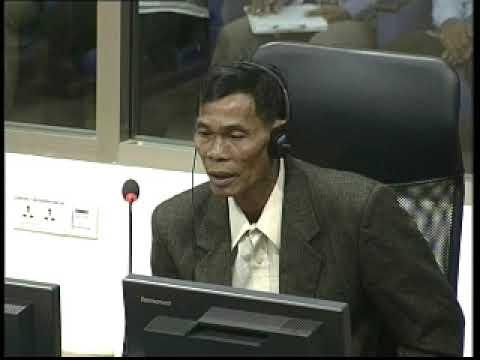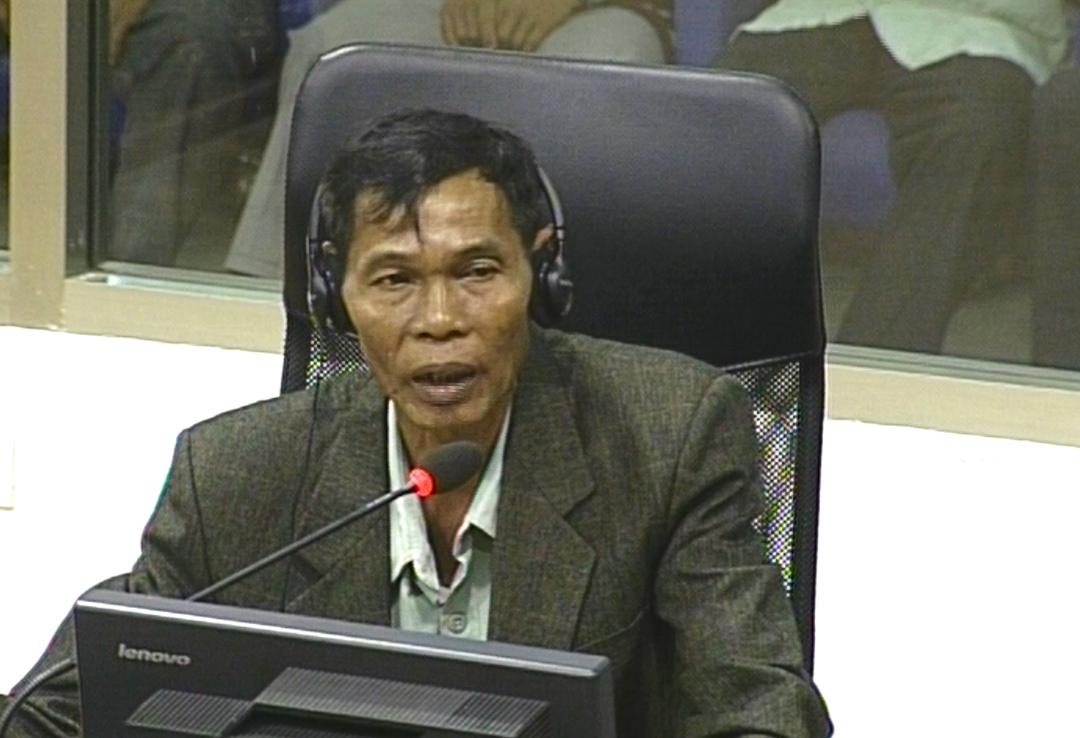
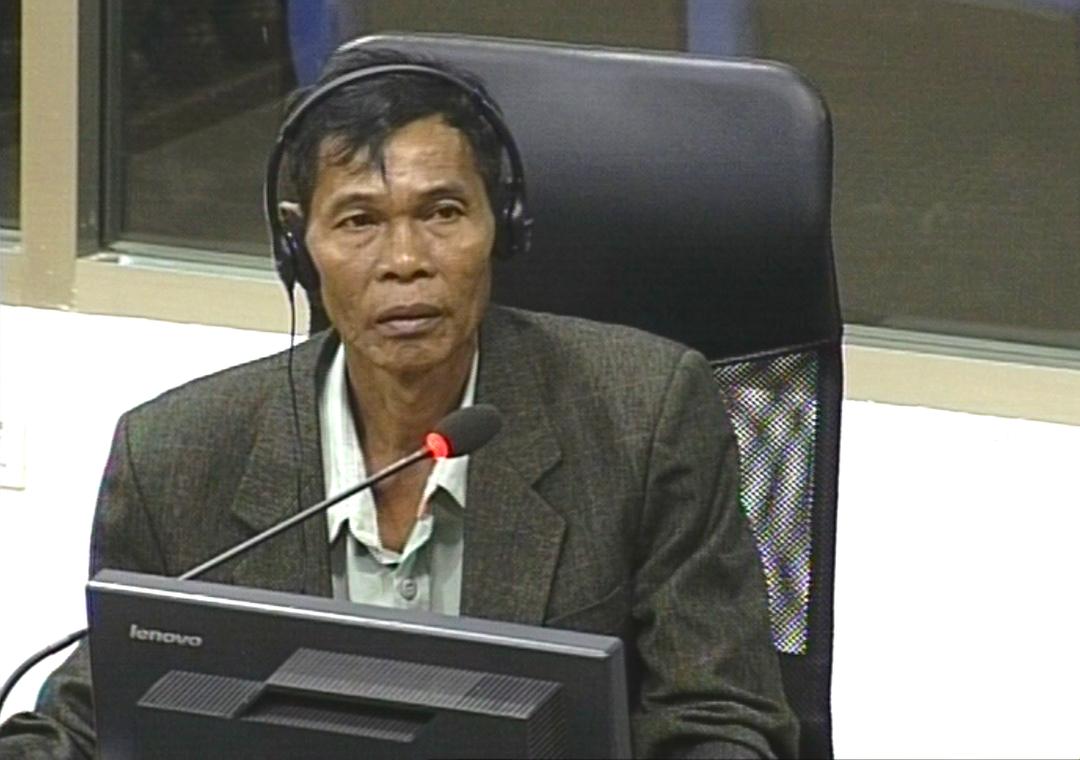
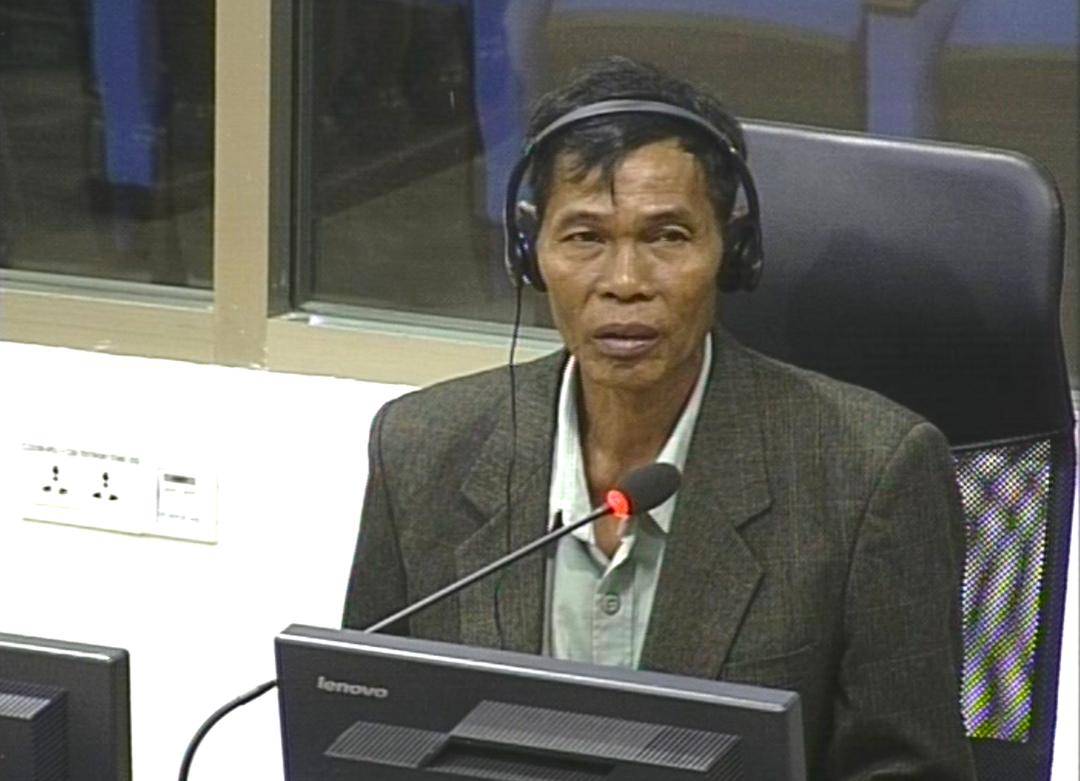
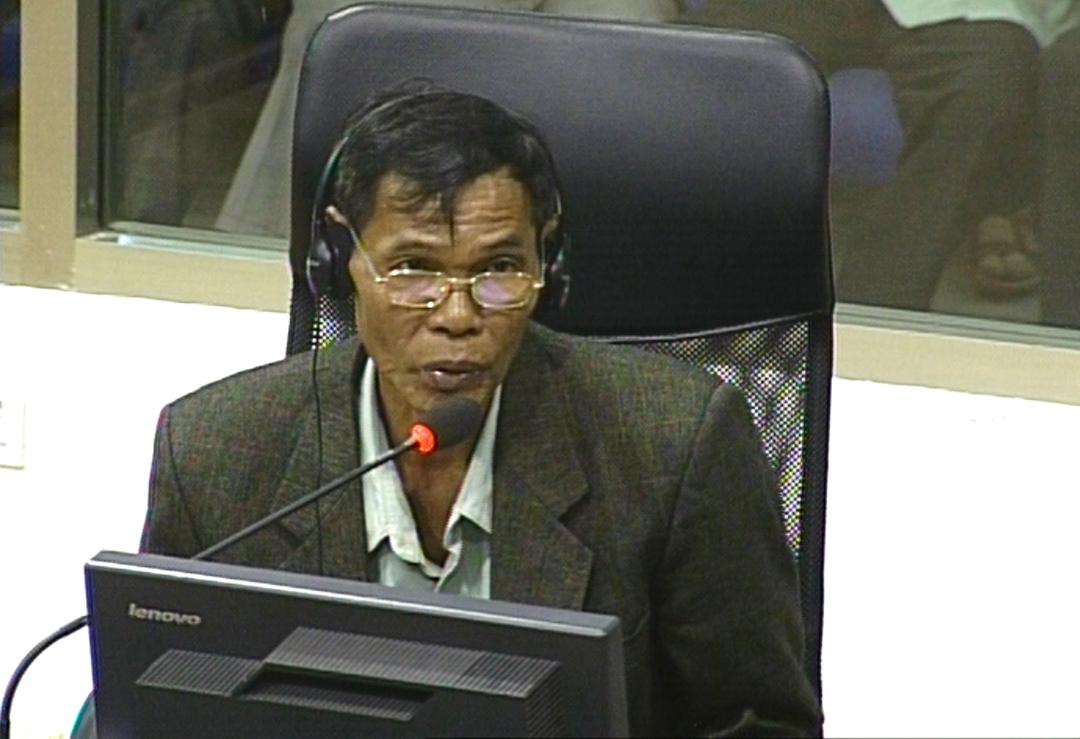
PAK Sok
Pseudonym: 2-TCW-1000
Cases: Case 002/02
Category: Witness
Background and role
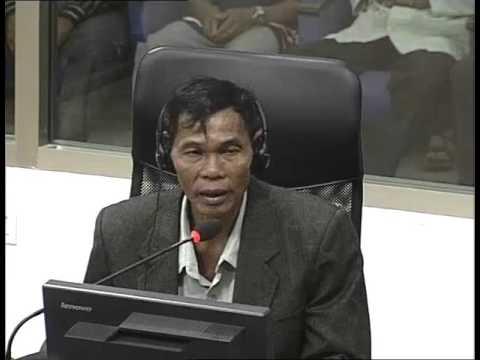
Pak Sok testified as a witness in Case 002/02 about the arrests and killings of the Vietnamese during the Democratic Kampuchea (DK) period. The Trial Chamber relied on his testimony in finding the existence of a policy targeting the Vietnamese for arrests and killings. Pak served in the Khmer Rouge military in 1972
1
and later joined the naval forces
2
of Division 164
3
from 1975 until 1979
4
in Kampong Som,
5
patrolling the border at night
6
and arresting anyone on boats from Thailand
7
. Meas Muth was the commander of Division 164,
8
headquartered near the theatre in Kampong Som.
9
It had seven regiments, of which he knew of regiments 61, 62, and 63.
10
Pak was based in Tang Island in 1975, Poulo Wai Island in 1976, and Ou Chheu Teal port in 1977.
11
He recalled that the Vietnamese fought to capture Poulo Wai Island in June 1975, but returned the island to Cambodia three months later.
12
The Trial Chamber relied on Pak’s testimony, and other witnesses, to establish the organisational lines of the Zones, Sectors, Districts, and Sub-District Entities during the DK period.
13
It also relied on Pak’s testimony to find that Vietnamese troops occupied the Poulo Wai Islands in early June 1975 at withdrew its troops that August.
14
Orders to arrest the Vietnamese
Orders concerning arrests were relayed down a hierarchy from the upper echelon to the division, then to the regiment, and finally to the battalion.
15
When a vessel was captured, the order from the top was to send those arrested to land, unless they were few, in which case they were killed on the island.
16
Vietnamese soldiers had to be sent ashore where their confessions were broadcast via national radio before they were killed.
17
The Trial Chamber relied on Pak’s testimony to find that Vietnamese boats entering DK territorial waters were systematically seised or otherwise targeted.
18
Killing of the Vietnamese
Pak testified that between 1975-1979, thousands of Thai and Vietnamese fishermen and refugees were arrested and killed.
19
The Vietnamese were treated differently from the Thai as they were considered the hereditary enemy of Pol Pot, regardless of whether they were military or civilians, and when they had guns, they had to be shot.
20
Pak referred to the Vietnamese as the “Yuon”, stating that when they were arrested, whether soldiers or refugees, they would be killed.
21
He explained that “if there were many of the Vietnamese, they would be sent ashore, but if there were only a few Vietnamese, they would be killed right on the island”.
22
During a mandatory training for Division 164, attended by Pak, the Communist Party of Kampuchea (CPK) instructed soldiers and sailors to kill Vietnamese “even if it was a baby” because they are their “hereditary enemy”.
23
While stationed on Poulo Wai Island, Pak witnessed a Vietnamese husband and wife with their one-year-old child arrested and killed by soldiers from a special unit of regiment 622.
24
On one occasion, Pak transported 12-13 Vietnamese to the Ou Chheu Teal port by truck who had been captured by his ship and beaten.
25
One of them was a Vietnamese soldier, while the others were ordinary people headed to Thailand.
26
He recalled a baby crying loudly while its mother was tied up and that the baby was thrown into the sea by the soldiers once they arrived at Ou Chheu Team port.
27
The Trial Chamber found Pak’s evidence on the targeting of the Vietnamese to be credible and relied on it to find that the crime against humanity of murder was established with respect to killings of the Vietnamese after April or May 1977 at Ou Chheu Teal port.
28
It also relied on his and other evidence to find that the CPK referred to, and promoted, Vietnam and the “Yuon” as the “hereditary enemy” of Cambodia,
29
and that the term “Yuon” was not limited to combatants.
30
The Trial Chamber further found, relying on Pak’s and other testimonies, that the killings of Vietnamese were systematically organised and directed against the Vietnamese, satisfying the actus reus of the crime of genocide.
31
The Supreme Court Chamber found no error in the Trial Chamber’s understanding of the term “Yuon” and Vietnam as the “hereditary enemy”
32
and affirmed the existence of “a centrally-devised policy targeting the Vietnamese for adverse treatment, dismissing the Defence’s argument
33
. It further found that the Trial Chamber’s reliance on Pak’s evidence alone to find that Vietnamese individuals had been killed on 19 March 1978 was reasonable.
34
Finally, it dismissed the Defence’s submissions regarding the killings not meeting the breadth and scale required for extermination.
35
Biographies
After liberation day in 1975, Pak was ordered to write a biography several times per year declaring personal details and whether he had any bad elements linked to his family background since he was a soldier with relatives who were former soldiers.
36
Videos