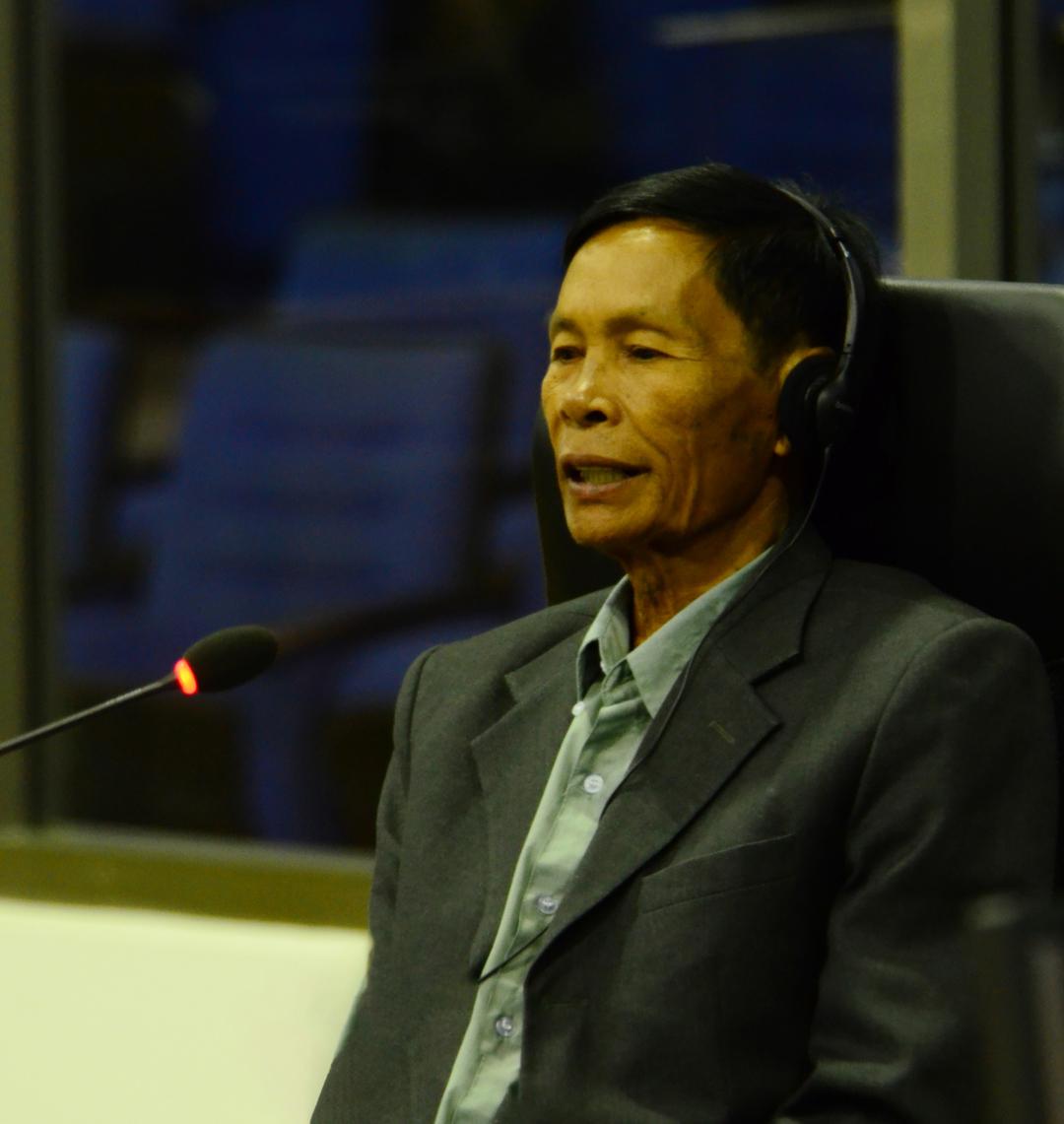
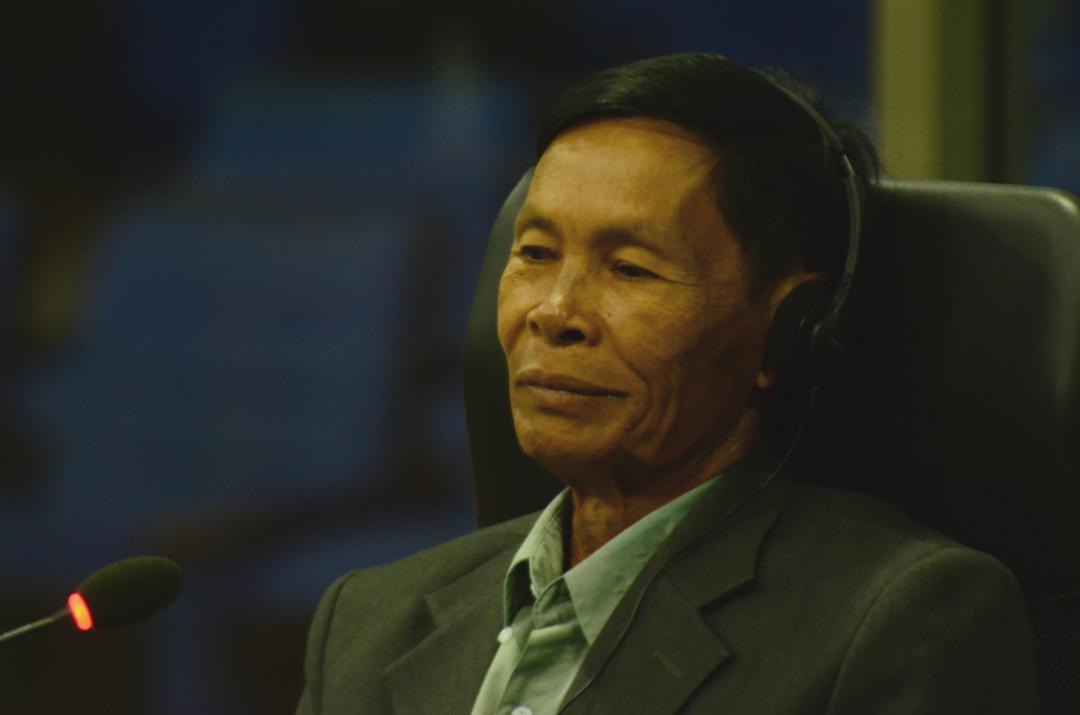
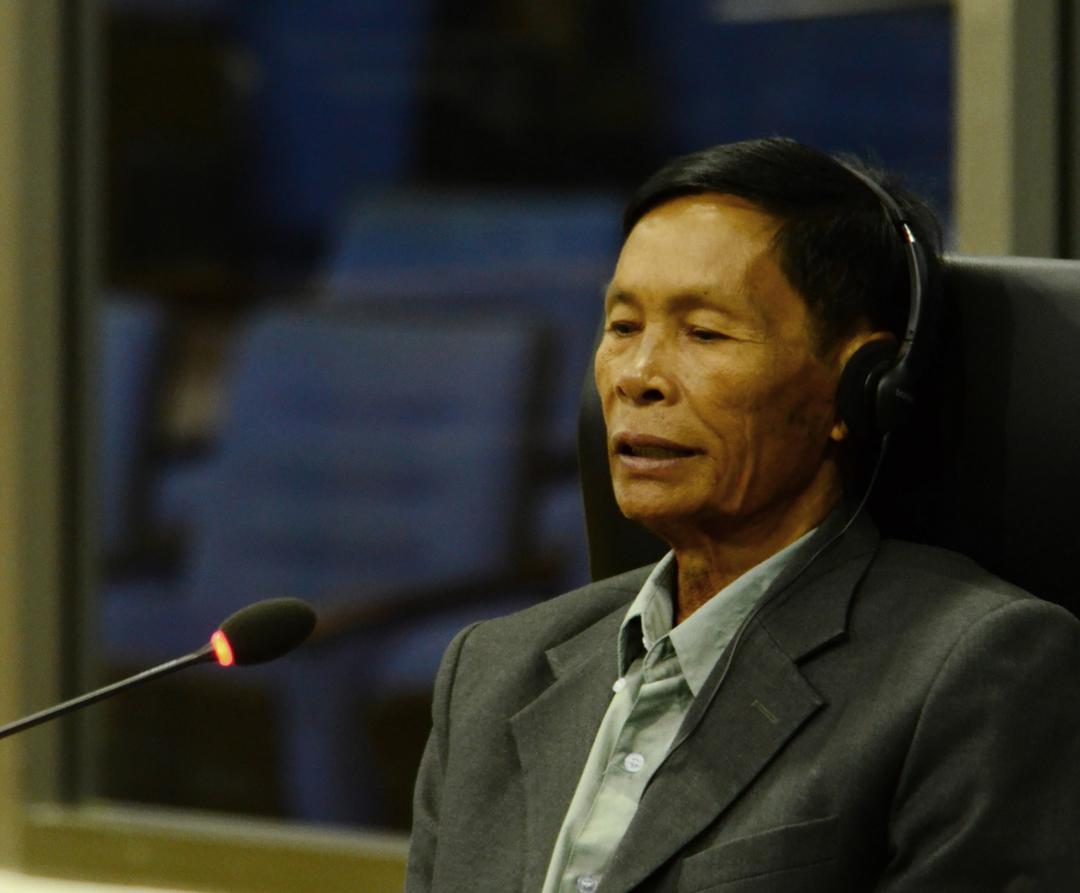
PAN Chhuong
Pseudonym: 2-TCW-918
Cases: Case 002/02
Category: Witness
Background and role
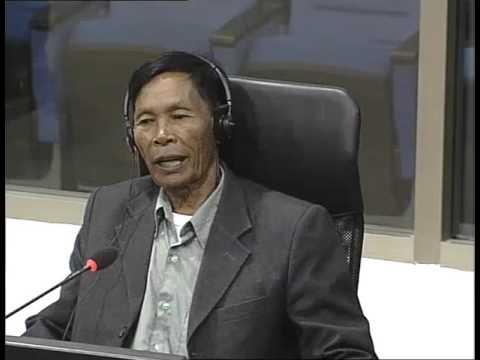
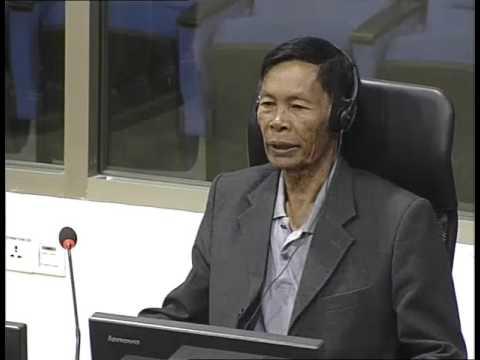
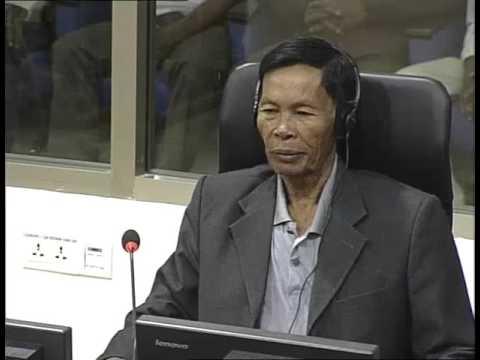
Pan Chhuong was a cadre assigned to the Trapeang Thma Dam worksite during the Democratic Kampuchea era.
1
He was initially a member of the Preah Netr Preah commune responsible for youth from July 1975 to January 1976
2
after which he worked on the Kambaor, Kouk Rumchek, and Trapeang Tham dams.
3
At the Trapeang Tham Dam worksite, Pan would supervise in the absence of Ta Val, the Chief of Sector 5.
4
Pan was referred to as the “commander of the battlefield” within the Sector mobile force, where he had six people working under him.
5
In June 1977, after two months at the Trapeang Thma Dam, Pan was reassigned to a fishing unit to fish for the workers on the worksite.
6
The Trial Chamber approached Pan’s testimony with caution, noting that he denied being Ta Val’s deputy chief in the Sector mobile unit, contrary to what he had stated prior, in order to downplay his role.
7
Pan testified as a witness in Case 002/02 about work quotas at the Kambaor, Kouk Rumchek, and Trapeang Thma dam worksites, and the structure, conditions, arrests, disappearances and marriages at the Trapeang Thma Dam.
Work quotas at Sector 5 dams
The Kambaor Dam was completed before the New Year while the Kouk Rumchek Dam could not be finished in time.
8
The Trapeang Thma Dam had no timeline for completion.
9
Each dam had different work conditions and therefore different work quotas.
10
Some worksites were steep and required more energy to carry dirt, while at others, workers used “very little energy”.
11
For example, the Trapeang Thma Dam was huge in scale and distance compared to the Kambaor and Kouk Rumchek dams, and therefore it took less time to carry dirt as the distance was just a few metres.
12
Pan testified that initially, a three cubic-metre per person quota was set for the Kambaor Dam only, but that one might have been imposed later at the Trapeang Thma Dam when Pan was assigned to the fishing unit.
13
Pan first testified that the work quota at the Trapeang Thma Dam was set by the regiment chiefs at three cubic metres per day,
14
but later stated that he did not know who actually set the quota.
15
Local chiefs would set their own quotas separate from Angkar in order to gain favor or promotions.
16
At the Kambaor Dam for instance, Ta Val informed the chiefs that the Upper Echelon wanted the work completed within four months and asked whether they were “courageous enough” to “make a commitment to the project”.
17
The chiefs, responded that they would instead complete it in three months.
18
The workers would have to work harder to complete the project in less time, which had “negative consequences” on them.
19
According to Pan, had they followed Angkar’s original plan, the workers would not have exhausted themselves.
20
The Trial Chamber accepted Pan’s evidence that workers were subjected to particularly hard working conditions, but treated his testimony with particular caution, finding that he sought to shift responsibility when blaming lower-level cadres exclusively for such treatment.
21
Authority Structure of the Trapeang Thma Dam
Once the preparatory work for the Trapeang Thma Dam was completed, Pan joined a meeting attended by Zone and Sector committees at Svay Sisophon to discuss the plan and work assignments for the dam’s construction.
22
His direct supervisors, Ta Val and Ta Hoeng (known as Brother 07
23
), were also in attendance.
24
Given that Pan provided no evidence regarding the presence of “Central Party members”, the Trial Chamber was not able to conclude that Central Party members participated in the meeting.
25
The construction on the Trapeang Thma Dam began in January or February 1977.
26
There were 6,500 workers in the Sector mobile force.
27
The districts sent supplemental mobile forces a month after the sector mobile forces arrived.
28
All the workers in the sector and district workforces were considered 17 April People, consisting of both New and Base People.
29
Cadres from the Southwest Zone arrived in July or August 1977.
30
Prior to their arrival was another group of cadres from the West Zone who came with their wives and children and were integrated into the commune and cooperative mobile unit and not the unit at the sector level.
31
Ta Val was the mobile unit chairman at the Trapeang Thma Dam, supervising and assigning work to all the forces.
32
Regiment commanders would submit reports about daily quotas to Ta Val.
33
Pan testified that Ta Val was a cruel person, but had a good heart and would call those who made mistakes to be refashioned once or twice.
34
Without instructions from the Upper Echelon, however, the lower level could not do the work they wanted.
35
Orders regarding the dam were issued by Ta Hoeng to Ta Val, who then provided instructions orally to Pan and five others about the work that had to be done.
36
Although Pan was in charge of the overall workers, all district mobile units had their own supervising chiefs who were under the instructions of Ta Val.
37
Based on Pan’s and other witness testimonies, the Trial Chamber concluded that pursuant to instructions from his superiors, Ta Val summoned company and battalion chiefs to meetings during which he gave orders related to the work plan.
38
Conditions at the Trapeang Thma Dam
Food rations to workers were supplied by the Sector.
39
Workers in the mobile unit received three cans of rice daily as they were considered to be more hardworking than those from the communes or cooperatives,
40
which the Trial Chamber relied upon to find the existence of a food regime based on productivity at the worksite.
41
Despite being provided rice cans for three meals per day, workers could only eat two due to limited amounts of water or firewood used to cook the rice.
42
While workers were not starved of food, there was a problem with the drinking water causing them to get sick from dysentery or fever.
43
Weak workers were sent to the hospital for rehabilitation until they got better after which they were returned to the worksite.
44
Those sent to the hospital for a check-up were put in a “case unit”,
45
although the Trial Chamber did not find Pan’s testimony to be credible in this respect due to his prior contradictory statements that case units were made up of people not considered to be hard-working.
46
In order to travel to other sections of the worksite or to visit parents in their villages, workers had to first obtain a letter of authorisation or laissez passer from their immediate supervisor.
47
Unit chiefs usually did not issue letters of authorisation for night travel so visits would usually occur only during the day.
48
These authorisation letters were checked by village chiefs at the travel destination as there were no guards at checkpoints.
49
Arrests and disappearances at the Trapeang Thma Dam
Arrests and disappearances of cadres took place at the Trapeang Thma Dam.
50
When asked whether workers also disappeared at Trapeang Thma Dam, Pan testified that “nothing happened,”
51
though the Trial Chamber disregarded this statement, noting that Pan always tried to lessen the conditions experienced by the workers under his authority and that it was contradictory to other witnesses’ evidence.
52
Around July 1977, Ta Hoeng and Ta Val were arrested.
53
Ta Val’s replacement, Ta Rin, showed Pan a list of names of people to be arrested.
54
The people on that list were put on vehicles and driven off.
55
When Hat, the Secretary of Phnum Srok, was arrested, his brother Ta Morn fled and took refugee within Pan’s fishing unit in order to escape his own arrest.
56
However, he was found out after which both Pan and Ta Morn were tricked into attending an education meeting when the latter was arrested by Angkar.
57
Ta Morn was taken in a vehicle in which Pan saw Ta Cheal,
58
whose vehicle was used to conduct arrests in the area.
59
Ta Cheal, the chief of Pan’s Sector 5 fishing unit and thought by Pan to be Ta Hoeng’s deputy,
60
committed misconduct and was reassigned, but not arrested.
61
Ta Hoeng’s messengers, Pak and Ponh, replaced Ta Cheal, but were later also arrested after attending a meeting.
62
Pan was frightened because he saw cadres who were loyal to Angkar, like himself, get arrested.
63
Marriages at the Trapeang Thma Dam
Marriage ceremonies at the Trapeang Thma Dam were referred to as the event of “holding hands”.
64
Pan attended one such ceremony on the worksite where about 50 couples were married.
65
Only two of those couples were married as a consequence of having committed a moral offence, while the remaining couples were married because they had consented and there was an agreement from their parents and relatives.
66
Usually, the Upper Echelon would announce the dates of marriages, which unit chiefs would organize when the men and women gave consent.
67
However, the Trial Chamber rejected Pan’s evidence regarding consent, noting that it may not have been genuine, and that former cadre had a tendency to minimise their own responsibility.
68
Videos