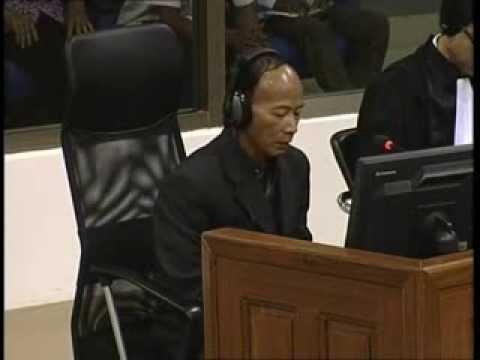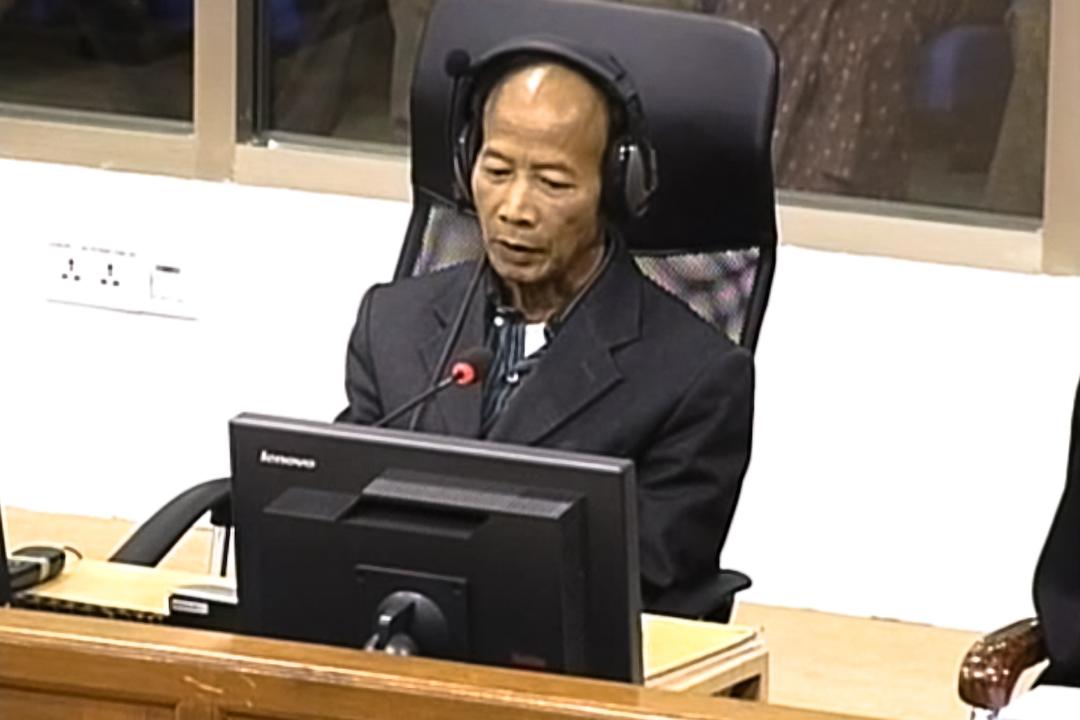
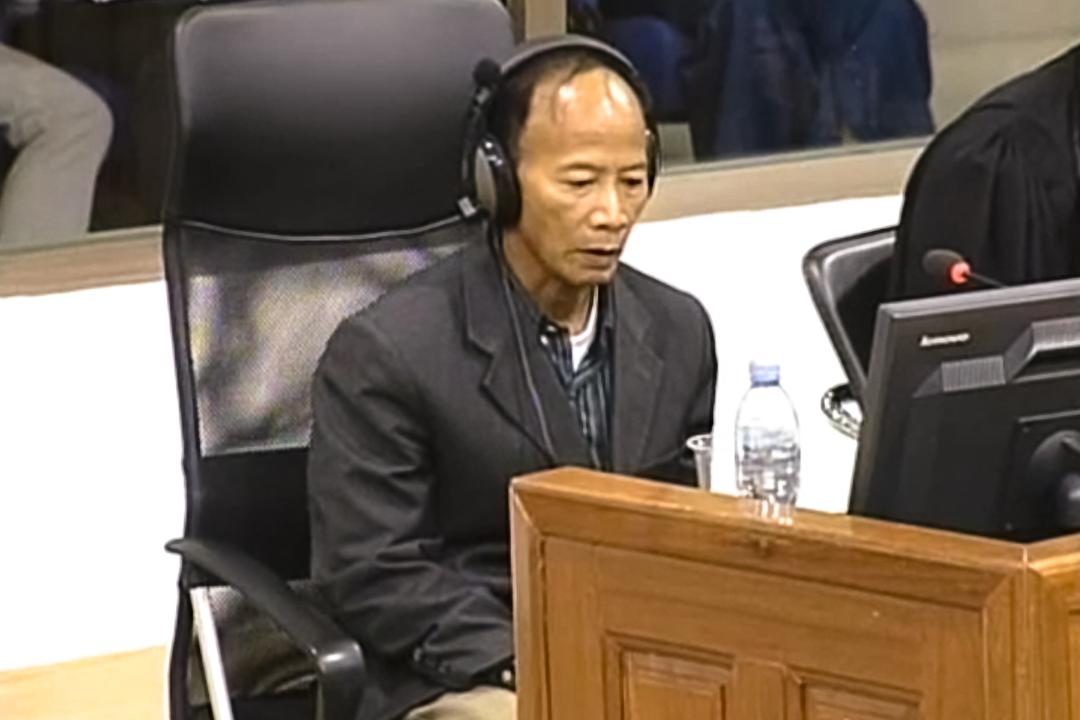
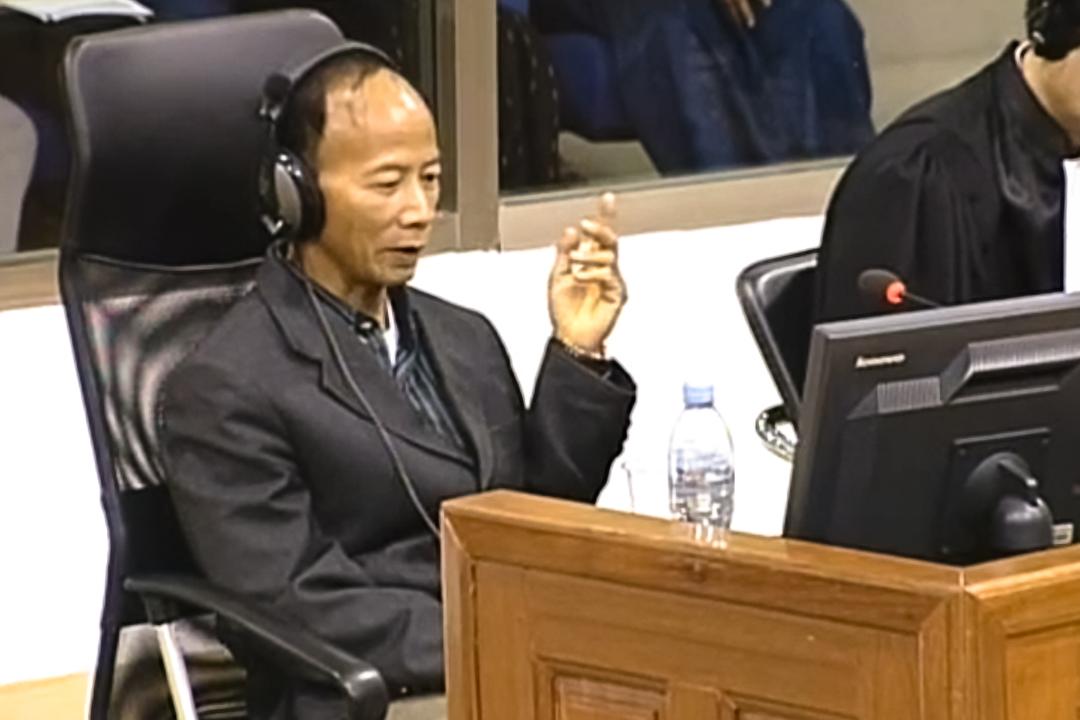
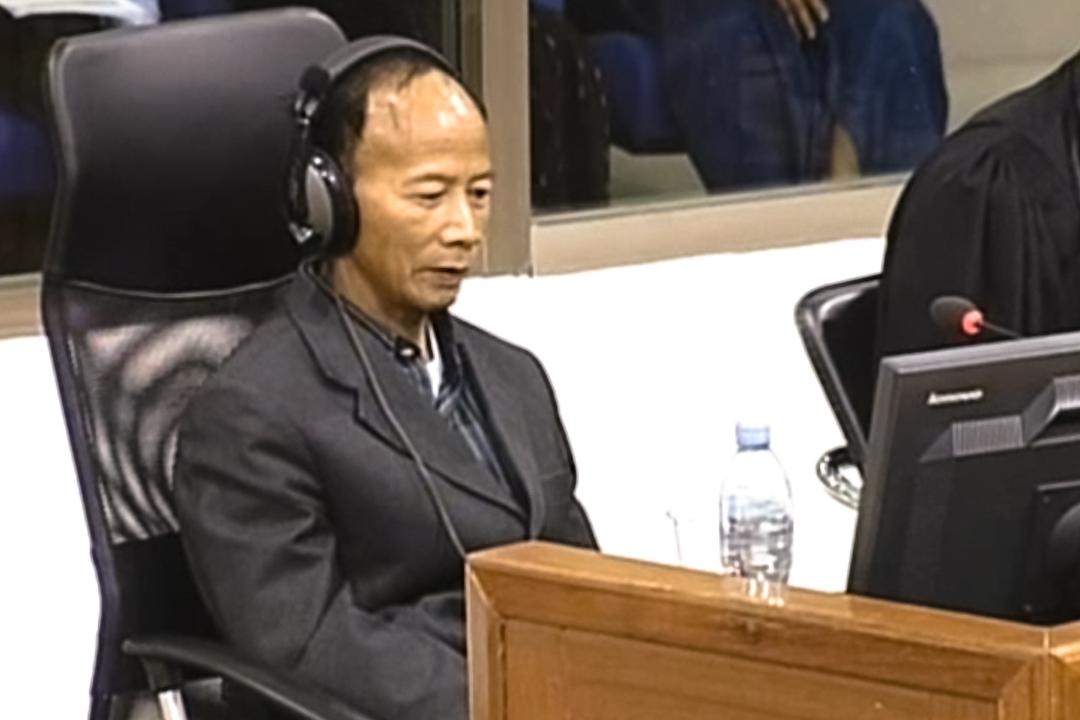
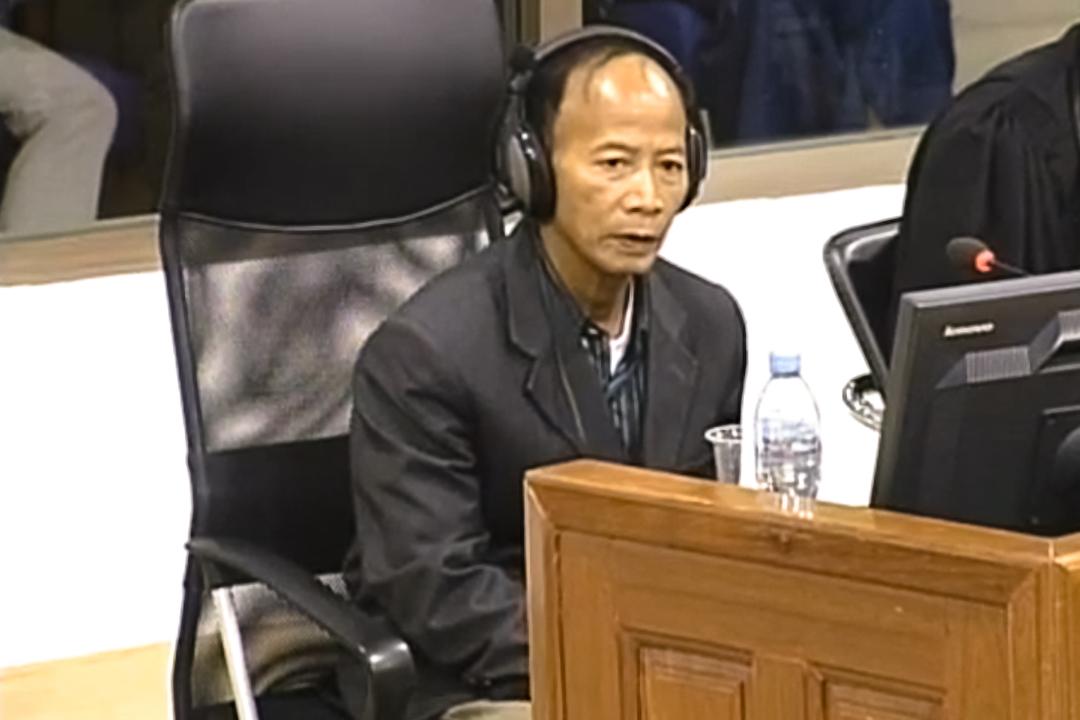
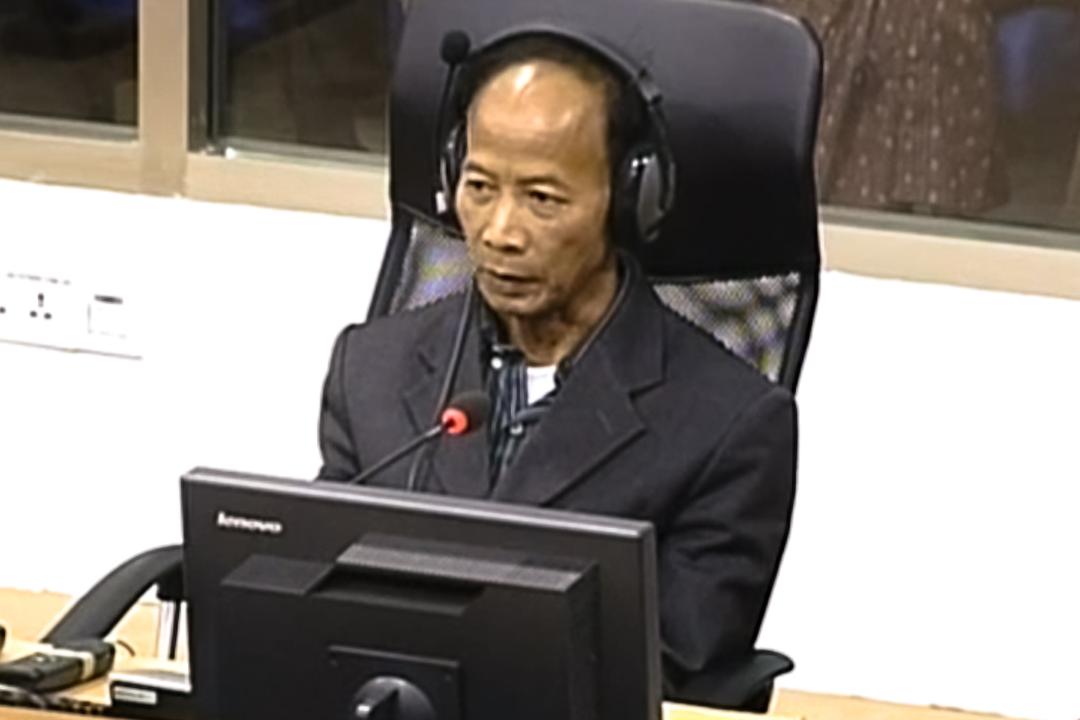
PEAN Khean
Pseudonym: TCW-504
Cases: Case 002/01
Category: Witness
Background, role, and knowledge of the Khmer Rouge leaders
Witness Mr Pean Kham (‘PEAN’) joined the Khmer Rouge revolution in 1966
1
when he was about 16 years old.
2
The revolution was aimed at liberating the nation,
3
particularly the peasants,
4
from capitalism
5
and the oppressive class.
6
PEAN was introduced into the revolution
7
by CHIMM Sam Aok alias “Pang”,
8
the messengers’ superior in the Northeast Zone.
9
PEAN became a messenger
10
for the Communist Party of Kampuchea (‘CPK’)
11
in Andoung Meas district.
12
PEAN delivered letters inserted in bamboo tubes from one base to another, the contents of which were unknown to him since he was forbidden to open them.
13
The recipients were also unknown to him as he delivered the letters at designated locations.
14
PEAN only knew that the revolution was led by Angkar,
15
a term used to refer to the leaders of the ‘revolutionary Kampuchea.’
16
Prior to 1975, PEAN learned that the only leader was Pol Pot.
17
By 1975 he had heard that Nuon Chea, Khieu Samphan, Ieng Sary,
18
and Son Sen were senior leaders,
19
determined ‘to fight and liberate Phnom Penh.’
20
Policy of the CPK and the ‘liberation’
Lon Nol and his soldiers were regarded as enemies of the revolution.
21
While PEAN knew of the fighting between the Khmer Rouge forces and those of the Lon Nol’s regime,
22
he was not aware of the evacuation plan.
23
PEAN arrived in Phnom Penh late afternoon
24
on 17 April 1975, after it was overran by Khmer Rouge forces.
25
PEAN stayed at the ‘French House’.
26
Later on he met Koy Khuon, who had arrived earlier.
27
PEAN saw a large number of people
28
leaving the city, most on foot
29
looking unhappy.
30
He heard people saying that the city had to be ‘cleaned’ from the enemy, Lon Nol’s soldiers,
31
and CIA agents.
32
Pean assumed that the ‘final assault and liberation of Phnom Penh’
33
was planned
34
in Chamkar Leu district.
35
PEAN knew Koy Khuon,
36
alias “Thuch”,
37
Secretary of Zone 304
38
and the person in charge of the Ministry of Commerce at the time of his arrest,
39
late 1975 or early 1976.
40
Since 1967
41
PEAN had lived and worked for him and his family assisting with housekeeping.
42
Koy Khuon was arrested in a place resembling a hotel, 300 meters south of K-1
43
- a compound where Pol Pot’s house was located,
44
and where Pang also stayed at.
45
PEAN brought Koy Khuon some food and returned immediately, on Pang’s instructions.
46
Three days after his arrival in Phnom Penh, PEAN was transferred to Chraing Chamres
47
where he heard that Koy Khuon had been arrested
48
on orders of Angkar, never to be seen again.
49
The radio broadcasts by Angkar mentioned that Koy Khuon was a traitor, affiliated with the CIA.
50
PEAN ‘heard through the grapevine’ that his subordinates were also be arrested,
51
instilling fear in him as the whereabouts of those arrested was unknown.
52
After Phnom Penh’s ‘liberation’, PEAN knew Offices K-1 and K-3,
53
where he also worked.
54
He knew little about Offices K-7
55
and K-71
56
and did not hear anything about Offices 100,
57
102,
58
K-5 or B-5.
59
While PEAN knew that the senior leaders, including Pol Pot, Nuon Chea, and Khieu Samphan met in K-3, their common office,
60
PEAN did not know what was being discussed; he merely assisted with the cooking and food delivery
61
and never received any minutes or briefings of the meetings.
62
After April 1975,
63
Pang, who assisted the senior leaders,
64
took charge of Office 870.
65
This was the “executive arm” of the Standing Committee’,
66
coordinating K-1, K-3, and K-7.
67
Pang also taught at the criticism and self-criticism sessions,
68
where performance of people’s daily work was discussed.
69
Pang warned that the CIA, KGB, the “Yuon” (pejorative for Vietnamese) were enemies of the revolution.
70
PEAN heard that Pang was arrested and disappeared before leaving K-1.
71
In the period spanning 1975-1979, PEAN was only aware of the disappearances of Pang and Koy Khuon,
72
though ‘everybody kept disappearing’.
73
Prior to 17 April 1975, PEAN had neither heard of any disappearance nor that people were sent away for ‘re-education’.
74
PEAN did not know whether Nuon Chea, Khieu Samphan, or Ieng Sary provided ‘political education’ during the 1975-1979 period,
75
despite also acknowledging that Nuon Chea and Khieu Samphan gave high-level political education at Borei Keila .
76
‘Political education’ was aimed at rebuilding the country,
77
defend it from external interference by preventing an invasion by the Vietnamese
78
and ensuring that the ‘American imperialism would not return’,
79
establish the cooperatives intended to ‘refashion or temper’ people
80
by undertaking the daily work,
81
create the collective regime, and encourage people to build dams and canals for the country’s prosperity.
82
Three months before the Vietnamese seized Phnom Penh on 7 January 1979,
83
PEAN was sent by Yom, the office’s chief at Preaek Pra,
84
to the Svay Meas cooperative.
85
PEAN did not know where he went wrong.
86
He was tempered by being put under surveillance because of his association with Koy Khuon.
87
PEAN testified that people were taken out from Svay Meas to unknown locations, however he could not confirm if they had been killed.
88
After 1975, the pagodas were removed and PEAN heard that the monks were defrocked or disrobed.
89
PEAN witnessed a chaotic situation when he left Phnom Penh.
90
Videos