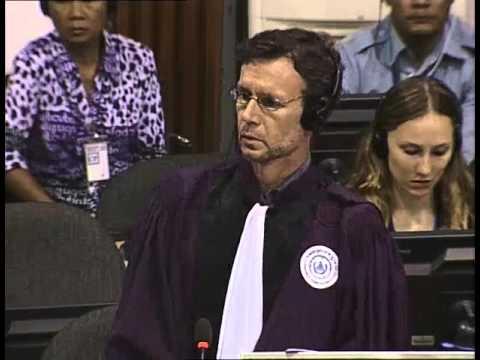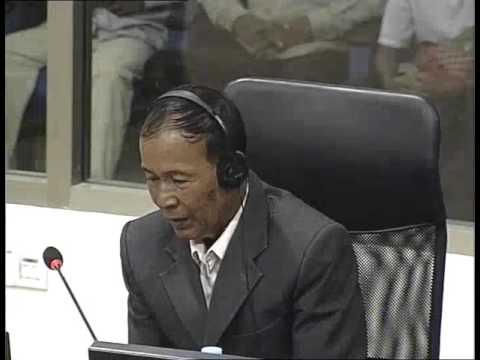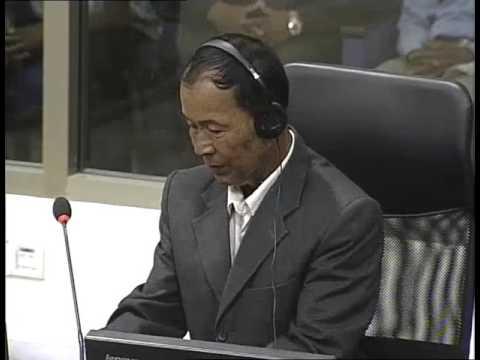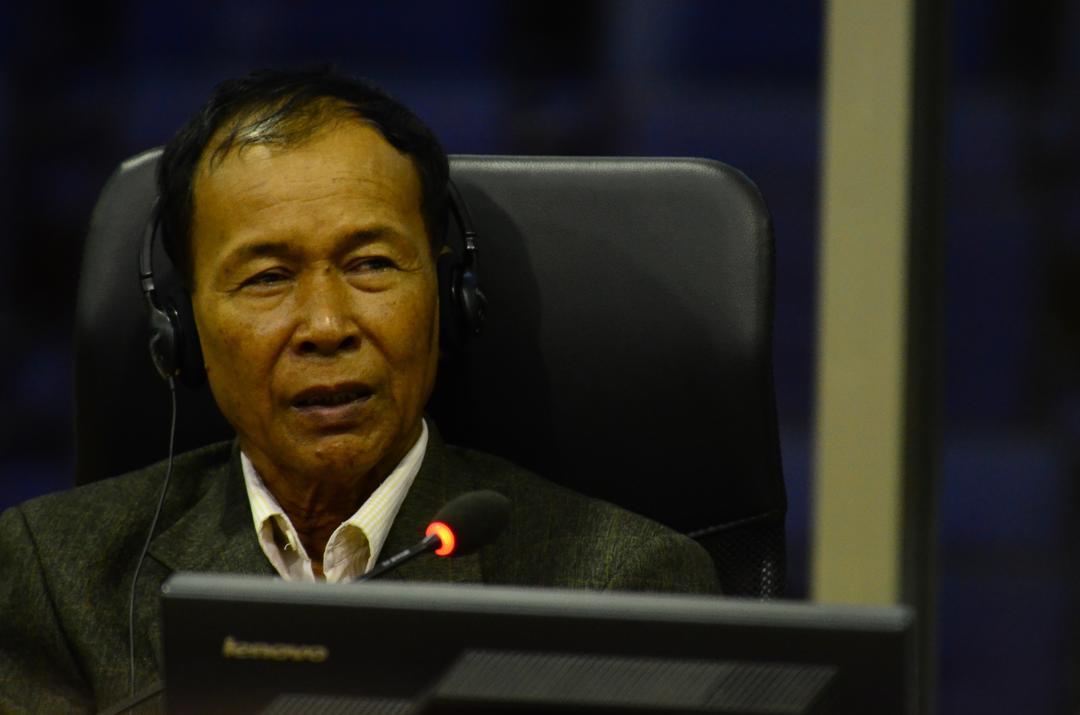
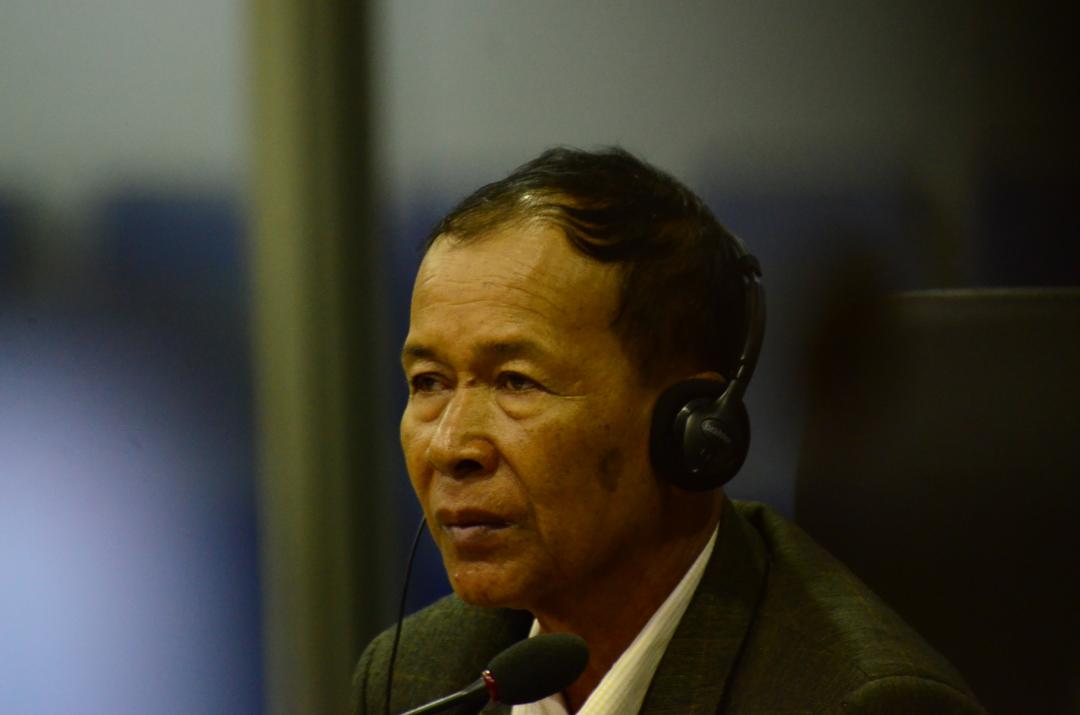
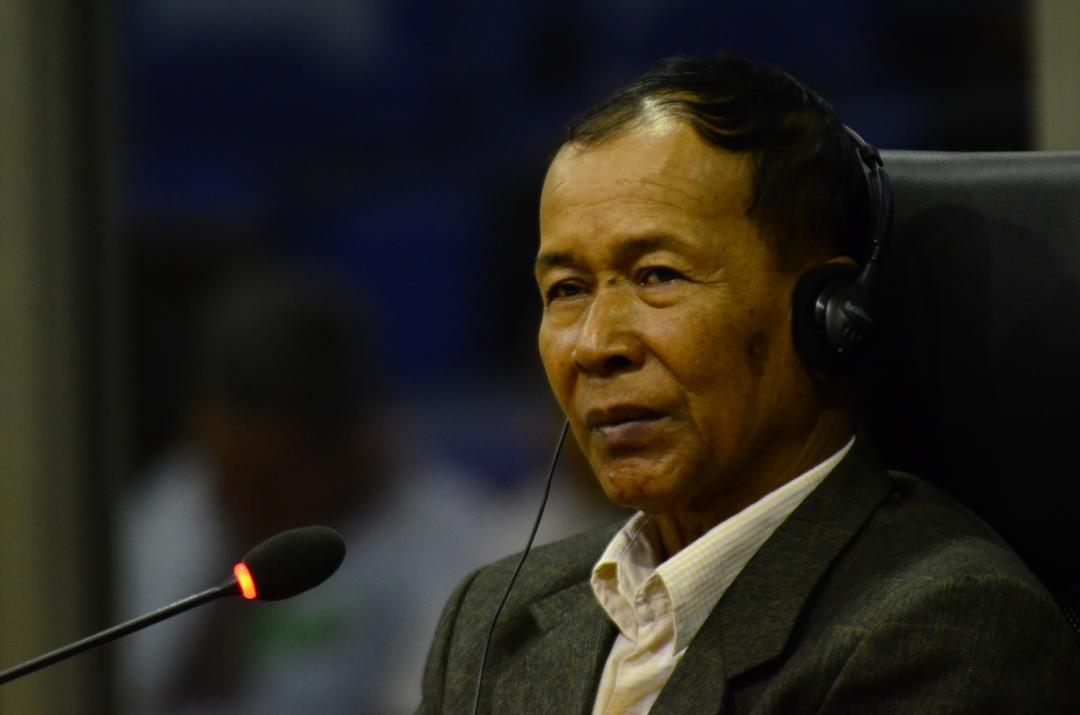
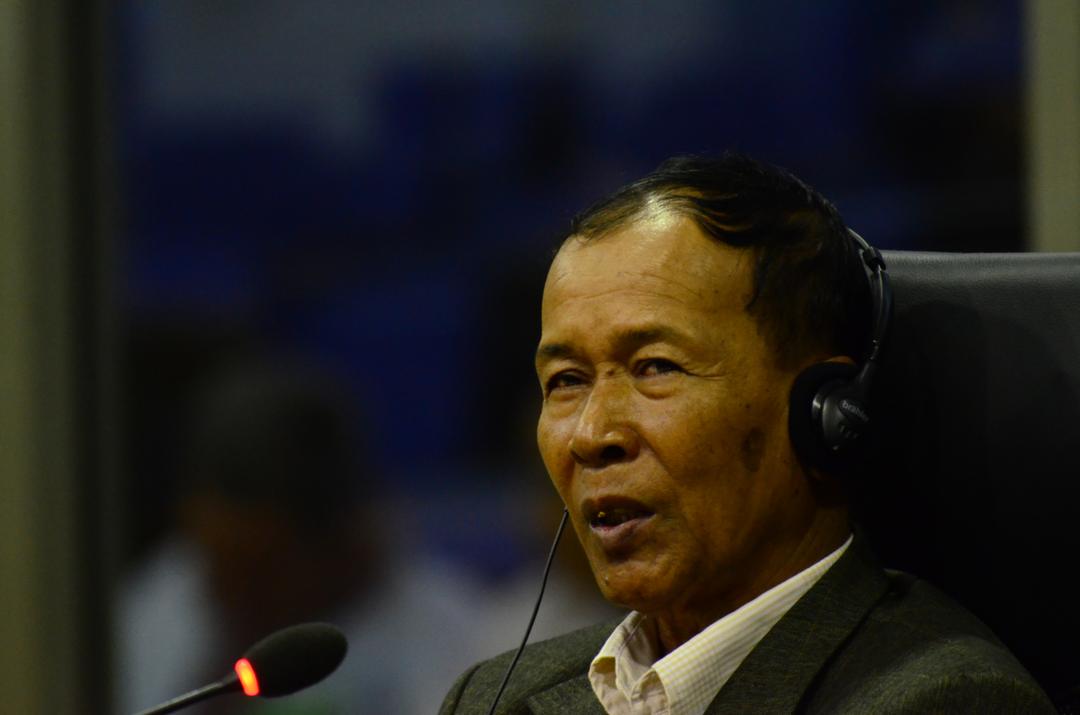
PRAK Khorn (PRAK Khan)
Pseudonym: 2-TCW-931
Cases: Case 002/02
Category: Witness
Background and role
Prak Khorn was engaged in combat against Lon Nol soldiers from 1973 until he entered Phnom Penh in 1975.
1
Initially, he was a combatant in Division 12 of the Special Zone, and later regiment 38 of Division 703.
2
From late 1975 or early 1976 to 7 January 1979, he worked at the S-21 Security Centre.
3
At first, he was guarding the outside of the compound.
4
From around 1977, he became an interrogator.
5
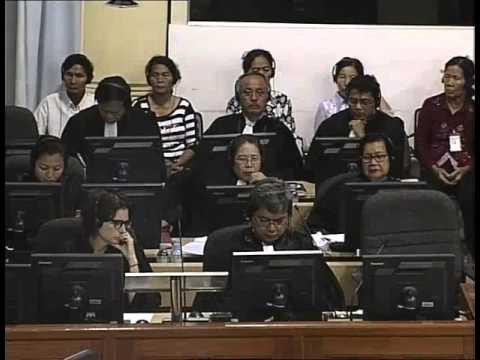
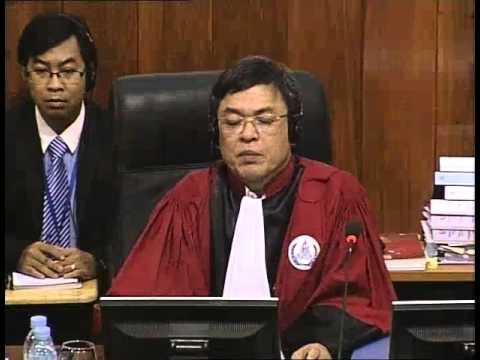
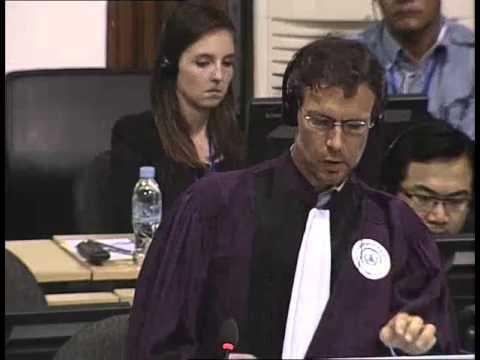
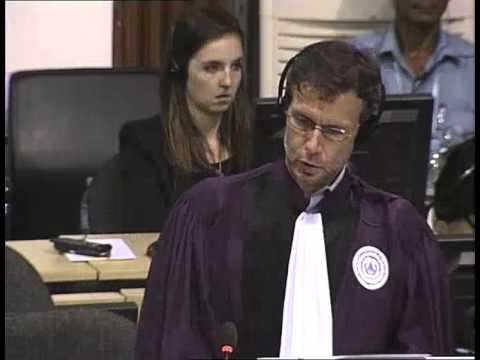
Prak Khorn testified as a witness before the Case 002/02 Trial Chamber about the location and structures of S-21 Security Centre, study sessions and instructions at S-21, and prisoners detained at S-21. The Trial Chamber considered that he was one of the key witnesses on this segment.
6
Location and structures of S-21
The S-21 compound was about one square kilometre, located in a former school in Phnom Penh.
7
It bordered the sewage canal to the east, Tuol Tompung pagoda to the south, Moha Montrei pagoda to the west, and the road to the fire station to the north.
8
There were two layers of fences, one surrounding the prison compound with a wall mounted by barbed wire, and a zinc outer fence far away from the prison buildings.
9
There was a gate that only opened for S-21 vehicles.
10
The S-21 committee was composed of Duch as chief, Hor as deputy, and two members: Phal, who was in charge of security guards outside the compound and Peng, who was responsible for internal security.
11
The outside guards were armed, whereas the inside guards were not.
12
Him Huy was in charge of receiving prisoners coming into S-21, bringing and transporting prisoners in and out.
13
Mam Nai alias Chan was an assistant to Duch regarding the interrogation unit.
14
There was a medical unit headed by Try.
15
A messenger unit was in charge of delivering letters and messages between S-21 and the upper level.
16
As a guard at the outer perimeter, Prak Khorn did not have any contact with those inside.
17
When he became an interrogator in the chewing unit, he was supervised by Tith.
18
Duch came once in a while to monitor him although that was not his daily duty.
19
Only the supervisors could come to the interrogators’ room.
20
Interrogators were obliged to report on the work progress to the group chief, and were not allowed to discuss among themselves in relation to the interrogation.
21
Prak Khorn was the only one survivor of Division 703 in the interrogation unit; others were arrested and detained in the special prison based on their networks with prisoners.
22
They were replaced by children from the West Zone.
23
Study sessions and instructions at S-21
Son Sen never came to the prison buildings but one or two times, he visited the political school near Duch’s house.
24
Duch and Son Sen communicated with each other, as it was the “communication between the leadership level to the leader of S-21.”
25
During study sessions, they said that Vietnamese were the hereditary enemy of the CPK and that Cambodia intended to retake the part of Cochinchina that was Kampuchea Krom.
26
Son Sen and Duch further said that S-21 was the key to the country by searching for all the networks of traitors or strings that the prisoners gave in their confessions.
27
Duch referred to Brother No. 1 or Brother No. 2 as his superiors and recipients of the confessions.
28
The ordinary training sessions led by Duch and Hor took place at the political school once every one or two weeks.
29
The subjects were about the Khmer Rouge’s offensive into Vietnam at the border areas.
30
Staff were instructed to follow the Party’s orders,
31
to remain confidential and maintain secrecy,
32
and to be arrogant and absolute in striking the enemy, not to feel pity for them, even their own parents.
33
Anyone who was considered to be a light offender was sent to Prey Sar, whereas serious offenders were sent to S-21 and referred to as enemies.
34
The principle at S-21 was that no prisoners were sent to a rice field for re-education and/or released after their interrogation concluded.
35
Prak Khorn never saw any prisoner who confessed was subsequently released.
36
The Trial Chamber relied on Prak Khorn’s testimony in addition to others to establish the central role which the CPK had in disseminating policies and insisting on a common ideology to guide the work of cadres at S-21.
37
Specifically, it cited his testimony in finding that: (i) the indoctrination and incitement of hate instilled absolute respect for the Party hierarchy and the principles to be followed at S-21, including the identification and killing of perceived enemies;
38
and (ii) a centrally-devised policy targeting the Vietnamese for adverse treatment existed throughout the DK period.
39
Prisoners at S-21
In the early days of its operation, not many prisoners were brought to S-21.
40
The number of prisoners increased following the internal purges from 1977-1978, and became massive in late 1978 when the battlefields became intense.
41
Incoming prisoners were handcuffed and blindfolded, brought into the compound by trucks,
42
and stopped at the registration office.
43
After their entry, their biographies were collected and they were photographed.
44
The high level prisoners were detained separately from others in the special prisons located in the south of the compound.
45
Sometimes, prisoners were arrested and brought in along with their spouses and children.
46
Foreign prisoners including Americans and Australians were interrogated by Duch and Chan in the common area in the compound
47
and were burned on the road.
48
Many Vietnamese civilians and soldiers were sent to S-21 in 1977-1978; some of them were brought in along with their spouse and children.
49
Vietnamese prisoners were instructed to read a statement prepared by Chan confessing that they came in to spy on Cambodia to be broadcasted on radio.
50
Prak Khorn saw a Vietnamese girl aged one year old brought to S-21 with their parents being dropped from the roof of the building onto the ground.
51
Cham people were also detained at S-21.
52
There was no distinguishing between Cham and Khmer people.
53
An interrogator who was a Cham was also arrested and killed, but not because of his ethnicity.
54
The purpose of the interrogation was to obtain a confession to be sent to the upper echelon.
55
They were instructed to keep prisoners alive in order to obtain the confession; otherwise, the interrogators would have been punished.
56
Regardless of whether they were men or women, prisoners would be tortured as long as that they refused to confess.
57
Duch taught different techniques of tortures in the trainings,
58
including terrifying the prisoners,
59
scolding, and humiliating them into confessing.
60
Techniques included: (i) cold methods that employed non-violent means such as promises to the prisoners to release them and/or provide them with food if they confessed; (ii) violent methods that could include mistreatment or beating;
61
and (iii) the chewing method where prisoners were repeatedly asked the same questions until receiving a full answer by using any techniques in the interrogation.
62
Interrogators had to seek permission from the group chief for more serious acts of violence, who in turn would decide or ask for further permission from Duch or Chan.
63
Once a full confession was obtained, it was typed in full with six copies being made to all be delivered to Duch.
64
The documents included the names of the interrogators and prisoners, with their signature, and the lists of the names of individuals implicated during interrogations.
65
Some prisoners had injuries and others became thinner because they did not receive enough food within their detention.
66
Some died during the interrogations.
67
Prisoners died one after another.
68
About two weeks before 7 January 1979, interrogators were not instructed to bring in prisoners for interrogations, but were instead instructed to destroy the documents in the rubbish bins.
69
Prisoners were transported out to be killed continuously until the 2nd or 3rd of January.
70
The executions happened within S-21.
71
The corpses were buried in graves in the alleys surrounding S-21.
72
Prak Khorn only learned about the execution at Choeung Ek after he was interviewed by a foreign journalist.
73
Only few prisoners were released to work in S-21 based on their skills including mechanics or electricity.
74
Pech was one among them who became a mechanic at S-21 and survived after the regime.
75
Prak Khorn also saw prisoners whose blood had been drained.
76
They were nearly dead, could not move or speak, and were thrown to a corner of the room.
77
The Trial Chamber relied on Prak Khorn’s testimony in addition to other evidence to find that the Vietnamese prisoners included soldiers and civilians, as well as children, and were targeted as an enemy group and as a threat to the DK.
78
The Trial Chamber further considered his testimony about the practice of blood drawing to be consistently reliable and corroborated by contemporaneous evidence from S-21.
79
It found that this practice was directed toward prisoners at S-21 and carried out in such a way that prisoners had blood drawn forcibly and often died.
80
However, the Trial Chamber was not satisfied that any specific policy of targeting the Cham was established at S-21.
81
Executions of former Lon Nol Regime
In the aftermath of the liberation of 1975, he saw Lon Nol soldiers in Phnom Penh being arrested and killed.
82
Some others were gathered at the court of first instance in Takhmau, and put along with their family to be killed at Kouk Roluos pagoda.
83
The Trial Chamber relied on this testimony in addition to other evidence to find the nationwide hunt for high-ranking former members of the Khmer Republic armed forces, civilian officials and their families in the immediate aftermath of liberation and throughout 1975, and their subsequent disappearance, and/or execution.
84
Videos