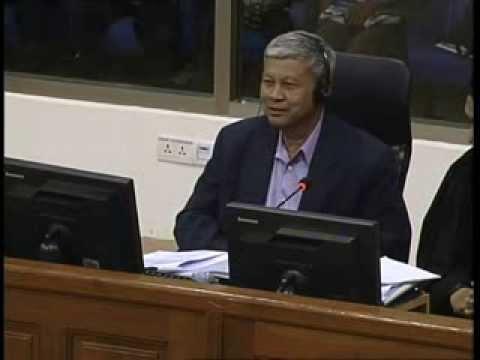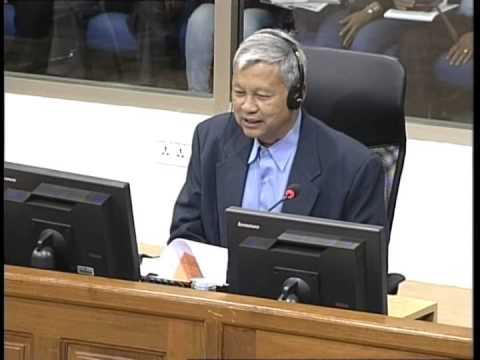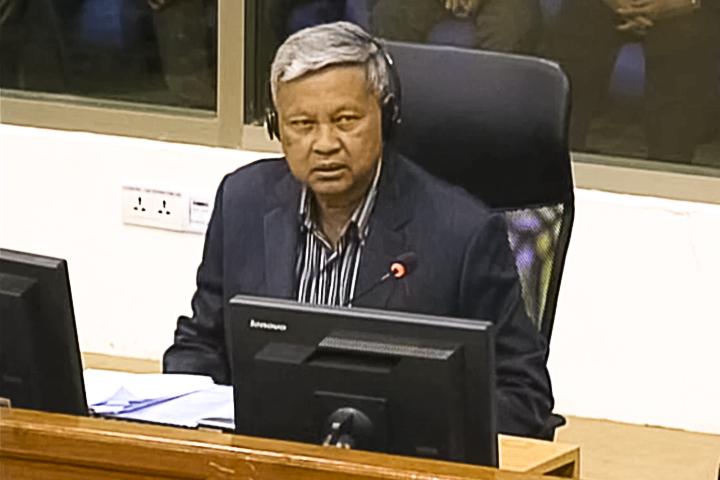
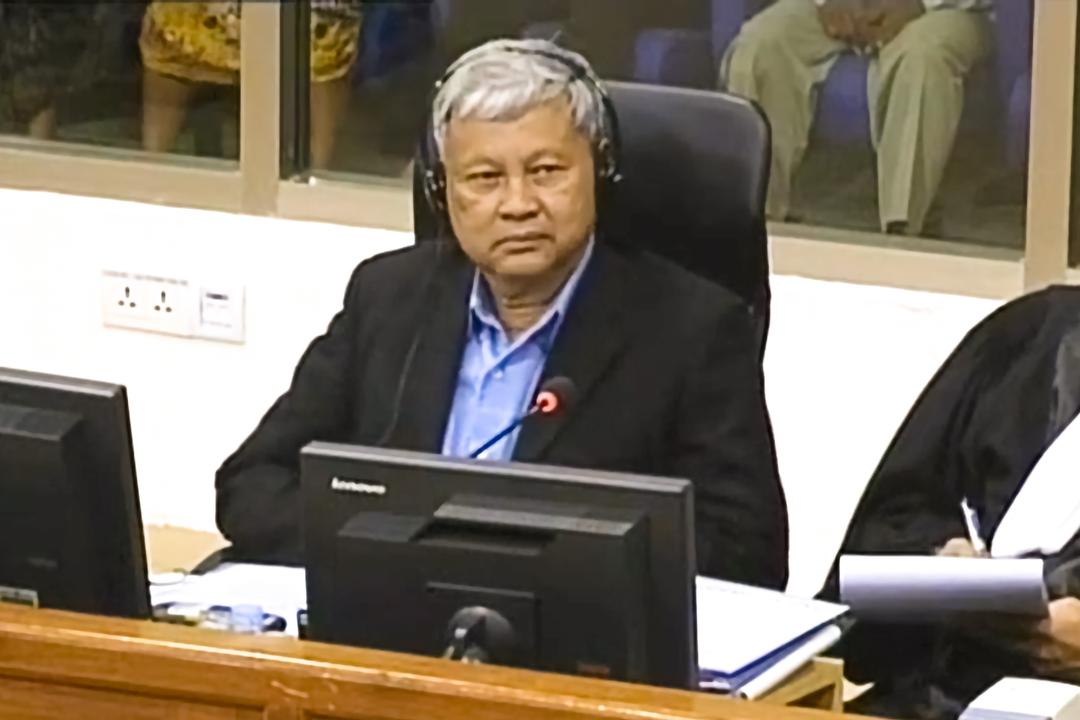
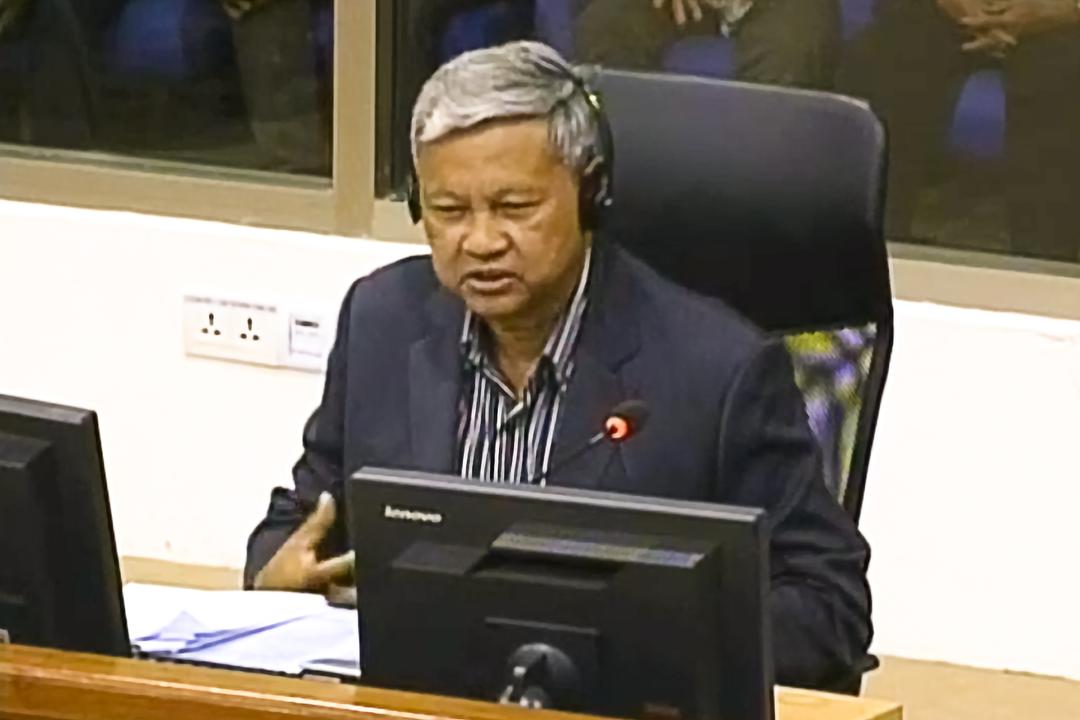
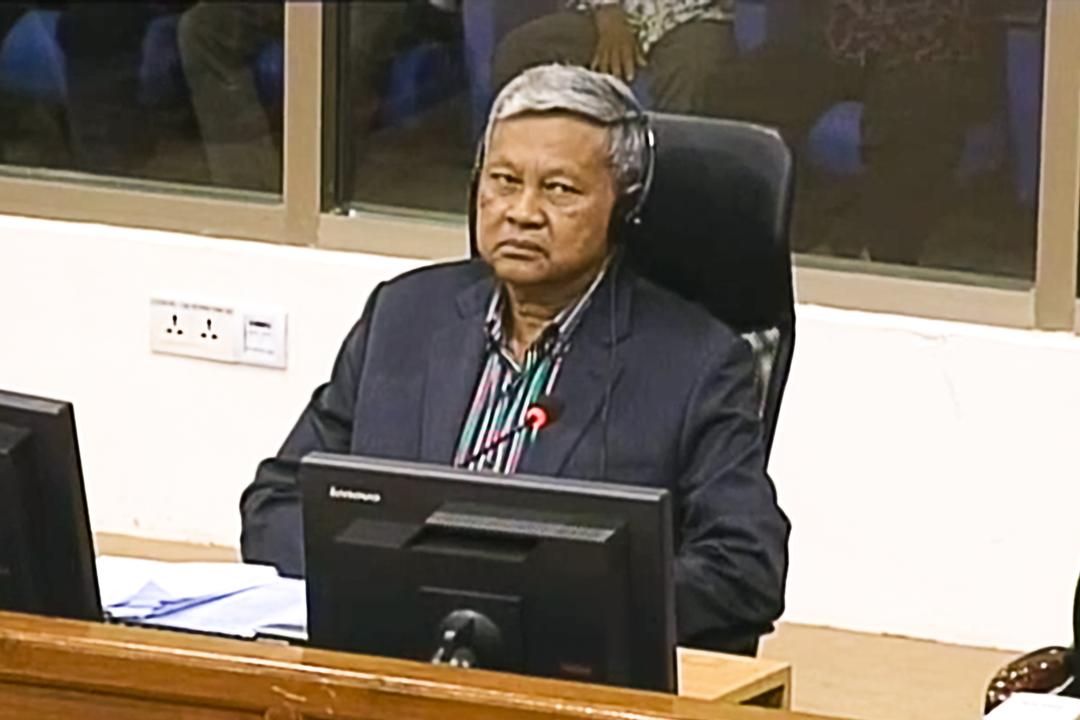
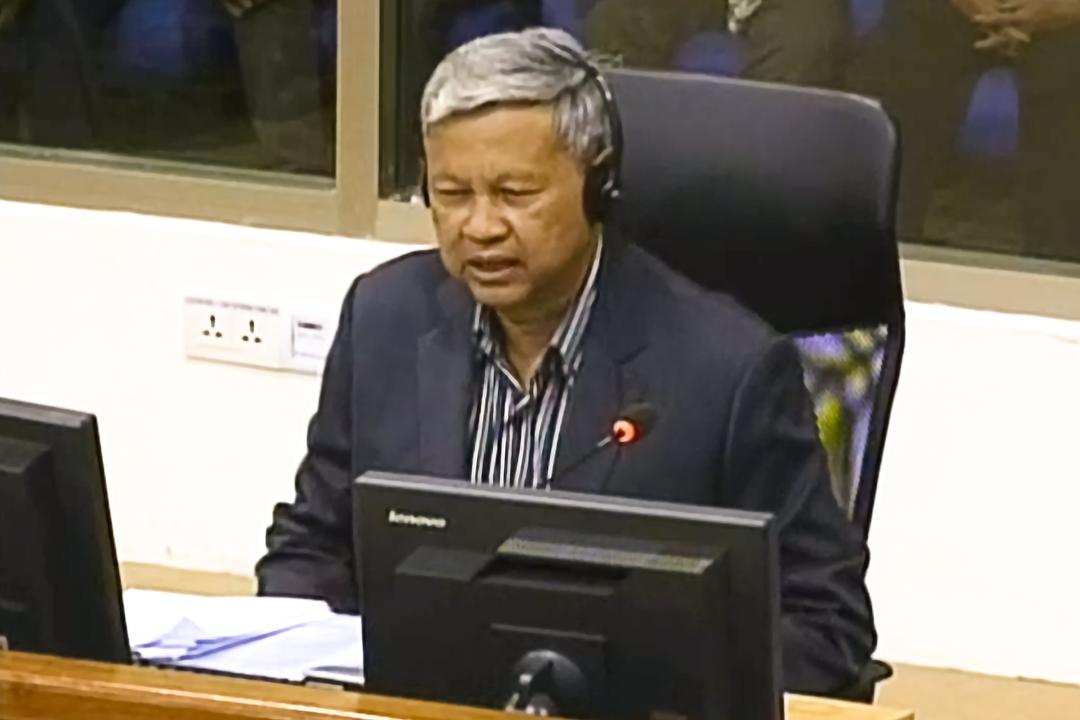
SALOTH Ban
Pseudonym: TCW-586
Cases: Case 002/01
Category: Witness
Background and Role
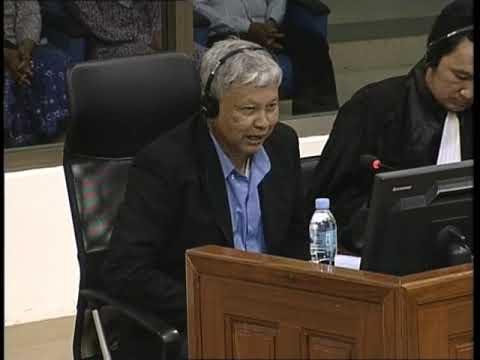
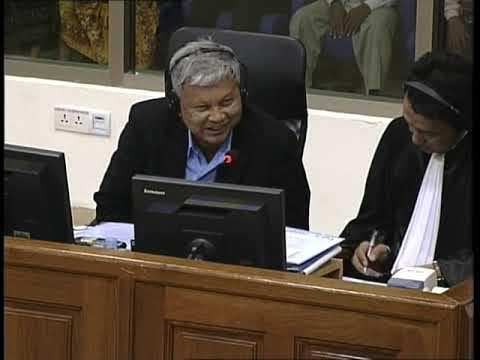
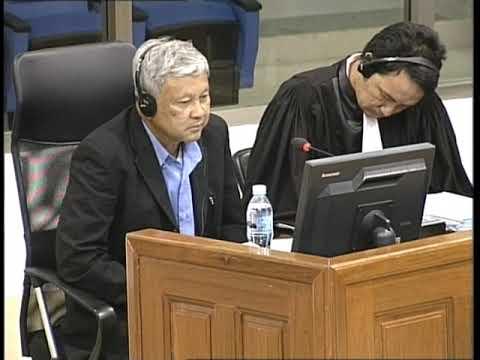
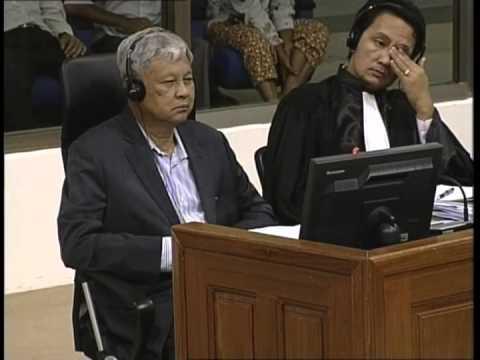
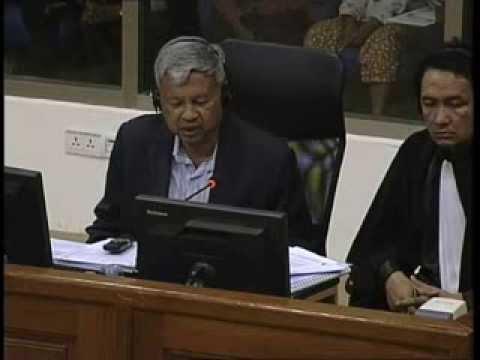
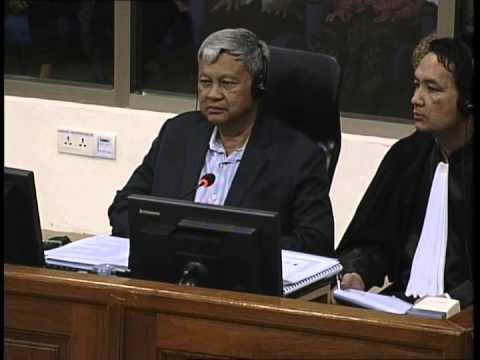
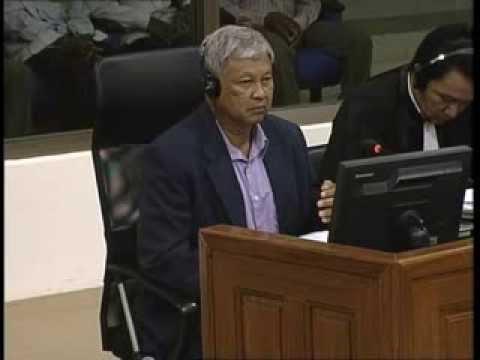
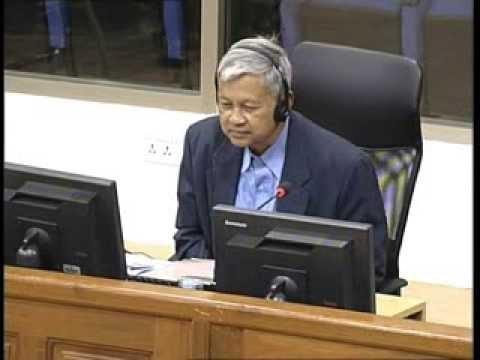
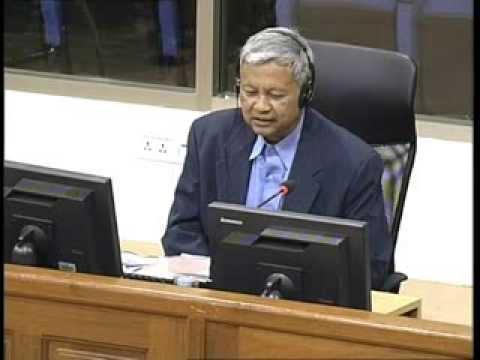
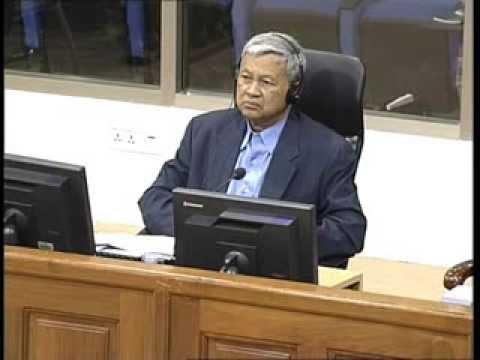
Saloth Ban was a nephew of Pol Pot and lived with him from a young age. He worked as a bodyguard for Khmer Rouge leaders and as a Secretary in the Ministry of Foreign Affairs.
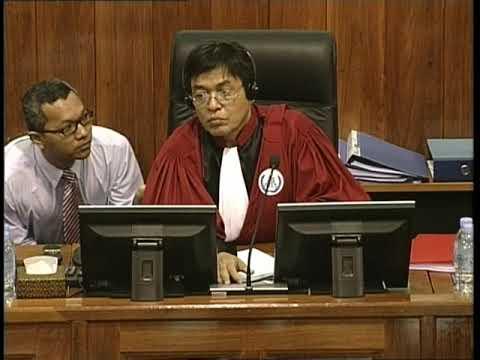
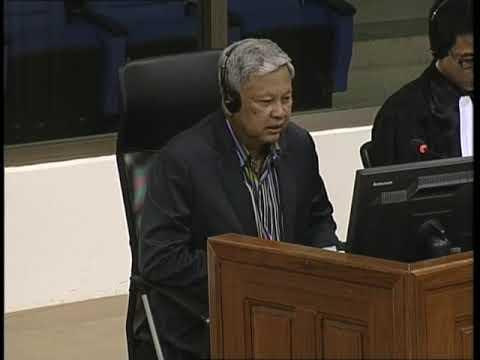
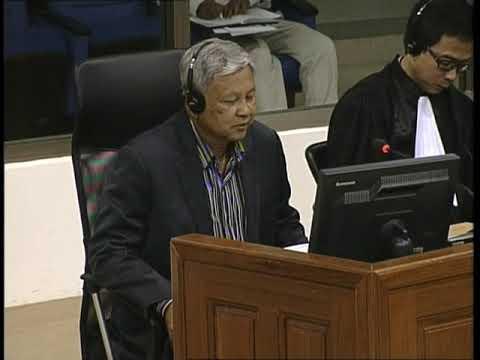
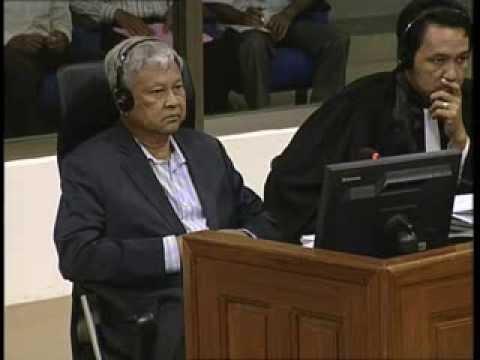
Saloth Ban testified before the Trial Chamber in Case 002/01.
1
He gave evidence about the structure of the Communist Party of Kampuchea (CPK) and his work in the Ministry of Foreign Affairs.
Early life and Involvement in the Khmer Rouge Movement
Saloth Ban lived with his uncle Pol Pot from the age of 15 or 16.
2
In 1968 or 1969, they moved from Phnom Penh to live in the jungle in Rattanakiri.
3
Saloth Ban loved and worshipped his uncle, and he prepared food for him and gave him medical injections.
4
Daily tasks were managed by Chimm Sam Oak alias Pang, who was around a lot of the time and received instructions from Pol Pot.
5
Saloth Ban joined the CPK in 1968, with the “purpose to liberate the country from American imperialism”.
6
During this time, he received political trainings on the basis of the “instrumental documents” “Minority Solidarity” and “Revolutionary Flag”. These documents targeted the minority groups in the Northeast of Cambodia, which were the most vulnerable and disadvantaged groups, and had to be educated to “resist against the exploiting class.”
After the Lon Nol coup d´etat in 1970, a Central Committee´s office was established at the border of Kampong Cham and Kampong Tham.
9
Between 1970 and 1975 Saloth Ban worked as Pol Pot´s bodyguard and joined him on trips.
10
He described the office as a jungle compound where everybody lived together closely.
11
The office moved locations and was kept as secret as possible,
12
so CPK leaders met not often, and at different places.
13
Evacuation of Phnom Penh in April 1975
In early 1975, Saloth Ban moved with the office to a place close to Udong in Kampong Speu.
14
Other CPK leaders came there for meetings to prepare for the attack on Phnom Penh.
15
In April 1975, Saloth Ban was entrusted by Pol Pot to guard munition at the compound, so he stayed behind with his pregnant wife while the evacuation took place.
16
During these days he heard soldiers saying that they were afraid of the imperialist spies that infiltrated Phnom Penh, whose “numbers were in the thousands.”
17
He also heard that Americans had a “defeat plan”, which he later learned was the bombardment of Phnom Penh. The Trial Chamber relied on Saloth Ban´s testimony when establishing facts about the evacuation of Phnom Penh and the claimed security concerns.
Work in the Ministry of Foreign Affairs
Saloth Ban came to Phnom Penh in May or June 1975.
20
Soon after, Ieng Sery and Pang assigned him the role of Secretary General of the Ministry of Foreign Affairs.
21
He did not agree with the appointment, as he did not know what the work was about and did not speak any foreign languages.
22
His main task was “to deal with psychological issues” of ministry personnel.
23
“As for the psychological issues, we did whatever it takes for, first of all, our people to live with morals, to be nationalist, to defend the nation and to build the nation. (…) In addition to this, we also studied a number of documents concerning building clean spirits.”
24
Structure and Tasks of the Ministry of Foreign Affairs
In the Ministry of Foreign Affairs, Saloth Ban worked as Secretary General under Minister Ieng Sary,
25
who was also Deputy Prime Minister.
26
Saloth Ban reported directly to him, usually orally and in daily meetings.
27
Decisions could only be taken by Ieng Sary.
28
Only Pang had the authority to take decisions in Ieng Sery´s absence.
29
Pang did not have a formal role at the Ministry, but as the chief of Office 870 he was responsible for security issues, and therefore he had a certain authority in the Ministry.
30
Peng was also responsible for recruiting personnel, who came mainly from the peasant class, and were therefore considered “pure”.
31
Khieu Samphan came sometimes to the Ministry to deal with arrangements for travel abroad.
32
Ieng Sery presided over regular self-criticism sessions within the ministry.
33
Individuals had to consider if they had done anything wrong. This was then discussed collectively, and in the end Ieng Sary would draw a conclusion about strengths and weaknesses of that individual.
34
Saloth Ban stated that Ieng Sary went often to trips abroad, e.g., to France, China, and the US.
35
Saloth Ban joined him a few times.
36
The reception of foreign guests was Pang´s responsibility,
37
but Saloth Ban was sometimes tasked to escort delegations from the US, Japan, Laos and Belgium through the country.
38
During one of these trips, he learned about food shortages in the country and reported them to Ieng Sary.
39
Arrests in the Ministry of Foreign Affairs
Saloth Ban stated that occasionally, mainly in 1976,
40
Pang would come to the Ministry to arrest ministry personnel. Sometimes people were taken away based on a letter signed by Pang.
41
These people, including Saloth Ban´s brother-in-law, never returned.
42
To his knowledge, Ieng Sary was aware of the arrests.
43
Additionally, there were around 20 people who were brought to the Ministry for a transition period, who were assigned to minor tasks while they were investigated.
44
These people were later also arrested or brought away.
45
Return of Foreign Intellectuals
Saloth Ban stated that after Ieng Sary met Cambodian students on a trip to France and the US, hundreds of them returned to Cambodia to help rebuild the country.
46
Additionally, some diplomats returned.
47
Pang received them at the airport,
48
and security forces took their passports.
49
Then most were brought to a location in Boeng Trabek, while their belongings were brought to Saloth Ban in the Ministry of Foreign Affairs.
50
From 1976, it was the Ministry of Foreign Affairs´ responsibility to oversee the office in Boeung Trabek.
51
Saloth Ban went there with Ieng Sary, and he learned that this was the place where “very renowned intellectuals, including renowned professors and lecturers” were kept by Pang.
52
He himself felt that this “was not appropriate”.
53
When the Vietnamese approached in 1979, he helped to evacuate these people.
54
Chraing Chamres
In 1977, Saloth Ban was designated by Ieng Sary to supervise Chraing Chamres, a farming compound in the North of Phnom Penh.
55
Around 70 to 100 people worked there, who were sent from Zone 304.
56
The reason that only people from the province worked there was to “prevent any issue of security”.
57
They were not allowed to move anywhere else, but had to stay within the premises.
58
Saloth Ban was also responsible for conducting self-criticism sessions, and he reported regularly to Ieng Sary.
59
Structure and Communication lines of the CPK
Saloth Ban estimated that the Central Committee had around 20 members.
60
The office of the Central Committee was called Office 870, and for a long time it was a mobile office.
61
After it moved to Phnom Penh, the office was referred to as K1.
62
Pang was the head of the office,
63
but the witness also saw him in many other locations, as Pang was a kind of “mobile cadre of Office 870”.
64
Between 1975 and 1979 Nun Chea, Pol Pot, Ieng Sary, Khieu Samphan and Son Sen held regular meetings at K 1 office at the riverside.
65
Saloth Ban stated that the CPK endorsed a general principle of secrecy, which was taught in daily study sessions.
66
Everyone was to mind their own business. There was a party slogan: “Disclosing secrecy will lead to death. Keeping secrecy will earn us 80 per cent of victory.”
67
The Trial Chamber in several instances relied on Saloth Ban´s testimony when establishing facts about CPK party and communication structures,
68
the role of Pang and the S-21 office,
69
as well as about the CPK´s policy of secrecy.
70
Roles of Nuon Chea and Khieu Samphan
Saloth Ban knew Nuon Chea from the 1960s, though they never directly worked together.
71
While Pol Pot oversaw the policies of the party, Nuon Chea was in charge of the administrative organization, including the appointment of party cadres.
72
Between 1970 and 1975 Khieu Samphan came often to visit Pol Pot and Nuon Chea at the Chinit River headquarters.
73
To the witness’s knowledge, Khieu Samphan was a member of the Central Committee.
74
Later, Khieu Samphan became the head of Office 870 as successor to Sua Vasi.
75
Khieu Samphan and Pang both worked at Office 870, but Khieu Samphan dealt mainly with administration and internal affairs.
76
According to Saloth Ban, Khieu Samphan did not have any military responsibility, but assisted Pol Pot according to his skills, e.g. with maintaining munition lists.
77
The Trial Chamber referred to Saloth Ban´s testimony when establishing facts about the roles of Khieu Samphan
78
and Nuon Chea, in particular the latter´s responsibility for the appointment and discipline of party members.
79
The Supreme Court Chamber corrected the Trial Chamber’s findings, highlighting that Saloth Ban testified about Nuon Chea´s general responsibility for appointments, rather than for the discipline of party cadres.
80
Videos