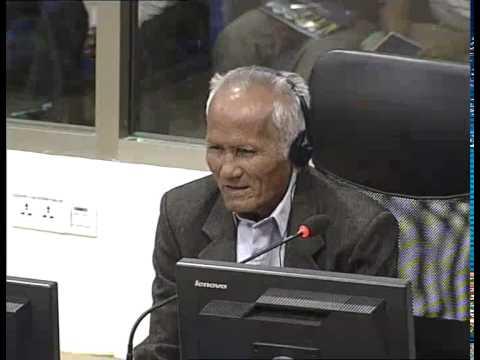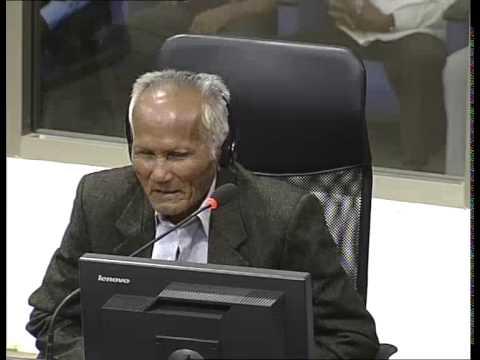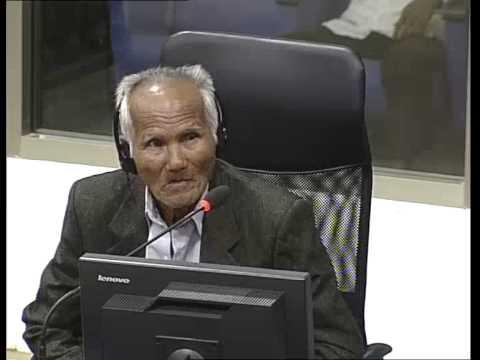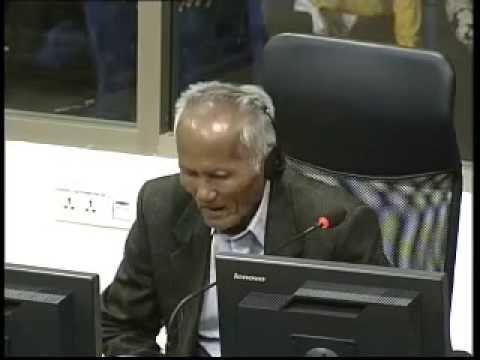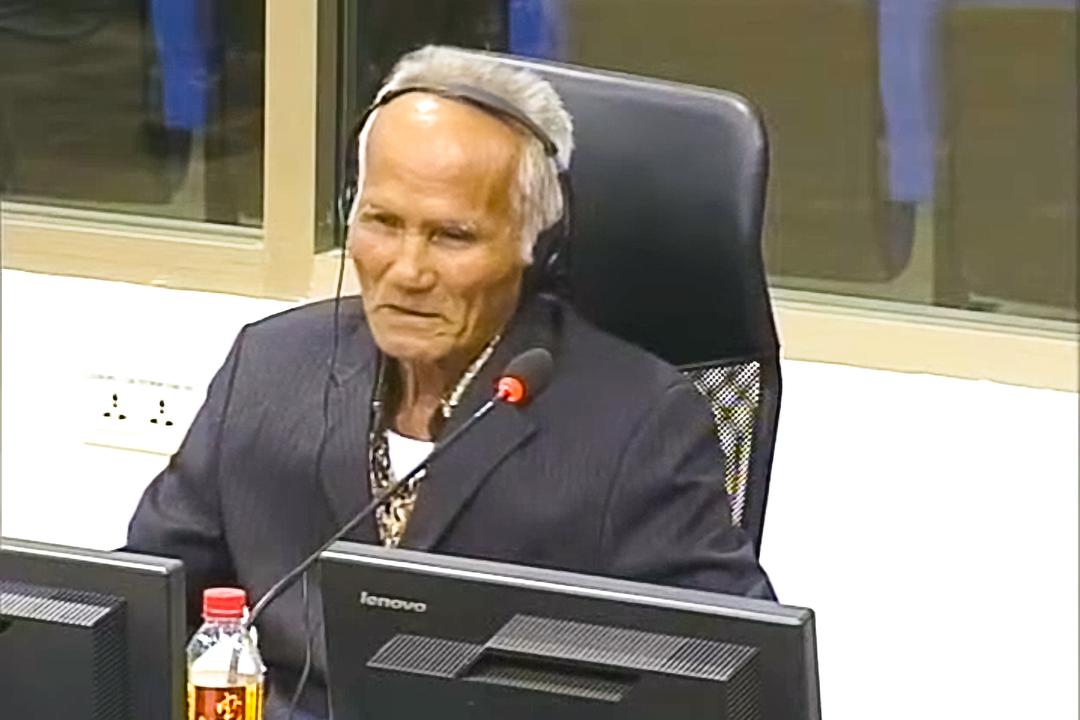
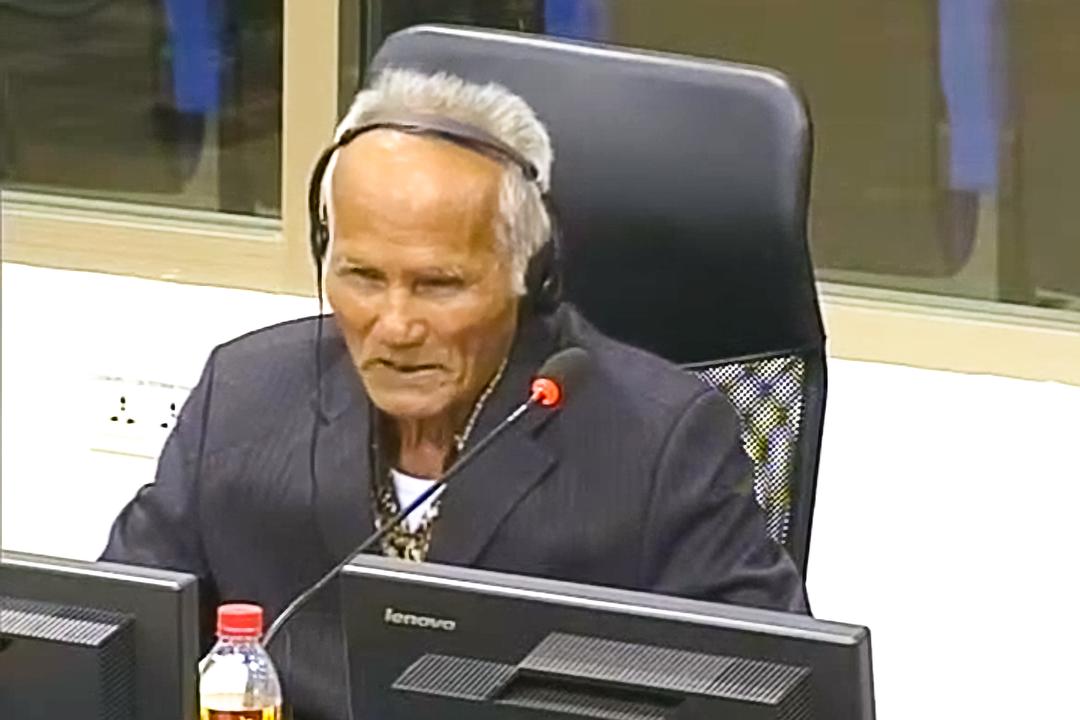
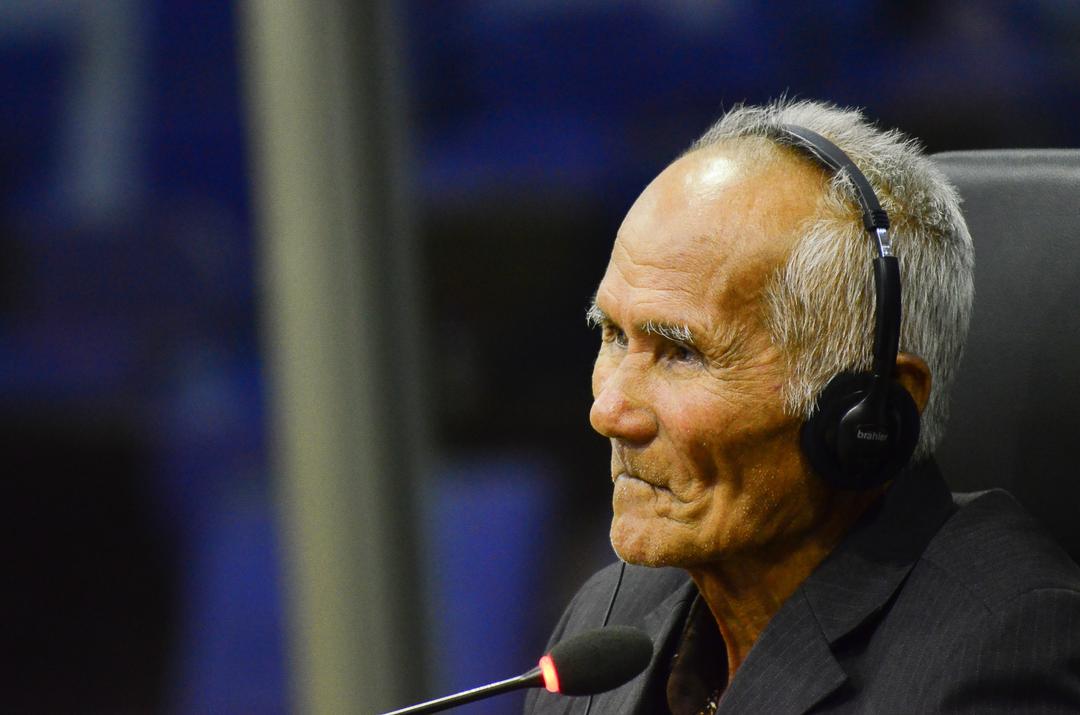
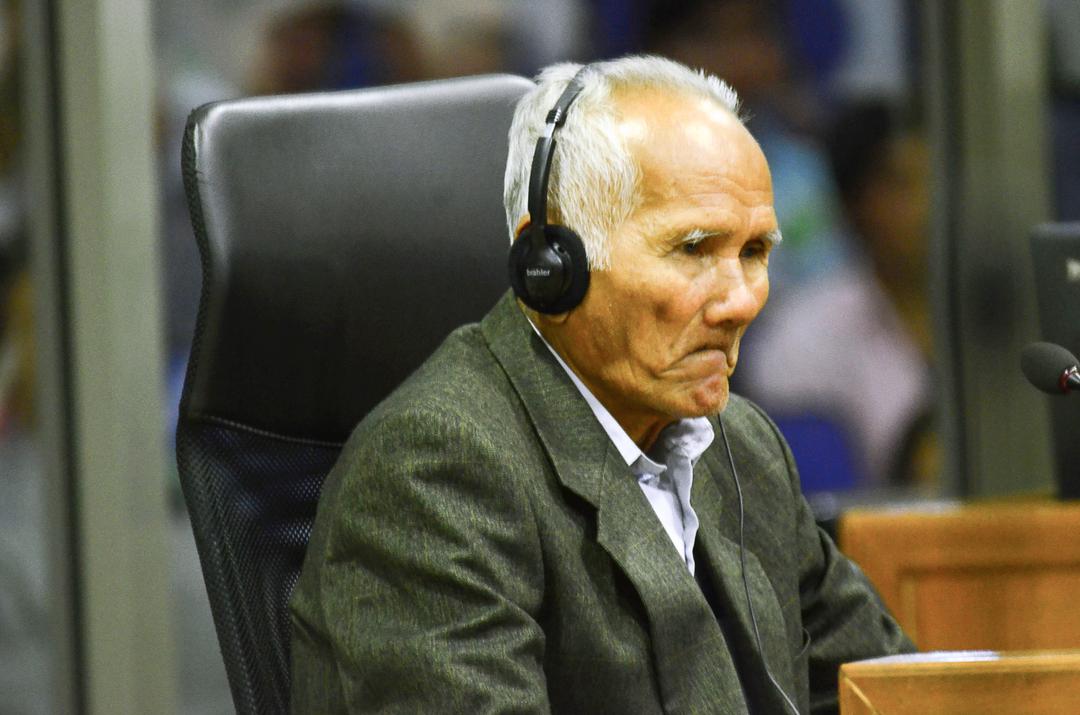
SAO Van (SAO Po)
Pseudonym: SCW-4
Cases: Case 002/01
Category: Witness
Background and Role
Sao Van (alias Sao Pok, alias Sao Po) was the chief of Cheang Tong commune in Tram Kak District from 30 September 1971.
1
In 1976, he was assigned to the Secretary of Kampong Svay in Kandal Province but was later “demoted to become an ordinary member”.
2
Sao Van gave a written record of interview, which was not mentioned in the trial judgment.
3
On appeal, Nuon Chea sought to use Sao Van’s testimony to confirm and corroborate other evidence that there had been instructions not to harm Khmer Republic soldiers below a certain rank at this time of the events at Tuol Po Chrey.
4
Having considered that hearing Sao Van’s evidence was in the interests of justice, the Supreme Court Chamber called him to testify in the appeal of Case 002/01 to give evidence regarding the command structure within the Communist Party of Kampuchea (CPK), the CPK policy to target Khmer Rouge soldiers and officials, and executions at Tuol Po Chrey.
5
Chief of Cheang Tong commune
Cheang Tong commune was located in Sector 13,
6
which was led by Ta Saom, Ta Muth, and Ta Phen.
7
While Sao Van was the chief of the commune, the area was under heavy American bombardment.
8
The CPK leaders told him that people had to join together to fight against imperialist America, which had helped Lon Nol depose the late King Sihanouk.
9
As a result, Sao Van was responsible for collecting people in the area who were loyal to the CPK to fight against the Lon Nol forces.
10
During his time as chief, Sao Van attended yearly student sessions conducted by Ta Saom, Ta Muth, and Ta Phen.
11
They spoke to attendees about strengthening solidarity within the CPK, including solidarity within and throughout the chain of command, all of which was required to serve the people of Cambodia faithfully.
12
They reiterated that directions from the upper echelons of the CPK were required to be respected and implemented by the base.
13
Anyone who was instructed to implement those instructions was required to do so “regardless of their knowledge or the limitation of their understanding of those circulars…”.
14
Sao Van also attended another yearly conference in Sector 13 where Ta Mok spoke.
15
The main content of Ta Mok’s speech was to remind cadres and peasants that they had to hold their solidarity strong and firm and to produce more rice yields.
16
Commune authorities, like Sao Van, did not have the authority to decide the life or death of people who violated this principle – this was ultimately decided by the Zone and the Centre.
17
Ta Mok did not speak about Lon Nol soldiers or the regime at this conference but stressed that an attack by Vietnam was coming, and that it was necessary to mobilise Cambodian forces and liberate Phnom Penh from Lon Nol.
18
Meeting at Kulen Mountain
Three months after the liberation on 17 April 1975, Ta Saom invited concerned cadres within Sector 13 to a meeting at Kulen Mountain in District 106.
19
Sao Van attended this meeting along with hundreds of people at different levels, including soldiers, commune cadres, and office committees.
20
Ta Saom advised attendees at the meeting that former Lon Nol soldiers up to the rank of colonel should not be harmed, as these soldiers had family members in the liberated zone who contributed to and joined in the liberation of the country.
21
Sao Van believed that this instruction was given in an attempt to consolidate the forces of the base people and those who arrived from the cities, to unify the entire Cambodian population, and to build the country.
22
Sao Van was “jubilant” to hear that soldiers were not to be harmed, as his elder brother served in the Lon Nol administration as a third assistant in a commune.
23
He asserted that the order not to harm these soldiers was followed in his commune but claimed not to know what happened in other areas.
24
Since Sao Van was unable to recall the exact date of the meeting, the Supreme Court Chamber relied on other available evidence to establish that any instruction not to execute Khmer Republic soldiers up to the rank of colonel was relayed, at the earliest, a month after 17 April 1975.
25
Meeting in Takeo Province
In late 1976, Sao Van went to a meeting in Takeo province which was attended by both Ta Saom and Ta Muth.
26
It was again announced that former Lon Nol soldiers with the ranks from second lieutenant to colonels were not to be harmed.
27
Sao Van was not made aware of any change to this instruction after it was given,
28
but believed that there had been a shift by early 1978, given what he saw at Krang Ta Chan and Tuol Sleng and those who died.
29
However, he was not given the details or content of any new instruction since he was demoted to an ordinary member by this time.
30
Although the term “enemy” was not used during any meetings Sao Van attended, he understood this term to mean anyone who was against the revolution, such as those who broke farming equipment or who got sick and could not work.
31
He believed that the term “enemy” was used to alert and intimidate people and that he “was afraid of being accused of an enemy as well.”
32
He “could survive because [he] was afraid at that time and [he] lived and worked for [his] life”.
33
The Supreme Court Chamber considered that Sao Van’s evidence, along with others, “called into question” the Trial Chamber’s findings with respect to the existence of a policy to kill Khmer Republic soldiers when the events at Tuol Po Chrey occurred.
34
Ultimately, it concluded that it was unreasonable for the Trial Chamber to find, beyond a reasonable doubt, that a policy contemplating the execution of Khmer Republic soldiers and officials existed at the time of the events at Tuol Po Chrey.
35
Videos