
SAUTR Saing
Pseudonym: 2-TCCP-304
Cases: Case 002/02
Category: Civil Party
Background and Role
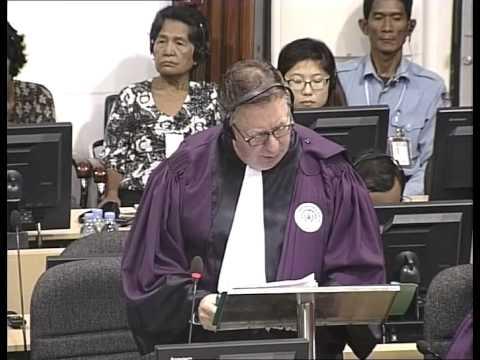
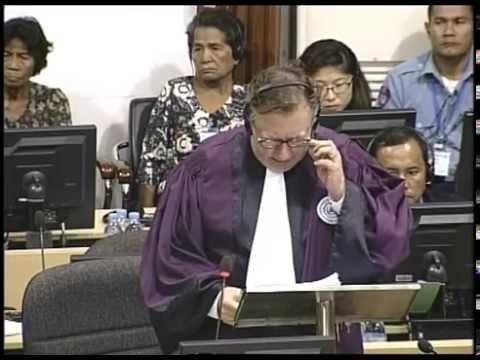
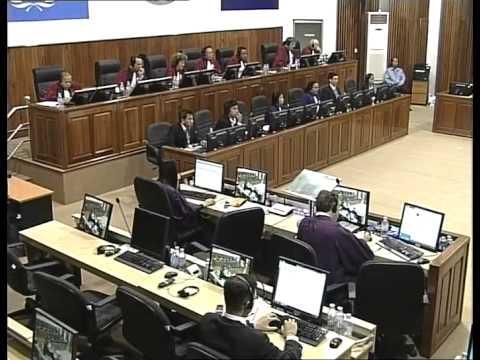
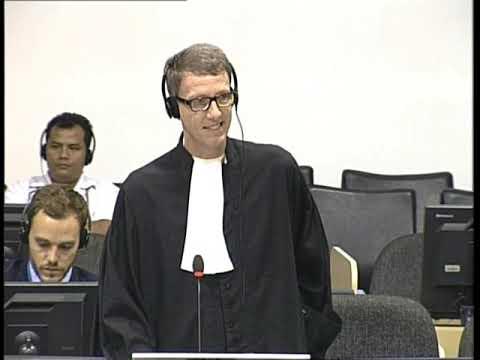
Saut Saing, a former guard from Kraing Ta Chan Security Centre (“Security Centre”), appeared as a civil party in Case 002/02 on the interrogations, torture, insufficient food rations, and executions that took place at the Security Centre.
1
The Trial Chamber relied on Saut Saing’s testimony in finding that (i) people were detained and shackled at the Security Centre;
2
(ii) the living conditions for prisoners were poor;
3
and (iii) prisoners were interrogated and children were killed,
4
but found his evidence generally unreliable on matters concerning his own culpability.
5
Working at Kraing Ta Chan Security Centre
Saut Saing joined the district military after April 1975 and worked on dam and canal projects in various worksites in Tram Kak district, including Khpob Trabek worksite.
6
He was later assigned to work as a guard at the Security Centre in 1976.
7
Saut Saing was one of six members from the district military who worked at the Security Centre, which included his cousin Van Soeun, Srei Than (alias Duch), and Sim.
8
He had various roles inside the prison compound, such as handling prisoners, reporting on the number of incoming and outgoing prisoners each day, and shackling and unshackling prisoners.
9
He supervised five to ten prisoners at the outer perimeter of the field,
10
who were tasked with carrying soil, fertiliser, or cow dung to fertilise the fields.
11
He slept in the prison compound and had access to the prison grounds for feeding pigs and cooking.
12
Saut Saing claimed that he was not the head of the guard unit,
13
though he noted that Ta Chem, a close family friend, was friends with the prison chief, Ta An.
14
He attended meetings approximately once a month, during which Ta An and other leaders handed down instructions.
15
Ta Khorn and Ta Ros, who were members of the district office, visited the Security Centre, but only made contact with the senior staff, namely Ta An, Ta Penh, and Ta Cheng.
16
The Trial Chamber relied on Saut Saing’s testimony in finding that: (i) some prisoners worked at the outer perimeter fence;
17
(ii) there were regular meetings where guards were given instructions by Ta An and other leaders;
18
and (iii) district-level cadres, including Ta Khorn, went to the Security Centre on one occasion.
19
Arrest, Detention, and Execution of Prisoners
Special units brought arrestees to the fence of the prison compound, where they were collected by people at the security office.
20
There were three detention buildings at the Security Centre, two towards the east and one to the west,
21
and each building accommodated two rows of prisoners who were shackled by the ankle.
22
Prisoners were neither allowed to clean themselves
23
nor provided with medical treatment.
24
Former Khmer Republic soldiers and officials were detained at the Security Centre.
25
When questioned about another witness, Meas Sokha, who testified before the Trial Chamber in Case 002/02, he recalled that following the detention of Meas Sokha’s father and brother-in-law, his mother, Yeak Nha, and his sister, Yeay Rat, were also detained at the Security Centre.
26
He explained that when mothers “disappeared”, children and young babies would also “disappear”, which meant they were “killed”.
27
The interrogation site was at the south of the compound, under a pongro tree, next to the guards’ kitchen.
28
There were rows of graves to the south of the interrogation site.
29
Whips and plastic bags were used to suffocate prisoners during interrogations.
30
Saut Saing claimed that he never beat prisoners.
31
The Trial Chamber relied on Saut Saing’s testimony in finding that: (i) militiamen and/or soldiers brought prisoners to the external fence of the Security Centre, where they were received by the guards;
32
(ii) people were detained in the three main detention buildings;
33
(iii) prisoners were shackled in rows;
34
(iv) prisoners were not allowed to clean themselves
35
and were not provided with medical treatment;
36
(v) persons suspected of being former Khmer Republic soldiers or officials were taken to the Security Centre;
37
(vi) many of Meas Sokha’s relatives were arrested and taken to the Security Centre;
38
(vii) babies and children were killed at the Security Centre;
39
(viii) there was an interrogation room to the south of the inner compound;
40
and (ix) beatings and suffocation were methods frequently deployed to extract confessions from prisoners.
41
However, the Trial Chamber found Saut Saing to lack credibility on the issue of his alleged participation in crimes and rejected his evidence that he and other guards did not beat prisoners.
42
Conflicting Evidence
According to Saut Saing, his unit was told to guard outside the compound while staff from the Security Centre executed prisoners.
43
Staff at the Security Centre included a three-member committee, together with members of the youth league and militia, who dug pits and buried bodies.
44
He gave conflicting evidence on not witnessing executions,
45
having “glimps[ing]” prisoners being killed from a distance.
46
The Trial Chamber approached Saut Saing’s testimony with great caution,
47
having found that he repeatedly sought to alter or qualify his evidence to minimise his association with atrocities,
48
and rejected his evidence that the guards did not perpetrate executions.
49
Videos