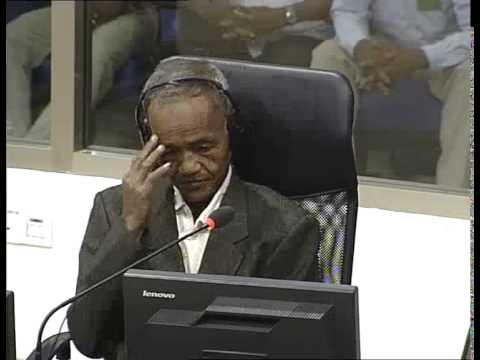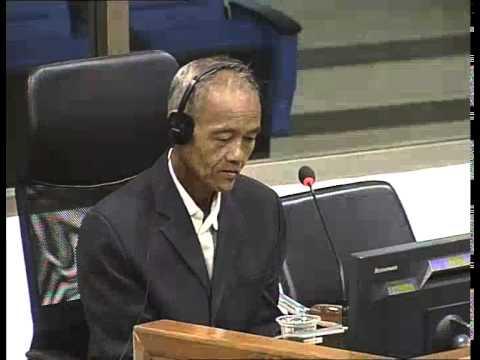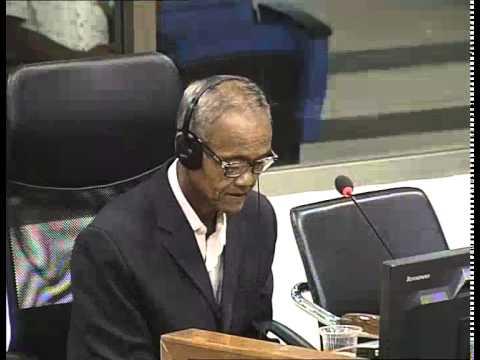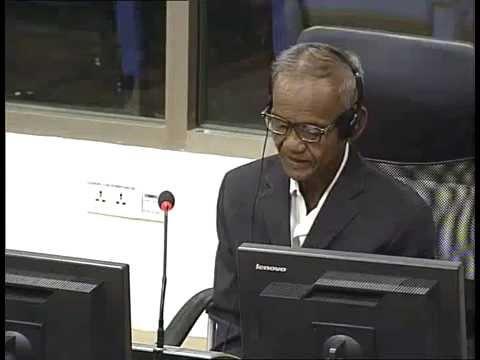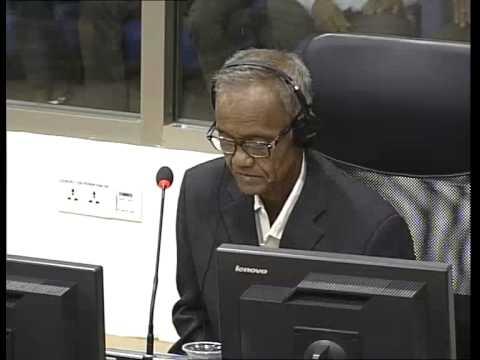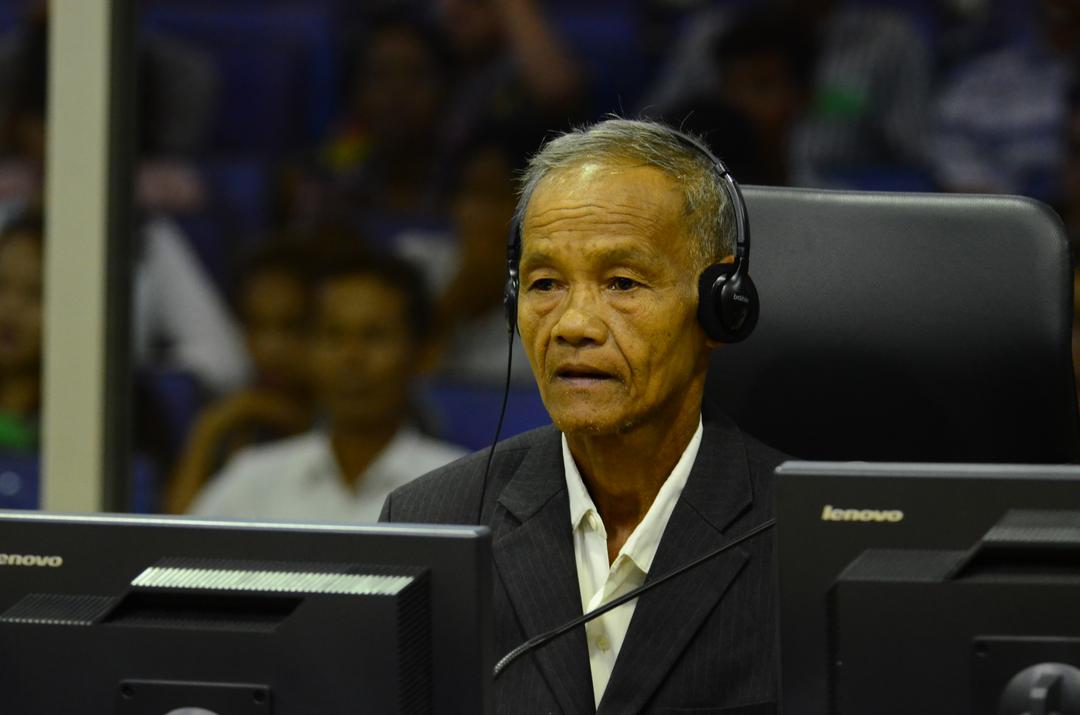
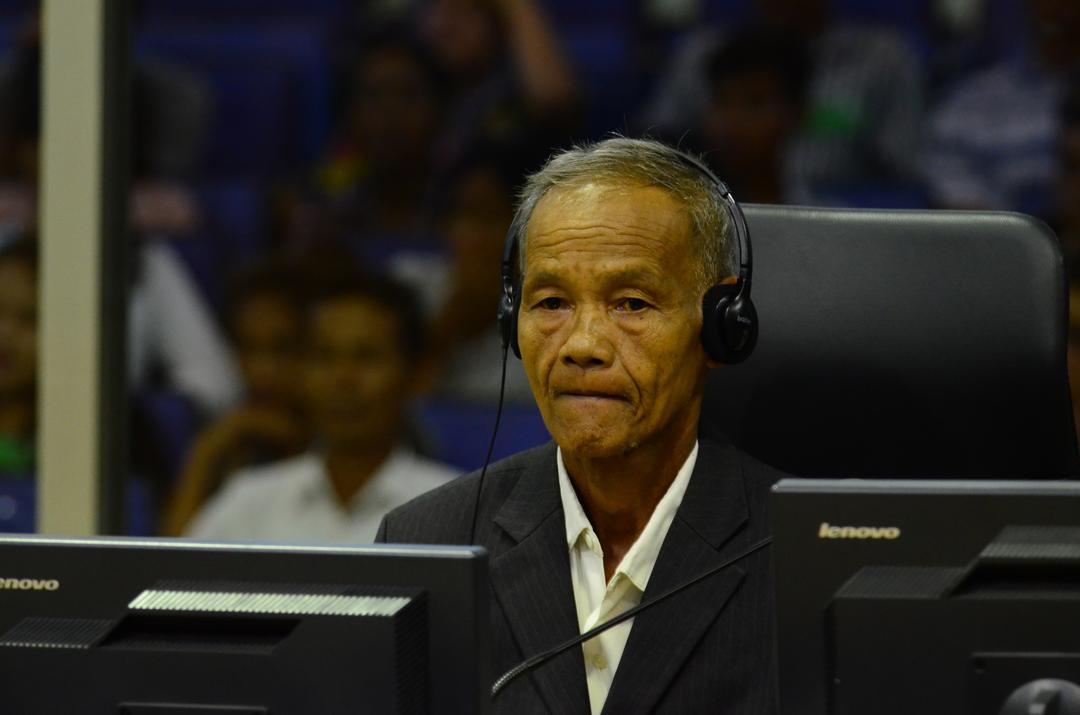
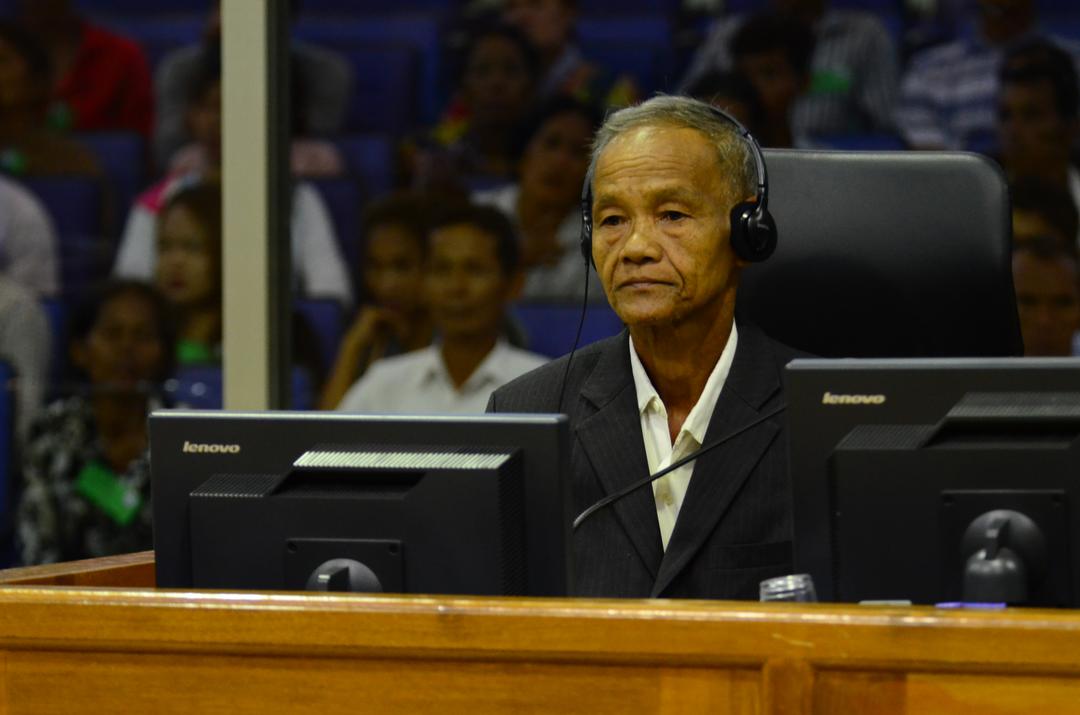
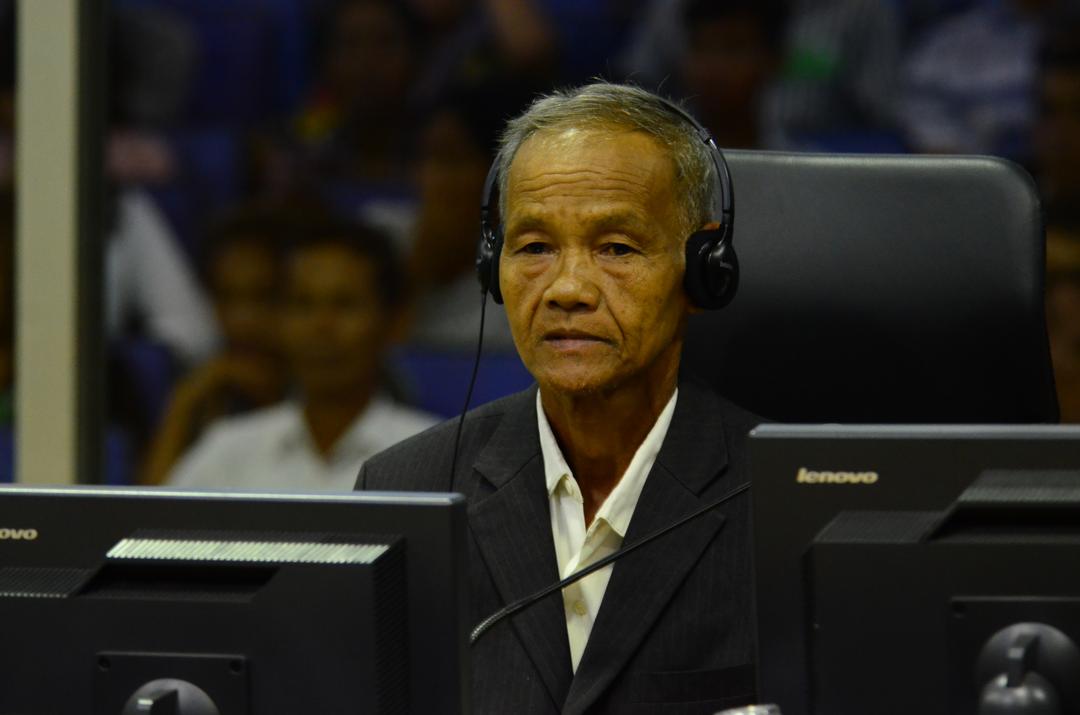
SEM Hoeurn
Pseudonym: 2-TCW-943
Cases: Case 002/02
Category: Witness
Role and background
Sem Hoeurn alias Kim
1
voluntarily became a soldier in 1970
2
and was chief of a platoon in Division 310.
3
In 1975, he entered Phnom Penh,
4
and was assigned to clean the rubbish in the city,
5
but was later removed because he was alleged to have connections with a traitorous network.
6
He was asked to farm in Toul Kork (Khmuonh-Kab Srov and Boeng Prayab),
7
and relocated to the Kampong Chhnang airport worksite in early 1977,
8
with others who had been affiliated with Division 310.
9
Kim was at the worksite until mid-1978 and was later sent to Amleang to live as an ordinary citizen.
10
Phnom Penh (1975)
Kim testified about a security office at Wat Phnom (opposite from the Calmette Hospital)
11
that detained cooperative and district chiefs who were alleged to have connections with the former regime.
12
Men, women, and children were tortured in that office.
13
He did not witness the torture, but heard their screams, sounds from beating, and children crying every morning.
14
Averted coup d’état
In 1977, Oeun, chief of Division 310, chaired a meeting in Phnom Penh when he called for rebellion and this meeting was held close to Wat Phnom that was attended by 500 soldiers.
15
Oeun tried to build up internal forces called “White Khmer”, to struggle against the Khmer Rouge regime.
16
Acts of rebellion began in 1975.
17
There was a plan to seize and capture Pochentong airport in mid-1977
18
and to attack and take over the radio station at Stueng Mean Chey in Phnom Penh.
19
Oeun gave Kim a platoon to lead and six 55-trucks to transport weapons to hide in Kampong Cham.
20
He transported the weapons from 1976 up to 1977.
21
Oeun wanted to create a movement to liberate Democratic Kampuchea, but information about his coup d’état planned for late 1977 was leaked.
22
Oeun was arrested
23
and taken to S-21.
24
Khmer Rouge called Division 310 soldiers into a meeting at Wat Phnom where the tape of Oeun’s confession, obtained under torture, was played.
25
They were told that former soldiers of the division were traitors and that they had been arrested.
26
Some Division 310 soldiers disappeared after the meeting.
27
Division 310 came under the Centre’s authority.
28
Cadres from Southwest Zone were sent to replace those of North Zone.
29
Kim testified that the now-Prime Minister Hun Sen was the deputy chief of the Division 310 in the North Zone.
30
Kim’s unit was disarmed
31
and sent to farm rice at Tang Kouk village.
32
At Boeung Prayab, he was assigned to clear up the hyacinths for 2-3 months.
33
There were frequent arrests and disappearances.
34
He worked from 5 a.m. and farmed with his bare hands, without any cattle to work in the field.
35
If his unit could not achieve the harvest target, they would be accused as being traitors.
36
Kim was never arrested, but was accused of having a connection to the traitorous network since the division commander was accused of being a traitor.
37
He survived the Khmer Rouge regime because he changed his biography.
38
The Trial Chamber found that Kim’s confusion of certain dates and his reliance on hearsay and inferences made thereon, raised doubt as to the reliability of his evidence in relation to the averted coup d’état.
39
The Chamber also noted that there is no evidence to corroborate Kim’s statement that Hun Sen served in the Central (old North) Zone,
40
which further raised doubts about his credibility as a witness.
41
The Chamber found Kim’s evidence “problematic and treated it with caution”.
42
However, Kim’s account was corroborated by Khnorn Prak’s testimony.
43
Kampong Chhnang airport worksite (1977-1978)
Kim arrived at the Kampong Chhnang airport worksite when construction had only just started; his unit was assigned to clear the land, pick up the wood, and uproot trees.
44
The worksite was a highly secretive military installation that nobody inside or outside of Democratic Kampuchea, except for China, knew about.
45
Fire jets were hidden in secret caves.
46
He saw Khieu Samphan inspecting the worksite once.
47
There was 36 members in one platoon, 12 members in one group.
48
The unit chief kept Division 310 soldiers under a constant watch.
49
If the unit chief did not follow the upper echelon’s rules, he or she would be accused of being an enemy.
50
Unit chiefs were dressed in black and had a black cap.
51
Workers wore a mixture of clothing: black clothing, or khaki pants, or some coloured clothing.
52
They had limited food rations, and began working at 5.30 a.m.
53
Those who fell sick, were placed under surveillance, and their food ratio was reduced.
54
Some died of starvation.
55
Some workers sustained fatal injuries.
56
There were mobile medics that would prescribe medicine, but some of the sick workers died of ineffective treatment.
57
Other sick workers were transported to another location and never returned.
58
The number of workers at the site increased to tens of thousands
59
tasked with breaking rocks, laying foundations, or compressing soil.
60
There was a rotation of work: sometimes they were asked to dig the ground, or to flatten the soil, or to dig a canal.
61
Only soldiers were on site; there were no civilians.
62
Those sent to the worksite were considered “bad elements”.
63
Workers would be sometimes crushed by fragments of rocks; heavy labour was a form of torture.
64
Workers were not allowed to speak or mingle with members of other units.
65
Workers who damaged the tools were killed
66
at a killing site nearby
67
with a blow with a hoe to the back of their neck.
68
Light offenders were assigned overtime work without being provided sufficient food.
69
From time to time, at around 10 p.m., workers were arrested and taken in fully-covered trucks to another location.
70
Two people disappeared from his 12-member unit:
71
Pheap and Soeun were arrested for stealing tobacco leaves and were accused of being traitors.
72
They planted tobacco leaves and collected some fallen leaves and smoked them, then they were arrested.
73
That was their only offence.
74
They never returned.
75
There was on 600-member division of Chinese who were assigned to be in charge of units in terms of technical work.
76
Heavy machinery was brought from China.
77
The Trial Chamber found that “[t]he Airfield was built in close cooperation with China as a key component of the DK military strategy”.
78
The Trial Chamber was also satisfied with his evidence on the existence of the killing site based on a conclusion that he drew from the fact that workers were forbidden to access the area to the west of the Airfield, although he never went to the site.
79
The Trial Chamber did not find beyond reasonable doubt that Khieu Samphan visited the Kampong Chhnang Airfield worksite, as Kim testified.
80
Buddhism
In 1971, Khmer Rouge forced monks to disrobe, to ride bicycles, and to engage in labour.
81
His suffering
Kim and his relatives endured a lot of hardship in that period.
82
Kim’s eldest brother, who was also a soldier, and his cousin Eng, commander of Company 5, were taken away and killed.
83
Angkar removed Kim from his unit for speaking with other soldiers in a nearby unit; he was severely mistreated, deprived of sufficient food and was not allowed to exercise his freedom of movement or speech.
84
“It seemed like we were living in a prison without wall”.
85
After seeing how the soldiers and people were mistreated, Kim became disillusioned and opposed the Khmer Rouge regime.
86
He testified that the work at the Kampong Chhnang airport was very difficult,
87
with hard labour, insufficient food and sleep.
88
“I do not want to recall what I have gone through in the period”.
89
Videos