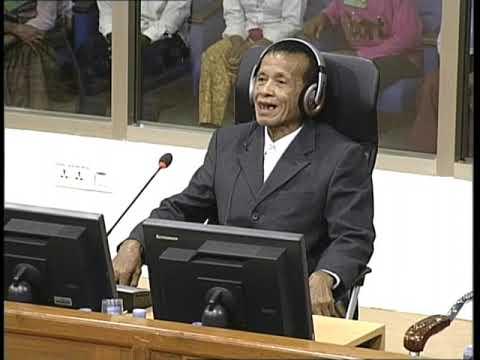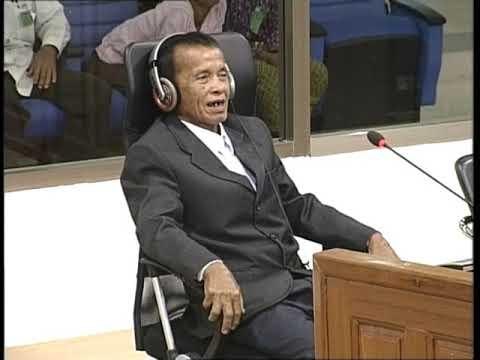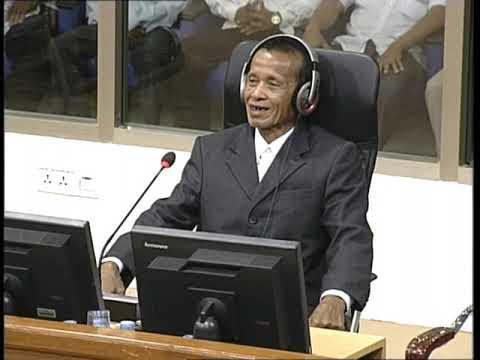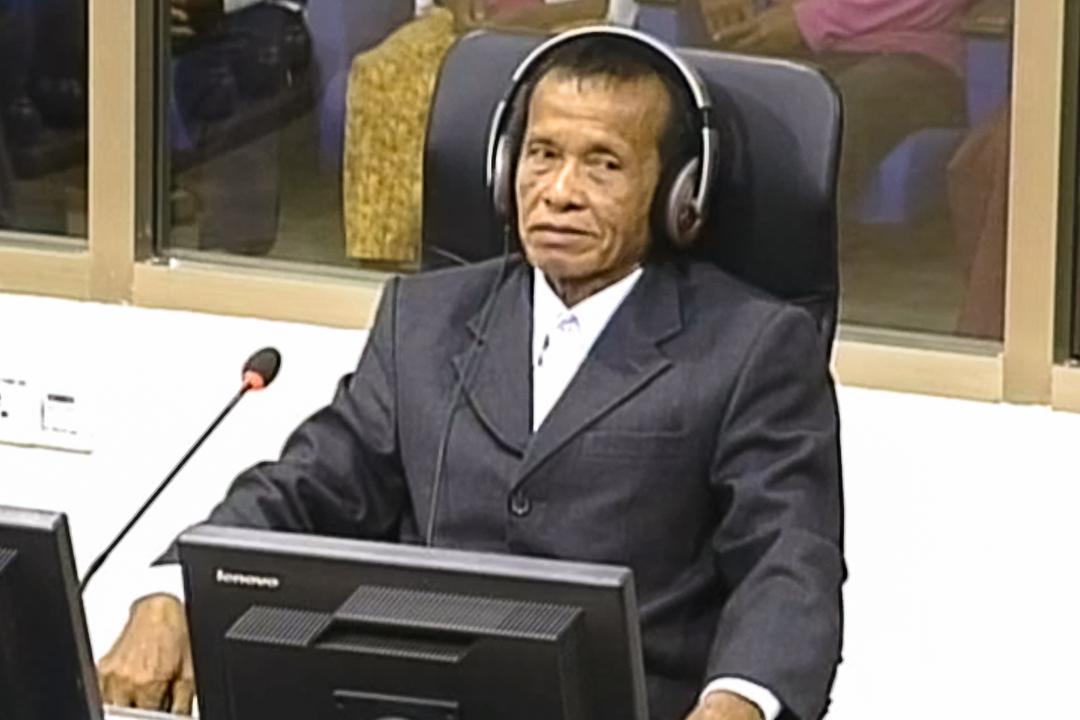
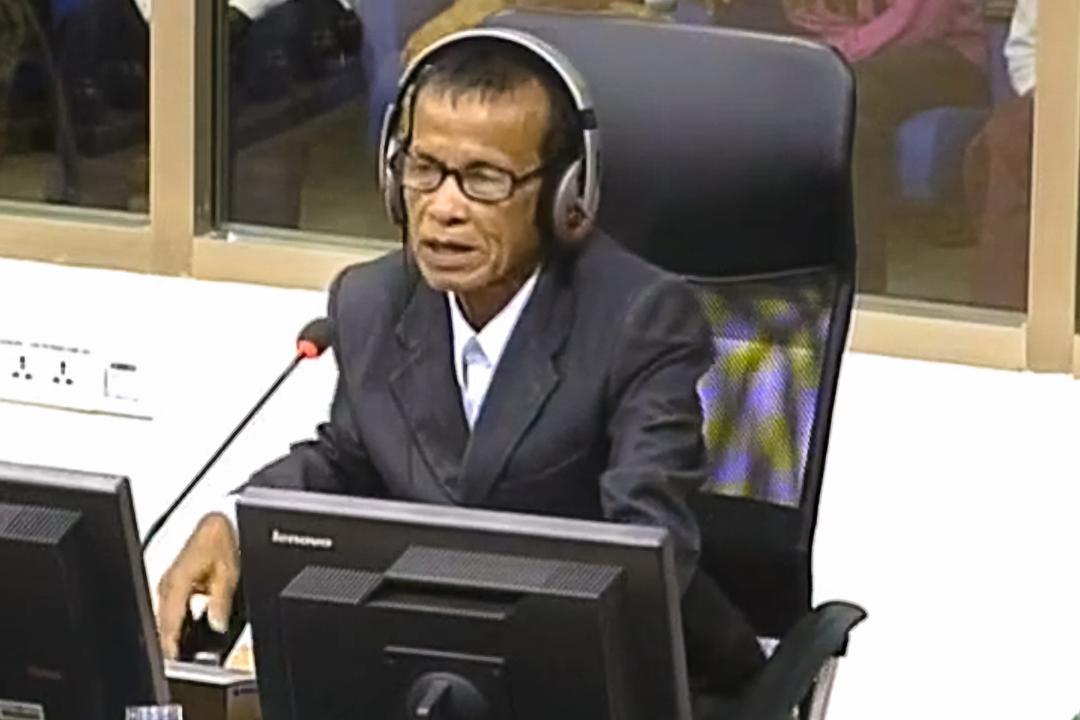
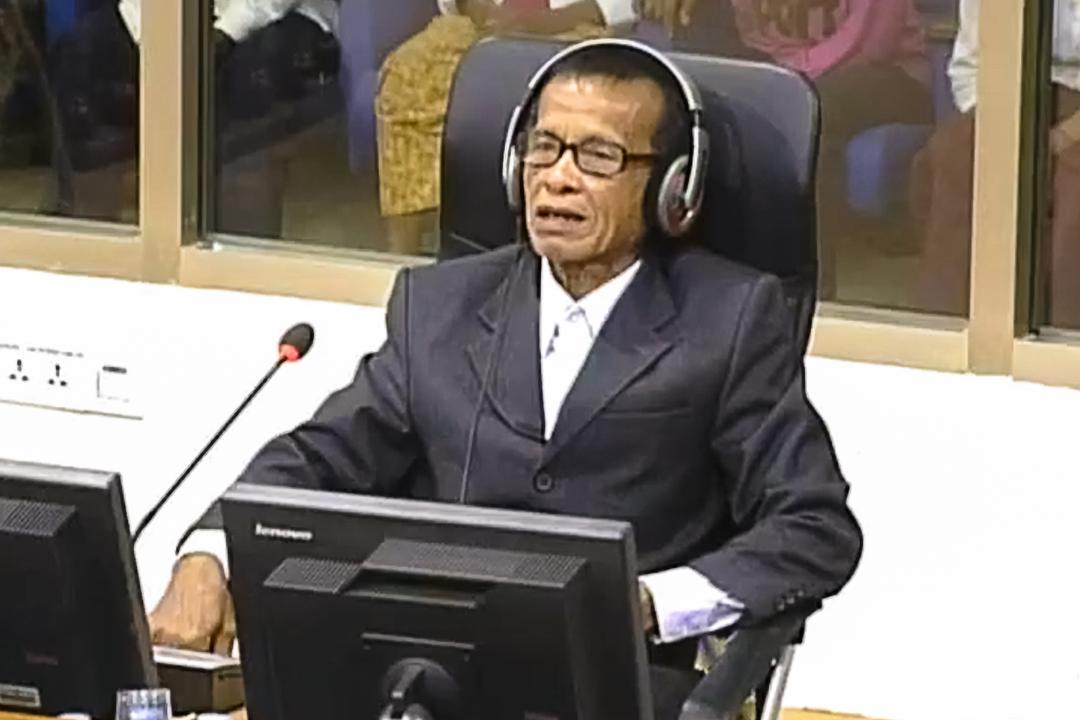
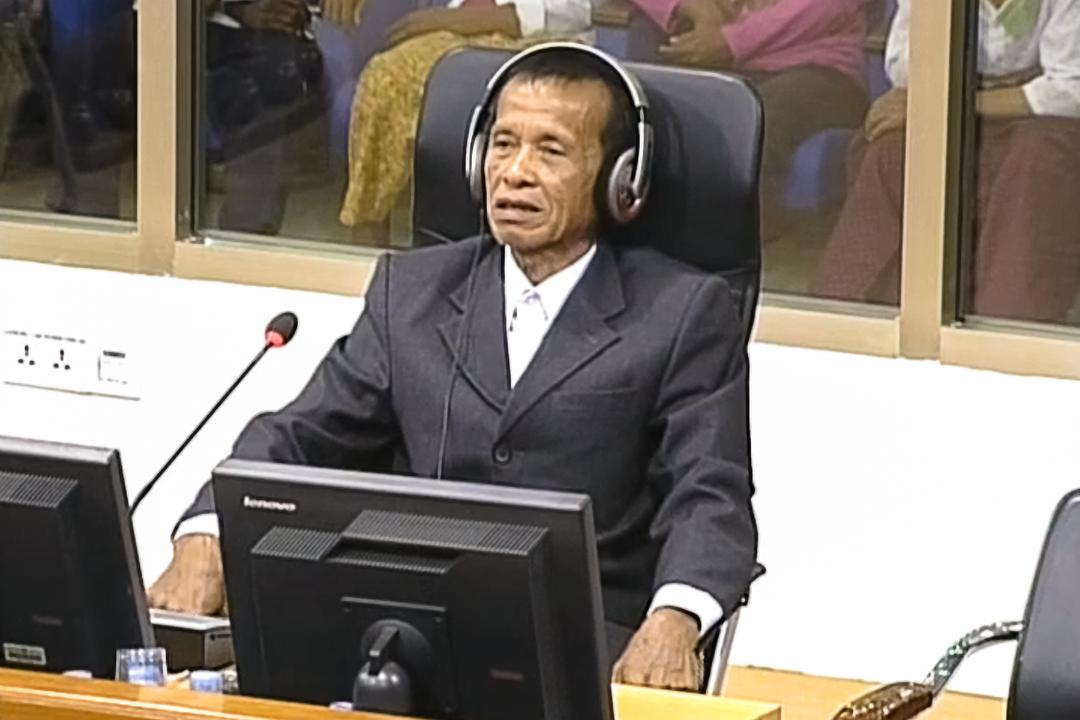
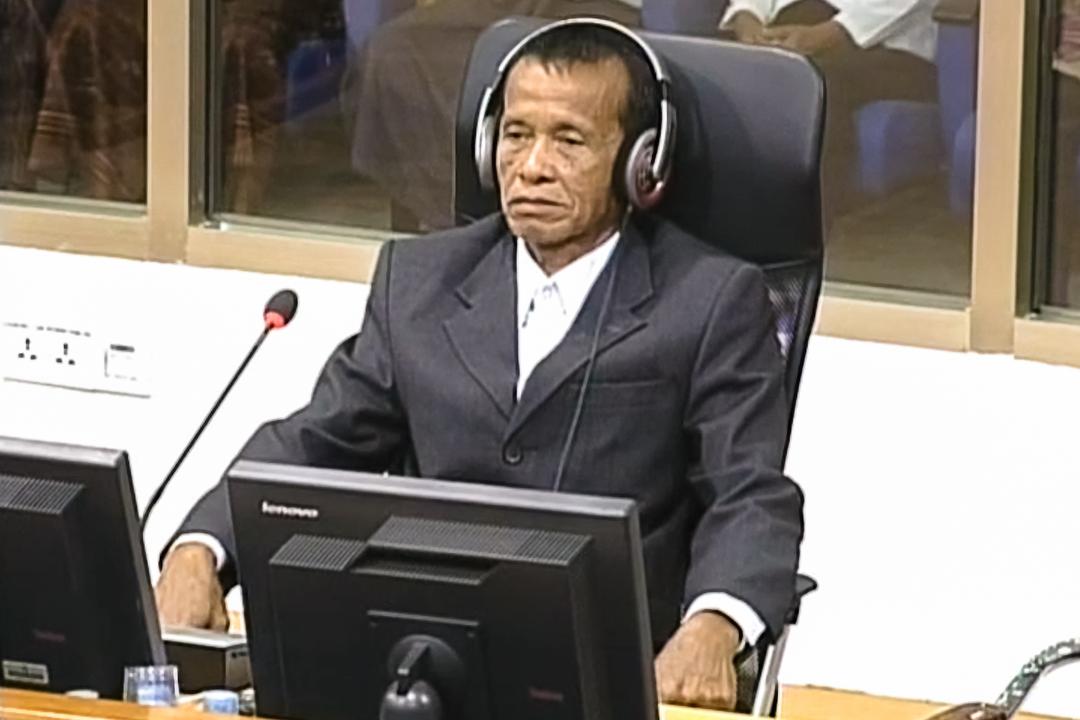
SOKH Chhin
Pseudonym: TCW-661
Cases: Case 002/01
Category: Witness
Background and role
Sokh Chin was a train ticket seller who worked in a mobile unit during the Democratic Kampuchea (DK) regime.
1
He started working as a ticket seller in 1967, in Moung Ruessei, in Battambang province.
2
In 1970, he was transferred to Svay Sisophon, in Serei Sophan, currently Banteay Meanchey province.
3
When the Khmer rouge took power on 17 April 1975, they banned ticket selling.
4
Consequently, Sokh Chhin was reassigned to repair railways and was transferred to Pursat province working in a mobile unit, taking care of a 21 kilometre track.
5
He was interviewed by investigators of the Office of the Co Investigating Judges in 2009,
6
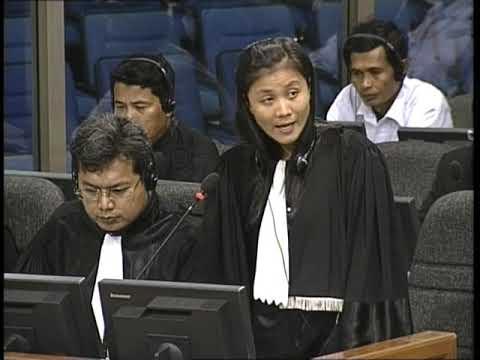
and later testified as a witness before the Case 002/01 Trial Chamber on what he saw and experienced when he was working as a railway repair worker during the DK regime.
7
Ta Moum
Under the DK regime, Sokh Chhin worked under the supervision of a Khmer Rouge soldier named Ta Moum.
8
Ta Moum was in charge of train traffic for two sectors between Romeas and Pursat,
9
reporting to the upper echelon in Phnom Penh.
10
He was part of a team of 18 men controlled by three soldiers.
11
During the course of his work at the railway, Sokh Chhin learned that Ta Moum attended study sessions in Phnom Penh.
12
When coming back from Phnom Penh, Ta Moum would convene a local meeting with his subordinates and the workers where topics like strengthening the political stance, social work, and production would be taught.
13
Ta Moum forced men, women, and children over six years old to work and study party politics.
14
Working conditions under the DK regime
Sokh Chhin suffered from bad living conditions during the DK regime.
15
He was malnourished and only ate porridge, although he harvested rice.
16
He lived in a constant state of fear as Khmer Rouge soldiers threatened to kill him if the train derailed or if he said something untrue.
17
He was instructed to be silent and never dared to speak to people coming by trains.
18
Moreover, he did not have free time except when he was really sick.
19
Sokh Chhin was also deprived of his freedom of movement and could not go freely outside the confined area of his work.
20
As a general rule, if the workers protested more than two times, they would be sent for re-education.
21
Some of his former colleagues went for re-education and never returned.
22
Evacuation by trains
Once or twice a week during the months of October, November, and December 1975, Sokh Chhin saw people coming from the direction of Phnom Penh being transported in old trains used to transport goods.
23
These trains were under the management of the chief of the train unit in Phnom Penh.
24
There were approximatively 40 to 50 people in each wagon, sitting on the ground.
25
They were escorted and guarded by soldiers with weapons, two soldiers for each compartment of the train.
26
Some disembarked at Leach commune, where they would stay for a few days, or even a week before they being transferred to other locations by military trucks.
27
No water was given to the evacuees; they had to drink the water from the paddy fields that they bathed in.
28
They did not have sufficient food and had to sleep on the ground.
29
Sokh Chhin learned from relatives that evacuees would also have their biographies made in Leach commune, and according to their personal history, would be sent elsewhere in the Northwest.
30
The chief of railway line, who knew Sokh Chhin, informed him that they could be sent to Kien Svay, Thma Koul market, or Phnum Touch.
31
Once those people disembarked, the train would go back to Phnom Penh with only the crewmembers and the soldiers and then returned again, with people on board.
32
Along the railroad, Sokh Chhin saw dead corpses, and had to bury one of them because of the stench.
33
He saw other corpses but no one buried them,
34
concluding that those bodies were evacuees from Phnom Penh as there were no villagers living in that area.
35
The Trial Chamber referred to Sokh Chhin’s testimony several times in finding that: (i) between 1975 and early 1977, at least 300,000 to 400,000 people were displaced from various locations to Battambang and Pursat Provinces and transferred under armed guard;
36
and (ii) Khmer Rouge soldiers and officials systematically and intentionally imposed conditions on people moved from southern Cambodia to Battambang and Pursat provinces that would likely lead to death on a massive scale.”
37
In his appeal brief, Nuon Chea argued that the Trial Chamber erroneously found that deaths occurred during and were unlawfully caused by the Phase II movement, by relying on Sokh Chhin’s testimony, as he only testified to burying a single body.
38
However, the Supreme Court Chamber found that Nuon Chea failed to establish that no reasonable trier of fact could have found that deaths or killings were established beyond reasonable doubt.
39
It also found that Nuon Chea failed to demonstrate that the Trial Chamber’s finding on the lack of care and proper treatment towards the transferred people in respect of their hygiene – which relied on Sokh Chhin’s testimony – was unreasonable, since it was also supported by 25 pieces of evidence.
40
Videos