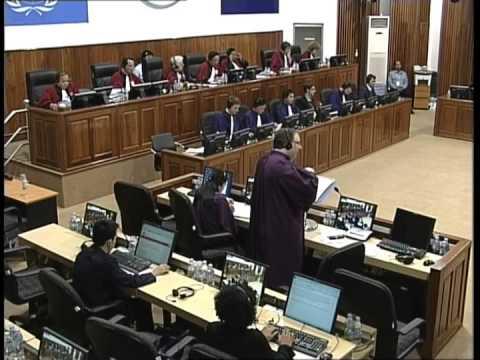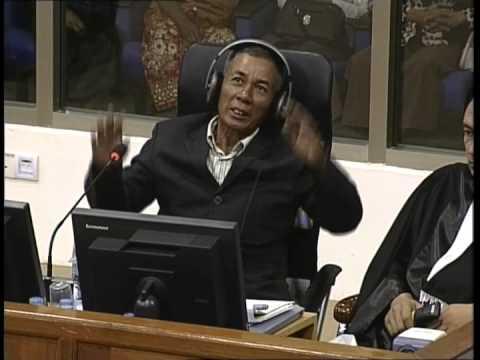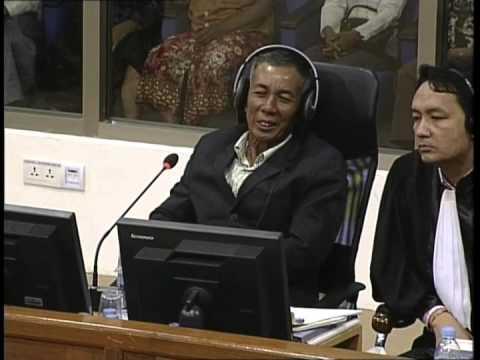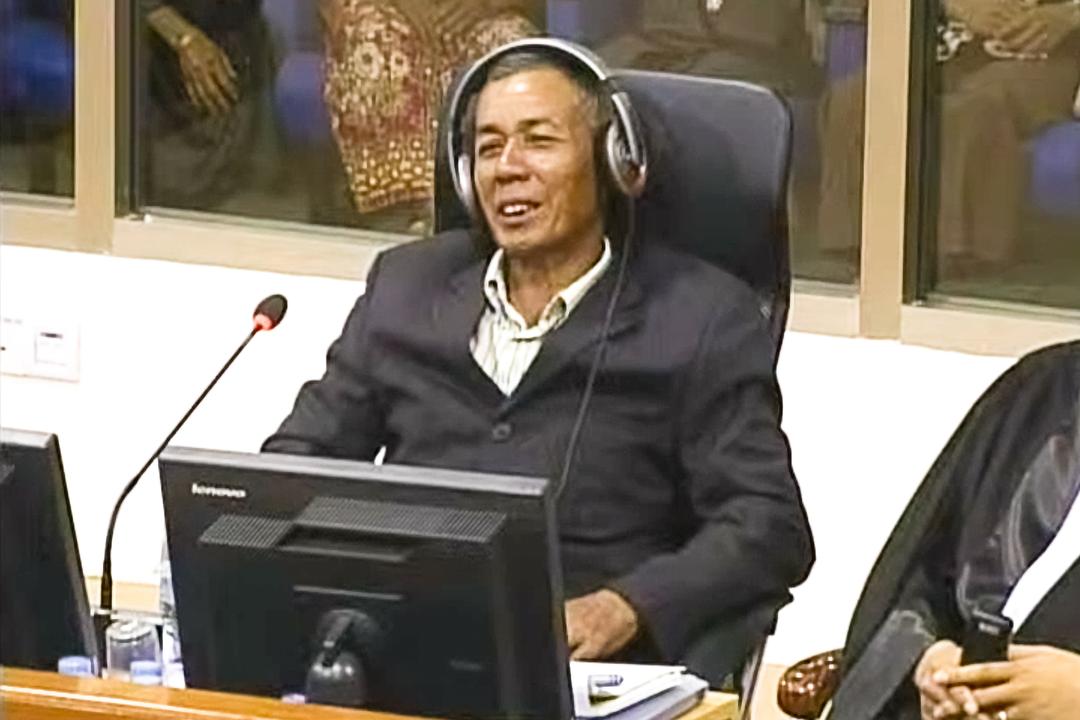
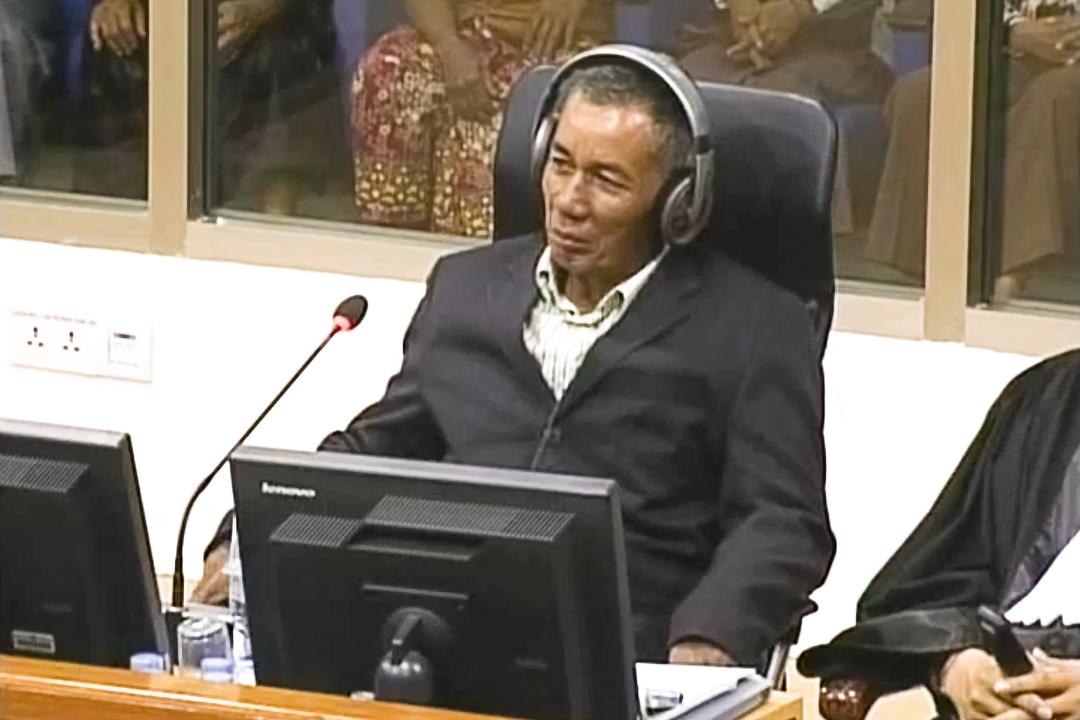
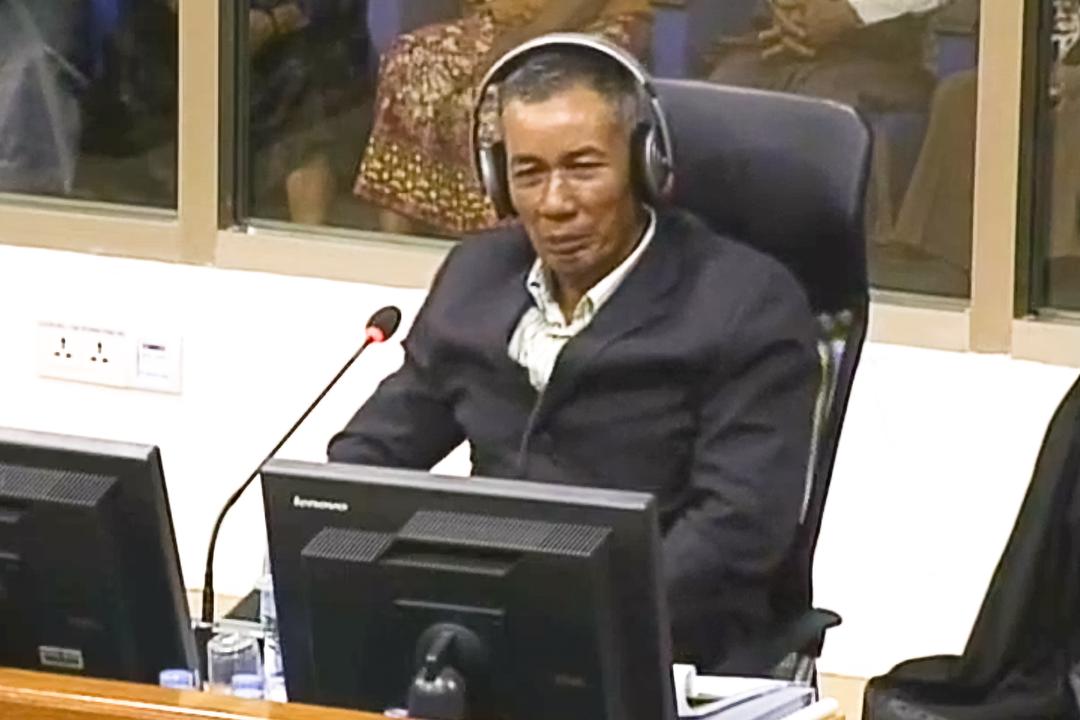
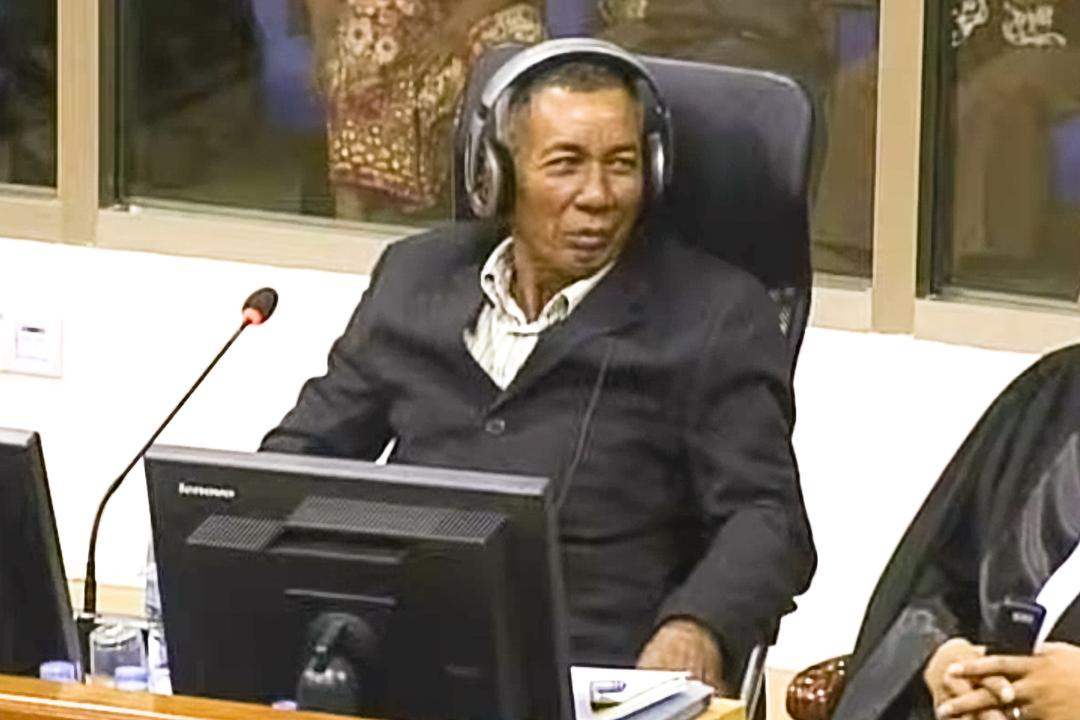
SUM Chea
Pseudonym: TCW-690
Cases: Case 002/01
Category: Witness
Background and Role
Sum Chea joined the Revolutionary Army of Kampuchea in 1972 in Boeng Nay commune,
1
but did not hold any position or rank.
2
Although he could not remember whether he was a member of a particular squad or platoon, he recalled that he was a member of Division 1, which was headed by Voeung.
3
He testified in Case 002/01 about his experience as a Khmer Rouge soldier during the invasion of Phnom Penh, the evacuation of civilians from Phnom Penh, and the treatment of officials and soldiers of the Khmer Republic.
Invasion of Phnom Penh on 17 April 1975
On 17 April 1975, Sum Chea’s division attacked Phnom Penh from Baset.
4
After the attack, different Khmer Rouge divisions took control of various areas of Phnom Penh.
5
For example, the head of Division 1, Voeung, was in charge of one section of the city, while the other sections were managed by the representatives of other zones.
6
After the Khmer Rouge forces took over the city the population was instructed to evacuate immediately.
7
The Trial Chamber relied on Sum Chea’s testimony, in addition to other evidence, to find that on the morning of 17 April 1975 Khmer Rouge forces from various zones across Cambodia attacked and entered Phnom Penh from all directions.
8
It also relied on Sum Chea’s testimony in finding that when the Khmer Rouge arrived in Phnom Penh, they instructed the population to leave the city.
9
The Evacuation of Phnom Penh
Sum Chea received orders to evacuate people from Phnom Penh after it had been liberated.
10
Specifically, his division received orders from the head of his battalion, Bong Hak (who was Voeung’s subordinate), to evacuate people from the city.
11
He did not know from whom Bong Hak received this order.
12
The population was told over loudspeaker announcements to leave Phnom Penh within three days.
13
They were told that the evacuation would be temporary in nature, lasting only three to seven days, after which they could return home.
14
Residents were warned that they risked being killed in bombings by the United States if they stayed.
15
However, this warning was part of the Khmer Rouge’s plan to deceive the population into leaving the city quickly.
16
While Sum Chea’s division helped evacuate the population without mistreating people, he heard that Bong Hak had said that soldiers in other divisions resorted to forcing people out at gunpoint, firing their guns, and beating and mistreating civilians who refused to leave.
17
Bong Hak also told him that without mistreating some individuals, they would not be able to empty the city of its population.
18
Certain groups were designated to force civilians to leave using whatever means possible and in the worst cases, civilians who refused to leave were shot.
19
Some groups shot and killed a few people “to scare the hell out of other people” and encourage them to flee.
20
During the evacuation, Sum Chea was stationed on the road leading to the French Embassy.
21
The people were easily evacuated under his division’s supervision and after five to six days the city was empty.
22
During the evacuation there was no policy or instruction to assist the population, and Sum Chea’s battalion did not provide food or water to the evacuees as the soldiers themselves could not afford to eat.
23
Sum Chea saw people dying in the streets during the evacuation
24
and patients who were abandoned in the hospital.
25
The Trial Chamber referred to Sum Chea’s evidence in finding that: (i) the Communist Party of Kampuchea made the decision to forcibly evacuate Phnom Penh and that these orders had been passed to lower cadre;
26
(ii) the population was told that the evacuation was temporary;
27
(iii) patients in hospitals who could not be evacuated were left to die;
28
and, (iv) Phnom Penh was largely emptied of its inhabitants within one week of its fall.
29
More specifically to Sum Chea, the Trial Chamber found that he received orders from Bong Hak to evacuate the population and that Bong Hak had told him that without mistreating some of the people, they would not manage to empty the city of its population.
30
It considered that even though Sum Chea claimed that his division did not mistreat people, he learned from Bong Hak that other soldiers had resorted to measures such as forcing people out at gunpoint, firing their guns, beating and mistreating civilians who refused to go and, in the worst cases, shooting them.
31
Finally, the Trial Chamber referred to Sum Chea’s testimony in finding that evacuees were forced to fend for themselves, as his battalion did not provide food, water, medical treatment or accommodation to the evacuees, and there was no policy to assist them.
32
Justifications for the Evacuation
During the evacuation of Phnom Penh, Sum Chea’s division deceived citizens into leaving Phnom Penh by warning them that fighting would soon breakout and everyone would be killed.
33
Khieu Samphan argued at trial that military necessity justified the evacuation of Phnom Penh, as the Khmer Rouge was trying to protect the new regime against the militaries of the United States and Vietnam.
34
The Trial Chamber disagreed with this justification for the evacuation of Phnom Penh, relying in part on Sum Chea’s testimony that his division was instructed to deceive the population of Phnom Penh by telling them that they needed to evacuate because they would be bombed and everyone would die.
35
Relying on Sum Chea, in addition to other evidence, the Trial Chamber was not satisfied that the leadership believed that the threat of bombardment by other militaries existed at the time.
36
Treatment of Officials and Soldiers of the Khmer Republic
When Sum Chea’s division arrived in Phnom Penh, they met civilians and unarmed Lon Nol soldiers who were waiving white flags.
37
Sum Chea’s battalion treated these soldiers as having surrendered.
38
However, Bong Hak told his battalion that they needed to evacuate the city’s population in order to “sweep out Lon Nol soldiers.”
39
There were various methods set up to find Lon Nol soldiers. For example, checkpoints were established in and around the city at Chrouy Changvar Bridge and Psar Thmei, to check for former Khmer Republic soldiers.
40
Further, seven or eight days after the liberation, loudspeaker announcements called for Lon Nol soldiers, regardless of rank, to turn themselves in to reveal the rank they held previously and that they would be offered the same position in the Khmer Rouge.
41
However, once they turned themselves in they were “instantly arrested and they would eventually be killed.”
42
The Trial Chamber referred to Sum Chea’s testimony in finding that Khmer Rouge soldiers actively sought out remaining members of the fallen Khmer Republic and their accomplices and that checkpoints were established in and around the city to check for former Khmer Republic soldiers.
43
The Trial Chamber also relied on Sum Chea’s testimony to find that the Khmer rouge attempted to lure Khmer Republic soldiers by announcing via radio and loudspeaker that they should turn themselves in to collaborate or join the Khmer Rouge army, after which they would be killed.
44
Videos