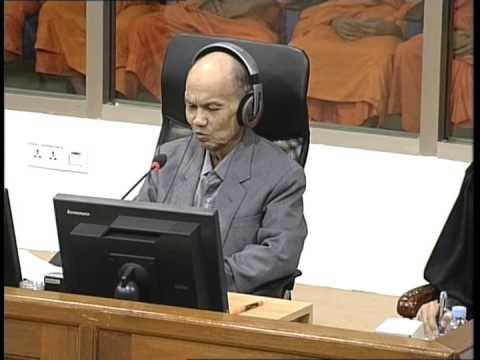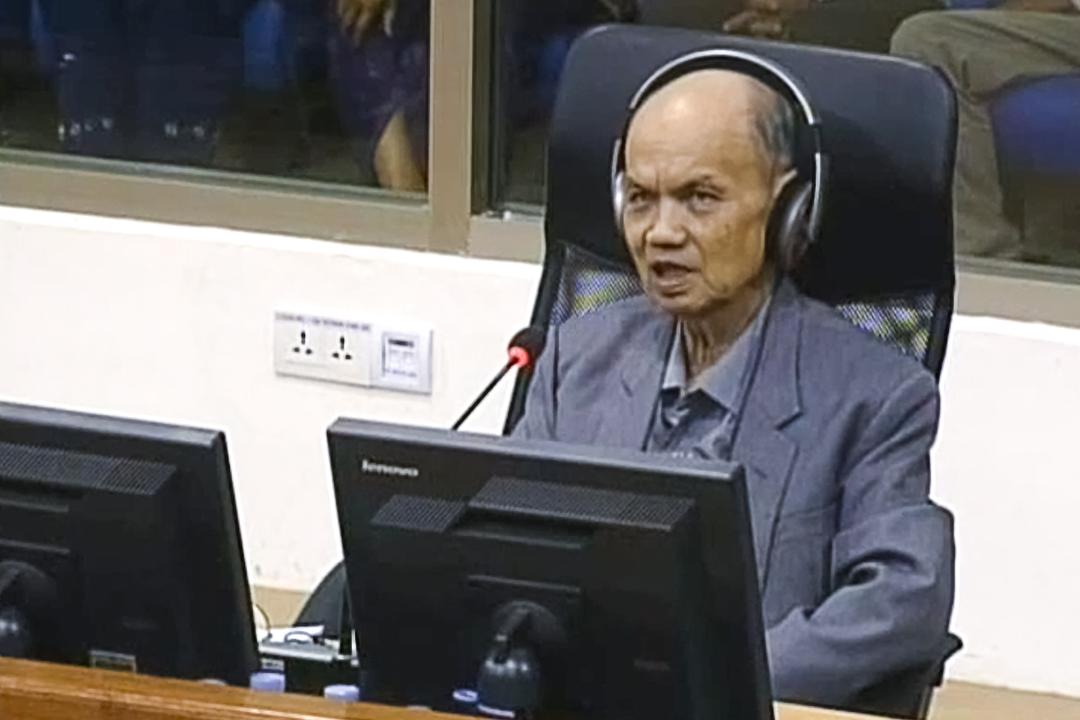
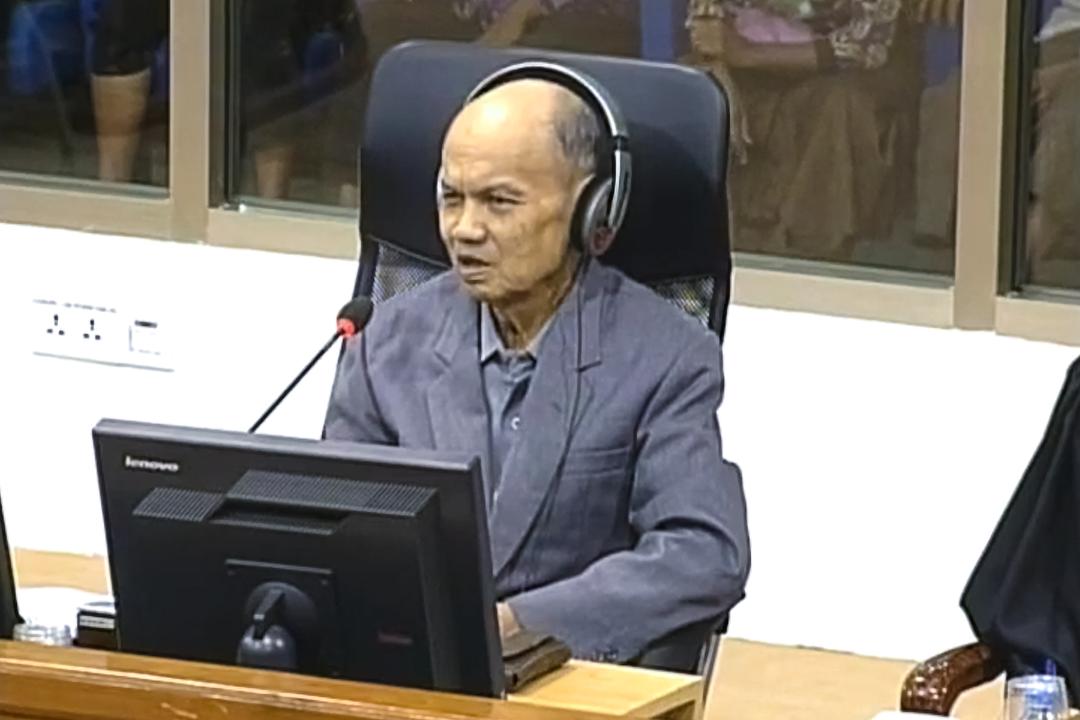
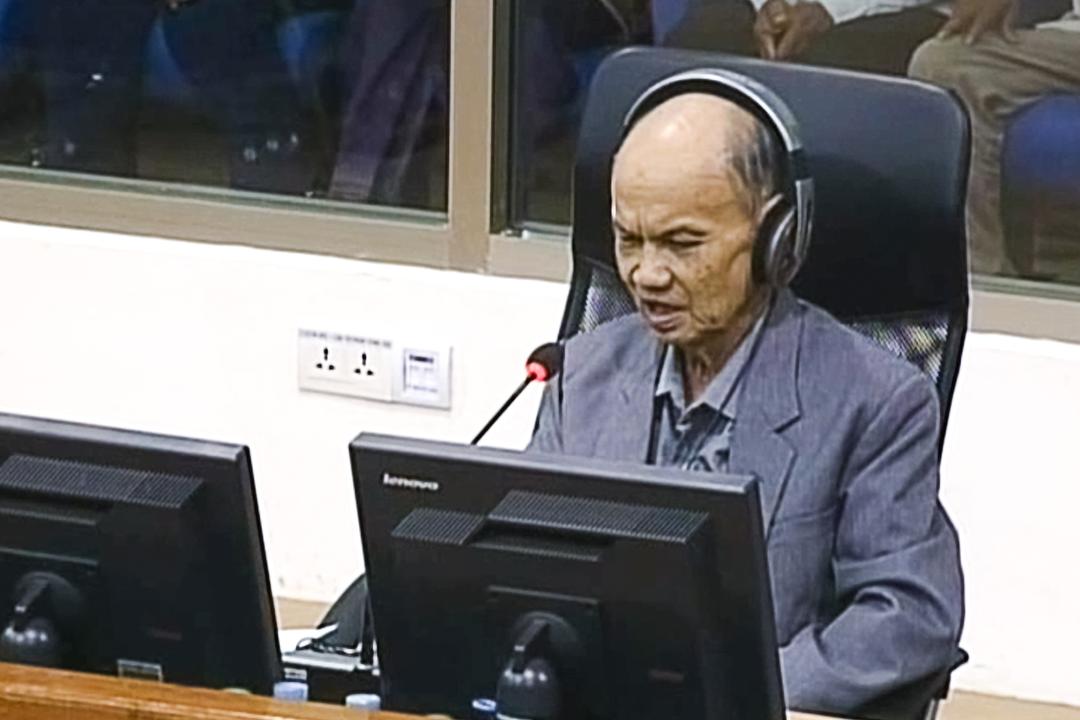
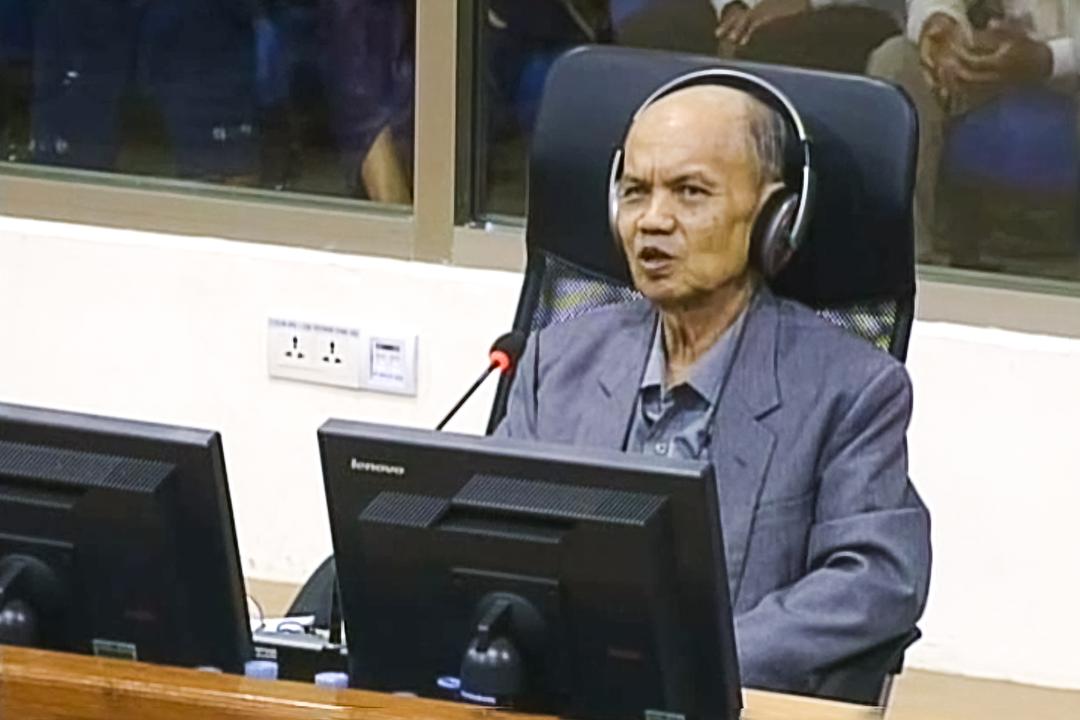
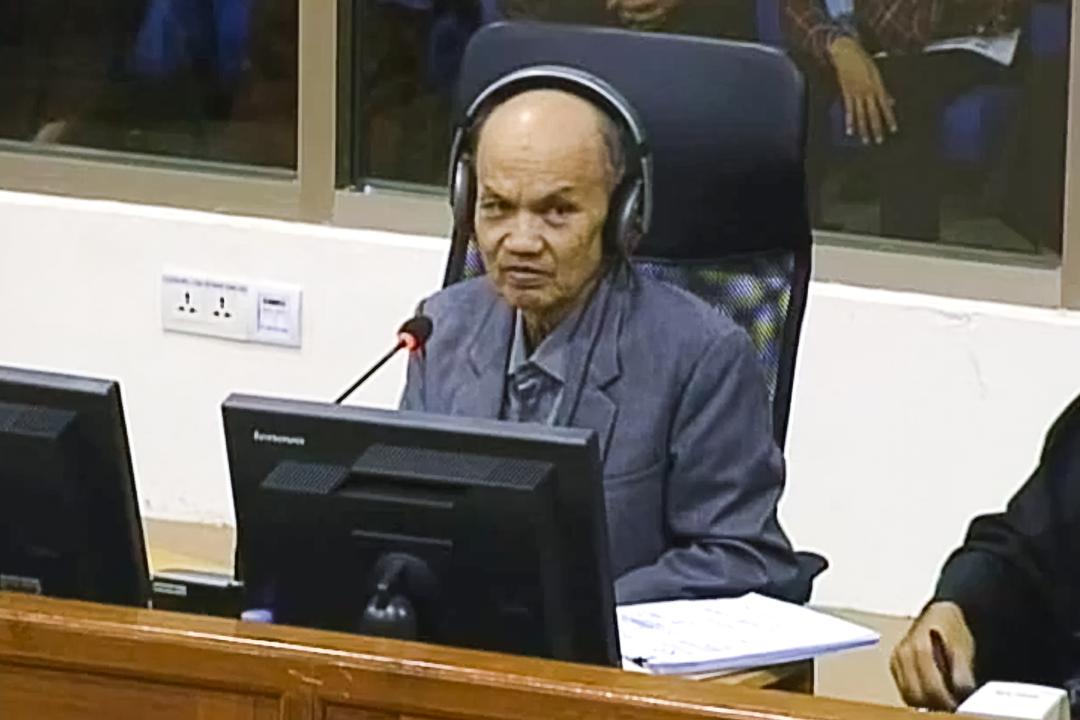
SUONG Sikoeun alias Kung, alias Thorn
Pseudonym: TCW-694
Cases: Case 002/01
Category: Witness
Background and role
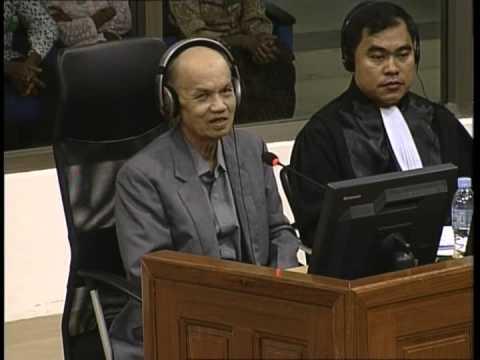
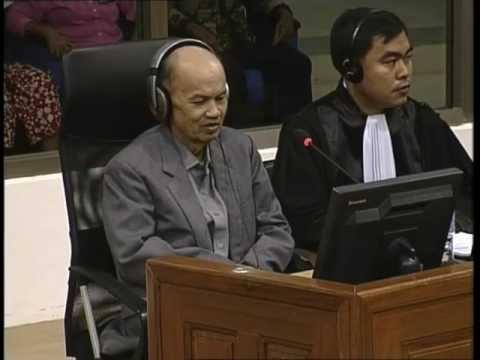
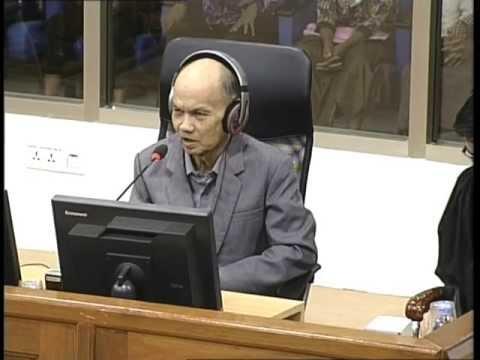
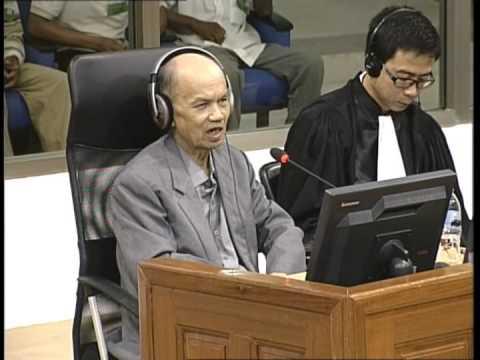
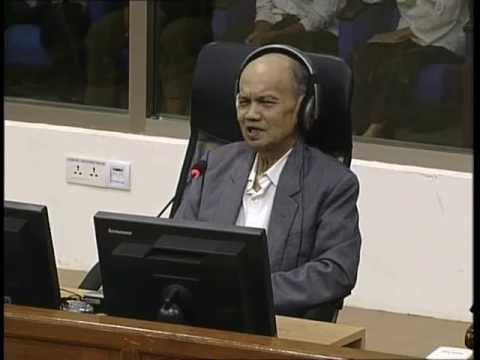
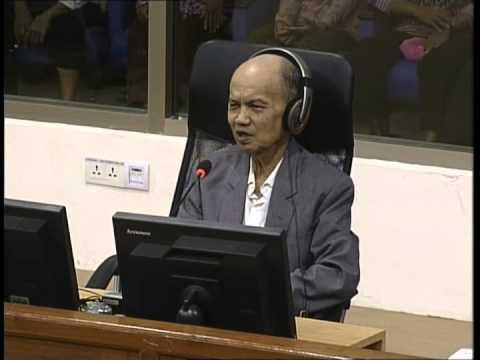
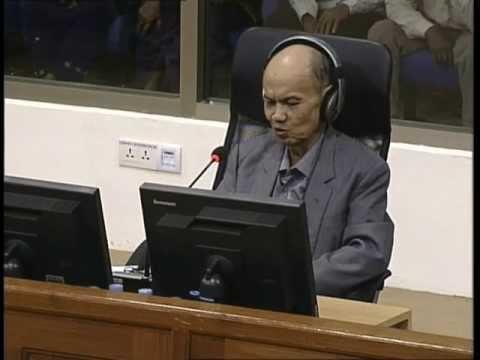
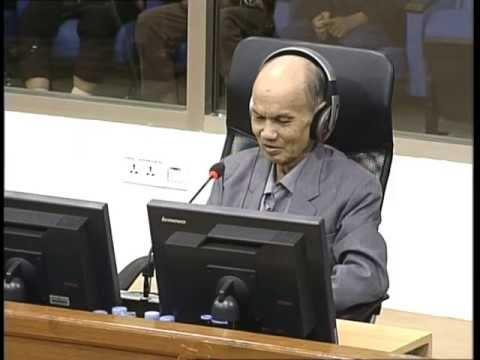
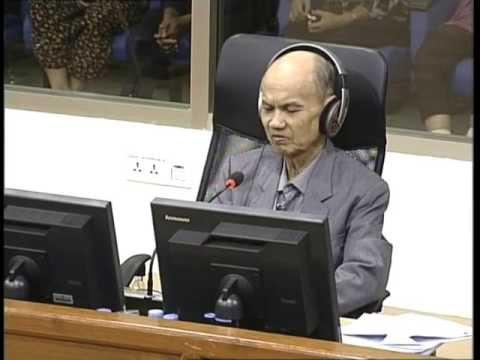
Suong Sikoeun alias Kung or Thorn testified as a witness in Case 002/01
1
about his engagement with the “Union des Etudients Khmer” (UEK) in Paris, the National United Front of Kampuchea (FUNK) in Beijing, and the Democratic Kampuchea (DK)Ministry of Foreign Affairs (MFA), on his book “Itinéraire d'un intellectuel Khmer rouge: Suivi de Les acteurs du drame.”
2
The Trial Chambers relied on his testimony, among others, in establishing historical facts on the CPK party and the communication structures among the upper echelon, and about the MFA.
Early life and studies in Paris
Suong Sikoeun grew up in Kampong Cham.
3
As a teenager he joined the Democratic Party
4
and Son Ngoc Thanh´s movement.
5
Later, he attended the Kampucheabot College and the Lycée Sisowath in Phnom Penh.
6
In early 1957, he met Ieng Sary and joined “the covert assistance movement within the framework of the CPK.”
7
Suong Sikoeun´s motivation for joining the movement was to “contribute to the liberation of Cambodia from the French colonists” and achieve social justice and better living conditions for people like his mother, “who did not even have proper clothing to go to the pagoda.”
8
In 1957, he went to Paris to study civil aviation and French literature.
9
He joined the Marxist-Leninist-Circle in Paris and the UEK, both led by Khieu Samphan.
10
Foundation of FUNK in Beijing
After the coup d´etat in 1970, Suong Sikoeun participated as a UEK representative in the foundation of the FUNK in Beijing.
11
He formally joined the CPK in 1971, in a ceremony held at Ieng Sary´ house.
12
Ieng Tirith gave him the name Kung.
13
During the “complicated Revolutionary Movement and Resistance” CPK cadres used different aliases when they moved from one location to another, to avoid being tracked down by the enemy.
14
It was their belief that maintaining secrecy, would already be 50 percent of the victory.
15
From 1970 to 1974, Suong Sikoeun was the Secretary of FUNK´s Central Committee and head of the Beijing office,
16
as well as the representative of the Khmer Information Agency in China.
17
He received information on the situation in Cambodia through the North Vietnamese Embassy.
18
The objective of both offices was “to broadcast information of the movement and diplomatic activities and to gather support from abroad to fight the American imperialists and their henchmen,”
19
through a bulletin which was published twice a week.
20
In 1973, Suong Sikoeun accompanied Ieng Sary and Prince Sihanouk, who resided in Beijing, on a trip to Romania.
21
In 1974, Suong Sikoeun accompanied a FUNK delegation led by Ieng Sary and Khieu Samphan, who was the deputy prime minister and commander-in-chief, on a trip to Africa and Europe, with the aim to inform “friend countries” about the situation in Cambodia.
22
Work at the FUNK Radio Station in Hanoi
In May 1974, Suong Sikoeun travelled with Ieng sary and Khieu Samphan from Beijing to Hanoi, and from there to South Vietnam and Laos.
23
Ieng Sary and Khieu Samphan returned to Cambodia;
24
in the light of the intensified war, as leaders of the movement “the two had the obligation to return to join the Resistance in the country.”
25
Suong Sikoeun returned to Hanoi to work under the supervision of Ieng Thirith at the “The Voice of the FUNK” radio station.
26
The Vietnamese Communist Party supported the CPK to set up the radio station, because Cambodia, Vietnam, and Laos “had a common enemy by that time”.
27
He worked in the international news until 17 April 1975.
28
Phnom Penh after April 1975
Suong Sikoeun came back to Phnom Penh on 20 May 1975, to find that the “evacuation was almost complete.”
29
He met several friends from the UEK whom the Party kept in Phnom Penh “to undertake certain functions.”
30
During DK period there were around 20.000 people left in the city.
31
He was told that the reasons for the evacuation were expected Americans bombardments and an eminent food shortage.
32
He was further told that the evacuation was to disperse the spy network of the enemy.
33
Work at the Ministry of Foreign Affairs
After a short stay at Office B-20 in Stueng Trang,
34
Suong Sikoeun was assigned by Ieng Sary to work for the MFA.
35
Initially, he was in charge of the Southeast Asia and Europe Section.
36
Later, he became Director of the Information and Propaganda department, spokesperson for the ministry, Deputy Director of the protocol section,
37
and head of the Foreign Language Bureau of the Kampuchea Press Agency (AKP).
38
In 1977 and 1978, he was in charge of writing, translating, and broadcasting programs in Vietnamese, English, French and Chinese.
39
While monitoring international radio programs for information about Cambodia,
40
he heard reports on crimes committed by Democratic Kampuchea (DK) against its own population.
41
He did not report this to the leadership, with the exception of Ieng Sary, who wanted to know what exactly happened,
42
as he “only liked things exactly as it was and for that reason that´s how it was reported to him.”
43
Meetings at the MFA
Departments in the MFA held regular meetings and reported to Ieng sary,
44
who chaired meetings with the heads of departments.
45
Ieng Sary chaired training sessions for all ministry personnel “to grasp the revolutionary situation and the building of socialism in the country.”
46
The three types of enemies were discussed: the foreign enemies, the domestic enemies, and the “enemies within ourselves”.
47
Foreign enemies were the “American Imperialist”, and from 1977 on, also Vietnamese spies.
48
Most documents focused on internal enemies.
49
The regime wanted to “get rid of those who were greedy, those who loved to hold on to their power and exploited people´s labour and those who were extravagant.”
50
It was considered most difficult to get rid of the “feudalist mentality,”
51
and this was the main target of the ideological training at that time.
52
Self-criticism sessions were held at different levels.
53
While these sessions could bring up some new ideas,
54
“those who were too frank they tend to have problem. But those who were rather flexible, they could survive it.”
55
Suong Sikoeun was usually criticized for his foreign wife and for his foreign attitude and behavior.
56
Arrests in the MFA
In late 1975, Pol Pot decided to call back all oversea diplomats.
57
They came through the DK Embassy in Beijing, where their valuables were taken away.
58
Ieng Sary and others also called the students and intellectuals in France to return to Cambodia and help build the country.
59
Returning intellectuals and diplomats would be sent to “labour work such as cultivation” to be reeducated.
60
Several MFA personnel were arrested or disappeared,
61
including many returning diplomats who worked at the MFA.
62
In some cases there was a reading out of their confessions,
63
which Suong Sikoeun assessed as made-up stories.
64
He stated that if all accused people would be arrested, “the ministry would have been closed.”
65
At some times, those implicated, including Suong Sikoeun, had to write their biography to explain themselves.
66
CPK Structure
In line with the principle of secrecy, Suong Sikoeun did not officially know the composition of the Standing Committee.
67
He knew that Ieng Sary was a permanent member,
68
and learned from him that Pol Pot and Nuon Chea also were.
69
Decisions were sometimes taken cooperatively by the party center, sometimes by Pol Pot alone.
70
Appointments were mostly done by Pol Pot,
71
but there was no official record.
72
They only “saw documents coming out from Tuol Sleng.”
73
As party secretary Pol Pot had the power to decide whether he informed others about decisions or not.
74
Nuon Chea was the Deputy Party Secretary.
75
Khieu Samphan dealt with “things such as buying medicines and spare parts etc. abroad.”
76
Office 870 was the “Party Centre Office.”
77
Trial Chamber´s Assessment
Videos