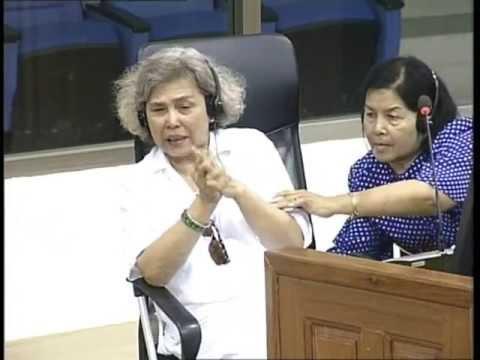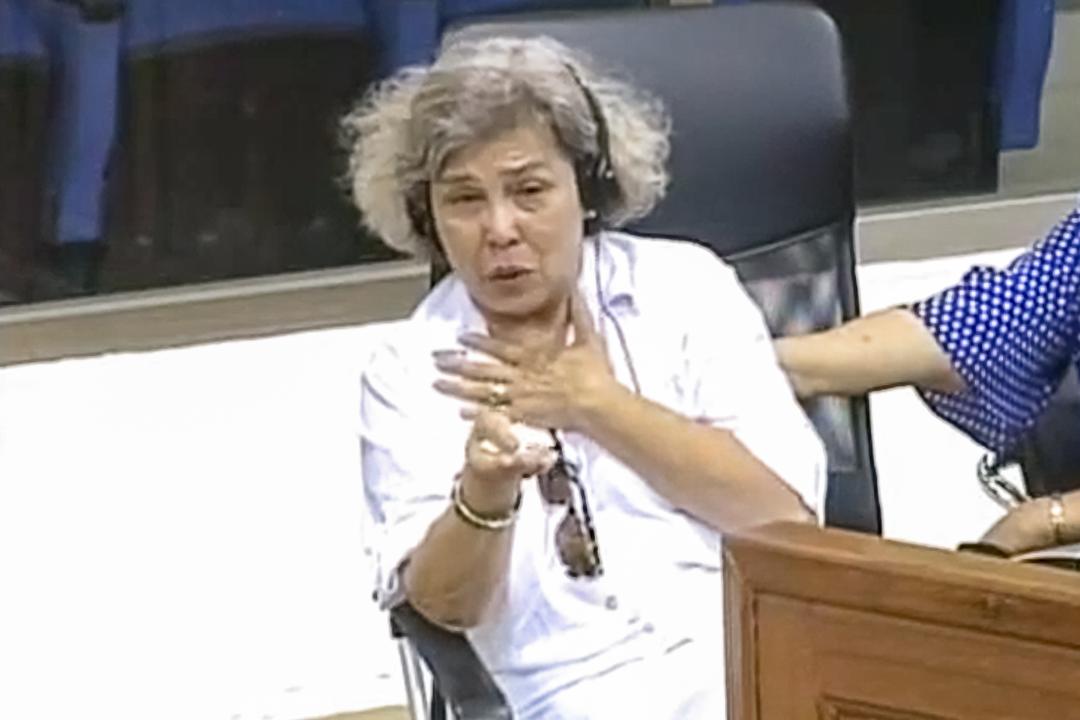
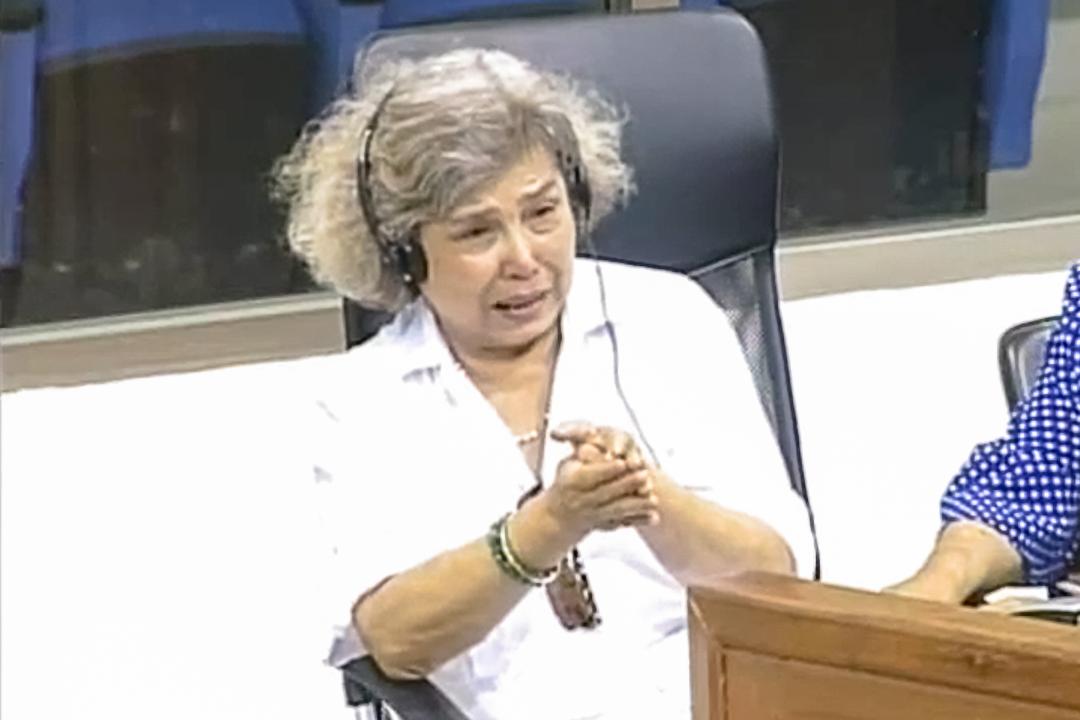
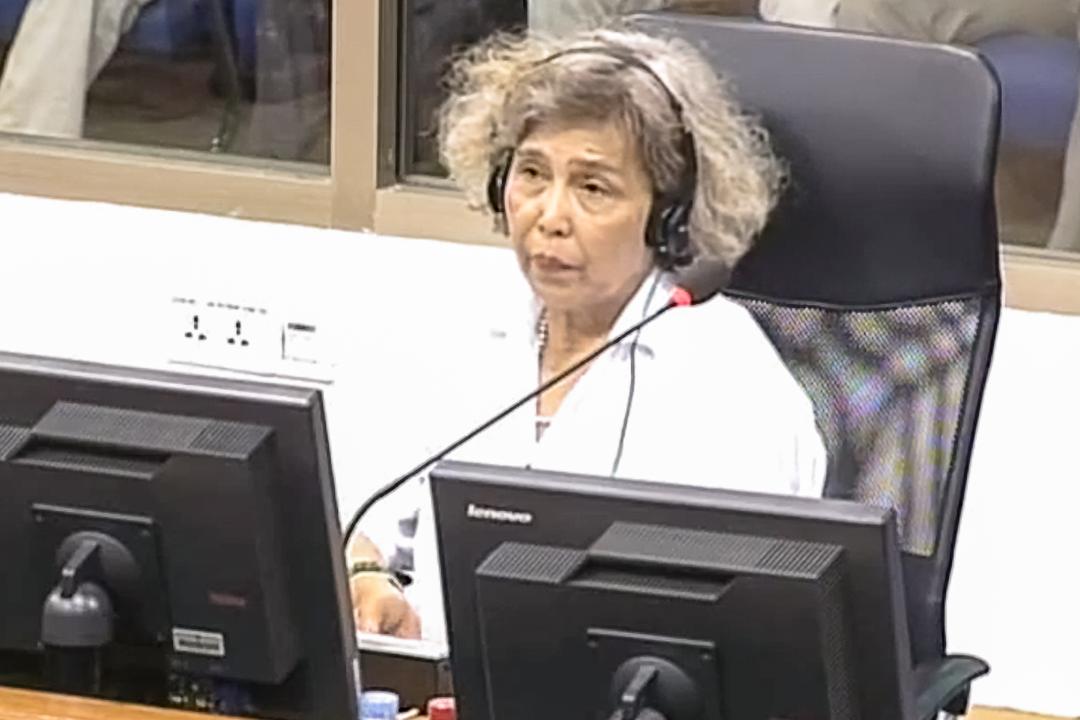
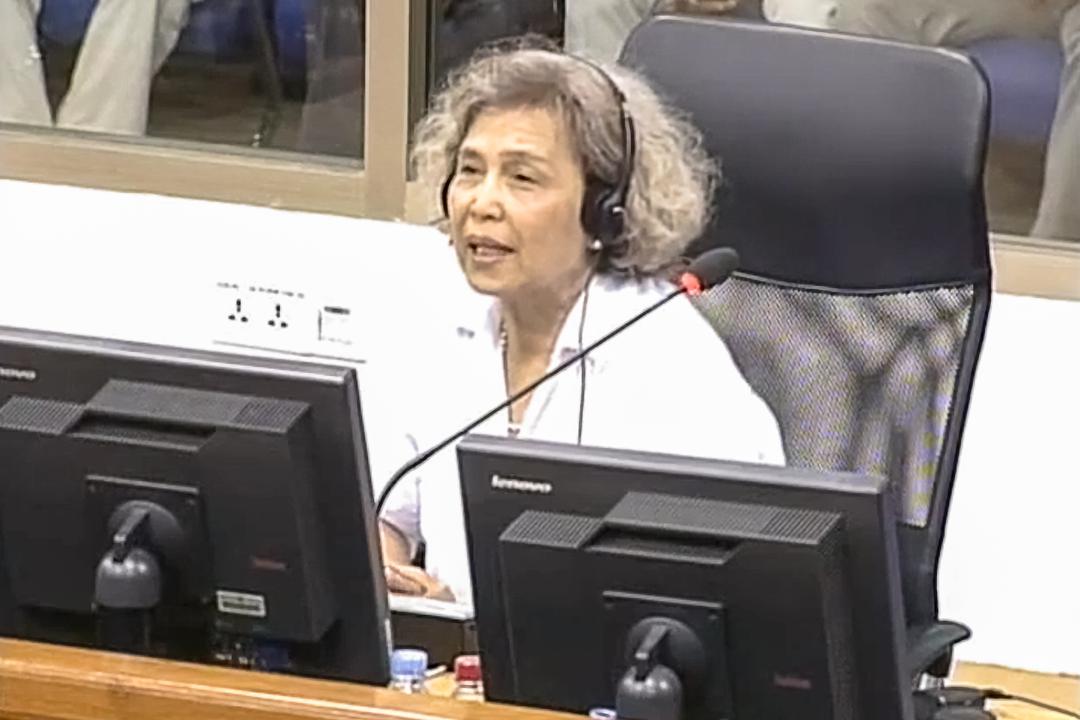
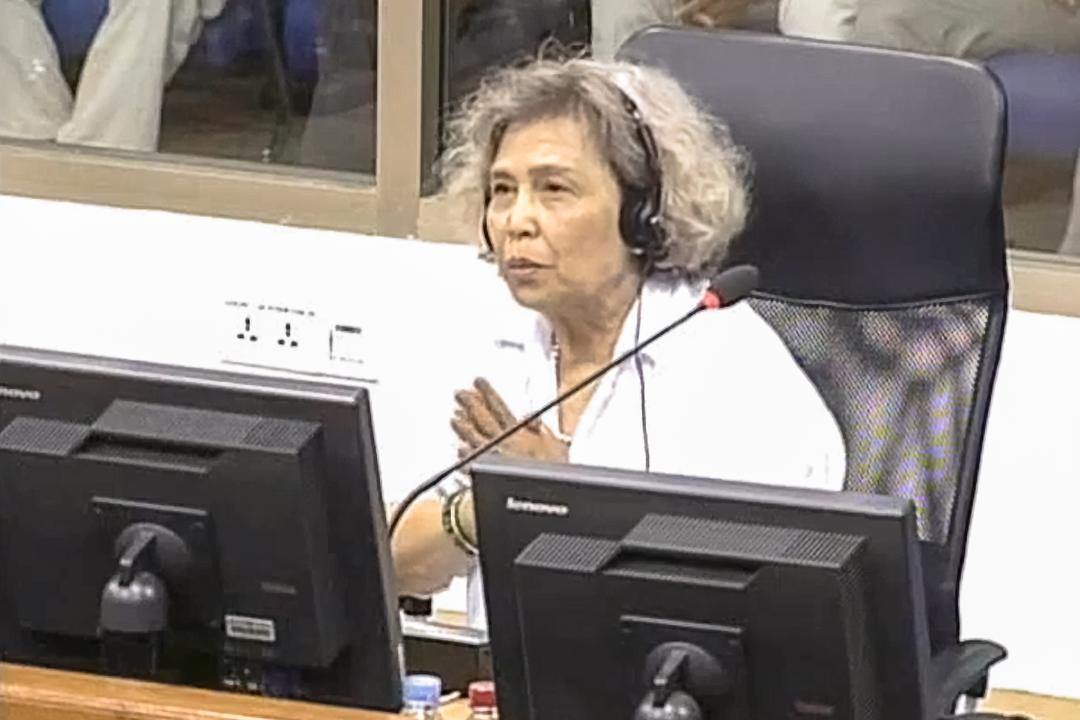
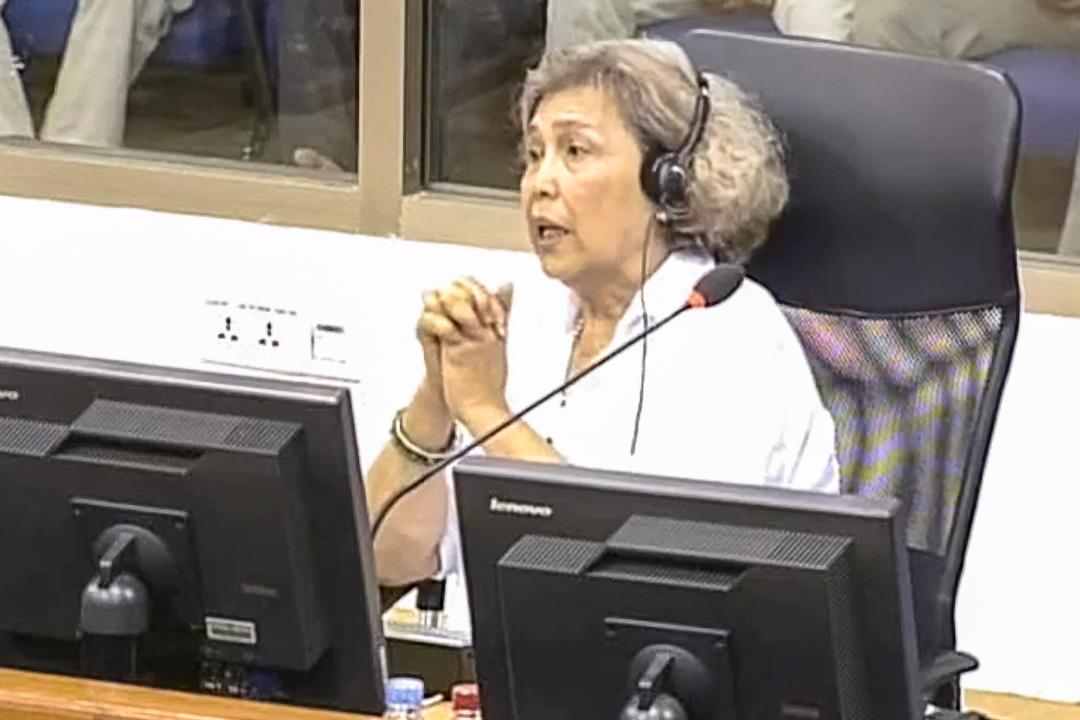
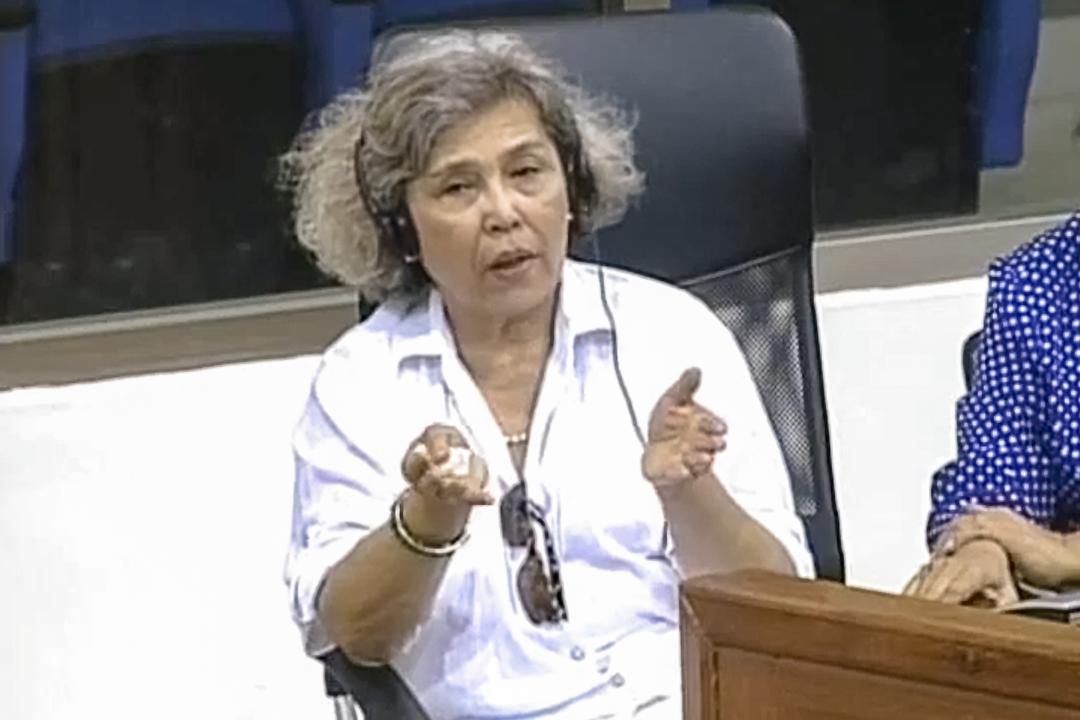
THOUCH FENIES Phandarasar
Pseudonym: TCCP-156
Cases: Case 002/01
Category: Civil Party
Background and role
Thouch Fenies Phandarasar, a French national, was born in Phnom Penh in August 1946.
1
She was married and had 3 children.
2
One of them died during the Khmer Rouge regime.
3
Ms. Thouch Fenies Phandarasar gave evidence in Case 002/01 about the harm and the suffering she endured losing first her parents and then one of her children after being placed into forced labor camps.
Evacuation of Phnom Penh after 17 April 1975
When the Khmer Rouge entered Phnom Penh on 17 April 1975, they began to instruct the population to leave Phnom Penh immediately while the government tried to “clean up the city” and bombing.
4
The civil party testified that she heard a gunshot and saw a man who had just been shot at by the Khmer Rouge.
5
The civil party found out from her cousin, Yourn, that when the Khmer Rouge entered Phnom Penh, General Thach was called to the Ministry of Information.
6
The Trial Chamber relied on her evidence, among others, to find that all of the senior officials disappeared and that media and diplomatic dispatches subsequently reported that certain officials, including Prime Minister Long Boret, Brigadier General Lon Non and Prince Sirik Matak, were executed.
7
Armed Khmer Rouge soldiers lined the main roads and supervised the evacuation as they directed the population to keep moving out of the city and onwards.
8
Her cars and other belongings were confiscated by Khmer Rouge soldiers.
9
Fearing losing her children and nephews, she tied them together.
10
During the course of the evacuation, she witnessed women giving birth in the street and sick people being carried in hospital beds with their drips.
11
The civil party and her family were evacuated from Phnom Penh to Kampong Chhnang before being displaced again to Pursat.
12
People were pushed by the Khmer Rouge soldiers to get on to overcrowded trains and trucks.
13
They were advised to destroy their administrative documents or I.D. cards and change their names before entering the destination village.
14
The Trial Chamber found that “hundreds of thousands of people” were displaced after September 1975.
15
It relied on the civil party’s evidence, among others, to find that those civil parties involved in the second movement of the population experienced even worse hardship due to their already weakened state caused by the first forced transfer.
16
There were numerous instances of Khmer Rouge soldiers shooting and killing civilians during the evacuation.
17
Questioning by the Khmer Rouge at Boeung Kantuot
The civil party testified that she, her family and at least six other families were threatened with loaded weapons and questioned about their history at Boeung Kantuot, near Battambang province.
18
She said she was a rice farmer and that she no longer had her documents.
19
The Khmer Rouge questioned them from early in the morning until late in the afternoon, the same questions repeated, and she kept telling them the same answer.
20
After being questioned, people were released and transferred to new locations and some were separated from their families.
21
Conditions in the worksites and the death of Thouch Fenies Phandarasar’s parents
The civil party, her husband and children were sent to Phnom Thmei Village, while her parents and brother’s children were taken to Boeung Kantout.
22
She was forced to work in the field from 5 o'clock or 4.30 in the morning,
23
and was watched by Khmer Rouge spies.
24
Her parents were sent to work with teenagers without food and died one after another in 1976.
25
She said that the death of her parents is something that will never be erased from her life.
26
The death of Thouch Fenies Phandarasar’s son
Ms. Thouch Fenies Phandara recalled the death of her son from meningitis during the Khmer Rouge regime, who could not be saved due to lack of medicine.
27
Photos of her dead son were the only tokens from the pre-1975 days she had managed to keep, by wrapping them in a plastic covering and hiding them and bringing them with her to work.
28
The Trial Chamber relied on this civil party’s evidence, among others, to find that there were fifty-four instances of killing during the population movement prior to September 1975.
Statement of suffering
The civil party recalled the harm she has suffered during the Khmer Rouge regime, from hunger, the death of her parents and the loss of her son:
“[…] we started working very early in the morning and we would return very, very late at night. We only - and with very, very little food, only a little full of rice, and the children were very, very hungry.”
30
“[…] After leaving Cambodia in 1979, I became a compulsive eater and I certainly put on a lot of weight. I always long for food.”
31
“[…] I saw my father ploughing the oxcart - ploughing – pulling the oxcart himself. I would see my father age by 10 years in a few days, and this is something unbearable to see. I would see his hair become grey; I would see him pull the plough in the mud. So then I wanted to die. I could not stand this sight and I was given work, as well when we were denounced…My husband was already ill and he was ill as of the first days; his legs were swollen, so he stayed in the shack and they brought us away.”
32
“[…] The conditions in which they died were not worthy of animals. It's better for animals; they get buried, but my parents died in a way that there are no words to describe; thrown into the ditch naked. I didn't even know the place where he was discarded and I retain a terrible feeling of guilt about this; not having been able to save my parents. If I was perhaps a little braver, I might have been able to feed them, bring them some rice or something. You never erase memories like that and that's why I'm here to ask this Court for justice. To give the deceased back their souls so they may live in peace because, right now, I know their souls are lost between the living and the dead and if there is justice that would be an honour to them. That's why I want to come to Court for justice and not just for them; for the two million other Cambodians who disappeared thanks to that Khmer Rouge regime.”
33
“[…] when he (son) died. He had been wearing a T-shirt, a yellow T-shirt and it had a slogan on the T-shirt, "If I smile to you, do you smile to me?" And when he died, and I saw written upon his chest: "Will you smile back to me?" while he was on his deathbed; I think any mother would understand the appalling emotion I went through.”
34
“[…] I had a fine life with my parents before the genocide and during the genocide it was sheer hell.”
35
“[…] in this courtroom, my first thoughts go to my mother. I didn't see her die. I have an image of my mother imprinted into my mind. She was so hungry; she had almost withered away. She went to the canteen with her rice bowl and she actually staggered and fell on the ground because she was so emaciated and then there she was crawling, picking up grains of rice. And now, mother, I'm telling you that I am bringing this case to the Court for you to bring justice for you.”
36
Videos