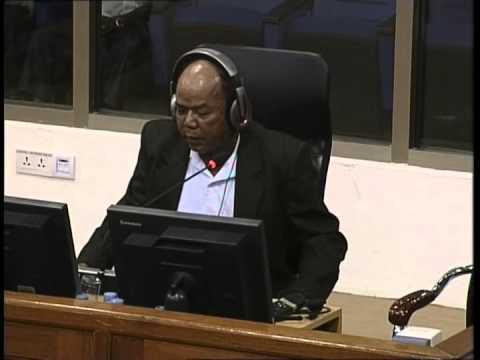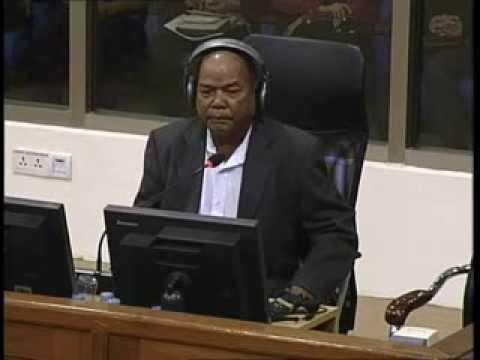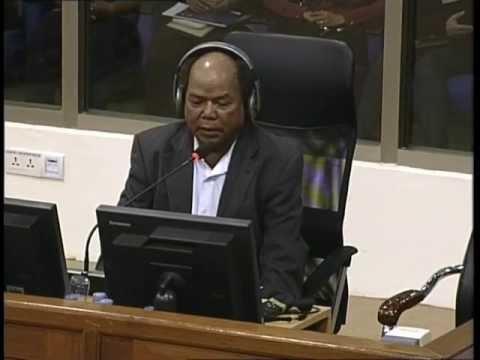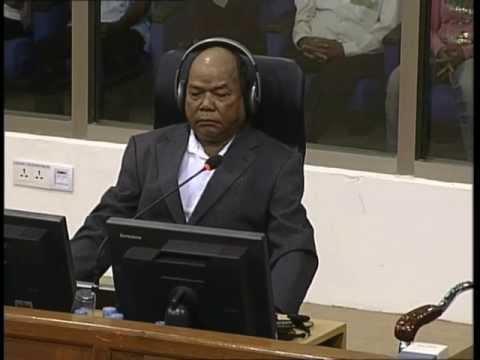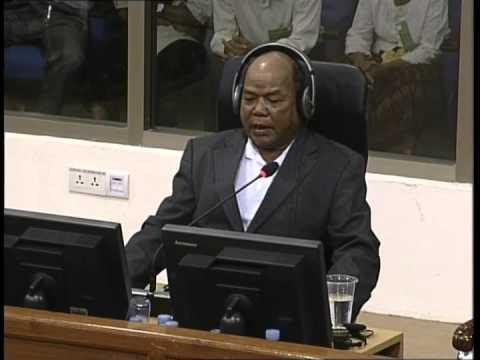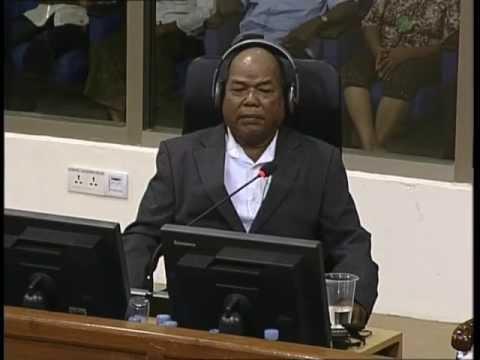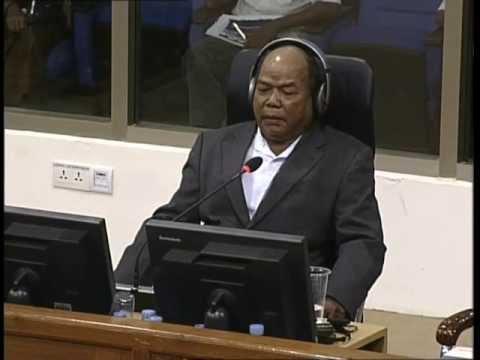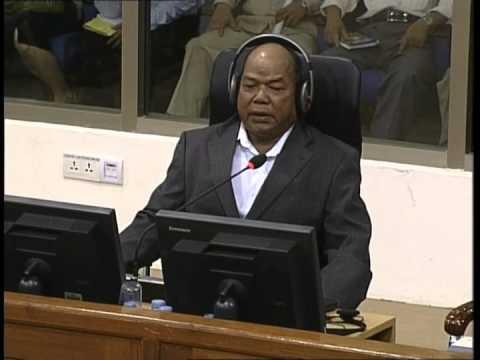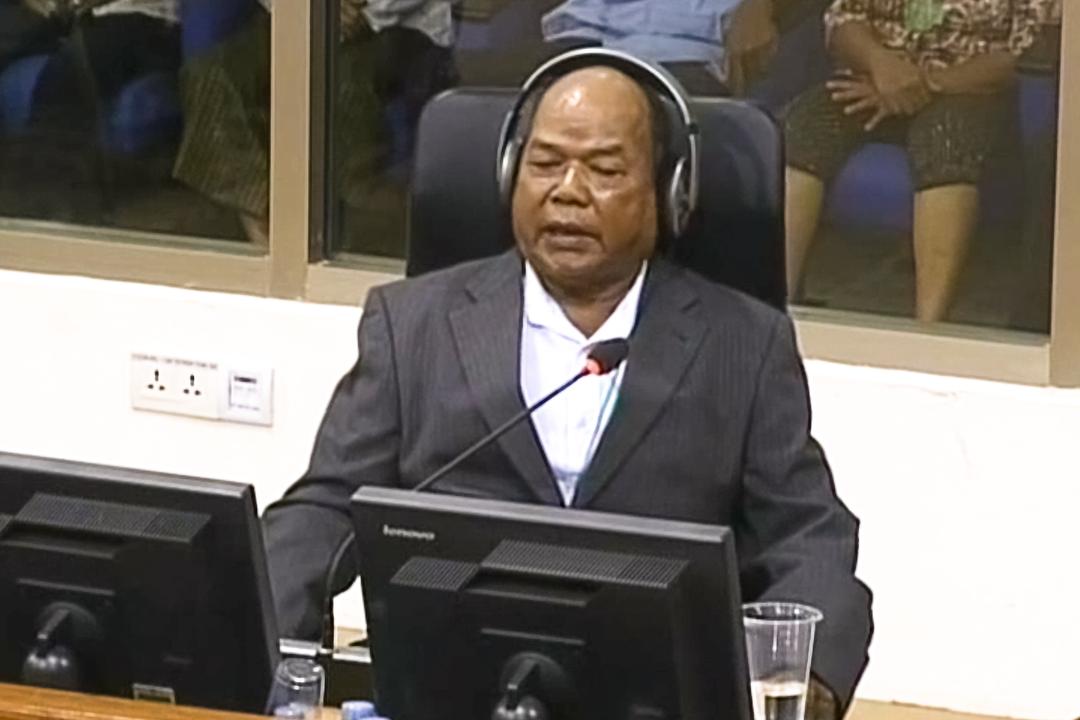
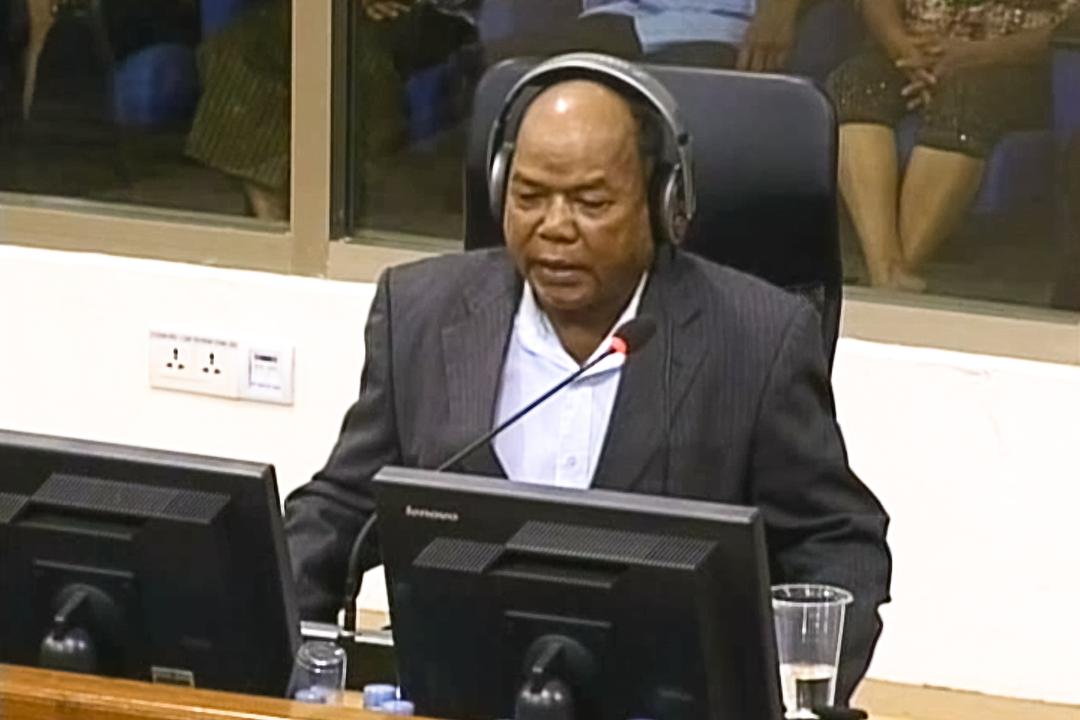
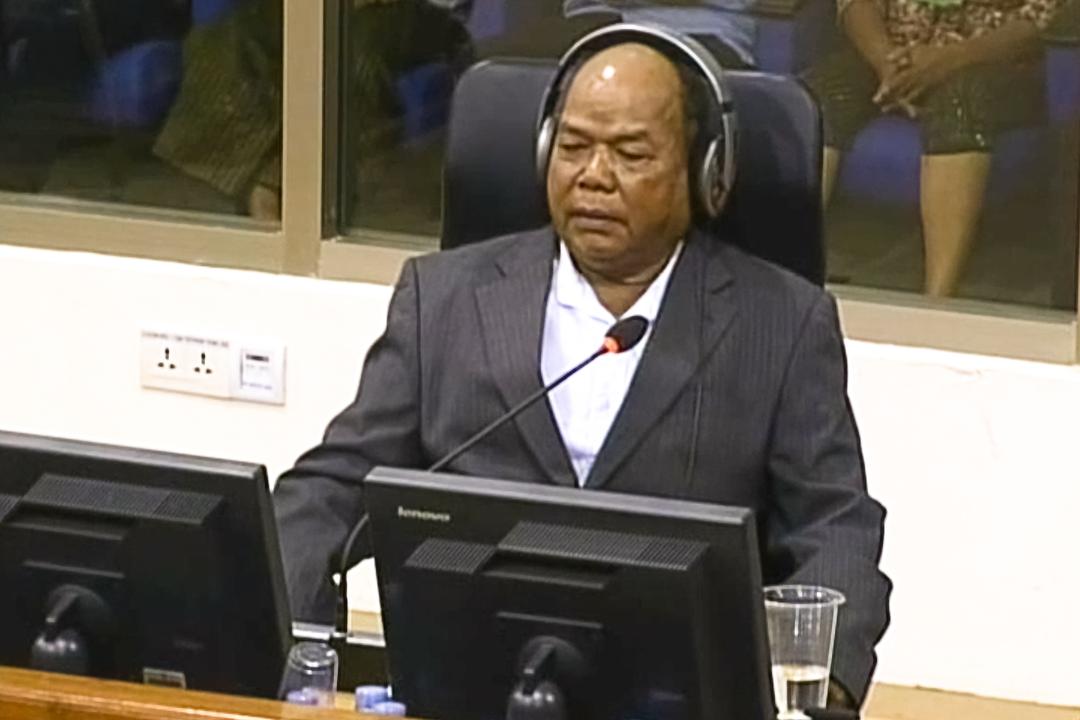
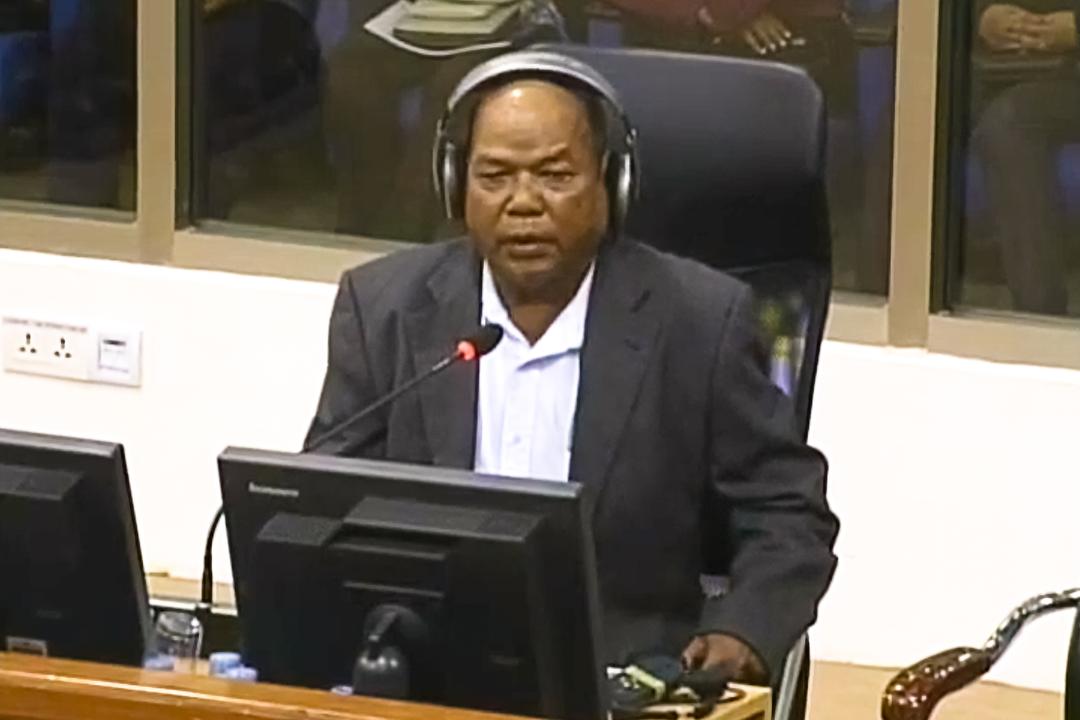
UNG Ren
Pseudonym: TCW-754
Cases: Case 002/01
Category: Witness
Background and Role
Ung Ren was a farmer and a member of a district council.
1
Ung joined the army in the late 1970’s and worked at Tang Pou village, before moving to Thma Tboung location, west of Kampong Speu.
2
He served as an officer in Brigade 14
3
and a representative of the People’s Representative Assembly (“PRA”).
4
He testified as a witness in Case 002 in relation to the attack on Phnom Penh and Oudong, the PRA, and the general party structure of the Communist Party of Kampuchea (“CPK”).
5
The Trial Chamber relied on Ung’s testimony in finding that: (i) the Khmer Rouge forces from across Cambodia attacked Phnom Penh on the morning of 17 April 1975; (ii) the residents in Phnom Penh were evacuated during the attack; and (iii) the PRA was a façade.
6
It also referred to his testimony in its findings relating to the general party structure of the CPK.
7
Attack and Evacuation in Phnom Penh
Ung was part of the group from the southwest that attacked Phnom Penh.
8
His unit did not receive orders to evacuate civilians from Phnom Penh.
9
He learned that the commanders gave the order to attack and evacuate Phnom Penh because they were afraid that enemies would be embedded among the population and that people would hide the enemies.
10
He also described his experience of the American bombings along road number 26 before the attack on Phnom Penh.
11
According to Ung, no one agreed to leave their homes during the evacuation unless they were coerced and physically pushed by others to leave.
12
He noted that the evacuees walked on foot and carried their luggage on pushcarts and bicycles.
13
He described the exodus of thousands of residents from Phnom Penh resulted in the countryside being packed with people.
14
The Trial Chamber cited Ung’s testimony in finding that Khmer Rouge forces from various zones across Cambodia attacked and entered Phnom Penh on the morning of 17 April 1975,
15
and that some residents were told the evacuation was for public safety as Angkar had to “sweep” or “clean” the remaining enemies from the city, organise the same, and disperse the enemy’s spy network, which allegedly included American imperialist spies.
16
Attack in Oudong
Ung noted that the brigade commander, Cheng An, was solely responsible for the preparatory plan to attack Oudong.
17
The overall plan was for the Southwest forces to attack Oudong while his regiment prepared for the attack on the South of Oudong.
18
After the attack on Oudong, they received information that there was an arrangement from the upper level to manage the spearhead of the Southwest force and the Special Zone force.
19
The People’s Representative Assembly
Ung did not know he was a candidate for the PRA until he was notified by his superiors that he had been appointed.
20
After the appointment, he remained uncertain as to the nature of his role and responsibilities as a PRA representative;
21
there were no open elections. he was never called for any meeting of the PRA,
22
and he never voted on any legislation.
23
The Trial Chamber referred to Ung’s testimony in finding that the PRA rarely met, did not pass any laws,
24
and was “worthless”, held no nationwide elections, and while voting took place at limited locations, it was not clear whether voters were presented with any actual choice of candidates.
25
General Party Structure and Key Figures
Ung noted that the commander of his division went to Phnom Penh every month to attend meetings,
26
and would communicate by radio within his brigade while his division commander held physical meetings to pass down instructions.
27
While there were regular meetings between the regiment and the division,
28
Ung did not know about the relationship between the division commander and the upper echelon.
29
According to Ung, Nuon Chea was part of the Central Committee and second to Pol Pot, and that Son Sen and Pol Pot were in charge of the military.
30
Ung was assigned to Division 801, which had a total of more than 5,000 soldiers.
31
He described the structure of Division 801 as follows: (i) there were regiments in his division; (ii) each regiment had three sections: the logistics, military, and politics; (iii) each section in the regiment had battalions with three separate sections; (iv) each section in the battalion had platoons with three separate sections; and (v) each platoon had 35 to 36 soldiers.
32
The Trial Chamber cited Ung’s testimony in finding that: (i) commanders and deputy commanders of divisions and independent regiments met Son Sen in person from time to time;
33
(ii) commanders and deputy commanders of divisions and subordinate levels communicated with each other by radio, by telegraph, by messenger, and in person;
34
(iii) the regiments sent written reports to the division by telegraph and by messenger on at least a monthly basis;
35
(iv) Nuon Chea was a full rights member of both the CPK’s Central Committee and its Standing Committee;
36
and (v) Khieu Samphan never had direct military responsibilities.
37
According to Ung, Office 870 was an office governed by the Central Committee, also known as the 870 Committee,
38
though the Trial Chamber did not rely on Ung’s testimony, finding that it was unable to make a definitive finding in relation to whether Committee 870 was the CPK Central Committee or the Standing Committee.
39
Videos