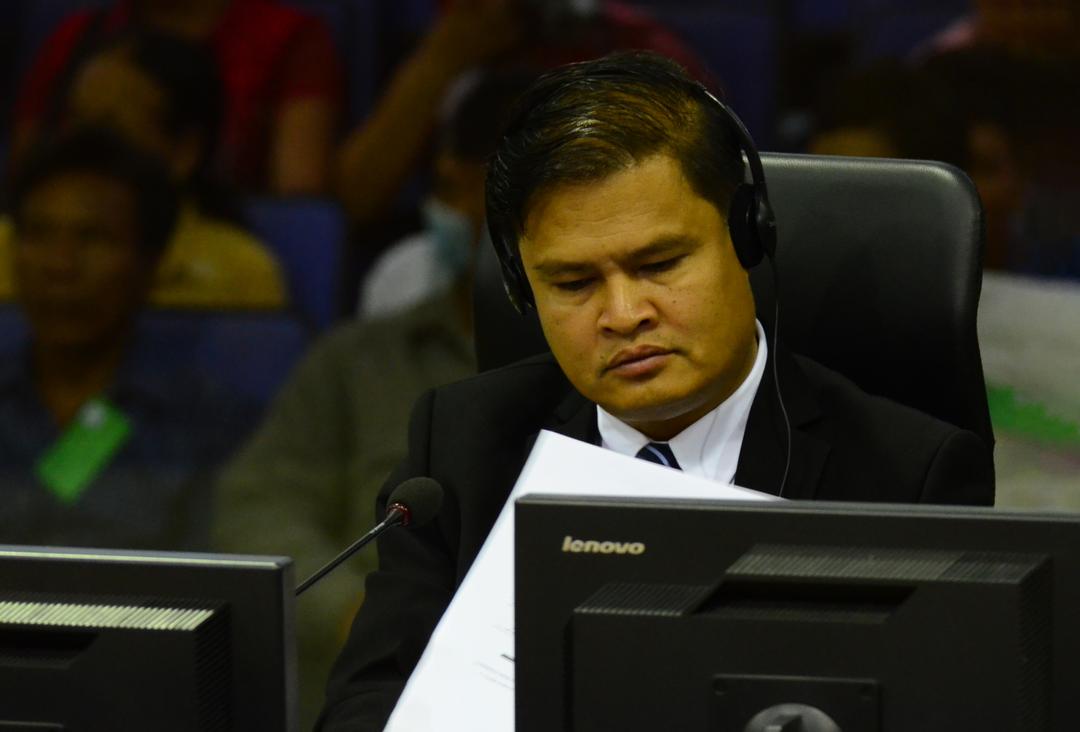
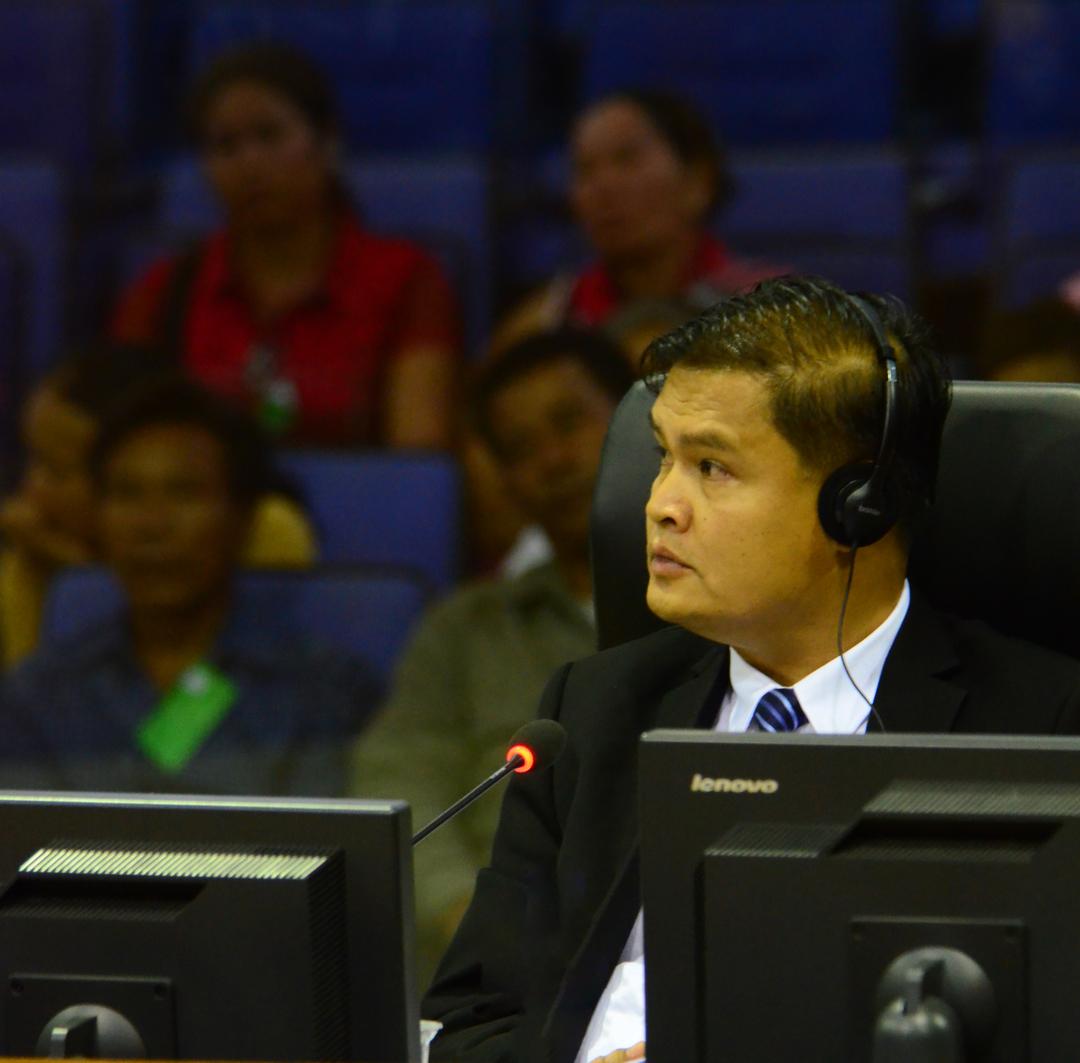
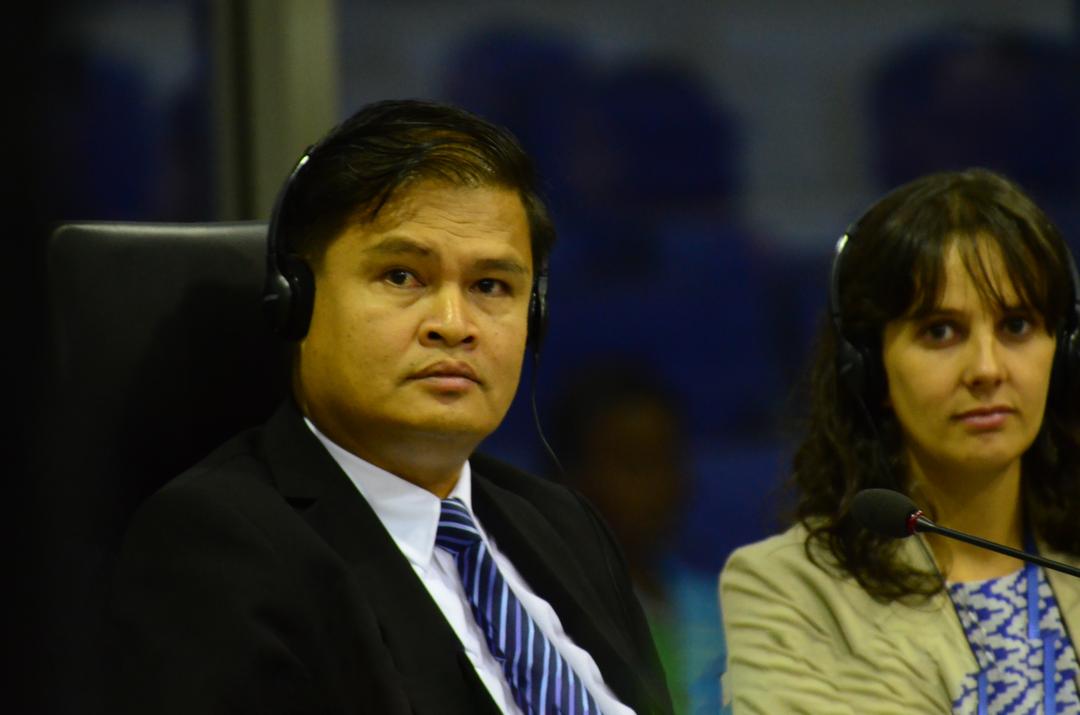
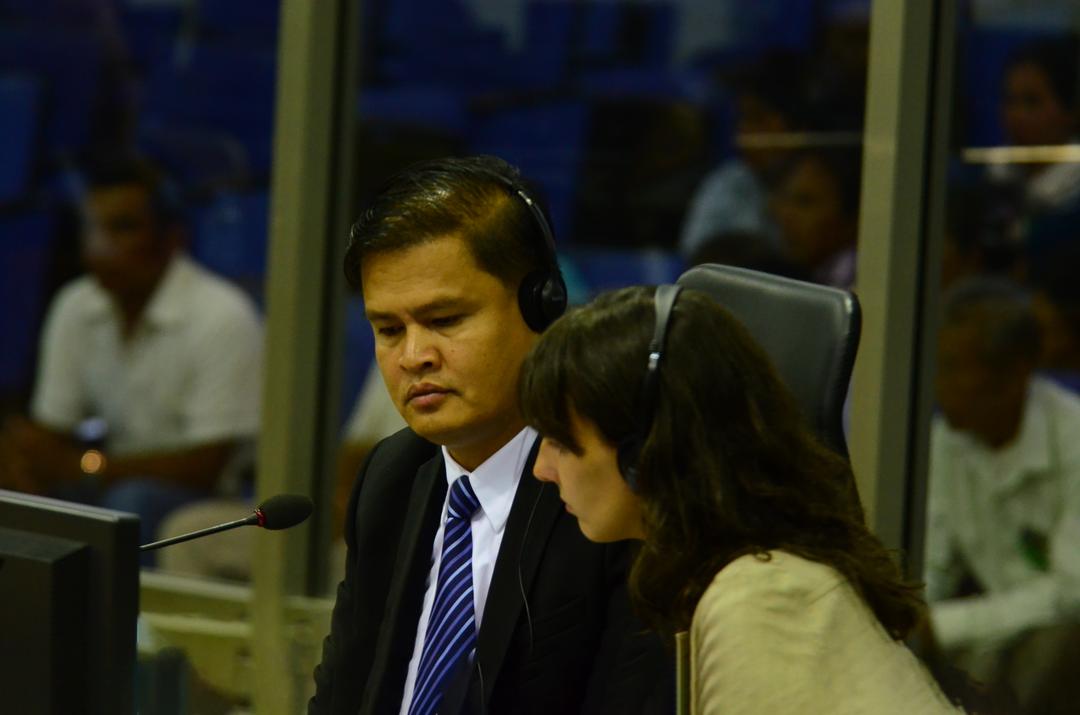
YSA Osman
Pseudonym: 2-TCE-95
Cases: Case 002/02
Category: Expert
Background and role
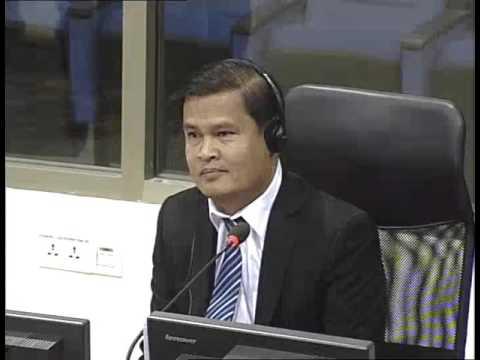
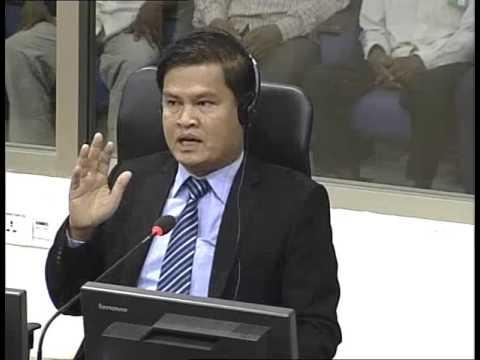
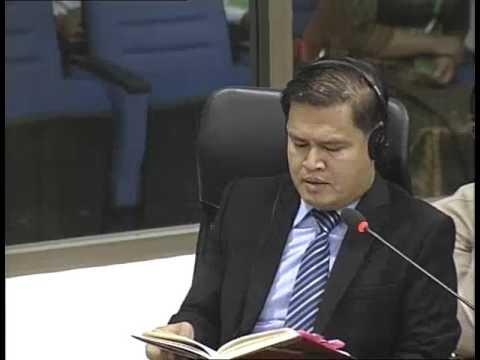
Ysa Osman was a researcher at the Documentation Center of Cambodia from 1999 to 2006 focusing on the Cham,
1
and in 2007 on became an analyst in the Office of the Co-Investigating Judges of the Extraordinary Chambers in the Courts of Cambodia.
2
He also published two books and several articles relating to the Democratic Kampuchea period.
3
He testified before the Trial Chamber as an expert in Case 002/02 on the Cham culture, alleged policies implemented targeting the Cham, and the treatment of the Cham during the Khmer Rouge regime.
4
The Cham culture
According to Ysa Osman, the Cham were Cambodia’s largest minority group that was dispersed through almost all provinces of Cambodia before 1975, though they mostly lived together in their own villages in Kampong Cham province and did not blend in with the Khmer.
5
They constituted a Muslim minority group that had their own language and did not eat pork, dogs, frogs, or snakes.
6
They chose names based on the Koran, wore traditional clothes, and had different grooming habits.
7
They also engaged in fishing along the Mekong and Tonlé Sap rivers.
8
The Trial Chamber relied on Ysa Osman’s testimony in finding that the Cham: (i) formed a distinct religious and ethnic group and most of whom lived in Kampong Cham province;
9
(ii) lived together and concentrated around the riverbanks of the Mekong River, rarely commingling with Khmers;
10
(iii) had their own language and script, practised Islam, eschewed pork, and chose names based on the Koran prior to 1975;
11
(iv) wore distinct traditional clothes, different from other Cambodians, and had different grooming habits than ethnic Khmers;
12
and (v) engaged in fishing as their primary economic activity.
13
Treatment of the Cham
Ysa Osman noted that the Cham enjoyed good relations with the Khmer Rouge until 1972 to 1973, when prominent Cham religious leaders were arrested and detained in Krouch Chhmar district, mosques were shut down, and people were pressured to stop practising Islam.
14
The Cham in Krouch Chhmar district were gathered and detained in a district security centre near Krouch Chhmar market in 1973.
15
The resultant tensions escalated in November 1973, when the Cham community protested and burned down a building, which caused the Khmer Rouge to respond by carrying out further arrests of the population.
16
The Trial Chamber relied on Ysa Osman’s testimony in finding that: (i) the Cham mostly enjoyed good relations with the Khmer Rouge in “liberated” zones during the initial period of unrest following King Sihanouk’s overthrow in 1970;
17
(ii) Cham religious leaders were arrested and detained in 1972 and 1973, while mosques were shut down and observers were pressured to stop practising Islam;
18
(iii) Muslims formed a near-majority in the Kroch Chhmar district, which was considered the heartland of Cambodia’s Cham community;
19
(iv) the security centre in Krouch Chhmar was opened by the Khmer Rouge prior to 1975;
20
and (v) the uprising of protests by the Cham resulted in the arrest of the Cham extending beyond religious leaders to the general Cham population in 1974.
21
State policies
Democratic Kampuchea’s constitution initially allowed people to have religious beliefs and only prohibited “reactionary religions.”
22
However, Ysa Osman recalled that since religious leaders were unable to characterise what constituted a reactionary religion, the regime’s definition of a reactionary religion included any religion, including Buddhism and Islam, and as a result.
23
Everyone was prohibited from practising any religious belief, including Islam.
24
Although Ysa Osman was unable to find any document containing Democratic Kampuchea policies about the Cham, he stated that the Cham were gathered and executed by the regime.
25
He also explained that it was a Khmer Rouge policy to force the Cham to eat pork and the majority of the Cham were indeed forced to eat pork in practice.
26
However, there were instances where local chiefs did not force the Cham to eat pork as they were sympathetic and allowed the Cham to carry on with their traditional practices.
27
The Trial Chamber relied on Ysa Osman’s testimony in finding that: (i) the Communist Party of Kampuchea never implemented the right of freedom of religion, even within the limits of the purported protections provided for in the Democratic Kampuchea Constitution, and considered Islam to be “reactionary” and thus “absolutely forbidden”;
28
and (ii) while individual leaders may not always have imposed the forced consumption of pork, the Communist Party of Kampuchea’s announcements made it clear that it was one of the ways in which the Cham were expected to assimilate into Khmer culture.
29
The Supreme Court Chamber also relied on Ysa Osman’s testimony in inferring that Khieu Samphan was aware that Buddhism was prohibited in the Democratic Kampuchea and that this had consequences for the followers of Buddhism and for their places of education and worship.
30
The 1975 rebellions in Kroch Chhmar district
Ysa Osman described two rebellions that occurred between September and October 1975 in two Cham communities, Koh Phal village and Svay Khleang village, in Kroch Chhmar district.
31
The Cham in Koh Phal village refused to abide by the Khmer Rouge’s instructions and rebelled against the increased restrictions imposed on Cham religious and cultural practices.
32
The restrictions included destroying Korans and forcing the Cham: (i) to cut their women’s hair short and stop wearing head scarves; (ii) to raise pigs and eat pork in Koh Phal village; (iii) to stop worshipping Allah and closing all the mosques; and (iv) to marry other ethnic groups other than the Cham.
33
Armed Khmer Rouge soldiers were sent to crack down on the rebellion and the villagers fought back with only knives, swords, and stones,
34
resulting in countless deaths among the villagers.
35
Regarding Svay Khleang village, forces from the Krouch Chhmar district and Sector 21 arrived to suppress the rebellion.
36
The Trial Chamber relied on Ysa Osman’s testimony in finding that: (i) two rebellions occurred at around the time of Ramadan from September to October 1975 in two Cham communities within Kroch Chhmar district, Sector 21, East Zone;
37
(ii) the Communist Party of Kampuchea had increasingly imposed restrictions on Cham religious and cultural practices in Koh Phal village, which led to the rebellion of the Cham from the village;
38
(iii) five specific restrictions against the Cham were announced in September 1975 to restrict the Cham’s grooming styles, as well as their freedom to possess Korans, abstain from pork, worship Allah, and marry other Cham;
39
(iv) the Communist Party of Kampuchea sent in soldiers from the sector and district levels to crack down on the rebellion and villagers were armed with only swords, knives, and stones, while the cadres had machine guns and artillery;
40
and (v) a number of villagers died as a result of the fighting.
41
However, the Trial Chamber found Ysa Osman’s testimony to be insufficient to determine precisely which armed forces participated in the suppression of the rebellion in Svay Khleang village.
42
Detention of the Cham and Other Minority Groups
Ysa Osman claimed that S-21 was not the “real target for the persecution of the Cham people” as S-21 was used to imprison and interrogate important people.
43
He also claimed that there was an ethnic minority group, the Jarai people, detained at Au Kanseng Security Centre.
44
The Jarai and Rhade from Mondolkiri and Ratanakiri province who wanted to regain the Champa territory were part of a “FULRO movement” led by Lon Nol.
45
The Trial Chamber relied on this evidence in finding that: (i) a group of Jarai ethnicity was imprisoned at Au Kanseng;
46
and (ii) the Jarai were arrested on grounds of their perceived non-Cambodian affiliations and “external enemies” status.
47
However, the Trial Chamber found that Ysa Osman’s opinion that S-21 did not target Cham detainees fell outside the scope of his expertise and therefore did not rely on his testimony in this regard, though it accepted his evidence that only a small number of Cham prisoners were detained at S-21.
48
Credibility as an expert
Khieu Samphan
49
and Nuon Chea
50
challenged Ysa Osman’s credibility as an expert witness in their Closing Briefs, claiming that his testimony was biased because he was Cham, his research was “driven by a desire to confirm his preconceived belief that the Cham were victims of persecution and genocide”, he had no formal training, and his evidence relied exclusively on unverifiable testimonies.
51
The Trial Chamber, however, noted that Ysa Osman was called as an expert based on the special knowledge he gained through his practical experience and publications and found his evidence to be generally reliable.
52
Nevertheless, it found that, given the occurrence of minor variations or lack of recollection in court due to the passage of time, it would consider Ysa Osman’s testimony with due caution.
53
Videos